10 Common Mistakes That Give Falsely High Blood Pressure Readings
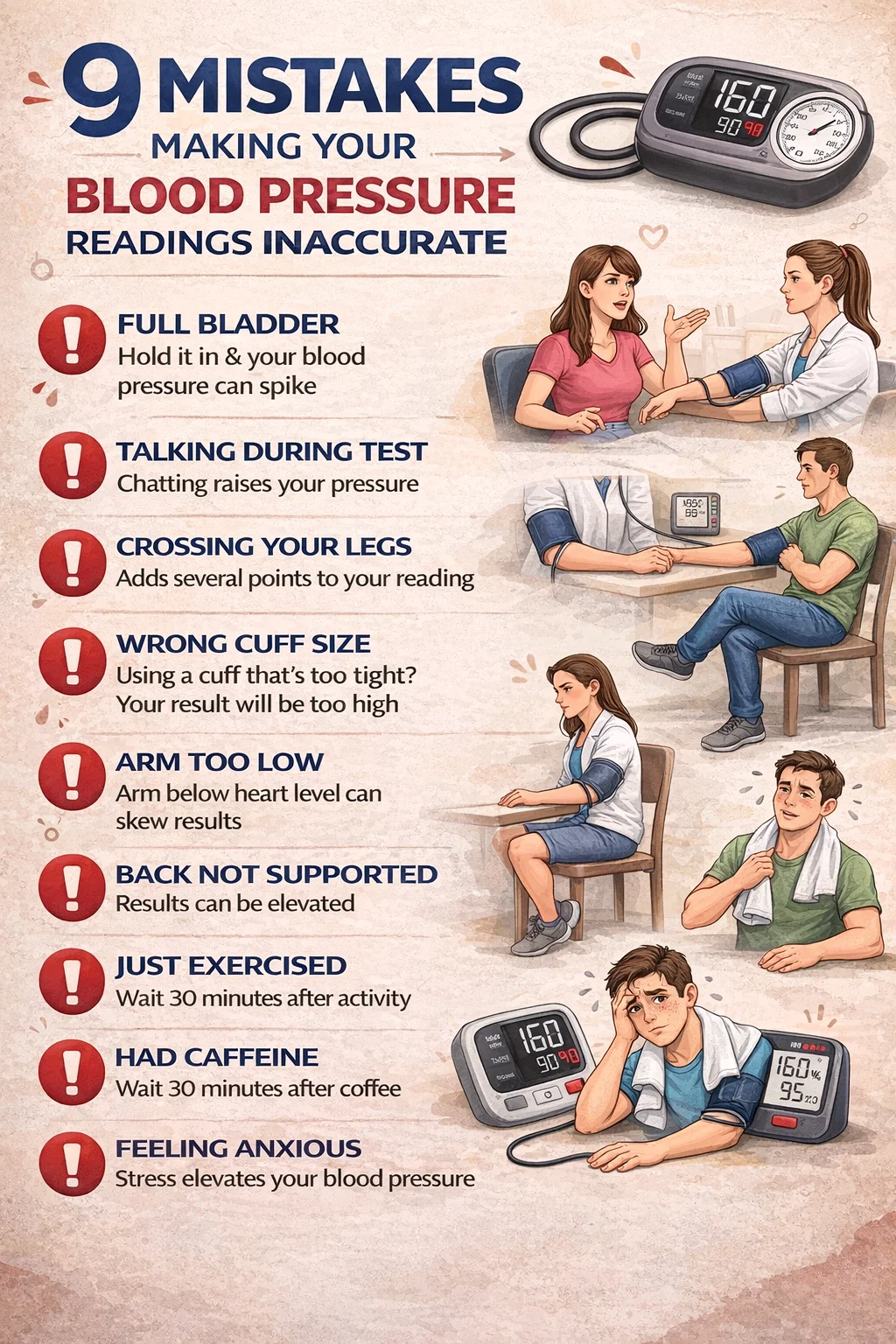
Walking into a doctor’s office or sitting down with a home monitor can often feel like a high stakes exam. You wait for that cuff to tighten, watching the numbers climb, and suddenly your heart starts racing just from the anticipation. When the final reading flashes a number much higher than you expected, it is easy to panic. However, what many people do not realize is that blood pressure is incredibly sensitive to external factors. The image we are looking at today highlights a critical truth: your actual cardiovascular health might be perfectly fine, but small, seemingly insignificant mistakes could be making your blood pressure look dangerous.
Getting an accurate reading is about more than just the machine. It is about the environment, your physical state, and even the way you are sitting in the chair. If you have ever walked away from a checkup feeling stressed about a high reading, this guide is for you. We are going to dive deep into the science of blood pressure measurement, the common errors that lead to “false highs,” and how you can take control of your numbers to ensure they reflect your true health status.
The Hidden Impact of Your Physical State
Your body is a complex system that constantly adjusts to internal and external demands. When it comes to blood pressure, even the most minor physical discomfort can trigger a physiological response that spikes your numbers. One of the most overlooked factors is the state of your bladder. A full bladder can actually add 10 to 15 points to your systolic reading. This happens because a full bladder puts stress on the body, triggering the sympathetic nervous system and causing a temporary rise in pressure. Always make sure to use the restroom before you sit down for a test.
Similarly, what you have consumed in the hour leading up to your test matters immensely. Caffeine is a well known culprit. Whether it is a morning cup of coffee or a midday soda, caffeine constricts blood vessels and can cause a temporary but significant jump in readings. Experts recommend waiting at least 30 minutes after your last sip of coffee before taking a measurement. The same rule applies to exercise. While long term fitness lowers blood pressure, the immediate aftermath of a workout sees your heart pumping harder and your pressure elevated. Giving your body a 30 minute grace period to return to a resting state is essential for accuracy.
Posture and Positioning: The Science of Accuracy
The way you position yourself in the chair is not just about comfort; it is about physics and biology. When you sit for a blood pressure reading, your body should be in a neutral, supported state. If your back is not supported, your muscles are technically working to keep you upright. This muscle tension can subtly increase the pressure in your veins. Ideally, you should be sitting in a chair with a firm backrest, allowing your body to fully relax.
Another common mistake is crossing your legs. It might feel like a natural way to sit, but crossing your legs at the knee can raise your reading by 5 to 8 points. This happens because the compression of the veins in your legs increases the resistance to blood flow, forcing the heart to work harder. Keep your feet flat on the floor to maintain a steady, natural flow. Additionally, the height of your arm plays a massive role. If your arm is dangling by your side or positioned too low, gravity pulls the blood downward, leading to a falsely high reading. Your arm must be supported at heart level to get a true reflection of your cardiovascular state.
The Role of the Blood Pressure Cuff
The equipment itself is often a source of error. One of the most frequent mistakes is using the wrong cuff size. If a cuff is too small, it has to exert more pressure to cut off the blood flow, which results in a falsely high reading on the monitor. Conversely, a cuff that is too large might give a reading that is too low. Most modern monitors come with guidelines on the cuff to help you determine if it fits your arm circumference correctly. Taking a moment to ensure the fit is snug but appropriate can save you a lot of unnecessary worry.
There is also a common debate about whether the cuff should be placed on a bare arm or over clothing. While thin sleeves are sometimes acceptable, placing a cuff over a thick sweater or bundled fabric can interfere with the sensors. For the most consistent results, a bare arm or a very thin layer of fabric is preferred. This ensures the monitor can accurately detect the pulse waves without interference from the material of your clothes.
Understanding White Coat Syndrome and Stress
If you find that your readings are always higher at the doctor’s office than they are at home, you are likely experiencing White Coat Syndrome. This is a very real phenomenon where the anxiety of being in a medical setting causes your blood pressure to spike. The stress of being evaluated, combined with the sterile environment of a clinic, can send your nervous system into a “fight or flight” mode. This is why many doctors now recommend home monitoring as a more reliable way to track trends over time.
Even if you are at home, your mental state matters. If you just had a stressful phone call or you are rushing to get through your morning routine, your numbers will reflect that tension. Talking during a reading is another major no-no. Simply engaging in a conversation can increase your pressure. To get a true resting heart rate and blood pressure, you should sit in silence for at least five minutes before starting the machine. This quiet time allows your heart rate to settle and your nervous system to calm down.
A Step by Step Guide to the Perfect Reading
To ensure you are getting the most accurate data possible, follow this checklist every time you measure your blood pressure. Consistency is the key to identifying actual health trends versus temporary spikes.
- Prepare your body: Empty your bladder and avoid caffeine, nicotine, or exercise for 30 minutes.
- Find the right setting: Sit in a quiet room where you will not be interrupted or distracted by electronics.
- Perfect your posture: Sit in a chair with back support, keep your feet flat on the floor, and do not cross your legs.
- Position your arm: Rest your arm on a table or armrest so that the cuff is at the same level as your heart.
- Stay silent: Do not talk or scroll through your phone during the five minute rest period or during the actual measurement.
- Verify the equipment: Ensure your cuff is the correct size and is wrapped snugly around your arm.
Why Accuracy Matters for Your Long Term Health
You might wonder why a few points here and there matter so much. The danger of falsely high readings is that they can lead to overdiagnosis and unnecessary medication. If a doctor sees a high number and assumes it is your baseline, they might prescribe blood pressure medication that you do not actually need. On the flip side, ignoring high readings because you assume they are “just mistakes” can be equally dangerous if there is an underlying issue.
The goal of monitoring should be to find your true average. By eliminating these small mistakes, you provide your healthcare provider with clean data. This allows for better decision making and a more personalized approach to your wellness. It empowers you to know exactly what is happening inside your body without the “noise” of external stressors and poor positioning.
Conclusion: Taking Control of Your Cardiovascular Health
Blood pressure is one of the most important vital signs we have, but it is also one of the most misunderstood. The image of the stressed patient and the fluctuating monitor is a scenario many of us know all too well. By recognizing that factors like a full bladder, a lack of back support, or a simple cup of coffee can skew your results, you take the power back into your own hands. You no longer have to be a victim of a “scary” number that does not represent your reality.
The next time you reach for the cuff, remember that those few minutes of preparation are just as important as the technology itself. Sit back, breathe deeply, and ensure your body is positioned for success. Accurate information is the foundation of good health, and by avoiding these common pitfalls, you are making a significant investment in your long term well being. Stay informed, stay relaxed, and let your true health shine through the numbers.