10 Common Signs Your Body Is Lacking Essential Vitamins and Nutrients
Have you ever woken up with a persistent headache or noticed that your hair seems a bit thinner than usual? Often, we dismiss these minor inconveniences as signs of aging or a busy lifestyle. However, your body is a sophisticated communication system, and these small changes are actually whispers before a roar. The physical symptoms we experience daily are frequently direct messages from our internal systems indicating that we are running low on essential fuel. Understanding how to decode these signals is the first step toward reclaiming your vitality and ensuring your body has exactly what it needs to thrive.
The Language of Vitamin Deficiencies
Most of us strive to eat a balanced diet, but in a world of processed foods and soil depletion, it is easier than ever to fall into a nutritional gap. A vitamin deficiency does not always manifest as a major illness right away. Instead, it shows up in the mirror and in our energy levels. When you see cracked lips, brittle nails, or feel an unusual sense of weakness, your body is using its external canvas to tell a story about its internal state. By paying attention to these signs early on, you can make simple dietary adjustments that prevent more significant health hurdles down the road.
Chapped Lips and Mouth Health
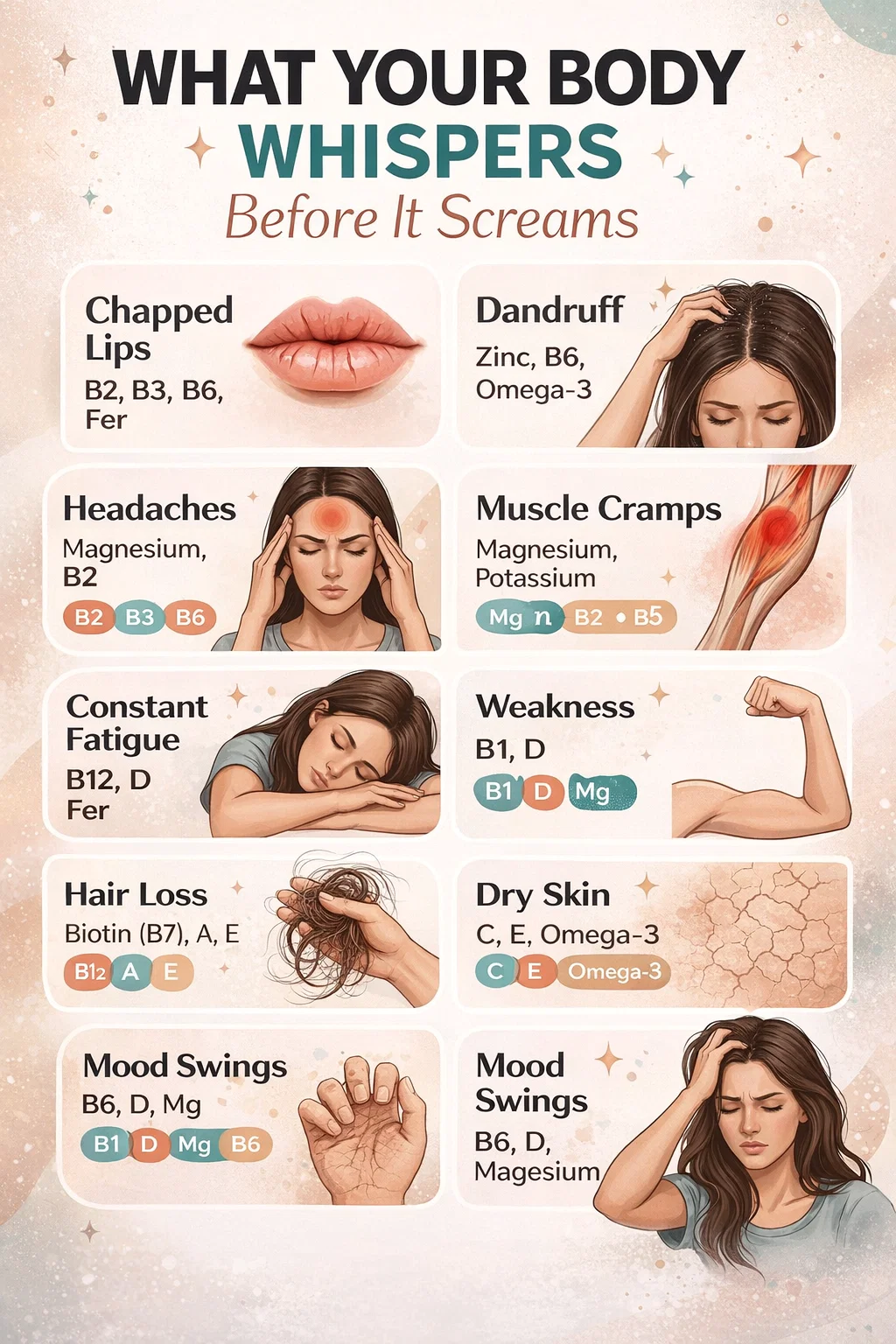
We often reach for lip balm the moment our lips feel dry, but if your lips stay chapped regardless of the weather, you might be looking at a shortage of B vitamins. Specifically, vitamins B2 (riboflavin), B3 (niacin), and B6 are critical for skin repair and metabolic function. Furthermore, a lack of iron can lead to pale or cracked lips. This occurs because iron is essential for carrying oxygen to your cells, and when levels are low, the delicate skin around the mouth is often the first to show signs of distress. Incorporating more leafy greens, lean proteins, and legumes can help bridge this gap naturally.
What Your Hair and Scalp Reveal
Your hair is often considered your crowning glory, but it is also a non essential tissue in the eyes of your body. This means that when nutrients are scarce, your system will divert vitamins and minerals away from your hair follicles to support vital organs like the heart and lungs. Consequently, your hair is one of the most accurate barometers for your nutritional status.
The Struggle with Persistent Dandruff
If you are dealing with flakes that just won’t go away, it might be more than just dry skin. Dandruff and seborrheic dermatitis can be linked to low levels of zinc, vitamin B6, and Omega 3 fatty acids. Zinc is a powerhouse mineral that supports cell growth and the health of the oil glands surrounding the follicles. When you are low on Omega 3s, your skin loses its ability to retain moisture, leading to a dry, itchy scalp. Adding walnuts, chia seeds, and fatty fish to your meals can provide the healthy fats your scalp needs to stay hydrated and flake free.
Thinning Hair and Hair Loss
Finding more hair than usual in your brush can be alarming. While genetics play a role, nutritional deficiencies are a very common culprit. Biotin, also known as Vitamin B7, is perhaps the most famous nutrient for hair growth. It helps produce keratin, the protein that makes up your hair, skin, and nails. Additionally, Vitamin A and Vitamin E act as antioxidants that protect the scalp from oxidative stress. If you notice significant thinning, it is worth checking your intake of these key vitamins to ensure your follicles have the strength to produce healthy strands.
Muscle Cramps and Physical Weakness
There is nothing quite as disruptive as a sudden muscle cramp in the middle of the night or a feeling of weakness during a workout. These physical sensations are often the result of an electrolyte imbalance or a lack of specific minerals that govern muscle contraction and relaxation.
The Role of Magnesium and Potassium
Magnesium is involved in over 300 biochemical reactions in the human body, yet a vast majority of people are deficient in it. If you suffer from frequent muscle spasms or “charley horses,” your body is likely screaming for magnesium and potassium. These two minerals work together to regulate muscle signals. Without enough magnesium, your muscles cannot properly relax after contracting, leading to that painful, knotted feeling. Bananas, avocados, and pumpkin seeds are excellent sources to help keep your muscles fluid and functional.
Understanding General Body Weakness
If you feel physically weak or your muscles feel heavy, you might be lacking Vitamin B1 (thiamine) or Vitamin D. Vitamin B1 is essential for converting nutrients into energy, while Vitamin D plays a massive role in muscle function and bone health. Many people don’t realize that Vitamin D receptors are located throughout the body, including in the muscle cells. Low levels can lead to a sense of lethargy and a lack of physical power. Spending more time in the sun and eating fortified foods can help restore these levels and bring back your strength.
Energy Levels and Mental Wellbeing
In our fast paced culture, we often accept exhaustion as a normal part of life. However, constant fatigue is not a badge of honor; it is a symptom. Your brain and your metabolism require a steady stream of specific vitamins to keep you feeling sharp and motivated throughout the day.
The Mystery of Constant Fatigue
If you find yourself dragging through the day even after a full night of sleep, you may be deficient in Vitamin B12, Vitamin D, or Iron. Vitamin B12 is crucial for the formation of red blood cells and the health of your nervous system. Without it, your cells don’t get enough oxygen, leaving you feeling wiped out. Similarly, iron deficiency anemia is one of the most common causes of fatigue worldwide. Strengthening your intake of red meat, spinach, or taking a high quality supplement can make a world of difference in how you feel from morning to night.
Mood Swings and Cognitive Function
Did you know that your mood is closely tied to your gut and your nutrient intake? If you find yourself experiencing unexplained mood swings or irritability, it might be a lack of Vitamin D, B6, or Magnesium. Vitamin B6 is a precursor to neurotransmitters like serotonin and dopamine, which regulate happiness and calm. When these nutrients are low, your brain struggles to maintain emotional balance. Ensuring you have a steady supply of these “feel good” nutrients can help stabilize your mood and improve your overall outlook on life.
Skin Health and Brittle Nails
The skin is the largest organ of the body, and it acts as a mirror for your internal health. When your skin is excessively dry or your nails are breaking easily, your body is providing a visual map of what is missing from your diet.
Dealing with Dry, Cracked Skin
If your skin feels like parchment paper regardless of how much lotion you apply, you might be lacking Vitamin C, Vitamin E, or Omega 3 fatty acids. Vitamin C is essential for collagen production, which gives skin its elasticity and structure. Vitamin E acts as a barrier, protecting the skin from damage and locking in moisture. Combining these with healthy fats ensures that your skin remains supple and glowing from the inside out.
The Secret to Strong Nails
Soft, peeling, or brittle nails are a classic sign of Biotin and Zinc deficiency. Just like your hair, your nails rely on these nutrients to build strong, resilient structures. Vitamin D is also important here, as it helps the body absorb calcium, which contributes to nail hardness. If you want to improve the appearance of your hands, start by nourishing your body with nutrient dense foods rather than just relying on topical treatments.
How to Start Your Healing Journey
Identifying these signs is the first step, but taking action is where the transformation happens. It is always best to prioritize whole foods as your primary source of nutrition. Nature packages vitamins and minerals with fiber and phytonutrients that help with absorption. For example, eating an orange provides not just Vitamin C, but also bioflavonoids that help your body use that vitamin more effectively.
If you suspect a significant deficiency, consider keeping a food diary for a week. Note down what you eat and how you feel physically. You might begin to see patterns, such as headaches appearing after a few days of low magnesium intake. This self awareness is a powerful tool in your wellness toolkit. Remember that supplements can be helpful, but they are meant to supplement a healthy diet, not replace one. Always consult with a healthcare professional before starting new supplements to ensure they are right for your specific needs.
Embracing a Nutrient Dense Lifestyle
The journey to health is not about perfection; it is about listening. Your body is constantly communicating with you, and by learning its language, you can provide the support it needs to function at its peak. When you nourish yourself deeply, you aren’t just fixing a symptom; you are investing in your future self. Start small by adding one or two nutrient rich foods to your daily routine, and watch as those whispers of discomfort turn into a vibrant shout of health and vitality. Your body does so much for you every single day. It is time to give it the fuel it deserves so you can live your life to the fullest.