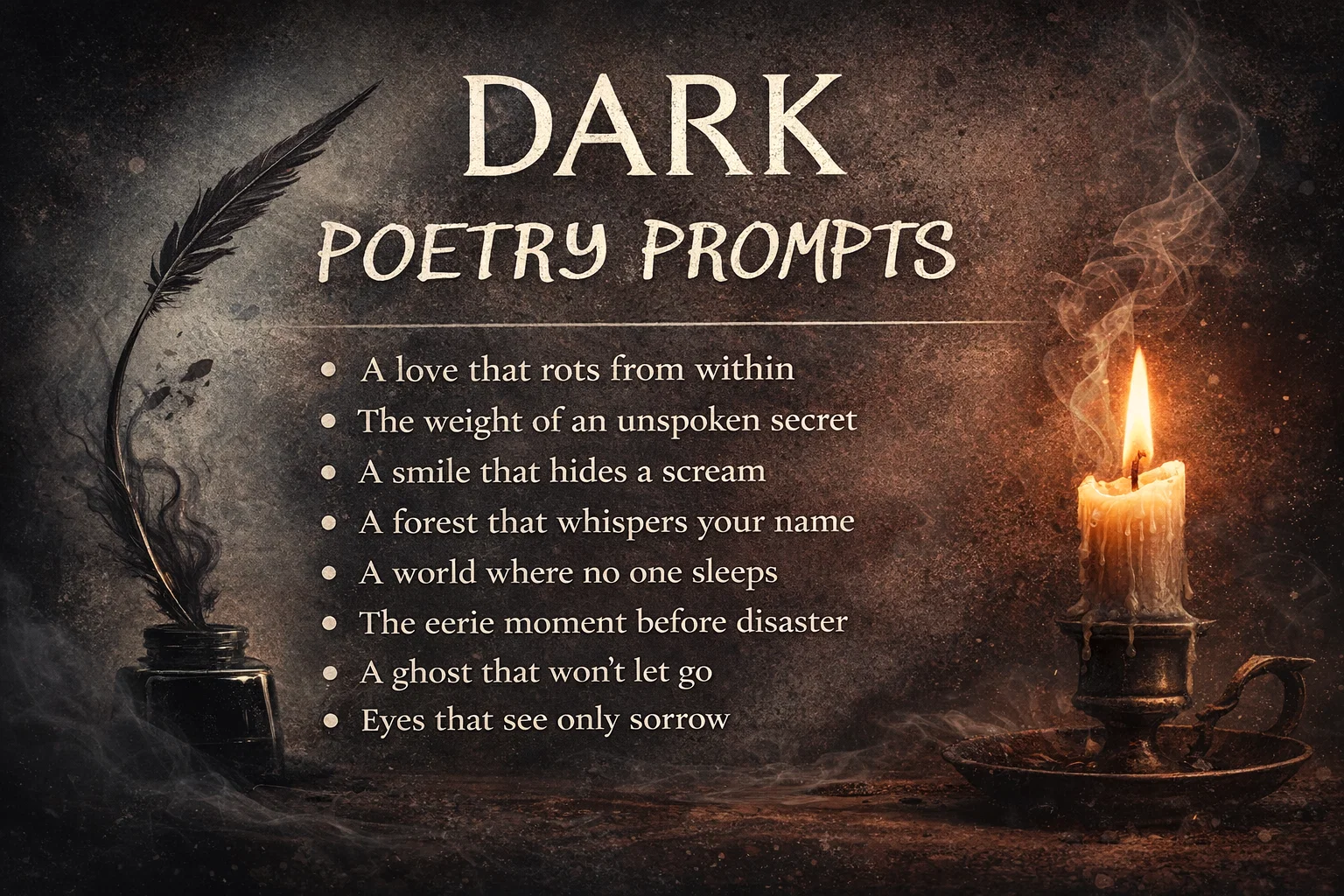
10 Dark Poetry Prompts Writing Inspiration for Creative Writers
Unlocking the silent corners of the mind often requires a key that is both sharp and delicate. For many writers, the most profound truths are found not in the midday sun, but in the elongated shadows of the evening. If you have ever felt the pull of a melancholy melody or the strange comfort of a rainy afternoon, you understand the allure of dark poetry. It is a genre that does not shy away away from the uncomfortable; instead, it embraces the rot, the secrets, and the ghosts we all carry. The image of these handwritten prompts serves as a perfect catalyst for anyone looking to dive deep into their subconscious and pull out something hauntingly beautiful. Let us explore how you can use these dark poetry prompts to transform your creative writing practice.
The Power of Dark Imagery in Modern Poetry
Dark poetry is more than just a collection of sad words. It is an exploration of the human condition in its most raw and honest state. When we write about a love that rots from within or a forest that whispers a specific name, we are tapping into universal fears and desires. This type of writing allows for a level of vulnerability that standard prose often misses. By focusing on the darker aspects of life, poets can highlight the contrast of light, making the moments of hope feel even more significant.
Using specific prompts like the ones found in the Dark Poetry Prompts list helps to bypass the analytical brain. Instead of worrying about structure or rhyme scheme right away, these evocative phrases force you to feel. They provide a sensory anchor. When you imagine a smile that hides a scream, you aren’t just thinking of an image; you are feeling the tension in the jaw and the coldness in the eyes. This sensory depth is what separates a good poem from a truly unforgettable one.
Breaking Down the Prompts: A Deep Dive into Melancholy
To get the most out of your writing session, it helps to look at these prompts through different lenses. Each one offers a unique path toward a finished piece. Here is a closer look at how you can expand on these ideas to create complex, layered work.
Exploring Internal Decay and Secrets
Prompts like A love that rots from within or The weight of an unspoken secret deal with the internal landscape. These are perfect for practicing metaphors. Instead of saying a relationship is failing, describe the smell of damp wood or the way a fruit turns soft and gray. How does a secret physically feel? Is it a stone in the stomach or a leaden vest? Focusing on the physical sensations of internal strife makes your poetry relatable to anyone who has ever carried a burden they could not share.
The Haunting Nature of the External World
When you move to prompts like A forest that whispers your name or A world where no one sleeps, you are playing with the uncanny. This is where dark poetry meets horror and magical realism. Use these prompts to experiment with personification. Give the wind a voice and the trees a memory. In a world without sleep, what happens to the concept of time? What do the eyes look like after a thousand hours of wakefulness? These prompts allow for expansive world building within the tight confines of a poem.
How to Use Writing Prompts Effectively
Many writers feel a bit of guilt using prompts, as if it is “cheating.” In reality, prompts are tools used by the greatest authors in history to keep the gears turning. Here is how to use them to your advantage:
- The 10 Minute Sprint: Choose one prompt and write without stopping for ten minutes. Do not worry about grammar or if it even makes sense. Just get the raw emotion onto the page.
- The Word Bank Method: Take a prompt like Darkness as a home, not a fear and write down ten words that associate with that feeling before you start the poem. Think of words like velvet, hearth, shroud, or ink.
- Perspective Shifting: Write a poem about A ghost that won’t let go from the perspective of the ghost, and then write another from the perspective of the person being haunted.
The Therapeutic Benefits of Writing Darkly
It might seem counterintuitive, but writing about dark topics can be incredibly healing. This process, often called shadow work in psychological circles, allows you to externalize fears and anxieties. When you put a name to the eyes that see only sorrow, you are taking that sorrow out of your head and putting it onto the paper. It gives you a sense of control over the chaos of human emotion. By creating art out of pain, you are essentially performing alchemy, turning something heavy and oppressive into something structured and expressive.
Reframing Fear as Comfort
The final prompt on the list, Darkness as a home, not a fear, is perhaps the most profound. It challenges the traditional Western view that darkness is inherently bad. For a poet, the dark is where the stars are visible. It is a place of rest, anonymity, and deep reflection. Writing from this perspective can help you find peace in your own quiet moments, teaching you that being alone with your thoughts is not something to be feared, but a sanctuary to be cherished.
Tips for Enhancing Your Atmospheric Writing
To make your dark poetry truly resonate, you need to master the atmosphere. The tone should feel consistent from the first line to the last. Here are a few ways to level up your writing style:
Focus on Negative Space
In poetry, what you don’t say is just as important as what you do say. Leave gaps for the reader’s imagination to fill. If you are writing about the moment just before a disaster, focus on the eerie silence or the way the birds suddenly stop singing rather than the explosion itself. The anticipation is often much darker than the event.
Utilize Sharp Verbs
Avoid passive language. Instead of saying the shadow was moving, say the shadow crept, bled, or clawed. Use words that have a physical “bite” to them. This creates a more visceral experience for the reader and helps maintain the “dark” aesthetic of your work.
Why Every Poet Should Keep a Prompt Journal
Inspiration is a fickle friend. Some days it arrives in a flood, and other days it is a desert. This is why having a visual reference like the Dark Poetry Prompts sheet is essential. Keeping a dedicated notebook for these exercises ensures that you always have a starting point. Even if you only write three lines, you have engaged your creative muscles. Over time, these small exercises can grow into full collections or provide the emotional core for a larger novel or short story.
Consider printing out lists like this and taping them to the front of your journal. When you find yourself staring at a blank screen, pick a bullet point at random and commit to just one stanza. You might be surprised at how quickly a simple prompt like A life lived in the shadows can turn into a sweeping epic about identity and invisibility.
Conclusion: Embrace the Shadow
Writing dark poetry is an act of bravery. It requires you to look into the mirror and acknowledge the parts of yourself and the world that aren’t polished or pretty. But in that darkness, there is an incredible amount of texture and truth. Whether you are writing for an audience or just for your own soul, these prompts are an invitation to explore the depths of your creativity without judgment. So, grab your favorite pen, find a quiet corner, and let the whispers of the forest or the weight of your secrets guide your hand. The darkness is waiting, and it has so much to tell you if you are willing to listen. Happy writing, and remember that every shadow is simply proof that there is a light shining somewhere nearby.