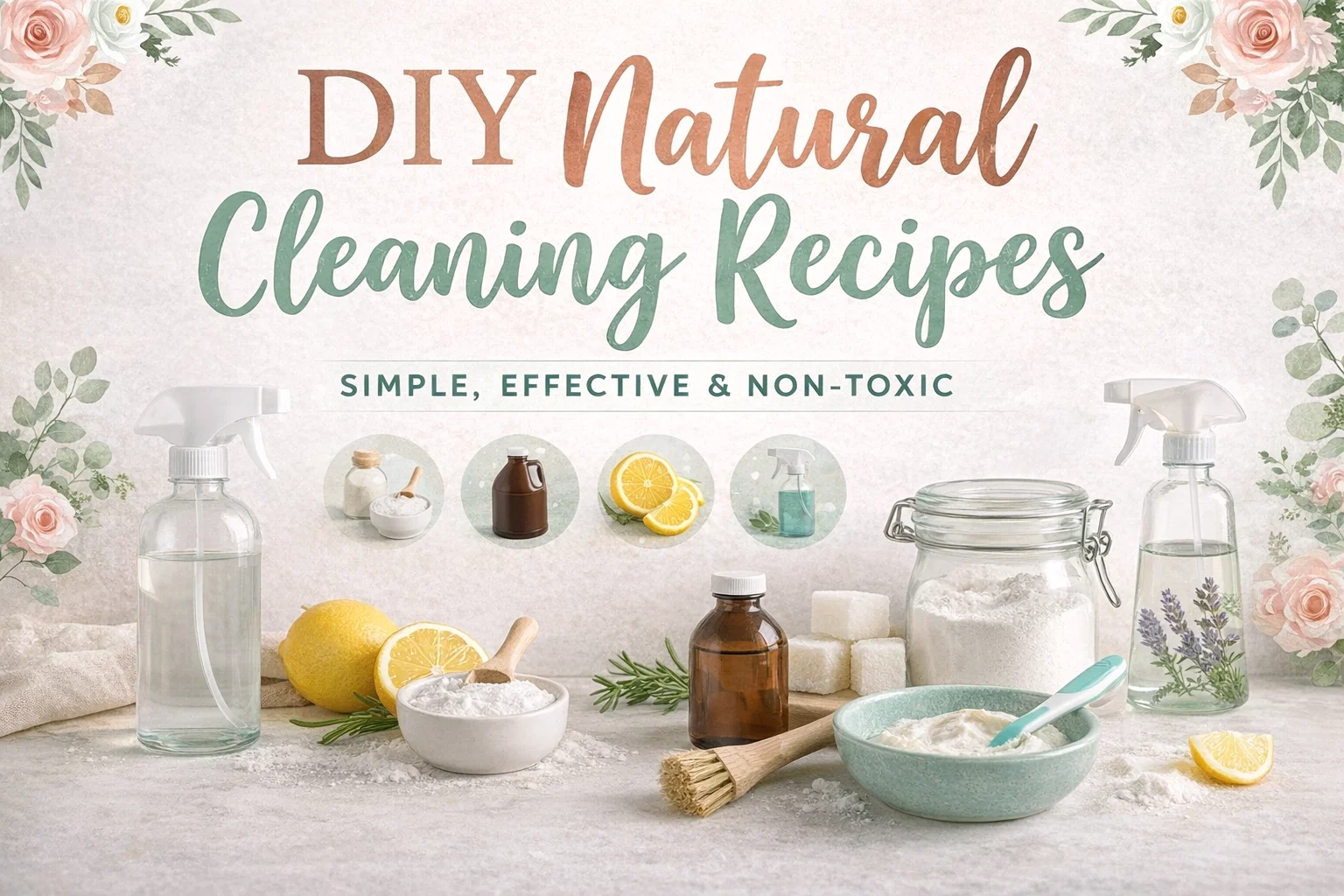
10 DIY Natural Homemade Cleaning Recipes with Free Printable Eco-Friendly House Cleaning
Embracing a natural lifestyle often starts in the heart of the home, but many people feel overwhelmed by the transition. We are constantly bombarded with sleek advertisements for colorful, mountain-scented sprays that promise to kill 99 percent of germs. What those ads don’t mention is the cocktail of synthetic fragrances, phthalates, and harsh surfactants that linger in the air long after the floor is dry. If you have been looking for a way to simplify your cleaning routine while protecting your family and the planet, you have come to the right place. Transitioning to DIY natural cleaning recipes is not just about being eco-friendly; it is about reclaiming control over the environment you live in every single day.
The Benefits of Switching to Homemade Cleaners
There are three major reasons why homeowners are ditching the cleaning aisle in favor of the pantry: health, cost, and effectiveness. When you mix your own solutions, you know exactly what is in the bottle. There are no hidden “fragrance” labels that mask hundreds of unlisted chemicals. This is particularly vital for households with young children who crawl on the floors or pets who lick various surfaces.
From a financial perspective, the savings are staggering. A gallon of white vinegar and a large box of baking soda cost a fraction of a single name-brand bathroom cleaner. Most of the recipes we are discussing today rely on five or six staple ingredients that can be bought in bulk. Furthermore, these natural alternatives are surprisingly powerful. Simple chemical reactions, like the fizzing of baking soda and vinegar or the grease-cutting power of citric acid in lemon juice, can tackle even the toughest grime without the need for a gas mask.
Essential Ingredients for Your Natural Cleaning Kit
Before you start mixing, it helps to understand the “power players” in the world of green cleaning. Having these items on hand will allow you to whip up any recipe in a matter of minutes.
- White Vinegar: An acetic acid that acts as a powerful disinfectant and deodorizer. It cuts through grease and dissolves mineral deposits.
- Baking Soda (Sodium Bicarbonate): A mild abrasive that is perfect for scrubbing. It also neutralizes odors rather than just masking them.
- Castile Soap: A vegetable-based soap that is gentle yet effective at lifting dirt. It is a must-have for floor and surface cleaners.
- Hydrogen Peroxide: A fantastic bleach alternative that sanitizes surfaces and brightens whites.
- Essential Oils: Not just for scent! Oils like tea tree, lemon, and eucalyptus have antibacterial and antifungal properties.
- Borax and Washing Soda: These are heavier-duty alkaline minerals used to boost laundry detergent and tackle tough stains.
Mastering the All-Purpose Surface Cleaner
Every home needs a reliable “grab and go” bottle. This is the spray you use for kitchen counters, dining tables, and dusty shelves. The recipe in our guide is incredibly straightforward: 2 teaspoons of baking soda, 4 tablespoons of white vinegar, and 400 ml of water.
Pro Tip for Mixing Vinegar and Soda
When you combine these two, they will fizz aggressively. To avoid a volcano in your kitchen, always mix them in a large bowl first or add the vinegar very slowly to the water and soda mixture. Once the reaction settles, pour it into your spray bottle. This solution is excellent for daily maintenance, but remember to avoid using vinegar on natural stone like granite or marble, as the acid can etch the surface over time.
Achieving a Streak-Free Shine on Glass and Mirrors
Nothing is more frustrating than cleaning a window only to see hazy streaks when the sun hits it. Commercial glass cleaners often rely on ammonia, which has a pungent smell and can irritate the respiratory system. The natural alternative uses rubbing alcohol and cornstarch. While cornstarch sounds like a strange ingredient for a liquid spray, it acts as a very fine abrasive that helps lift dirt without leaving a film behind. Combine 1/4 cup of rubbing alcohol, 1/4 cup of white vinegar, and 2 tablespoons of cornstarch with 2 cups of warm water. Always give the bottle a good shake before each use to redistribute the cornstarch.
Tackling the Bathroom: Soft Scrub and Toilet Bowl Cleaner
The bathroom is often where people are most hesitant to go natural because of the germs involved. However, the combination of Borax and vinegar is a formidable opponent for bacteria. For the toilet, pouring in 3/4 cup of Borax and 1 cup of white vinegar creates a deep-cleaning environment. If you let it sit overnight, the minerals and acidity do the hard work for you, making the morning scrub a breeze.
The Power of the Homemade Soft Scrub
For tubs and sinks that have developed a ring of soap scum, a liquid spray often slides right off. You need something with “grip.” By mixing 3/4 cup of baking soda with 1/4 cup of Castile soap and a splash of water, you create a thick paste. This “soft scrub” clings to vertical surfaces. Apply it with a brush, let it sit for ten minutes, and watch the grime disappear with a simple rinse. It provides that satisfying abrasive feel without scratching your porcelain or fiberglass finishes.
Revolutionizing Your Laundry Routine
Laundry is one of the biggest sources of chemical exposure since our skin is in constant contact with our clothes. Making your own detergent might sound like a chemistry project, but it is actually quite simple. The recipe involving Fels-Naptha soap, Borax, and Washing Soda is a classic for a reason. By grating the soap bars and mixing them with the powdered minerals, you create a high-efficiency detergent that lasts for months. You only need about 1 to 2 tablespoons per load, which makes the cost per wash significantly lower than pods or bottled liquids.
A Natural Bleach Alternative
If you want to keep your whites bright without the harshness of chlorine, hydrogen peroxide is your best friend. Mixing 1.5 cups of 3 percent hydrogen peroxide with 1/2 cup of lemon juice in a gallon of water creates a brightening soak. The citric acid in the lemon works synergistically with the peroxide to lift yellowing and organic stains from cotton fabrics.
Deep Cleaning Kitchen Appliances
The dishwasher and the oven are the workhorses of the kitchen. For the dishwasher, you can create “tabs” by mixing Borax, washing soda, and Epsom salts with a little lemon juice. Pressing these into an ice cube tray and letting them harden in the sun provides you with pre-measured cleaning power. The Epsom salt helps soften the water, preventing spots on your glassware.
Restoring Grout to Its Original Color
Grout is notoriously porous and loves to soak up coffee spills and floor dirt. To brighten it, make a paste of 1/2 cup baking soda and 1/4 cup white vinegar. Apply it directly to the grout lines with an old toothbrush. The fizzing action helps lift the dirt out of the pores. After sitting for five minutes, a quick scrub and a rinse will reveal much lighter, cleaner lines.
Freshening the Air Naturally
Most commercial air fresheners don’t actually clean the air; they simply coat your nasal passages with oil or overwhelm your senses with perfume. A natural air freshener can be as simple as water and a few drops of your favorite essential oils. If you want a scent that lingers slightly longer, adding a small amount of natural fabric softener or rubbing alcohol to the water helps the scent molecules disperse more effectively. Lavender is a classic choice for bedrooms, while citrus or eucalyptus works wonders in bathrooms and kitchens.
Dusting and Wood Care
Wood furniture needs moisture to prevent cracking, but it also needs a cleaner to remove fingerprints. A simple dusting spray of 1 cup vinegar, 1/2 teaspoon of olive oil, and 3 cups of water is the perfect balance. The vinegar cleans, while the tiny amount of olive oil polishes and conditions the wood. Adding 10 drops of lemon essential oil gives it that “freshly polished” scent that we all associate with a clean home.
Tips for Success with DIY Cleaners
As you begin your journey, keep a few logistical tips in mind. First, always label your bottles clearly. Even though these ingredients are natural, you don’t want to confuse a bottle of floor cleaner with a bottle of dusting spray. Second, make small batches. Because these recipes do not contain synthetic preservatives, they are best used within a few months. Finally, reuse your old plastic spray bottles or invest in glass amber bottles. Glass is ideal for recipes containing essential oils, as some oils can degrade plastic over time.
Transitioning Your Home Today
You don’t have to throw out every commercial cleaner in your cabinet this afternoon. Start by replacing one item at a time. Perhaps the next time you run out of glass cleaner, try the cornstarch and vinegar method. Once you see the results and realize how much money you are saving, you will likely be inspired to tackle the laundry room or the kitchen next.
The beauty of these recipes lies in their simplicity. They prove that we don’t need complex chemicals to have a sanitary, beautiful home. By using the printable guide provided in the image, you can keep these ratios handy in your pantry or cleaning closet, ensuring that you are never more than five minutes away from a fresh, non-toxic home environment.
Conclusion
Switching to DIY natural cleaning is a powerful step toward a more sustainable and intentional lifestyle. It reduces plastic waste, protects your indoor air quality, and simplifies your shopping list. Whether you are motivated by a desire to save money or a commitment to holistic health, these ten recipes provide a comprehensive foundation for any household. The next time you face a messy kitchen or a foggy mirror, reach for the baking soda and vinegar. You will be amazed at how effective nature can be at keeping your home sparkling clean and safe for everyone who lives there.