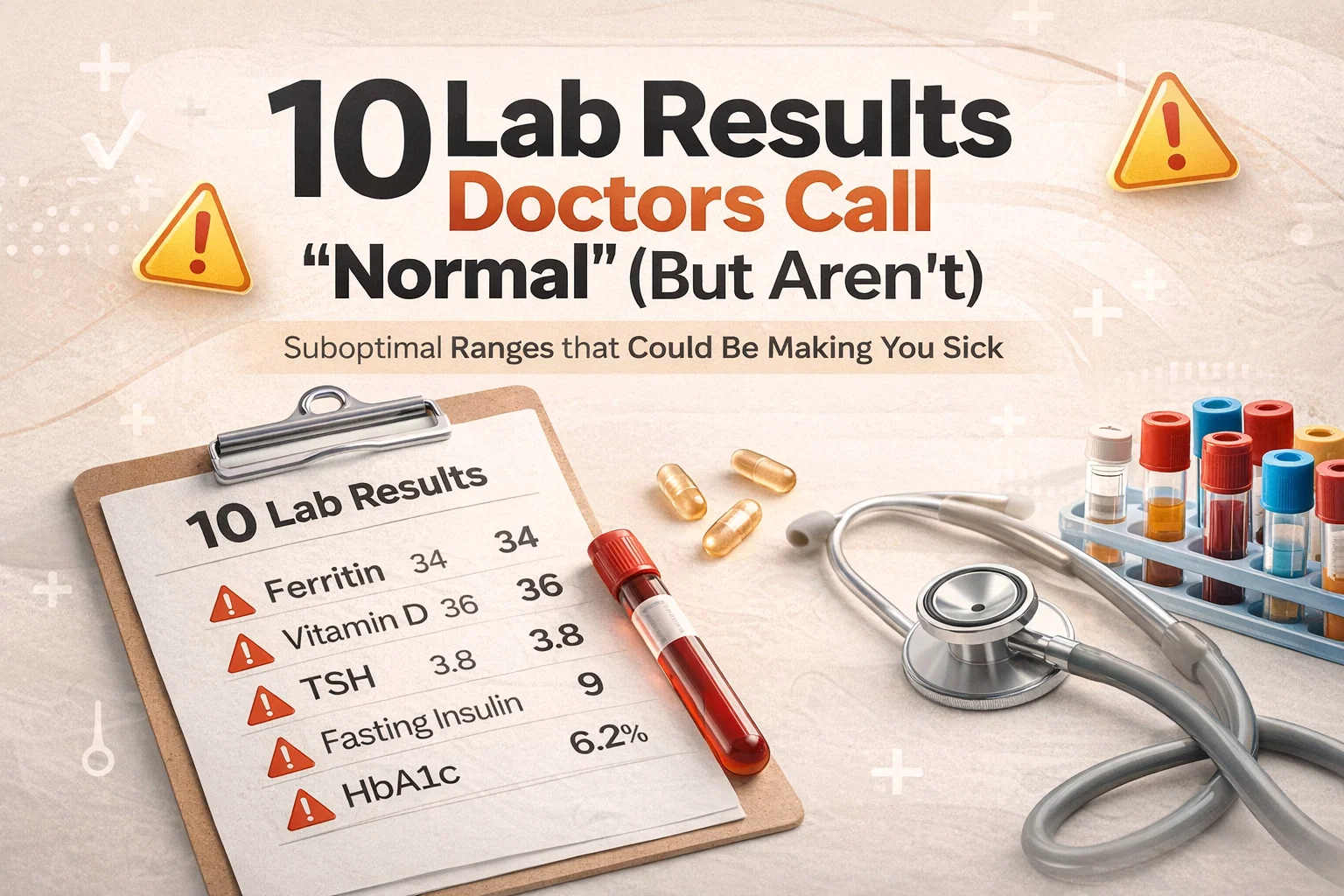
10 Optimal Lab Results for Health Functional Medicine Guide to Ferritin, TSH Vitamin D
Have you ever walked out of a doctors office with a clean bill of health, yet you still feel completely exhausted? It is a frustratingly common scenario. You have the symptoms: your hair is thinning, your joints ache, or your brain feels like it is stuck in a thick fog. But when the lab results come back, your physician simply shrugs and says, everything looks normal. This gap between feeling unwell and having normal lab work is where many people fall through the legal cracks of the modern healthcare system. It is time to talk about the difference between being clinically well and being biologically optimal.
The standard reference ranges you see on your lab reports are based on a bell curve of the general population. The problem is that the general population is not necessarily healthy. Those ranges are designed to identify acute disease, not to help you thrive. If you want to move from surviving to thriving, you need to understand functional medicine ranges. These are narrower, more specific targets that reflect how the body operates when it is truly in balance. Let us break down the ten critical lab markers that might be lying to you about your health.
1. Ferritin: The Truth About Your Iron Stores
Ferritin is a protein that stores iron, and it is one of the most misunderstood markers in primary care. Most labs list a normal range for women that starts as low as 10 or 15 ng/mL. However, functional practitioners know that symptoms of iron deficiency can start long before you become officially anemic. If your ferritin is sitting between 30 and 50, you are in the hair loss zone. Your body is smart; if it does not have enough iron to support vital organs, it stops sending it to non-essential things like your hair follicles.
To feel your best and maintain high energy levels, you really want that number to be above 70 ng/mL. When ferritin drops below this threshold, exhaustion starts to set in. You might feel winded going up the stairs or find that your recovery after a workout takes twice as long as it should. Always check the actual number, not just the word normal.
2. Vitamin D: Moving Beyond Rickets Prevention
We have been told for decades that a Vitamin D level of 30 ng/mL is sufficient. While 30 might be enough to prevent bone diseases like rickets, it is nowhere near enough for robust immune function or mood regulation. Vitamin D acts more like a hormone than a vitamin, influencing thousands of pathways in the body. When your levels sit in the 30 to 40 range, your immune system is essentially operating on low battery.
The functional goal for Vitamin D is typically between 50 and 80 ng/mL. In this range, you are providing your body with the resources it needs to fight off seasonal bugs, reduce systemic inflammation, and support healthy bone density. If you live in a northern climate or work indoors, hitting these numbers without supplementation is nearly impossible for most people.
3. TSH: Why the Standard Thyroid Range is Too Broad
The Thyroid Stimulating Hormone (TSH) test is the gold standard for screening thyroid issues, but the standard range is massive, often spanning from 0.5 to 4.5 or even 5.0. If your TSH is a 4.0, your doctor might say you are fine, but your pituitary gland is actually screaming at your thyroid to work harder. This is often why people have all the symptoms of hypothyroidism—cold hands, weight gain, and constipation—despite normal results.
A functional, healthy TSH range is much tighter, usually between 0.5 and 2.0. When your TSH starts climbing above 2.5, it is often a sign that the thyroid is beginning to struggle. Getting ahead of this trend can prevent a full-blown thyroid disorder later in life.
4. Fasting Insulin: The Early Warning System
Most doctors only check your blood sugar or HbA1c, but fasting insulin is the real canary in the coal mine for metabolic health. You can have perfect blood sugar for years while your insulin levels climb higher and higher to keep it that way. By the time your blood sugar rises, the damage to your metabolism is already well underway.
A fasting insulin level greater than 8 uIU/mL is a strong indicator of early insulin resistance. Ideally, you want this number to sit between 2 and 6. Keeping insulin low is the key to longevity, fat loss, and avoiding the inflammatory cascade that leads to chronic disease.
5. HbA1c: Preventing Diabetes Before It Starts
Hemoglobin A1c (HbA1c) measures your average blood sugar over the last three months. The medical establishment defines pre-diabetes as 5.7% to 6.4%. The problem with this definition is the wait and see approach. If you are at a 5.9, your cells are already being damaged by excess sugar through a process called glycation. Why wait until you hit the threshold for a diagnosis to change your lifestyle? Functional medicine suggests keeping this marker below 5.5% to ensure your cells stay healthy and responsive.
6. Homocysteine: Protecting Your Heart and Brain
Homocysteine is an amino acid that, when elevated, acts like sandpaper on the inside of your arteries. High levels are a major risk factor for heart attacks, strokes, and even cognitive decline. Standard labs often flag anything over 15 as high, but research suggests that risk starts climbing significantly once you pass 10. A truly protective level is under 7. If yours is high, it often points to a need for more B vitamins, specifically B12, B6, and folate.
7. hs-CRP: Measuring the Fire of Inflammation
High-sensitivity C-Reactive Protein (hs-CRP) is a marker of systemic inflammation. It is like a smoke detector for your body. While a level under 3.0 mg/L is considered average risk, average in our society often involves chronic aches and pains. To be in the low-risk, optimal health category, you want your hs-CRP to be under 1.0. If it is between 1 and 3, there is a low-grade inflammatory fire burning somewhere in your body that needs to be addressed.
8. Magnesium: The Secret Mineral
Magnesium is involved in over 300 biochemical reactions, including muscle relaxation and stress management. The standard serum magnesium test is notoriously inaccurate because only about 1% of your body’s magnesium is in your blood; the rest is in your bones and cells. Even within that flawed test, a result of 1.7 to 2.2 mg/dL is often associated with anxiety and muscle cramps. If you want a real answer, ask for an RBC Magnesium test, which looks at the magnesium inside your red blood cells.
9. Vitamin B12: Nerve Health and Energy
In the United States, the lower limit for B12 is around 200 pg/mL. In many other countries, anything under 500 is considered a deficiency. B12 is essential for the protective coating on your nerves called myelin. When you are in the 200 to 400 range, you might start experiencing tingling in your hands, memory lapses, or depression. Functional practitioners want to see your B12 levels at 500 or higher to ensure your nervous system is fully supported.
10. Free T3: The Active Metabolism Spark
As mentioned earlier, TSH is just one part of the story. Your thyroid produces T4, which then must be converted into Free T3. Free T3 is the active hormone that actually enters your cells and tells them to produce energy. Many people have a normal TSH and normal T4, but their Free T3 is in the bottom half of the range. This results in a slow metabolism, even if your other numbers look fine. If you are not testing Free T3, you are missing the most important piece of the thyroid puzzle.
The Problem With “Normal”
The recurring theme here is that normal is a statistical average, not a health goal. When a lab determines its reference range, it takes the results of everyone who has used that lab recently and calculates the middle 95%. Think about who goes to get blood work done: mostly people who are sick, elderly, or dealing with chronic issues. Comparing yourself to a pool of potentially unhealthy people is not the way to achieve peak performance.
How to Talk to Your Doctor
It can be intimidating to challenge a normal result, but it is your body and your health. When you go into your next appointment, come prepared. You can say something like, I noticed my ferritin is at 35. While I know that is within the lab range, I am experiencing hair loss and fatigue, and I have read that an optimal level is closer to 70. Can we discuss a plan to raise this? Most practitioners are happy to help when you show that you are engaged and informed.
Conclusion: Taking Control of Your Biology
Understanding these ten lab markers is the first step toward becoming the CEO of your own health. You do not have to settle for feeling mediocre just because a computer printout says you are within range. By focusing on functional, optimal targets, you can catch imbalances before they turn into chronic diseases and finally find the energy and vitality you have been searching for.
Start by requesting a copy of your most recent labs. Look at the actual numbers, not just the checkmarks. If you find yourself in the gray area between normal and optimal, it is an invitation to look deeper into your nutrition, lifestyle, and environment. Remember, your labs should reflect how you feel, and you deserve to feel your absolute best. Save this guide and bring it to your next checkup to ensure you are getting the full picture of your health.