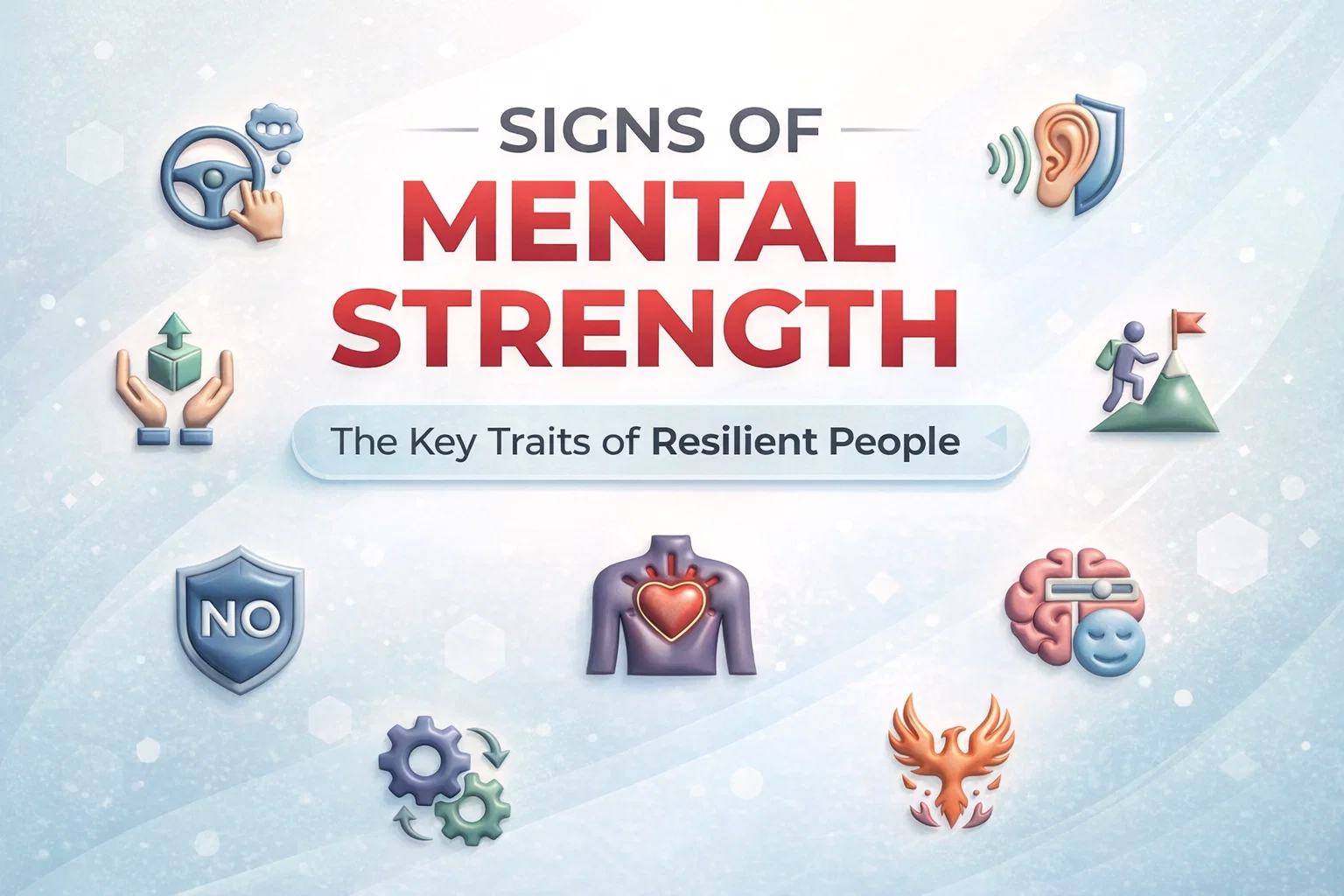
10 Signs of Mental Strength How to Build Resilience and Emotional Regulation Strategies
Building a resilient mindset is one of the most transformative journeys you can undertake. It is not about reaching a destination where you no longer feel stress or fear, but rather about changing your relationship with those emotions. When we look at the core indicators of mental strength, we see a pattern of conscious choices. These choices allow us to move from a state of reaction to a state of intention. Whether you are navigating a career shift, managing personal relationships, or simply trying to find more peace in your daily life, understanding the pillars of emotional fortitude is the first step toward true personal empowerment.
The True Definition of Mental Strength
Many people mistake mental strength for being stoic or emotionless. In reality, the strongest individuals are often the most self-aware. They feel the full spectrum of human emotion, but they do not let those feelings dictate their long term direction. Mental strength is a muscle that you build through repetitive action and intentional habit formation. It involves a combination of emotional intelligence, grit, and the ability to maintain a healthy perspective even when circumstances are challenging.
One of the most profound indicators of this strength is when fear does not drive you. We all experience fear, it is a survival mechanism designed to keep us safe. However, a mentally strong person acknowledges the fear, assesses the risk, and proceeds based on their values rather than their anxieties. You feel the fluttering in your chest before a big presentation or the hesitation before a difficult conversation, but you do it anyway because it aligns with who you want to be.
Developing Resilience to Feedback
In a world where we are constantly being evaluated, developing a thick skin is essential. Resilience to feedback is not about ignoring what others say, but about filtering it through a lens of growth. When you can listen to criticism without losing your confidence, you unlock a superpower. You begin to see feedback as data rather than a personal attack on your character.
Separating Identity from Performance
The key to handling criticism is separating who you are from what you do. If a project fails or a manager gives you a tough performance review, it does not mean you are a failure. Mentally strong individuals understand that their worth is intrinsic. By maintaining this separation, you can objectively look at where you can improve and take the necessary steps to grow without being spiraled into a cycle of self-doubt.
The Art of Active Listening
When someone provides feedback, the natural human instinct is to become defensive. To build mental strength, practice active listening. Ask clarifying questions. Seek to understand the perspective of the other person. By doing this, you show that you are in control of your emotions and that you value the opportunity to refine your skills and your mindset.
Taking Full Ownership of Your Life
Radical responsibility is perhaps the most difficult indicator of mental strength to master. It requires you to stop blaming your boss, your parents, the economy, or your partner for your current situation. While external factors certainly influence our lives, our response to those factors is entirely within our control. Taking ownership means recognizing that you are the primary architect of your future.
- Stop the Blame Game: Blaming others gives away your power. When you take responsibility, you reclaim the ability to change the outcome.
- Focus on Solutions: Instead of dwelling on why something went wrong, shift your energy toward how to fix it.
- Acknowledge Your Mistakes: Saying I was wrong is a sign of high confidence, not weakness. It shows you are secure enough to learn and move forward.
The Power of Presence and Internal Validation
We live in a culture of distraction and external approval. Building mental strength requires us to look inward. Presence is the ability to stay with discomfort instead of trying to escape it through scrolling on social media, overworking, or other numbing behaviors. When you can sit with your feelings, even the uncomfortable ones, you learn that they are temporary and manageable.
Finding Validation from Within
If you rely on likes, compliments, or external milestones to feel good about yourself, your happiness will always be fragile. Internal validation means knowing you did your best and staying true to your principles regardless of whether anyone notices. It is the quiet confidence that comes from keeping the promises you make to yourself. When your self-worth is rooted in your own integrity, you become much harder to shake.
Practicing Mindfulness in Daily Life
You can cultivate presence through simple daily practices. Whether it is a dedicated meditation session or simply focusing entirely on the sensation of the water while you wash the dishes, these moments train your brain to stay in the now. Over time, this training makes it easier to stay calm and centered during high-stress situations.
Setting Healthy Boundaries Without Guilt
Boundaries are the gatekeepers of your mental energy. A major indicator of mental strength is the ability to say no without over-explaining or apologizing for your needs. Many people struggle with this because they fear being perceived as unkind or selfish. However, setting boundaries is actually an act of kindness toward yourself and others because it prevents burnout and resentment.
When you set a boundary, you are teaching people how to treat you. You don’t need a three paragraph justification for why you can’t attend an event or take on an extra project. A simple “I won’t be able to make that work” is sufficient. Mentally strong people value their time and energy enough to protect it fiercely.
Emotional Regulation and Adaptability
Managing your reactions is a core component of emotional intelligence. It is the pause between a stimulus and your response. While you cannot always control how you feel, you can always control how you act. Emotional regulation involves recognizing the physical signs of a rising emotion, such as a clenched jaw or a racing heart, and using tools like deep breathing to bring yourself back to a baseline of calm.
Adapting When Plans Fall Apart
Life is unpredictable. One of the clearest signs of mental strength is how you handle it when things don’t go according to plan. Do you crumble and give up, or do you pivot? Adaptability is the ability to see a closed door as an invitation to find a window. It requires a level of cognitive flexibility that allows you to let go of “how things should be” and deal with “how things are.”
Building a Survival Mindset
Reflecting on your past victories is a great way to boost your current mental strength. You have survived every hard day you have ever faced. You have moved through situations that you once thought would break you. This track record of survival is proof of your resilience. When you face new challenges, remind yourself of your past endurance. You have the tools, the history, and the strength to handle whatever comes next.
Persistence Through the Fading of Motivation
Motivation is a feeling, and like all feelings, it is fleeting. It is easy to work toward a goal when you feel inspired and excited. The real test of mental strength comes when the novelty wears off and the work becomes a grind. Persistence is the ability to keep moving even when the “spark” is gone. It is about discipline and commitment to the process rather than the emotional high of the result.
To maintain persistence, break your larger goals into tiny, manageable steps. Focus on the system rather than the finish line. By showing up every day, regardless of your mood, you build a level of grit that eventually leads to massive success. This is how high achievers separate themselves from the rest of the pack.
Practical Exercises to Increase Your Mental Strength
If you want to actively improve these indicators in your own life, you can start with small, daily exercises. Mental strength is built in the quiet moments of choice that occur throughout your day.
The Two-Minute Rule for Discomfort
The next time you feel an urge to avoid a task or escape a difficult emotion, commit to staying with it for just two minutes. Sit in the discomfort. Notice where you feel it in your body. Usually, the peak of the discomfort passes within that window, and you find that you are more than capable of handling the situation.
Reframing Negative Self-Talk
Pay attention to the inner monologue in your head. Are you your own harshest critic? When you catch a negative thought, challenge it. Is it true? Is it helpful? Practice speaking to yourself with the same encouragement you would give a close friend. Over time, this shifts your internal environment from one of hostility to one of support.
Final Thoughts on the Journey of Growth
Becoming mentally strong is a lifelong commitment. There will be days when you handle feedback perfectly and days when you feel defensive. There will be moments of total presence and moments of complete distraction. The goal is not perfection, it is awareness. By recognizing these indicators within yourself, you can start to lean into the areas where you want to grow.
Remember that every challenge you face is an opportunity to practice these skills. Each time you set a boundary, take ownership, or persist through a lack of motivation, you are reinforcing your mental framework. You are becoming the person who can navigate the storms of life with confidence and grace. Keep moving forward, stay present, and trust in your ability to adapt and survive.