10 Signs You Are a Dangerous Person Mental Strength Stoic Mindset Tips
True power is rarely loud. In a world where everyone is shouting to be heard, the most formidable individuals are often the ones sitting quietly in the corner, observing everything and reacting to nothing. When we talk about being a dangerous person in the context of self-improvement and stoicism, we are not talking about physical aggression or malice. Instead, we are describing a level of mental fortitude, emotional discipline, and self-mastery that makes you an unstoppable force. It is the kind of danger that comes from being unshakeable, unpredictable, and entirely in control of your own narrative.
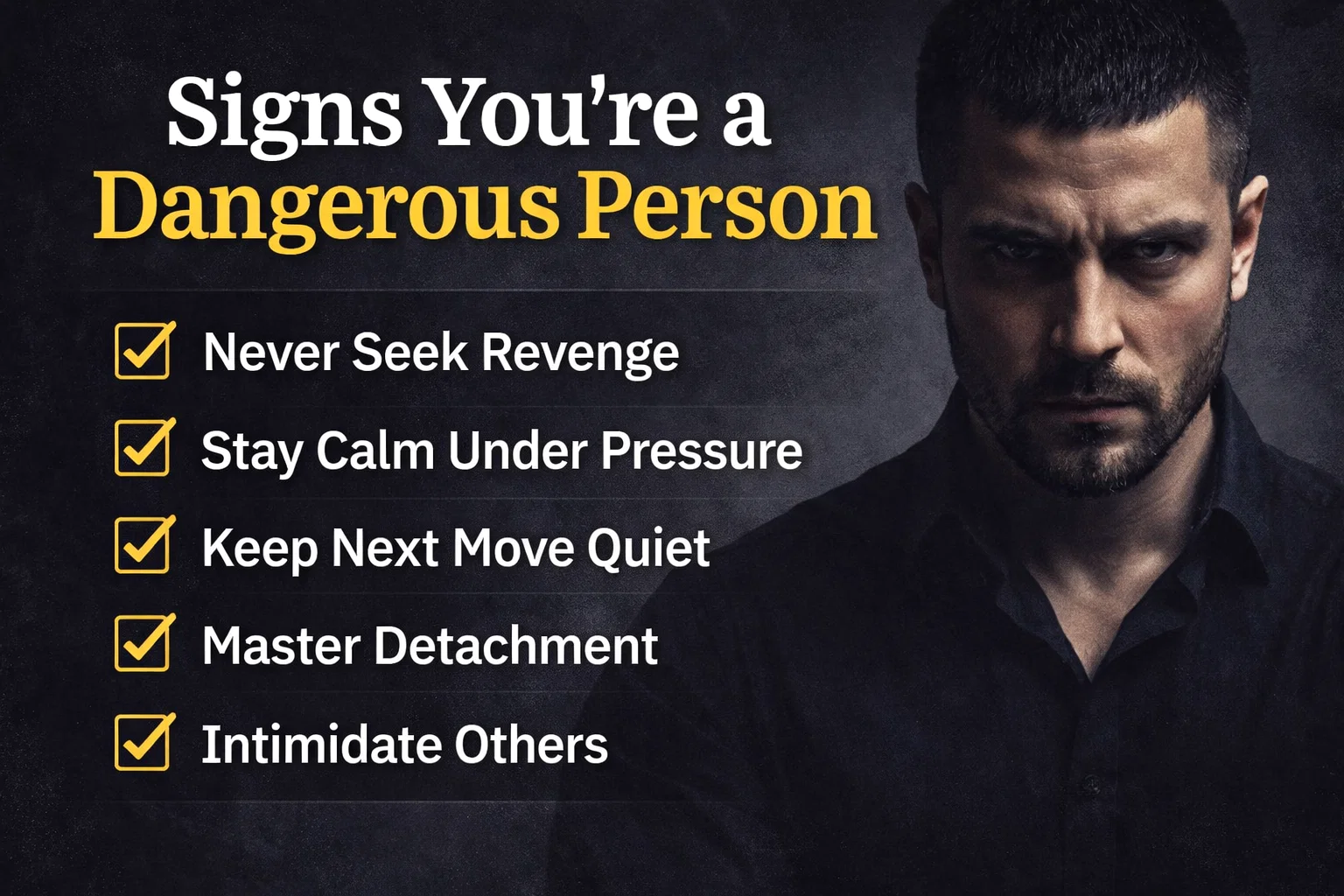
The image we are analyzing today highlights ten specific traits that define this high-level persona. These aren’t just personality quirks; they are elite psychological habits that separate the leaders from the followers. If you recognize these signs in yourself, or if you are striving to implement them, you are participating in a profound “glow-up” of the mind. Let’s dive deep into what it really means to carry yourself with this kind of quiet, commanding authority and how you can harness these traits to level up your life.
The Power of Silent Progression
One of the most striking characteristics of a truly powerful individual is the refusal to seek petty revenge. Most people, when wronged, immediately look for a way to strike back. They want to even the score. However, a dangerous person understands that their time and energy are their most valuable assets. Instead of wasting that energy on someone who hurt them, they use it as fuel for their own growth. They level up so significantly that their success becomes the ultimate response. It haunts their detractors not because of a direct attack, but because of the vast distance created between who they were and who they have become.
This links directly to the idea of keeping your next move quiet. There is a psychological phenomenon where telling people your goals releases dopamine in the brain, making you feel as though you have already achieved them. This often leads to a lack of follow-through. The disciplined individual bypasses this trap. They work in the shadows, grinding through the difficult hours without seeking a “good job” from the crowd. When the results finally manifest, they are so loud and undeniable that no explanation is required. You don’t need to tell people you are winning when the evidence is standing right in front of them.
Mastering the Art of Detachment
Detachment is often misunderstood as being cold or uncaring. In reality, it is the highest form of self-respect. To be detached means that you have reached a point where your inner peace is not a bargaining chip. No one else’s opinion, no external circumstance, and no temporary setback has the power to own your emotions. This is a terrifying trait to those who rely on manipulating others’ feelings to gain control. When you can walk away from a situation without feeling the need to explain your side, even when you are 100 percent right, you have won. You have realized that your truth doesn’t require someone else’s validation to exist.
This emotional discipline ensures that no one knows what truly gets to you. By remaining an enigma, you maintain your leverage. If people cannot find your buttons, they cannot push them. This doesn’t mean you don’t feel emotions; it means you are the master of them rather than their servant. You process discomfort internally and present a calm, collected exterior to the world.
Thriving in Discomfort and Chaos
Most people spend their entire lives trying to avoid discomfort. They want the easiest path, the softest chair, and the least amount of friction. A dangerous person, however, has built a high tolerance for the “suck.” They can sit with discomfort longer than most can handle. Whether that is the physical strain of a workout, the mental fatigue of a complex project, or the awkward silence in a negotiation, they remain unfazed. They understand that growth only happens at the edges of your comfort zone, and they are willing to live there as long as necessary to get the job done.
This ability to remain calm while everyone else is losing their minds is perhaps the most visible sign of a leader. In a crisis, people look for the person who isn’t panicking. When you maintain your composure during a storm, you naturally gravitate toward a position of power. Your presence becomes a stabilizing force, but it also becomes intimidating. People feel the weight of your focus and the depth of your stillness.
The Strategy of Observation
There is a reason why we have two ears and only one mouth. Observing more than you speak is a strategic masterstroke. When you are talking, you are only repeating what you already know. When you are listening and observing, you are gathering data. You are learning about the weaknesses, motivations, and insecurities of those around you. A dangerous person uses silence as a tool. They let others fill the void with nervous chatter, often revealing far more than they intended.
- Active Listening: Processing the subtext of what is being said.
- Body Language Analysis: Watching for inconsistencies between words and actions.
- Environmental Awareness: Understanding the dynamics of the room before making a move.
When you finally do speak, your words carry more weight because they are rare and backed by careful thought. People feel the intensity of your presence because they know you aren’t just waiting for your turn to talk; you are analyzing the very fabric of the conversation.
Acting Without Warning
One of the ten points mentions that you never threaten; you act when it is time, with no warnings. Threats are usually a sign of weakness. They are a desperate attempt to gain compliance through fear because the person making the threat lacks the resolve to actually take action. A person of high character and power doesn’t need to bark. If a boundary is crossed, they simply implement the consequence. If a partnership is no longer viable, they end it. The lack of a warning makes the action definitive and final. It shows that you are a person of your word and that your actions are dictated by your principles, not your temper.
Being Fully Present
In our digital age, attention is the new currency. Being fully present in a moment is becoming increasingly rare, which makes it incredibly potent. When you give someone your undivided attention, looking them in the eye without checking your phone or glancing around the room, it can be quite intimidating. It shows a level of confidence and focus that most people simply don’t possess. You are not distracted by the past or anxious about the future; you are right here, right now, and that makes you a force to be reckoned with.
How to Cultivate These Traits
Becoming this version of yourself is a journey of intentional habits. It starts with small victories over your own impulses. The next time someone cuts you off in traffic or insults you online, practice the art of walking away without a word. The next time you feel a wave of anxiety, sit with it for five minutes before trying to distract yourself. These small moments of self-regulation build the “muscle” of emotional discipline.
You should also focus on your physical presence. Stand tall, maintain eye contact, and speak with a steady tone. When you carry yourself like someone who knows their worth, the world begins to treat you accordingly. Remember, the goal isn’t to make others feel small, but to make your own light so bright that it naturally commands respect. This is the essence of a holistic “glow-up” that involves the mind, body, and spirit.
The Role of Habit and Routine
Productivity and personal development are the foundations of this transformation. A dangerous person is often dangerous because they are incredibly consistent. They have a routine that supports their goals, and they don’t let their feelings dictate their actions. If they planned to work at 6 AM, they work at 6 AM regardless of whether they “feel” like it. This level of reliability makes you dangerous because you become an inevitable success. It is not a matter of if you will reach your goals, but when.
- Morning Meditation: To build the calm that persists through daily chaos.
- Deep Work Sessions: To practice the focus required to stay present.
- Physical Training: To build the stamina to sit with discomfort.
- Journaling: To process emotions internally so they don’t leak out externally.
Conclusion
Being a “dangerous” person is about the radical ownership of your own life. It is about realizing that you are the architect of your peace and the captain of your soul. When you stop seeking revenge, start moving in silence, and master the art of detachment, you unlock a level of freedom that most people will never experience. You become someone who cannot be bought, cannot be bullied, and cannot be broken.
This path is not easy. It requires you to face your own weaknesses and choose the harder path time and time again. But the reward is a version of yourself that is resilient, respected, and truly powerful. As you continue to work on your personal development, keep these ten signs in mind as a benchmark for your progress. Focus on your growth, stay disciplined, and let your results do all the talking. You have the potential to be the most formidable person in any room; now, it is time to do the work to get there.