12 Best Magnesium Rich Foods for Better Sleep, Energy and Muscle Recovery
Have you ever felt a random eye twitch, persistent muscle cramps after a workout, or a strange sense of fatigue that a full night of sleep just cannot fix? You might be part of the roughly 50 percent of the population that is not getting enough magnesium. Often called the master mineral, magnesium is responsible for over 300 biochemical reactions in your body. From keeping your heart rhythm steady to strengthening your bones, it is the unsung hero of the nutrition world. While supplements are an option, the best way to hit your daily targets is through a colorful, diverse plate of whole foods.
Why Your Body Is Craving Magnesium
Magnesium is not just another nutrient on a long list; it is a fundamental spark plug for your cells. It plays a critical role in energy production by activating adenosine triphosphate (ATP), which is the fundamental unit of energy for every single cell in your body. Without enough of it, you are essentially trying to run a high-performance engine on low-quality fuel. Beyond energy, it acts as a natural calcium blocker, helping your muscles relax after they contract. This is why a deficiency often manifests as physical tension, spasms, or even restless leg syndrome.
The Connection to Mental Health and Sleep
If you struggle with anxiety or insomnia, magnesium might be the missing piece of your wellness puzzle. It regulates neurotransmitters that send signals throughout the brain and nervous system. Specifically, it binds to GABA receptors, the same receptors targeted by sleep medications. By maintaining healthy levels of GABA, magnesium helps quiet the nervous system, preparing your mind and body for a restful night. It is nature’s original chill pill, helping to lower cortisol levels and keep stress at bay.
Top Magnesium-Rich Foods to Add to Your Grocery List
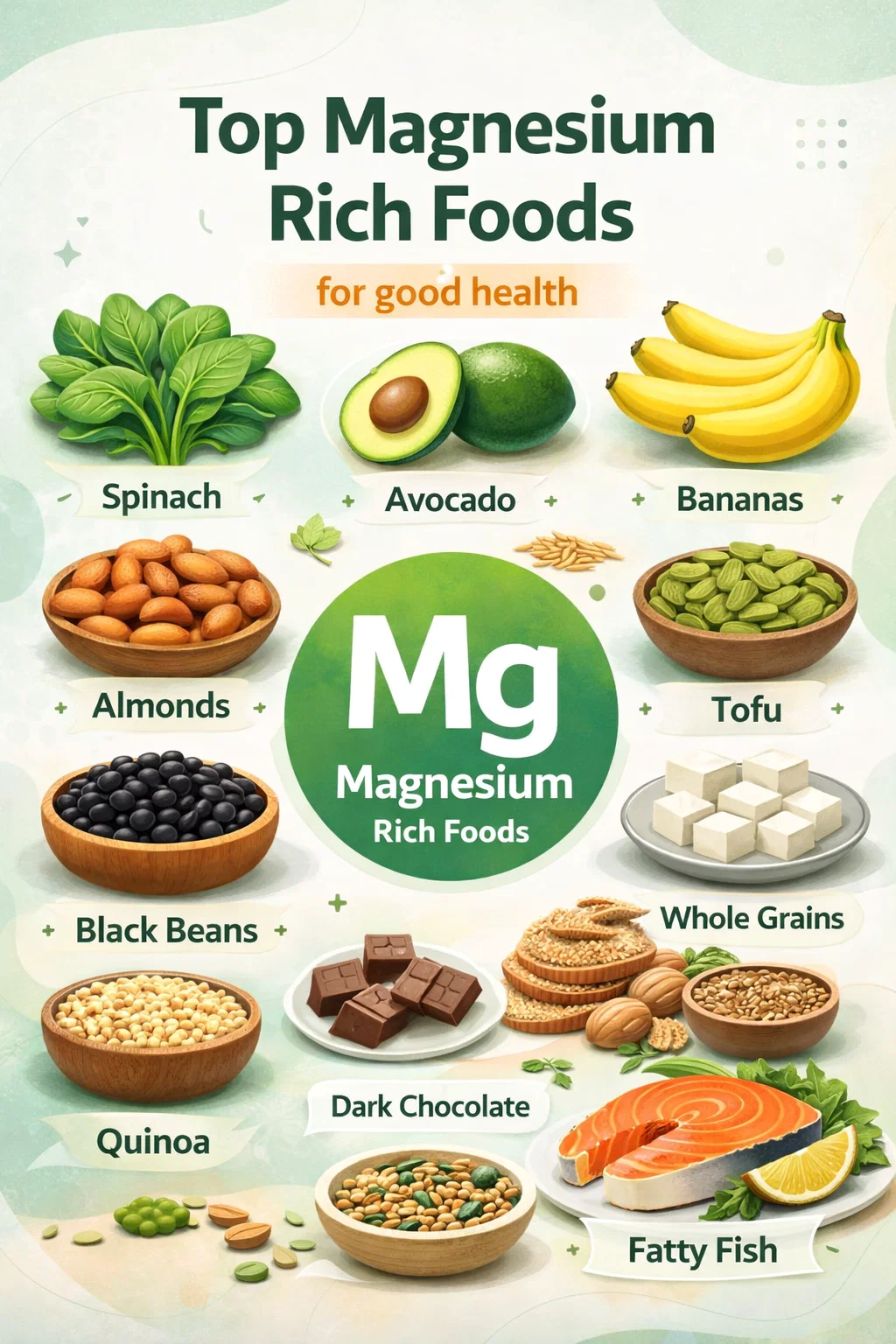
Looking at a vibrant infographic of magnesium-rich foods is inspiring, but knowing how to integrate them into your daily life is where the real change happens. Let us break down the heavy hitters shown in the image and explore why they deserve a permanent spot in your pantry.
Leafy Greens: The Spinach Powerhouse
Spinach is perhaps the most iconic source of magnesium. Just one cup of cooked spinach provides nearly 40 percent of the Recommended Dietary Allowance (RDA). The magic lies in the chlorophyll molecule, which contains magnesium at its very center. As a general rule, if it is dark green and leafy, it is likely loaded with this mineral. Swiss chard and kale are also excellent alternatives if you want to switch up your salad game.
Seeds and Nuts: Tiny But Mighty
Pumpkin seeds, also known as pepitas, are arguably the kings of the magnesium world. A single ounce can contain about 150 milligrams of magnesium. Almonds and cashews follow closely behind, providing a satisfying crunch along with a massive boost to your heart health. These are the perfect portable snacks for anyone with a busy lifestyle. Just a small handful can bridge the gap between your meals and keep your energy levels stable.
The Creamy Goodness of Avocado
Avocados are a nutritional unicorn. Not only are they packed with heart-healthy monounsaturated fats and fiber, but a medium avocado also provides about 15 percent of your daily magnesium needs. Because magnesium is better absorbed when consumed with healthy fats, the avocado is a self-contained delivery system for optimal nutrition. Whether smashed on whole-grain toast or sliced into a salad, it is a delicious way to support your nervous system.
Grains and Legumes: Foundation of a Mineral-Rich Diet
For those looking for more substantial meal components, whole grains and legumes are essential. Unlike refined grains, which have their nutrient-dense outer layers stripped away, whole grains like quinoa and oats retain their high mineral content.
Quinoa and Whole Grains
Quinoa is often labeled a superfood for its protein content, but its mineral profile is equally impressive. One cup of cooked quinoa provides about 118 milligrams of magnesium. Similarly, whole wheat and buckwheat are excellent sources. When you choose brown rice over white rice or whole-grain bread over white bread, you are significantly increasing your mineral intake without needing to eat more calories.
Black Beans and Tofu
Legumes are a budget-friendly way to get your nutrients. Black beans, chickpeas, and lentils are all fantastic sources. For those following a plant-based diet, tofu is an incredible double-threat. It is high in protein and, depending on how it is processed, can be an excellent source of both magnesium and calcium. Adding a half-cup of black beans to your soup or taco bowl can provide about 60 milligrams of magnesium instantly.
The Sweet and Savory: Dark Chocolate and Fatty Fish
Eating for health does not have to be boring. In fact, some of the most delicious foods on the planet are the ones your body needs the most. This is where dark chocolate and fatty fish come into play.
Dark Chocolate: The Ultimate Treat
Yes, you read that correctly. Dark chocolate is exceptionally rich in magnesium, with about 64 milligrams in a one-ounce serving. However, the keyword here is dark. To get the benefits, you should look for chocolate that is at least 70 percent cocoa. The higher the cocoa content, the higher the mineral density and the lower the sugar content. It is a win-win for your taste buds and your heart.
Fatty Fish for Heart and Brain
Fish like salmon, mackerel, and halibut are famous for their omega-3 fatty acids, but they are also surprisingly high in magnesium. A fillet of wild-caught salmon provides a significant portion of your daily requirement. The combination of protein, healthy fats, and minerals makes fatty fish one of the most anti-inflammatory foods you can consume, helping to reduce the risk of chronic disease and improve cognitive function.
How to Maximize Magnesium Absorption
Simply eating these foods is a great start, but how you eat them matters too. Some substances can actually hinder your body’s ability to use the magnesium you consume. For example, excessive intake of caffeine or alcohol can cause your kidneys to flush out magnesium more quickly than usual.
The Role of Vitamin D and Calcium
Nutrition is a team sport. Magnesium works closely with Vitamin D and Calcium. Magnesium is required to convert Vitamin D into its active form, which in turn helps with calcium absorption. However, taking massive doses of calcium supplements without enough magnesium can actually lead to a deficiency, as the two minerals compete for absorption. Aim for a balanced diet where you get a variety of minerals from whole food sources rather than relying solely on isolated supplements.
Watch Out for Phytates
Many high-magnesium foods, like grains and legumes, also contain phytates. These are antioxidant compounds that can bind to minerals and reduce their absorption. You can easily get around this by soaking your beans and grains before cooking them or opting for sprouted varieties. This simple step “unlocks” the minerals, making them much easier for your digestive system to process.
Signs You Might Need More Magnesium
Because blood tests for magnesium are not always accurate (most of your magnesium is stored in your bones and soft tissues, not your blood), it is often better to look at physical symptoms. Early signs of deficiency can be subtle, like loss of appetite or nausea. As it progresses, you might experience more obvious signs like muscle contractions, personality changes, or abnormal heart rhythms.
Who is at Higher Risk?
Certain groups of people need to be extra vigilant. This includes individuals with digestive disorders like Celiac or Crohn’s disease, which can impair nutrient absorption. People with type 2 diabetes often lose more magnesium through their urine. Furthermore, as we age, our bodies become less efficient at absorbing minerals from our food, making a nutrient-dense diet even more critical for older adults.
Simple Meal Ideas to Boost Your Intake
Ready to put this into practice? Here are a few quick meal ideas that combine several of the magnesium stars mentioned above:
- The Power Breakfast: A bowl of oatmeal topped with sliced bananas, pumpkin seeds, and a dollop of almond butter.
- The Recovery Salad: A bed of baby spinach topped with grilled salmon, avocado slices, and a sprinkle of quinoa.
- The High-Protein Snack: Greek yogurt mixed with a square of crumbled dark chocolate and a few almonds.
- The Hearty Dinner: A tofu and broccoli stir-fry served over brown rice with a side of black beans.
The Long-Term Benefits of a Magnesium-Rich Life
When you consistently meet your magnesium needs, the benefits ripple through every aspect of your health. You will likely notice more stable energy levels throughout the day, fewer headaches, and a more resilient mood. Over time, adequate magnesium intake is linked to a lower risk of hypertension, type 2 diabetes, and osteoporosis. It is truly an investment in your future self.
Wrapping Up Your Mineral Journey
Maintaining optimal magnesium levels does not require a complicated medical protocol or an expensive cabinet full of pills. As we have seen, the most potent sources of this vital mineral are already sitting in the produce aisle and the bulk bins of your local grocery store. By making small, intentional swaps—like choosing dark chocolate over milk chocolate or adding a handful of spinach to your morning smoothie—you can give your body the tools it needs to thrive.
Remember that health is built on consistency, not perfection. Start by picking two or three of the foods we discussed today and find a way to include them in your meals this week. Your muscles, your heart, and your mind will certainly thank you for it. Start fueling your body with the master mineral today and feel the difference that real, whole-food nutrition can make in your daily life.