12 Common Hygiene Mistakes That Make You Smell Bad Daily Self Care Glow Up Tips
We have all been there. You step out of the shower feeling like a brand-new person, only to realize a few hours later that you do not feel or smell as fresh as you should. It is frustrating when you put in the effort but do not get the results you want. Personal hygiene is more than just a quick rinse; it is a collection of small, consistent habits that keep your body healthy and your confidence high. Often, the reason we struggle with body odor has nothing to do with genetics and everything to do with tiny mistakes we make in our daily routines.
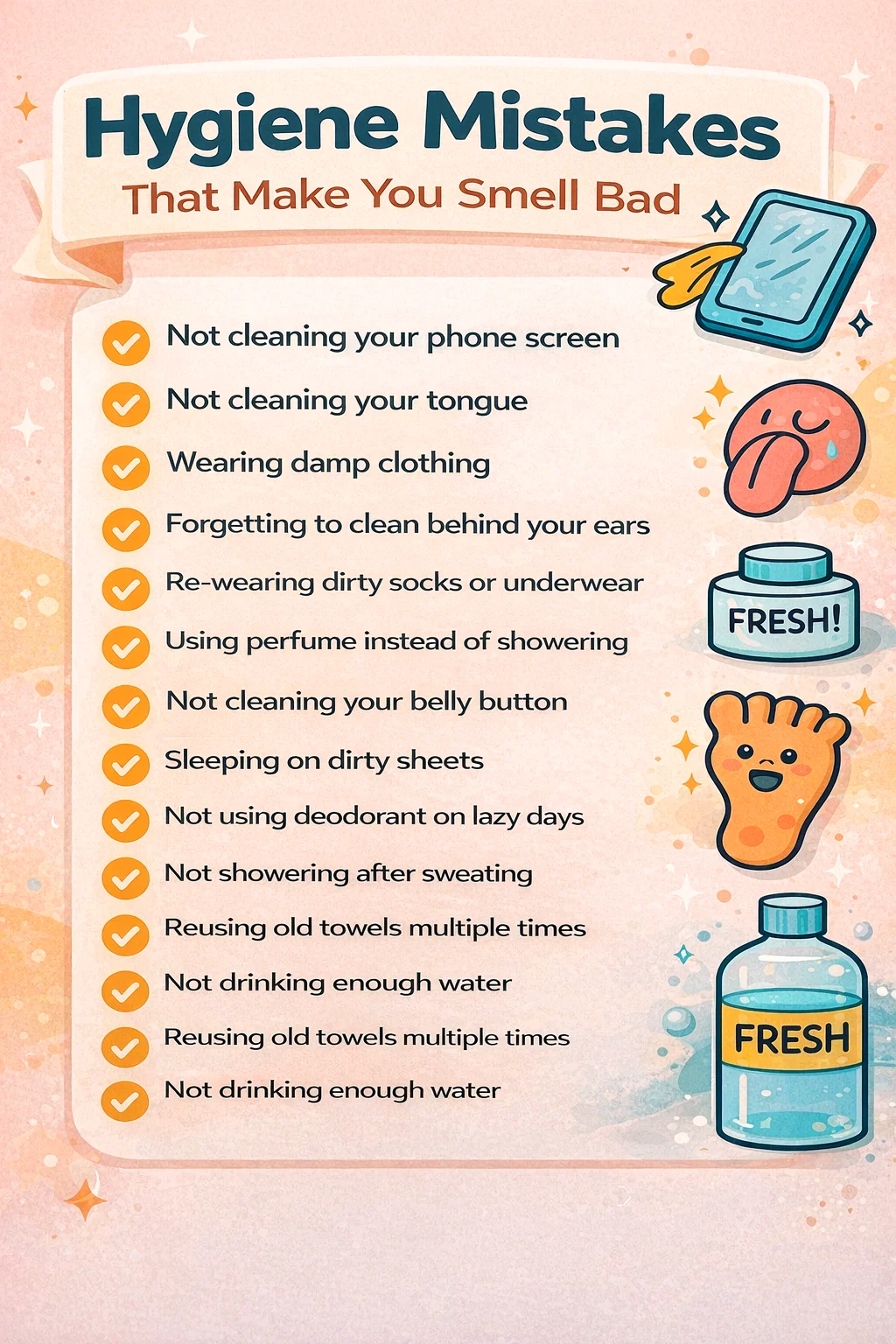
The image provided highlights several overlooked habits that can lead to unwanted odors. From the bacteria living on your phone screen to the importance of hydration, these factors play a massive role in how the world perceives you. If you want to master the art of smelling good all day long, it is time to look beyond the surface. In this guide, we are going to dive deep into these common hygiene mistakes and provide actionable solutions to help you achieve a permanent glow up.
The Hidden Bacteria on Your Tech Devices
It might come as a surprise, but one of the biggest culprits of poor hygiene is sitting right in your hand. We touch our phones hundreds of times a day, taking them into bathrooms, onto public transit, and even to the dinner table. If you are not cleaning your phone screen regularly, you are essentially carrying a petri dish of bacteria against your face. These microbes can lead to skin breakouts and, eventually, subtle odors that you might not even notice.
How to Properly Sanitize Your Phone
To keep your tech clean, use a microfiber cloth dampened with a bit of 70 percent isopropyl alcohol. Avoid spraying liquids directly onto the device. Aim to wipe down your phone at least once a day, especially after you have been in public spaces. This simple habit protects your skin and ensures that the items you touch most are not contributing to a lack of freshness.
The Importance of Oral Hygiene Beyond Brushing
Most people remember to brush their teeth twice a day, but many forget one crucial area: the tongue. Your tongue is a carpet for bacteria, food particles, and dead cells. When these sit on the surface of your tongue, they produce sulfur compounds that cause chronic bad breath. No amount of minty toothpaste can fully mask the smell if the source is still sitting on your tongue.
Using a Tongue Scraper
While you can use your toothbrush, a dedicated stainless steel or copper tongue scraper is much more effective. Start at the back of the tongue and gently pull forward. You will be amazed at the difference this makes in your breath and even your sense of taste. Incorporating this into your morning and evening routine is a total game changer for your confidence during close conversations.
Clothing and Fabric Care for Lasting Freshness
Sometimes the smell is not coming from your skin, but from what you are wearing. Wearing damp clothing is a major mistake. Whether it is a gym shirt that did not dry properly or a towel that has been hanging in a humid bathroom for a week, damp fabric is a breeding ground for mildew and bacteria. This creates a musty scent that is incredibly difficult to cover up with perfume.
The Danger of Re-wearing Dirty Items
It can be tempting to grab that pair of socks or underwear from the day before if you are in a rush, but this is a recipe for disaster. These items absorb sweat and skin cells more than any other garment. Re-wearing them introduces old bacteria back onto your clean skin, which can lead to fungal infections and strong odors. Always opt for fresh, dry laundry to ensure you start your day on the right foot.
Addressing the Overlooked Body Parts
During a quick shower, it is easy to focus only on the main areas like your arms and legs. However, the image reminds us that we often forget the hidden spots. Behind the ears, the belly button, and between the toes are all places where sweat and sebum collect. Because these areas are often dark and moist, they are the first places where odor-causing bacteria begin to thrive.
Focusing on the Belly Button and Behind the Ears
The belly button is a deep crevice that can trap lint and sweat. Use a soapy washcloth or a cotton swab to gently clean this area during every bath. Similarly, run a soapy hand behind your ears. You would be surprised how much oil can build up there, leading to a sour smell if neglected. Taking an extra thirty seconds to hit these spots will significantly improve your overall scent profile.
The Perfume Trap: Why Fragrance Cannot Replace Water
One of the most common mistakes people make when they are in a hurry is using perfume or body spray instead of showering. This is a temporary fix that often backfires. When you mix heavy fragrance with stale sweat, the result is often a cloying, unpleasant scent that is much worse than the original odor. Perfume is designed to enhance clean skin, not to mask dirt.
The Science of Body Odor
Body odor occurs when bacteria on your skin break down protein molecules in your sweat. Perfume does nothing to stop this chemical process. To truly smell good, you must remove the bacteria through washing. If you are having a lazy day, a quick three minute rinse is always better than a bottle of expensive cologne. Focus on the high sweat areas and you will feel much better than you would with just a spritz of spray.
The Role of Bedding in Personal Hygiene
We spend about a third of our lives in bed. Every night, our bodies shed thousands of dead skin cells and release sweat and oils into our sheets. If you are sleeping on dirty sheets for weeks at a time, you are essentially marinating in old sweat. This can lead to body acne and a lingering scent that sticks to your skin even after you wake up.
Establishing a Laundry Schedule
You should aim to wash your bed sheets at least once a week in hot water to kill any lingering bacteria. If you tend to sweat a lot at night, you might even consider changing your pillowcases every two or three days. Keeping your sleeping environment clean ensures that you wake up feeling refreshed rather than weighed down by yesterday’s grime.
Hydration and Its Impact on Body Scent
The image emphasizes that not drinking enough water is a hygiene mistake. While it might seem unrelated, your internal hydration levels directly affect how you smell. When you are dehydrated, your sweat becomes more concentrated and pungent. Furthermore, a dry mouth leads to less saliva production, which is necessary to wash away the bacteria that cause bad breath.
Flushing Out Toxins
Drinking plenty of water helps your kidneys and liver process toxins more efficiently. When your internal systems are running smoothly, your skin does not have to work as hard to excrete waste products through sweat. Aim for at least eight glasses of water a day to keep your systems diluted and your breath fresh. It is one of the simplest and cheapest beauty tips available.
Post-Workout Hygiene: Don’t Wait to Rinse
After a hard workout, it is tempting to sit on the couch and scroll through your phone while you cool down. However, letting sweat dry on your skin is a major mistake. Once sweat dries, it becomes a feast for bacteria. The longer you wait to shower after sweating, the more time those bacteria have to multiply and create a strong, stubborn odor.
The Quick Rinse Method
If you do not have time for a full grooming routine after the gym, at least hop in for a quick rinse. Focus on your underarms, groin, and feet. Removing the salt and moisture from your skin immediately will prevent odors from setting in and will also keep your skin clear of exercise induced breakouts.
Towel Hygiene: The Silent Odor Source
Reusing old towels multiple times is a mistake many of us make without thinking. A damp towel hanging in a bathroom is the perfect environment for mold and bacteria. If your towel has a slight funky smell, that smell is going to transfer directly onto your clean skin the moment you use it. You effectively undo all the hard work of your shower by drying off with a dirty towel.
Towel Care Tips
Try to use a fresh towel every two to three uses. Make sure your towel is able to dry completely between uses by hanging it in a well ventilated area rather than on a hook where it stays bunched up. If your towels have started to smell musty even after washing, try adding a cup of white vinegar to the rinse cycle to strip away old soap buildup and bacteria.
Building a Consistent Self Care Routine
The key to avoiding these hygiene mistakes is consistency. It is not about doing everything perfectly once; it is about making these small actions part of your daily lifestyle. When you prioritize these small details, you start to notice a shift in how you feel. You carry yourself with more confidence because you know you are presented in the best possible way.
Creating a Morning and Evening Checklist
If you struggle to remember these steps, try creating a simple checklist in your bathroom. Include things like scraping your tongue, cleaning behind your ears, and checking your phone screen. After a few weeks, these actions will become second nature, and you will no longer have to think about them.
Conclusion: The Path to Total Freshness
Hygiene is a form of self-respect. By avoiding these common mistakes, you are not just making yourself more pleasant for others to be around; you are taking care of your physical health and mental well-being. From the water you drink to the sheets you sleep on, every choice contributes to your overall scent and glow. Remember that smelling good starts from the inside out and requires attention to the details that many people choose to ignore.
Start today by picking one or two of these habits to improve. Maybe you will start cleaning your phone screen daily or finally invest in a tongue scraper. Whatever you choose, stay consistent and watch how it transforms your daily routine. True confidence comes from knowing you are at your best, and a solid hygiene routine is the foundation of that feeling. Stay fresh, stay hydrated, and keep glowing!