12 Harsh Truths to Know From Age 18 to 55 Life Advice for Personal Growth
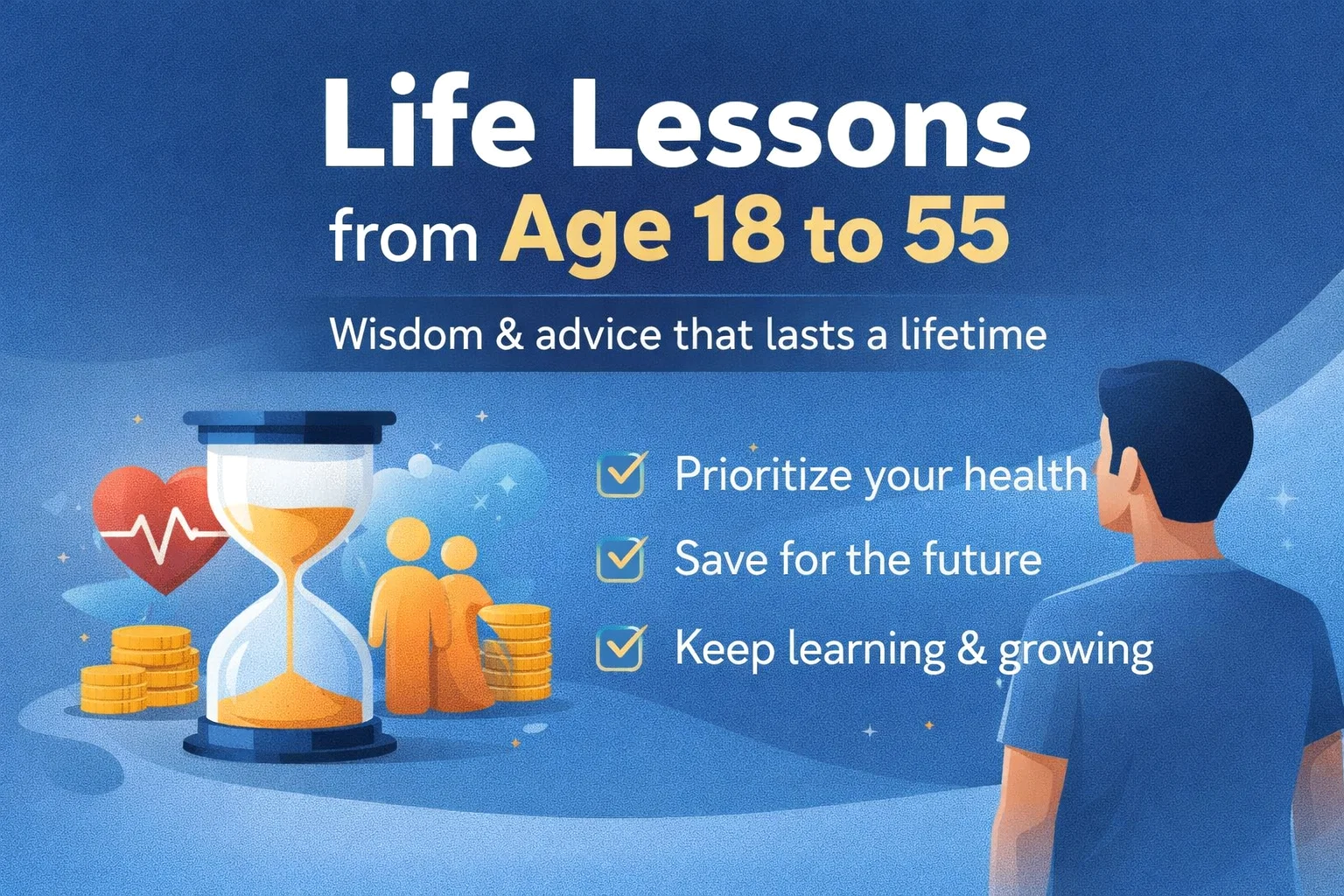
Life doesn’t come with a manual, but if it did, the years between 18 and 55 would likely be the most complicated chapters. This period is a whirlwind of career building, relationship navigating, and self-discovery. We often spend our twenties rushing to prove our worth, our thirties trying to balance it all, and our forties realizing that half the things we worried about didn’t actually matter. The image shared today captures twelve fundamental truths that serve as a compass for anyone navigating these pivotal decades. These aren’t just motivational quotes; they are hard-won lessons in emotional intelligence, financial literacy, and physical well-being. By internalizing these principles early, you can shift from simply surviving the rat race to truly thriving in your personal and professional life.
Health as Your Foundation: Protecting Your Real Wealth
It is a cliché because it is true: without your health, you have nothing. In our early twenties, we often feel invincible. We pull all-nighters, eat processed foods, and skip the gym, thinking we can “make up for it” later. However, health is cumulative. The choices you make at 22 determine the quality of your life at 52. Protecting your health early means viewing your body as a long-term investment rather than a disposable resource.
The Cost of Neglect
When we talk about health as wealth, we are referring to the freedom that physical capability provides. Protecting your health isn’t just about avoiding illness; it is about maintaining the energy to pursue your passions. This involves consistent movement, a diet rooted in whole foods, and, perhaps most importantly, restorative sleep. If you treat your body like a high-performance machine now, it will serve you faithfully for decades to come.
Time and the Trap of External Validation
One of the most liberating realizations you can have is that time moves faster than you think. When you are 18, 55 seems like a lifetime away. But as the years go by, the days seem to shrink. One of the biggest wastes of this precious resource is trying to prove yourself to people who likely aren’t even paying attention. Whether it is buying a car you can’t afford to impress neighbors or staying in a soul-sucking job for the title, living for others is a fast track to regret.
Focusing on Your Own Race
Instead of seeking external validation, focus on internal satisfaction. Your time is better spent building a life that feels good on the inside rather than one that looks good on the outside. When you stop worrying about what “they” think, you reclaim the mental bandwidth to focus on your actual goals. Remember, the people you are trying to impress are usually too busy worrying about their own lives to notice your efforts anyway.
Skills vs. Degrees: The Evolution of Earning
In the modern economy, the traditional path of “get a degree and stay for forty years” is largely a thing of the past. While education is valuable, a degree is often just the entry ticket. Real success comes from specialized skills and the willingness to keep learning. The world changes rapidly; the software, strategies, and systems we use today might be obsolete in five years. This makes adaptability your most valuable asset.
The Power of Continuous Learning
Becoming a lifelong learner ensures that you remain relevant regardless of economic shifts. Whether it is mastering a new coding language, learning the nuances of digital marketing, or developing soft skills like leadership and negotiation, your ability to acquire new knowledge is what truly “pays.” Don’t let your graduation date be the end of your education. Strive to be a student of your craft every single day.
Relationships: Distinguishing Between Friends and Family
As you move through the decades, your social circle will naturally expand and contract. You will meet “seasonal” friends who are there for a specific chapter, and that is okay. However, the fourth truth in our image reminds us that while friends may come and go, family is forever. This doesn’t just mean biological family; it refers to your “inner circle”—the people who show up when things get ugly.
Nurturing Your Inner Circle
It is easy to get distracted by the excitement of new acquaintances, but the long-term investment should always be in your core support system. These are the people who know your history and support your future. Make time for them. Prioritize the Sunday dinners, the long phone calls, and the quiet moments of connection. When the dust settles on your career, these are the people who will be standing by your side.
The Discipline of Saving: Financial Peace of Mind
Financial stress is one of the leading causes of anxiety and relationship friction. The advice to “save money when you don’t need it” is a masterclass in foresight. It is much easier to set aside a portion of your income when things are going well than to scramble for funds during an emergency. Saving isn’t about deprivation; it is about buying your future self a sense of security and freedom.
Building a Safety Net
Compound interest is a powerful ally, but only if you give it time to work. Even small, consistent contributions to a savings or investment account can grow into a significant “thank you” from your future self. Having a financial cushion allows you to make choices based on desire rather than desperation. It gives you the power to walk away from a toxic job or to say yes to a once-in-a-lifetime opportunity.
Choosing Peace Over Drama
Energy is a finite resource. As you get older, you realize that not every argument deserves your participation. Choosing peace over drama isn’t about being passive; it is about being protective of your mental space. Drama is loud, exhausting, and rarely productive. When you opt out of the chaos, you gain the clarity needed to focus on your own growth.
Setting Emotional Boundaries
Learning to walk away from toxic situations or high-conflict individuals is a sign of maturity. It is the realization that your internal state is more important than “winning” a petty disagreement. By prioritizing peace, you create a stable environment where creativity and happiness can actually flourish. Let the drama pass you by; your future self will thank you for the lack of gray hairs.
Habits vs. Motivation: The Blueprint for Success
Motivation is a feeling, and feelings are fickle. Some days you will feel like taking on the world; other days, you will want to stay in bed. This is why motivation is a poor foundation for success. Your daily habits, however, are reliable. They are the small, repetitive actions that shape your identity and your future. As the saying goes, “We are what we repeatedly do.”
The Science of Small Wins
If you want to change your life, don’t wait for a burst of inspiration. Instead, look at your daily routine. What are you doing every morning? How are you spending your evenings? By automating healthy habits—like reading for twenty minutes, exercising, or planning your day—you remove the need for willpower. Success is the result of boring, consistent habits performed over a long period of time.
The World Owes You Nothing: Taking Radical Responsibility
This is perhaps the harshest truth on the list, but also the most empowering. Entitlement is a trap that leads to bitterness. When you believe the world “owes” you success, happiness, or recognition, you give away your power. When you accept that you must work for what you want, you take the driver’s seat of your own life.
Adopting an Ownership Mindset
Taking radical responsibility means looking at your current circumstances and acknowledging your role in creating them. If you want a better job, you must build the skills. If you want a better relationship, you must be a better partner. Once you stop waiting for a “lucky break” and start putting in the work, you’ll find that luck tends to follow effort. You are the architect of your own destiny.
The Superpower of “No”
Many of us are raised to be people-pleasers. We say yes to every invitation, every favor, and every extra project until we are burnt out and resentful. Learning to say “no” is an essential skill for anyone who wants to protect their time and energy. It is not about being rude; it is about being honest about your capacity and your priorities.
Quality Over Quantity
Every time you say “yes” to something that doesn’t align with your goals, you are inadvertently saying “no” to something that does. Saying “no” allows you to commit fully to the things that actually matter. It filters out the noise and leaves room for the meaningful. Practice saying it without over-explaining yourself. “No” is a complete sentence and a powerful tool for self-preservation.
Mental Health: The Invisible Pillar
For a long time, mental health was a taboo subject, but the modern world is finally recognizing that it is just as vital as physical health. You can have a perfect body and a massive bank account, but if your mind is in a dark place, you cannot enjoy any of it. Prioritizing mental health means seeking therapy when needed, practicing mindfulness, and being kind to yourself during setbacks.
Breaking the Stigma
Taking care of your mind isn’t a luxury; it is a necessity. This involves recognizing the signs of burnout, managing stress effectively, and ensuring you have an outlet for your emotions. Just as you would see a doctor for a broken bone, you should feel empowered to seek professional help for your mental well-being. A healthy mind is the lens through which you experience the entire world.
The Spotlight Effect: You Are Not the Center of the Universe
We often suffer from the “spotlight effect,” where we believe everyone is hyper-focused on our flaws, our mistakes, and our awkward moments. The truth is quite the opposite: most people are far too worried about themselves to give your minor slip-ups a second thought. This realization is incredibly freeing.
Embracing Social Freedom
When you realize that nobody is thinking about you as much as you think they are, you gain the courage to take risks. You can start that YouTube channel, wear that bold outfit, or speak up in that meeting without the paralyzing fear of judgment. Once you stop being your own harshest critic, you’ll find that the world is a much friendlier place to navigate. Dance like nobody is watching, because they probably aren’t.
Never Stop Evolving: The Journey of Growth
Age is just a number, but mindset is everything. Some people “stop” at 25, content to let their beliefs and skills stagnate. Others continue to evolve well into their eighties. The final truth on our list is a reminder that growth has no expiration date. Whether you are learning a new language at 50 or starting a business at 18, the act of evolving is what keeps life vibrant and meaningful.
Cultivating a Growth Mindset
To keep growing, you must remain curious. Stay open to new ideas, challenge your own biases, and never be afraid to be a beginner again. Evolving means letting go of the versions of yourself that no longer serve you and stepping into new possibilities. Life is a continuous process of becoming, and as long as you are breathing, you have the opportunity to change for the better.
Conclusion: Living with Intention
Navigating the decades from 18 to 55 is an incredible journey filled with challenges and triumphs. By keeping these twelve truths at the forefront of your mind, you can build a life of purpose, resilience, and joy. Remember that health is your wealth, time is your most precious asset, and your habits are the bricks that build your future. Don’t be afraid to say no, don’t worry about the critics, and never, ever stop growing. These years are yours to shape—make them count by living with intention and staying true to the lessons that matter most.