12 Romantic Fiction Writing Prompts Story Starters for Creative Writers
Every writer knows the paralyzing feeling of staring at a blinking cursor on a blank white screen. It is the silent battle of the creative mind, where the desire to tell a story clashes with the sudden inability to find the right starting point. If you are a romance author or a hobbyist storyteller, that pressure feels even heavier because romance relies so heavily on chemistry, tension, and the perfect emotional spark. Sometimes, all you need to ignite a 50,000 word manuscript is a single, poignant “what if” scenario. That is exactly why we have curated a list of evocative romance prompts designed to pull your characters out of their comfort zones and into the whirlwind of a new relationship.
Understanding the Power of a Great Romance Prompt
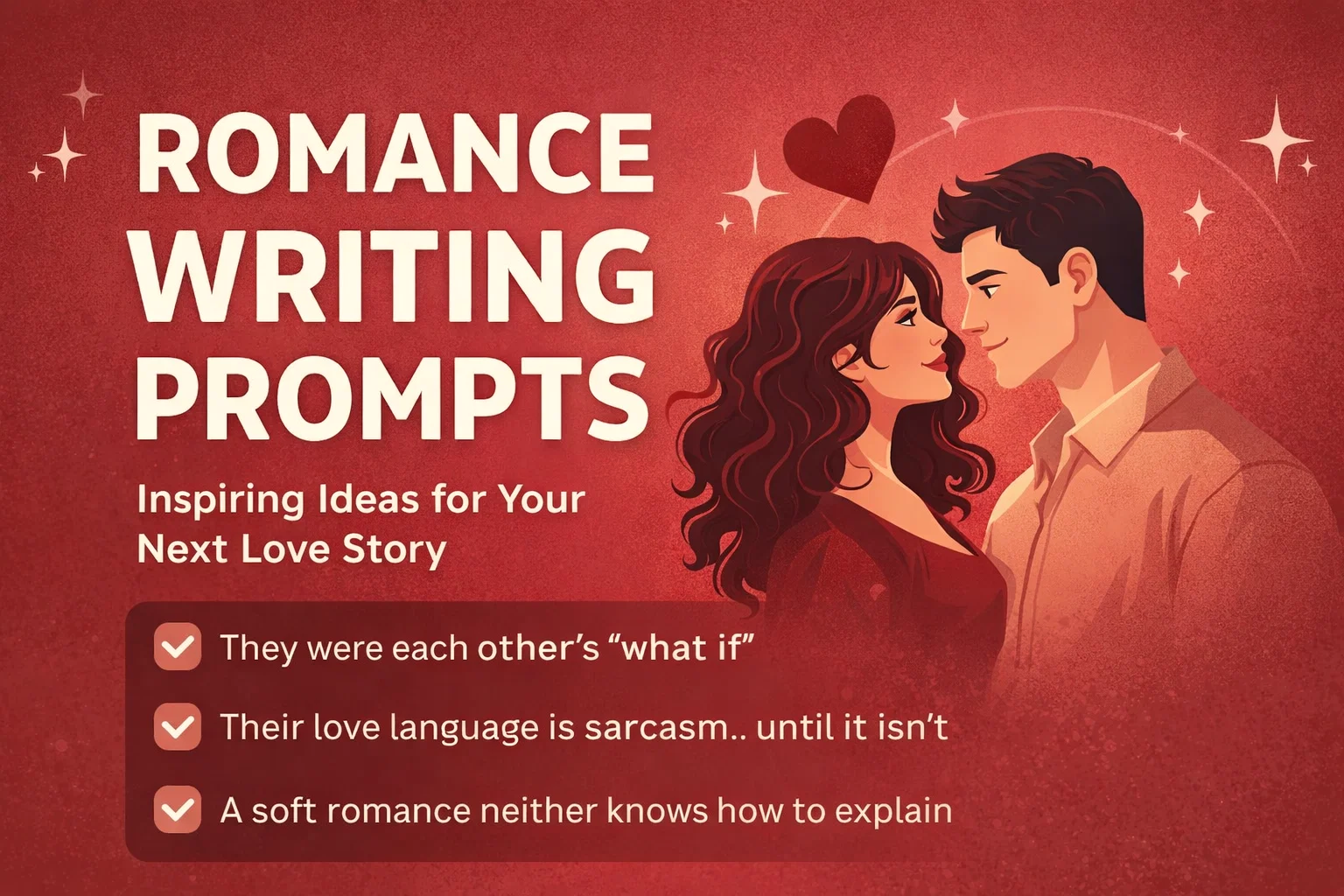
A prompt is more than just a sentence; it is a gateway to a world of conflict and resolution. In the romance genre, the plot is driven by the internal growth of the characters and the external obstacles that keep them apart. When you use a structured prompt, you are giving yourself a roadmap for character development. For instance, the prompt “They were each other’s what if until one of them finally decides to find out” immediately establishes a history of longing. It tells the writer that these two people have a past, a shared tension, and a catalyst that is finally pushing them toward a confrontation. Using these starting points allows you to skip the aimless world-building and dive straight into the heart of the emotional narrative.
Diving Into the Friends to Lovers Trope
One of the most beloved dynamics in fiction is the transition from friendship to something deeper. It is a slow burn that readers absolutely adore because it is grounded in a pre-existing trust. A fantastic way to explore this is by writing a scene where two characters who swear they are just friends accidentally give everyone else couple vibes. This creates a delicious sense of irony. The characters are in denial, but the world around them sees the truth. As a writer, you can play with body language, shared glances, and the way they finish each other’s sentences. This prompt helps you show the connection rather than just telling the reader that they are close.
The Importance of Internal Conflict in Romance
Romance thrives on the “no” before the “yes.” If two characters meet and immediately live happily ever after, there is no story to tell. Prompts like “I shouldn’t care this much” are perfect for building this internal resistance. It highlights the moment a character realizes their feelings have surpassed the boundaries they set for themselves. Writing the exact moment they realize they really, really do care provides a pivotal emotional peak for your chapter. It is the moment of no return where the character must choose between their fear and their heart.
Exploring the Dynamics of Opposites Attract
There is a reason the “Sunshine and Thunderstorm” dynamic remains a staple in literature. It provides built-in conflict and a natural balance. When one character is an eternal optimist and the other is a brooding realist, their worlds colliding creates instant friction. This friction eventually turns into heat. Writing the moment these two different energies meet allows you to experiment with dialogue and tone. How does the sunshine character try to brighten the thunderstorm’s day? How does the thunderstorm character react to that unwanted warmth? These interactions are the building blocks of a memorable romance.
Writing the Moment of Realization
In many stories, one character falls first, but the other falls harder. This is a subtle but powerful distinction. The character who falls first is often the pursuer, the one who is more open with their affection. However, the character who falls harder is often the one who was more resistant. When that resistance finally breaks, the impact is massive. Capturing the moment they both realize this shift is essential for a satisfying character arc. It is the moment where the power dynamic shifts and the vulnerability becomes mutual.
Using Sarcasm and Tension to Build Chemistry
Dialogue is the sharpest tool in a romance writer’s shed. Many couples use sarcasm as a shield to hide their true feelings. It is a defense mechanism that keeps people at a distance while still allowing for intimacy through wit. But what happens when the sarcasm stops? Writing a scene where their love language is sarcasm until one night it isn’t allows you to strip away the masks. This shift into earnest, raw communication is often where the most romantic declarations happen. It forces the characters to be honest, which is the scariest thing they can do.
The Worst Time and the Only Reason
Sometimes, love does not happen in a vacuum of perfection. Some of the most compelling stories involve people who meet at the worst time in their lives. Perhaps they are grieving, facing a career crisis, or simply feeling lost. The prompt suggesting that meeting at the worst time is the only reason it works explores the idea of trauma bonding or finding a mirror in someone else’s struggle. It adds a layer of grit and realism to your romance, proving that love can be a healing force rather than just a distraction.
Creating Obvious Tension for Outside Observers
Tension is a physical thing in romance writing. It should feel like static electricity in the air. A great exercise is to write a scene where the tension is so obvious it makes another character uncomfortable. By viewing the lead couple through the eyes of a third party, you can highlight how intense their connection has become. This outside perspective serves as a reality check for the reader and the characters themselves. If a random bystander can feel the heat, the protagonists can no longer pretend it does not exist.
The Mystery Element in Romance
While most of these prompts focus on emotion, adding a touch of mystery can elevate your plot. Consider a protagonist who finds a journal detailing a crime before the crime happens. This introduces a high-stakes environment where a romance can bloom under pressure. Danger often forces characters to rely on each other quickly, accelerating the bonding process. It moves the story from a simple “will they, won’t they” to a “can they survive this together” narrative.
Practical Tips for Using These Prompts
- Don’t feel pressured to write a whole book: Use these as 15-minute morning warm-up exercises to get your creative juices flowing.
- Mix and match: Try combining the “Sunshine and Thunderstorm” trope with the “Worst Time in Their Lives” prompt for a unique twist.
- Focus on the Senses: When writing a prompt about realization or tension, focus on what the characters smell, hear, and feel physically.
- Change the Setting: A prompt about a “just friends” couple will feel very different in a high-fantasy castle compared to a modern-day office.
Developing a Consistent Writing Routine
The best way to improve your romance writing is through consistency. You do not need to wait for a lightning bolt of inspiration to strike. By using structured prompts, you are training your brain to find stories in the mundane. Over time, you will find that your ability to craft dialogue and build emotional stakes becomes second nature. These prompts act as a scaffold, supporting your growth until you are ready to build entire worlds on your own.
Conclusion: Ignite Your Imagination
Romance is a genre that celebrates the human connection in all its messy, beautiful, and complicated forms. Whether you are looking to write a sweet, soft romance that heals the soul or a high-tension drama that keeps readers on the edge of their seats, these prompts are your starting line. The magic of storytelling lies in the details you add and the unique voice you bring to these classic themes. So, pick a prompt that resonates with you today, set a timer, and see where your characters take you. You might just find that your next great love story was only a single sentence away. Happy writing!