12 Savage Replies to Fake Apologies How to Handle Gaslighting and Set Boundaries
Navigating the complex world of human relationships often feels like walking through a minefield of unspoken rules and emotional nuances. One of the most challenging moments in any interaction is receiving an apology that does not quite hit the mark. We have all experienced that stinging sensation when someone says they are sorry, yet their words feel more like a dismissal than a genuine attempt at reconciliation. These “fake apologies” can leave us feeling unheard, invalidated, and frustrated. However, learning how to identify these patterns and responding with assertive, clear communication can transform these difficult moments into opportunities for personal growth and boundary setting.
Understanding the Anatomy of a Fake Apology
Before we can respond effectively, we must understand what makes an apology insincere. A genuine apology requires three specific components: an acknowledgment of the mistake, an expression of regret, and a commitment to change or make amends. When any of these are missing, the apology falls flat. Often, insincere apologies are used as a tool to end a conversation quickly or to shift the blame back onto the person who was hurt. This is a subtle form of deflection that prevents true accountability from taking place.
Common Red Flags to Watch For
One of the most frequent offenders is the phrase “I am sorry you feel that way.” On the surface, it sounds polite, but it actually places the burden of the conflict on your emotions rather than the other person’s actions. It suggests that the problem is your reaction, not their behavior. Other red flags include “If I upset you, sorry,” which introduces doubt about whether they actually did anything wrong, and “I already apologized,” which weaponizes the act of apologizing to avoid discussing the ongoing impact of their actions.
The Power of Assertive Communication
Responding to these dismissive statements requires a shift in mindset. Instead of falling into a cycle of defensiveness or simply staying silent, you can use assertive communication to reclaim the narrative. Assertiveness is the middle ground between being passive and being aggressive. It allows you to state your needs and feelings clearly without attacking the other person. By using “savage” yet calm replies, you are not being mean; you are being honest and firm about your standards for respect.
Why Setting Boundaries Matters
Boundaries are the invisible lines we draw to protect our mental and emotional well-being. When someone offers a fake apology, they are often testing or ignoring those boundaries. Responding with a firm statement like “I am not asking for sympathy; I am asking for accountability” sends a clear message that you will not accept a surface level resolution. This consistency helps build healthier relationships in the long run because people learn exactly what you will and will not tolerate.
Analyzing Effective Responses to Gaslighting
Gaslighting is a specific type of manipulation where someone tries to make you doubt your own reality or memory. Fake apologies are a primary tool in the gaslighter’s kit. When someone says, “You are overthinking this” or “You are too sensitive,” they are attempting to rewrite the narrative of the event. Your response should act as an anchor to the truth. Phrases like “No, I am addressing it” or “Respect is not about sensitivity” are powerful because they refuse to engage with the false premise the other person has created.
Addressing the Intent Versus Impact Gap
A classic defense used in poor apologies is “That was not my intention.” While intentions are important, they do not erase the harm caused. A mature individual understands that they can hurt someone accidentally and still take responsibility for the outcome. A strong way to handle this is by saying, “I understand, but the impact still needs to be addressed.” This acknowledges their perspective while keeping the focus on the resolution and healing process.
Practical Tips for Difficult Conversations
Mastering the art of the “savage reply” is not just about the words you choose, but also about the timing and delivery. Here are a few strategies to keep in mind during a heated or emotional exchange:
- Take a breath: You do not have to respond immediately. If an apology feels off, take a moment to process why before speaking.
- Stay focused: Do not let the other person sidetrack the conversation with unrelated grievances. Keep the focus on the current issue.
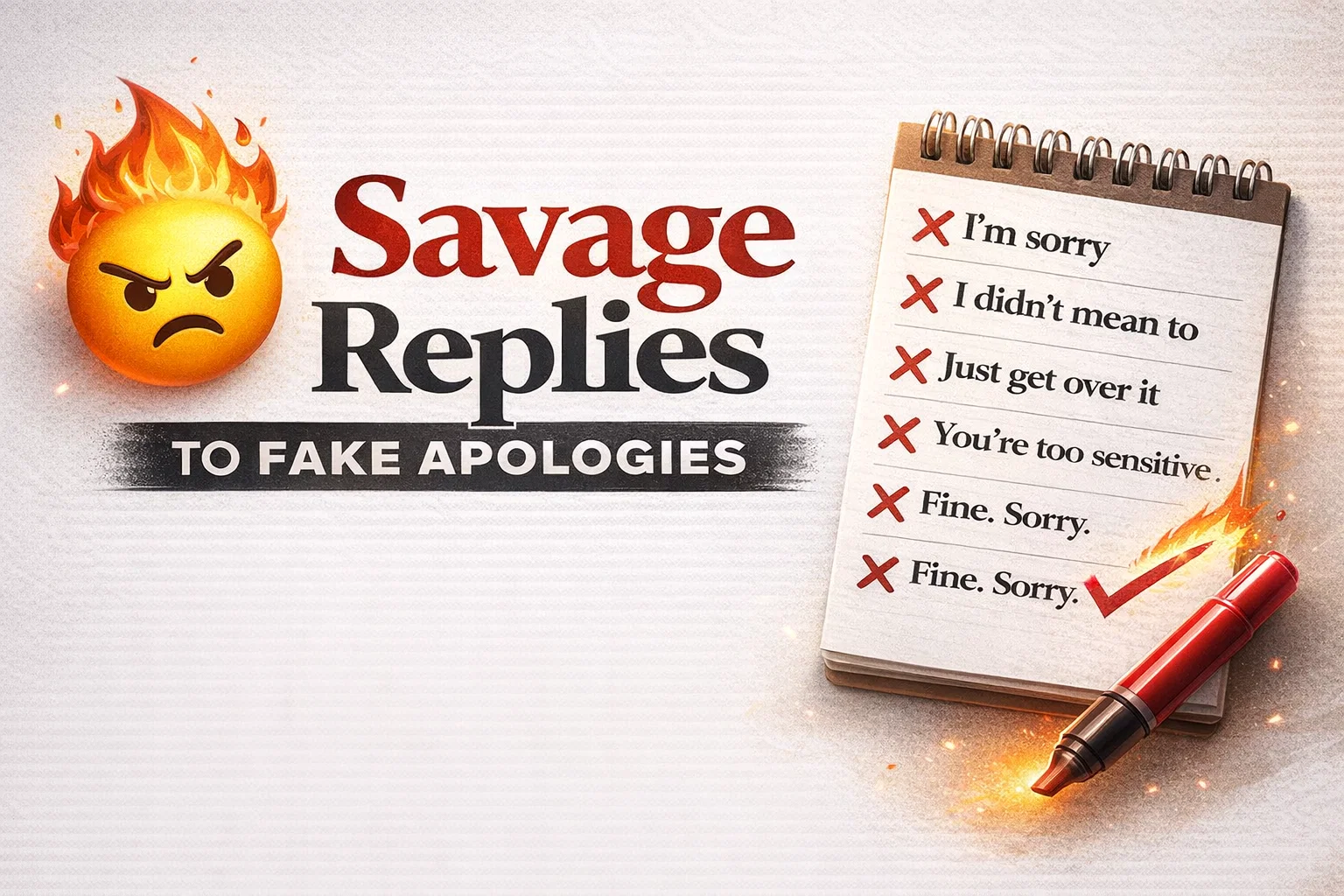
- Use “I” statements: Instead of saying “You are lying,” try “I see this differently.” However, when responding to a fake apology, do not be afraid to use direct language as seen in the image analysis.
- Know when to walk away: If someone says “Fine, sorry” with an attitude, it is perfectly acceptable to say, “If it is not sincere, let us pause and revisit this later.”
The Role of Emotional Intelligence in Conflict
High emotional intelligence involves recognizing your own emotional state and the states of those around you. When you encounter a fake apology, your emotional intelligence acts as a radar. You feel the incongruence between the words being said and the energy behind them. Developing this skill allows you to remain calm and collected. When you respond with “Ownership, not resistance,” you are demonstrating a high level of emotional maturity that often forces the other person to reflect on their own behavior.
Moving Beyond the Words
An apology is only the beginning of a process. For true healing to occur, there must be a visible change in behavior. This is why the reply “An apology works when the behavior changes” is so vital. It sets a standard for the future. It tells the other person that you are watching their actions, not just listening to their scripts. This creates a culture of integrity in your personal and professional life.
Cultivating Self Respect Through Honesty
Choosing to address a fake apology is an act of self love. It shows that you value yourself enough to demand sincerity. Many people accept bad apologies because they want to avoid conflict or keep the peace. However, a peace built on ignored feelings is not a real peace; it is just suppressed tension. By being “savage” in your pursuit of truth, you are actually clearing the way for a more authentic connection.
Reframing Personal Attacks
When someone tells you that “You always take things personally,” they are trying to make your character the problem. A perfect rebuttal is “When it is personal, I address it.” This turns a perceived weakness into a strength. It shows that you are engaged with your life and your relationships, rather than being a passive bystander to your own mistreatment.
How to Foster Better Communication in Others
While you cannot control how someone else apologizes, your responses can serve as a guide for how they should treat you. By refusing to accept “I didn’t think it would bother you” and responding with “Now you know,” you are providing essential information for the relationship to survive. You are teaching others your “user manual.” Over time, people who truly value you will adjust their communication style to meet your needs for honesty and accountability.
When an Apology is Just Not Enough
There are times when even a “good” reply cannot save a situation. If you find yourself constantly having to use these savage replies with the same person, it may be time to evaluate the health of the relationship itself. Boundaries are meant to keep people in, but they are also meant to keep toxicity out. If accountability is consistently met with resistance, you have the right to move on for your own mental clarity.
Conclusion: Reclaiming Your Narrative
The journey toward better communication and stronger boundaries is a marathon, not a sprint. Learning to navigate fake apologies is a significant milestone in that journey. By using clear, firm, and assertive language, you protect your emotional space and teach others how to interact with you authentically. Remember that your feelings are valid, your perspective matters, and you never have to settle for a half hearted “sorry.” Whether it is in the workplace, with friends, or within family dynamics, standing up for the truth of your experience is one of the most empowering things you can do. The next time someone offers you a hollow apology, remember these tools and choose a response that reflects your worth. You deserve a life filled with genuine connections and mutual respect.