13 Powerful Psychology Tricks to Master Your Mind and Life
Most of us spend our days reacting to the world around us rather than intentionally navigating through it. We respond to every notification, jump at every demand, and let our emotions steer the ship before we even realize we are off course. But what if you could reclaim that lost ground with a few simple shifts in your perspective? Mastering your mindset is not about a massive overnight overhaul; it is about the subtle, quiet adjustments that change how you process reality. By implementing small psychology tricks into your daily routine, you can sharpen your focus, reduce chronic stress, and build a life that feels centered rather than chaotic.
The Power of the Pause: Leading with Logic
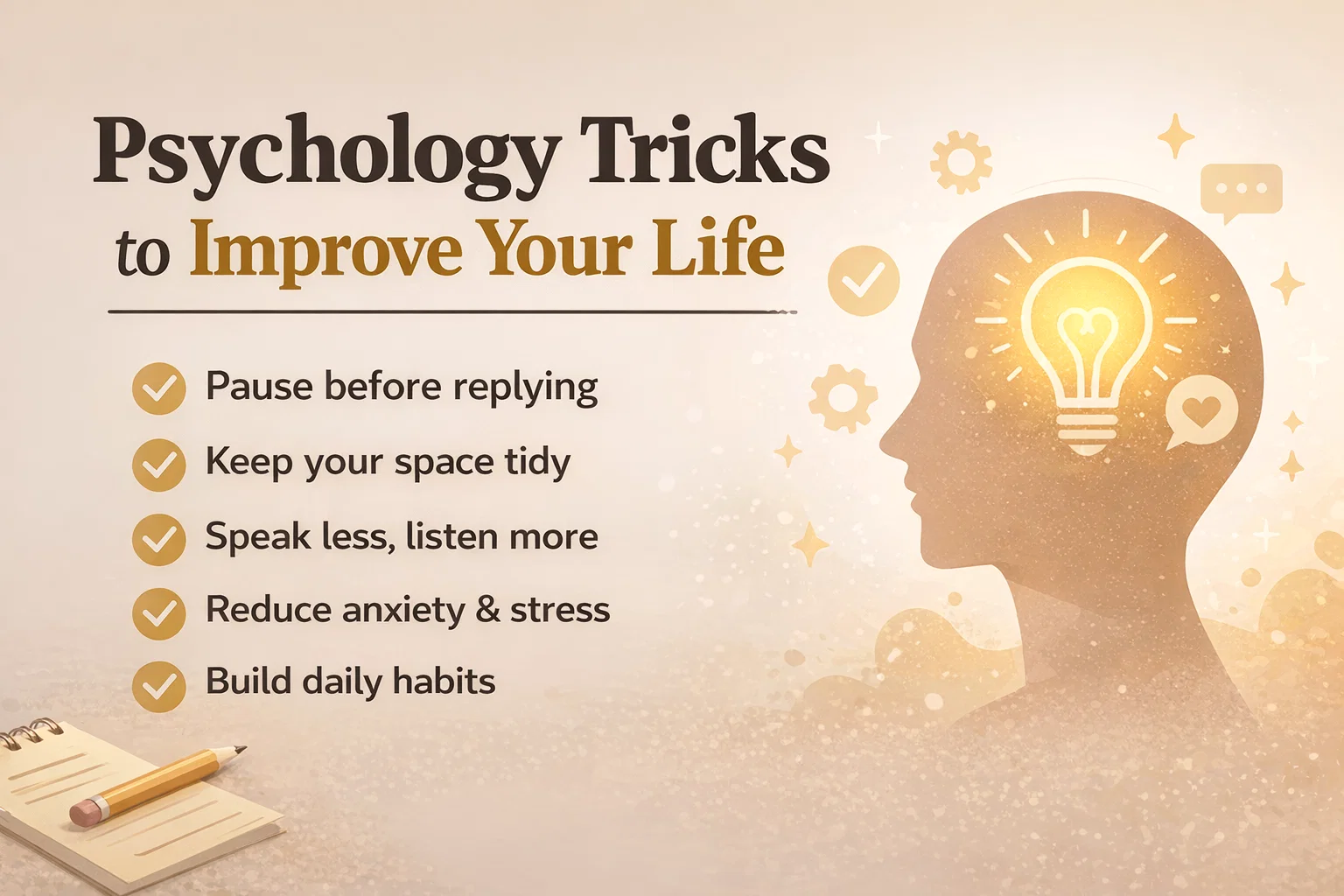
One of the most effective ways to change your interpersonal dynamics is to master the art of the pause. We live in a world that demands instant responses, but speed is often the enemy of clarity. When someone says something that triggers you or when you face a high pressure situation, your immediate emotional reaction is rarely your best one. By intentionally pausing before you reply, you give your brain the necessary seconds to move from the reactive amygdala to the logical prefrontal cortex. This simple gap ensures that your emotions do not lead your conversations, allowing your words to carry more weight and intention.
Speaking Less to Gain More Authority
There is a quiet power in brevity. We often feel the need to fill silence with nervous chatter or over-explain our positions to feel validated. However, when you speak less, people naturally listen more intently to what you do say. Reducing the volume of your words increases their perceived value. This is not about being cold or distant; it is about being precise. When you stop over-explaining, you project a level of confidence and self-assurance that draws people in and establishes a natural sense of authority in any room.
Simplifying Your Internal and External Environment
Your brain is constantly scanning your environment for cues on how to feel. If your physical space is cluttered, your mental state will likely follow suit. There is a profound psychological link between a clean space and a calm mind. Clutter represents unfinished business, and every stray item on your desk is a tiny visual reminder of a task you have not completed. By keeping your environment organized, you remove those micro-stressors, allowing your brain to dedicate its full energy to the task at hand rather than managing environmental noise.
Reducing Choice Paralysis and Anxiety
Modern life provides us with an overwhelming number of choices, from what to eat for breakfast to which project to start first. While we think we want more options, psychology suggests that too many choices actually lead to anxiety and decision fatigue. One of the best ways to stay consistent is to keep your routines incredibly simple. By automating the mundane parts of your life, like your morning routine or your meal planning, you save your mental energy for the big decisions that actually matter. Reducing choices is not about limiting your life; it is about liberating your mind from unnecessary friction.
Slowing Down to Speed Up Progress
It sounds counterintuitive, but slowing down your physical movements can actually make you more productive. When we are stressed, our movements become jerky, rushed, and frantic, which sends a signal to the nervous system that we are in danger. By consciously slowing down your pace, whether you are walking, typing, or speaking, you signal to your brain that you are in control. This immediate reduction in physical tension leads to a sharper focus and a more grounded presence.
The Ritual of Daily Movement
Mental clutter is often the result of stagnant energy. A daily walk is one of the most underrated psychology tricks for clearing the mind. It is not just about the physical exercise; it is about the bilateral stimulation of the brain that occurs when we walk. This process helps us digest thoughts and find creative solutions to problems that seemed impossible while sitting at a desk. If you protect your mornings from noise and start with a simple walk, you set a tone of clarity that carries through the rest of your afternoon.
Building Discipline Through Micro-Habits
Discipline is often misunderstood as a grand act of will, but in reality, it is built through the repetition of tiny, almost invisible habits. If you try to change everything at once, you will likely fail because the brain resists drastic shifts. Instead, focus on repeating small habits daily. These small wins build a “success identity,” teaching your brain that you are someone who follows through on their promises. Over time, these micro-actions compound into significant lifestyle changes that feel effortless rather than forced.
Accepting Reality and Saving Energy
Resisting reality is one of the biggest drains on our mental energy. We spend so much time wishing things were different, complaining about setbacks, or dwelling on mistakes. The faster you can accept the current reality of a situation, the faster you can move into a problem-solving mode. Acceptance is not about liking what is happening; it is about acknowledging it so you can stop wasting energy on “what if” scenarios and start focusing on “what now.”
Understanding Others Through Observation
Most people listen just to wait for their turn to speak. If you want to understand people on a deeper level, try observing without reacting. When you remove your own ego and emotional triggers from an interaction, you start to see the motivations and insecurities behind what people are saying. This objective observation allows you to navigate social situations with a high level of emotional intelligence. You become less of a participant in the drama and more of a strategist who understands the underlying currents of the conversation.
Subtracting Rather Than Adding
When we face a problem, our first instinct is usually to add a new solution, a new tool, or a new habit. However, the most effective way to improve your life is often to remove one problem rather than adding three solutions. This “via negativa” approach focuses on identifying the things that are holding you back and eliminating them. Whether it is a toxic habit, a distracting app, or a commitment that no longer serves you, removing the negative often provides a much larger boost to your well-being than adding something positive ever could.
The Path to a Mindful and Intentional Life
Integrating these psychology tricks into your life is a journey of self-discovery. It is about realizing that you have much more control over your mental state than you might think. By choosing to do one thing at a time, keeping your routines simple, and protecting your mornings from the noise of the outside world, you create a sanctuary for your mind to thrive. This is not about being perfect; it is about being intentional. Each time you choose to pause before replying or decide to clear your desk, you are casting a vote for the person you want to become.
The beauty of these strategies lies in their simplicity. You do not need a specialized degree or a massive budget to start sharpening your focus and reducing your anxiety. You just need the willingness to look at your daily actions through a more psychological lens. As you begin to apply these tips, you will find that the chaos of the world starts to feel a little further away, replaced by a sense of calm confidence that comes from knowing you are the one at the helm.
Conclusion: Your New Mental Blueprint
Mastering your psychology is the ultimate life hack. When you understand how your mind works, you can stop fighting against yourself and start working with your natural tendencies. From the power of the pause to the discipline of daily movement, every small trick mentioned here serves as a building block for a more resilient and focused version of you. Start small, choose one or two tricks to implement this week, and watch as your mental clutter begins to fade away. By taking control of these small habits, you are not just changing your day; you are changing your entire life trajectory. Stay consistent, stay focused, and remember that the most powerful changes always start from within.