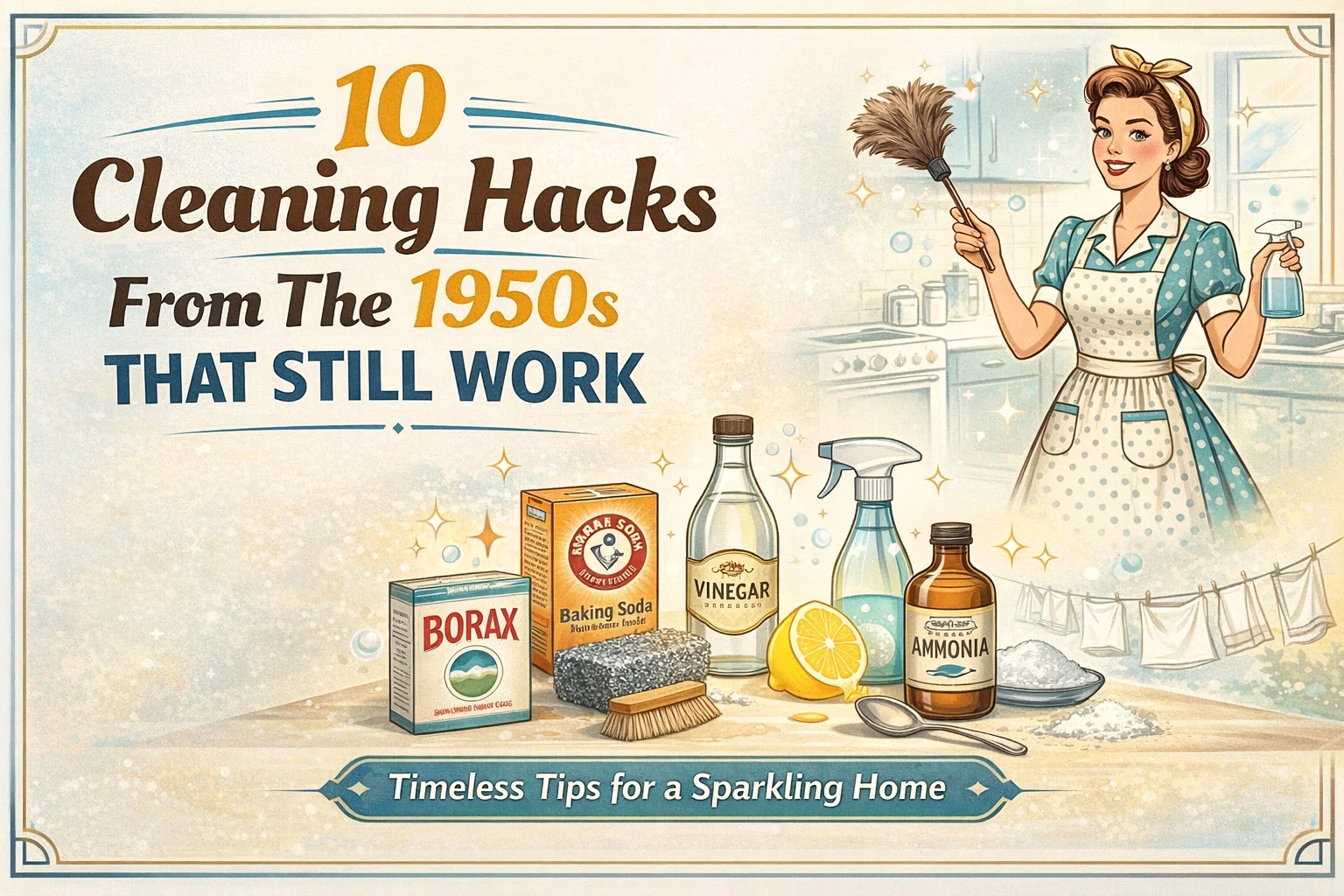
13 Vintage 1950s Cleaning Hacks for a Sparkling Home Natural DIY Deep Cleaning Tips
There is something undeniably nostalgic about the image of a 1950s kitchen. We often picture gleaming chrome, pastel appliances, and a home that looks perpetually polished. While the aesthetics of the era are iconic, the real secret to those sparkling mid-century homes wasn’t found in high-tech gadgets or complex chemical compounds. Instead, it was found in the simplicity of the pantry. Today, as we move toward more sustainable and eco-friendly lifestyles, these vintage cleaning hacks are making a massive comeback. They are effective, affordable, and surprisingly gentle on both your surfaces and your health.
In a world filled with specialized cleaners for every single nook and cranny of the house, it is refreshing to realize that most of your cleaning needs can be met with just a handful of basic ingredients. By looking back at the wisdom of the 1950s, we can rediscover the power of natural elements like lemon, vinegar, and baking soda. Let us dive deep into these thirteen timeless cleaning secrets that still work like a charm in the modern home.
The Power of the Pantry: Essential Natural Cleaners
The foundation of a 1950s cleaning kit was built on versatility. Households during this era focused on products that could perform multiple tasks, reducing waste and saving money. Here are the heavy hitters that every vintage-inspired cleaning cabinet should have.
Baking Soda for Everything
Baking soda is perhaps the most versatile tool in the cleaning arsenal. Known chemically as sodium bicarbonate, its mild alkalinity and gentle abrasive nature make it perfect for scrubbing away grime without scratching delicate surfaces. In the 1950s, it was used to deodorize refrigerators, brighten white linens, and scrub out porcelain sinks. To use it today, simply make a paste with a little water and apply it to grout or stained countertops. It lifts odors and stains effortlessly.
Vinegar: The All-Purpose Hero
Distilled white vinegar was the original multi-surface cleaner. Its acidic properties make it incredibly effective at cutting through grease and dissolving mineral deposits. Whether you are trying to get a streak-free shine on your windows or you need to freshen up musty fabrics in the laundry, vinegar is the answer. It is also an excellent natural fabric softener when added to the rinse cycle, leaving clothes soft without the waxy buildup of modern alternatives.
Lemon Juice for Natural Shine
Lemons are more than just a garnish for your tea. The citric acid in lemon juice acts as a natural bleaching agent and a powerful degreaser. In the mid-century home, half a lemon was often used to scrub copper pots or to brighten up dull wooden surfaces. It leaves behind a fresh, clean scent that synthetic fragrances simply cannot replicate. If you have hard water stains on your chrome faucets, rubbing them with a slice of lemon will make them shine like new.
Mastering the Art of Surface Care
Properly maintaining different materials in the home requires a bit of specialized knowledge. The following hacks focus on specific surfaces that require a delicate yet effective touch.
Olive Oil for Polishing Wood
Before the invention of aerosol furniture polishes, homeowners relied on natural oils to keep their wood furniture hydrated and glowing. Olive oil is a fantastic natural conditioner for wood. When mixed with a bit of lemon juice or vinegar, it creates a polish that nourishes the grain and provides a protective barrier against dust. Simply apply a small amount to a soft cloth and buff the wood in the direction of the grain for a rich, deep luster.
Cornstarch for Silverware
Polishing silver can be a tedious chore, but cornstarch makes the process much smoother. By creating a thick paste of cornstarch and water, you can gently coat your silverware. Once the paste dries, you simply wipe it away with a soft cloth. This method removes tarnish and restores the original brilliance of the silver without the risk of harsh scratches that come with some commercial metal polishes.
Salt for Heavy Duty Scrubbing
Salt is not just for the dinner table. Its coarse texture makes it an ideal abrasive for tough jobs. In a 1950s kitchen, salt was the go-to solution for cleaning cast iron pans. Since you should avoid using soap on seasoned cast iron, salt provides the friction needed to remove stuck-on food particles while absorbing excess grease. It is also a great way to freshen up drains by pouring a salt and hot water solution down the sink to kill bacteria and clear minor buildup.
Laundry and Textile Secrets
Keeping clothes and linens looking their best was a point of pride in the mid-century. These techniques ensure that your fabrics remain vibrant and clean using traditional methods.
Borax for a Laundry Boost
Borax has been a staple in laundry rooms for generations. This naturally occurring mineral helps to soften hard water, which allows your detergent to work more effectively. It is particularly useful for tackling tough stains on work clothes or baby items. Adding a half-cup of borax to your wash cycle can help whiten whites and brighten colors, making it a powerful ally for those who want to avoid chlorine bleach.
Club Soda for Emergency Stains
The trick of using club soda on a fresh wine stain is a classic for a reason. The carbonation and the minerals in the soda help to lift the stain from the fibers of carpets or upholstery before it has a chance to set. In the 1950s, this was the standard first-aid for any spill during a dinner party. The key is to blot, never rub, to ensure the liquid is absorbed into a clean cloth rather than pushed deeper into the fabric.
Sunshine for Natural Whitening
Before the widespread use of electric dryers, the clothesline was a fixture of every backyard. The sun provides a natural, free way to whiten linens. Ultraviolet rays act as a mild bleach, helping to fade yellowing and kill bacteria. Hanging your white sheets and towels outside on a bright day not only gives them a crisp, fresh scent but also keeps them looking snowy white without the need for harsh chemicals.
Tackling Tough Grime and Unusual Messes
Sometimes, standard cleaning methods are not enough for the truly stubborn spots. These specific vintage hacks address the more difficult challenges found around the house.
Ammonia for Ovens and Stoves
Ammonia is a powerful cleaner that was frequently used to tackle the baked-on grease found in ovens and on stove burners. While it has a strong scent and should always be used in a well-ventilated area, its ability to cut through thick grime is legendary. A common 1950s trick involved placing a bowl of ammonia in a cold oven overnight to loosen the grease, making it easy to wipe away the next morning with minimal scrubbing.
Kerosene for Crayon Marks
While we might reach for a magic eraser today, in the past, kerosene was often used to remove wax-based marks like crayons from walls. It dissolves the wax quickly, allowing the pigment to be wiped away. While this is a very effective old-school tip, it is important to remember that kerosene is flammable and should be used with extreme caution and only in tiny amounts. Always follow up with a damp, soapy cloth to remove any residue.
Newspaper for Streak-Free Windows
If you want windows that truly sparkle without a single streak, look no further than your recycling bin. Using crumpled-up black and white newspaper instead of paper towels is an old-fashioned secret that professional cleaners still swear by. The paper is highly absorbent, and the ink acts as a very fine abrasive that helps to polish the glass. When paired with a vinegar and water solution, this method produces a crystal-clear finish every time.
Boiling Water to Unclog Drains
Before calling a plumber or reaching for a bottle of caustic drain cleaner, 1950s homeowners would try the simplest solution first: boiling water. Slowly pouring a kettle of boiling water down a sluggish drain can melt away soap scum and grease buildup that causes clogs. It is a cost-free and chemical-free way to maintain your plumbing and keep things flowing smoothly.
Why Vintage Methods Matter Today
Adopting these 1950s cleaning hacks is about more than just nostalgia. It is about returning to a way of living that is more intentional and less dependent on industrial chemicals. Many modern cleaning products contain volatile organic compounds (VOCs) that can affect indoor air quality and irritate the respiratory system. By switching to the simple ingredients highlighted in this guide, you create a safer environment for your family and pets.
Furthermore, these methods are incredibly economical. Most of the items mentioned, such as salt, vinegar, and baking soda, cost just a fraction of the price of specialized cleaners. When you realize that one bottle of vinegar can clean your windows, soften your laundry, and descale your coffee maker, the savings start to add up quickly. It is a beautiful example of how the wisdom of the past can provide practical solutions for the challenges of the present.
Embracing a Simpler Way of Cleaning
The 1950s taught us that a clean home does not require a complicated chemistry lab. By mastering these thirteen hacks, you can maintain a sparkling household with ease and confidence. These techniques have stood the test of time because they rely on the fundamental properties of natural ingredients to get the job done right. Whether you are a fan of retro culture or simply looking for a more sustainable way to manage your chores, these vintage tips offer a path to a cleaner, brighter home.
Start small by swapping out one of your commercial cleaners for a natural alternative. Perhaps try the newspaper and vinegar trick on your mirrors this weekend or use a bit of baking soda to refresh your kitchen sink. You will likely find that these old-school methods are not just effective, they are also deeply satisfying to use. Save these ideas for your next deep clean and enjoy the timeless results of a home maintained with care and tradition.