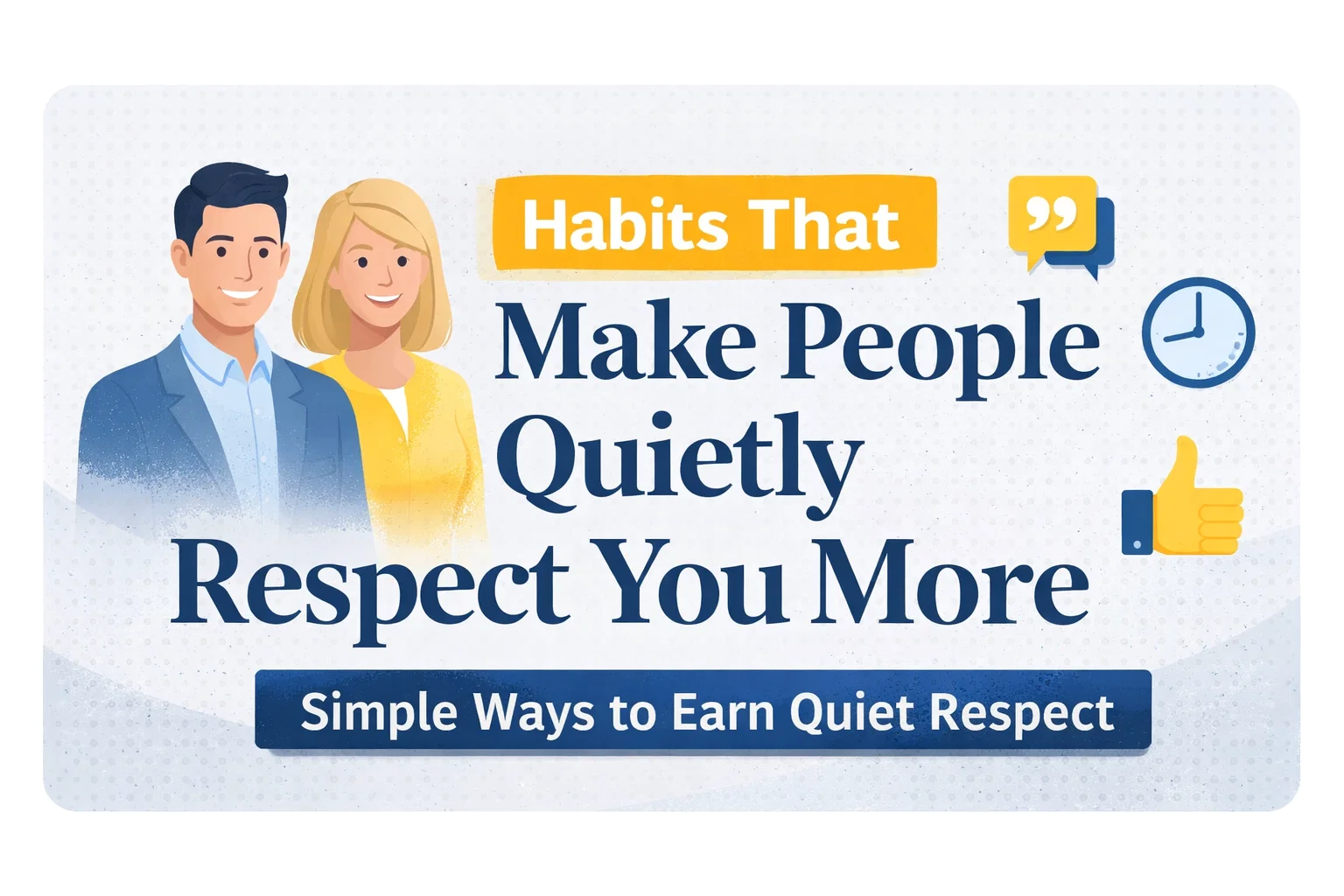
15 Habits That Will Make People Quietly Respect You More Psychology of Respect Tips
Have you ever noticed how some people walk into a room and instantly command a sense of admiration without saying a single word? It is not about being the loudest or the most assertive person in the group. In fact, true respect is often earned through the quiet, consistent actions that define a persons character. When we look at the way we interact with others, it is frequently the subtle habits that leave the most lasting impressions. By focusing on high-integrity behaviors and emotional intelligence, you can transform the way the world perceives you while simultaneously building a more authentic version of yourself.
The Power of Alignment Between Words and Actions
One of the most foundational ways to earn quiet respect is ensuring that what you say and what you do are in perfect alignment. Integrity is not a grand gesture; it is a daily commitment to being reliable. When you make a promise, whether it is a small lunch date or a major professional deadline, following through sends a powerful message. It tells people that your word has weight and that you value their time as much as your own. People who are consistent are viewed as pillars of strength because they provide a sense of stability in an unpredictable world.
In contrast, when there is a gap between words and deeds, trust begins to erode. You do not need to be perfect, but you do need to be honest. If you cannot fulfill a commitment, being upfront about it is far more respectable than making excuses later. This level of transparency shows that you possess a high degree of self-awareness and respect for the people around you.
Navigating Social Dynamics with Integrity
Social circles can often become breeding grounds for gossip and negativity. A person who quietly commands respect is someone who chooses to step away from these toxic dynamics. Staying silent or physically leaving the room when others are gossiping is a bold move that speaks volumes. It shows that you have a personal code of ethics that prevents you from participating in the teardown of another person. People will notice that you are a safe harbor for information, and they will feel more comfortable being vulnerable around you.
Speaking Well of Others in Their Absence
While staying silent during gossip is powerful, speaking well of people when they are not around is a next-level habit. This practice, often called reverse gossip, builds an incredible amount of social capital. When you highlight someones strengths or celebrate their wins behind their back, it demonstrates a lack of insecurity. It shows that you are confident enough in your own abilities that you do not feel the need to diminish others to feel superior. Over time, this reputation for kindness and fairness becomes your calling card.
The Strength Found in Vulnerability and Humility
We often mistakenly believe that respect comes from having all the answers. However, there is immense power in confidently admitting when you do not know something. Intellectual humility is a rare trait that signals a growth mindset. Instead of pretending to be an expert and risking a mistake, asking questions shows that you value truth and learning over ego. This invites others to share their expertise and fosters a collaborative environment where everyone feels valued.
Accepting Blame and Sharing Credit
In a professional or personal setting, the way you handle success and failure defines your leadership potential. A person who earns quiet respect is quick to accept blame when things go wrong and even quicker to give credit when things go right. Taking responsibility for a mistake prevents the blame game from starting and allows a team to focus on solutions. Similarly, acknowledging the contributions of others fosters loyalty and shows that you are a team player rather than a glory seeker. This selfless approach to achievement makes people want to work with you and support your future endeavors.
Mastering the Art of Emotional Regulation
Life is full of unexpected challenges and high-pressure situations. Remaining steady and calm when things around you are chaotic is a hallmark of a respected individual. This does not mean you are emotionless; rather, it means you have developed the emotional intelligence to process your feelings without letting them dictate your actions. When you stay composed, you become a grounding force for those around you. People look to the calmest person in the room for direction and reassurance during a crisis.
Handling Disappointment with Grace
Disappointment is an inevitable part of the human experience, but how we react to it reveals our true character. Handling a setback with quiet grace rather than resentment or outward anger shows incredible maturity. It indicates that you have a long-term perspective and understand that one failure does not define your entire journey. By maintaining your dignity during tough times, you demonstrate a level of resilience that others cannot help but admire.
Communication Habits That Build Deep Connections
Communication is about much more than the words we choose. It is about how we make others feel during an interaction. One of the most underrated habits for earning respect is being consistently early. Whether it is two minutes or ten, being on time shows that you respect the other persons schedule. It eliminates the frantic energy of a late arrival and allows the conversation to start on a centered, respectful note.
The Magic of Active Listening
Do you remember and repeat details from past conversations? If so, you are practicing a high level of active listening. When you mention a small detail someone shared weeks ago, it proves that you were truly paying attention and that you value what they have to say. This makes the other person feel seen and heard on a deep level. Additionally, focusing on asking questions instead of constantly giving answers keeps the focus on the other person, making you a more engaging and thoughtful communicator.
Apologizing Without the Word But
We all make mistakes, but the way we apologize can either heal a relationship or cause further damage. A sincere apology is one that is delivered without the word but. Adding a justification or a counter-accusation after an apology effectively cancels out the sentiment. By simply stating what you did wrong and how you plan to fix it, you show that you are willing to take full ownership of your actions. This level of accountability is a cornerstone of a respected personality.
Standing Firm in Your Values
Respect is often the byproduct of having a strong moral compass. Defending unpopular but correct decisions is perhaps one of the most difficult habits to maintain, yet it is one of the most rewarding. It requires the courage to stand alone if necessary. When people see that you cannot be swayed by peer pressure or convenience, they recognize that your values are non-negotiable. This consistency makes you a person of substance and reliability.
Treating Everyone with Equal Respect
A true test of character is how you treat people who can do absolutely nothing for you. Treating others with respect regardless of their position or status is a clear indicator of a kind heart and a centered ego. Whether you are speaking to a CEO or a service worker, your level of courtesy should remain the same. This universal respect shows that you value humanity above hierarchy, a trait that is universally admired across all cultures and social structures.
Growth Through Feedback and Celebration
The most successful people in the world view feedback as a gift rather than a threat. If you can take constructive criticism without becoming defensive, you open the door to rapid personal and professional growth. It shows that you are more interested in becoming better than you are in being right. This openness to evolution is inspiring to others and encourages a culture of continuous improvement.
Celebrating Others Wins
Finally, celebrating the wins of others as if they were your own is a beautiful way to build community. In a world that often feels competitive, being the person who cheers the loudest for a friends success is refreshing. It proves that you operate from a mindset of abundance rather than scarcity. When you are genuinely happy for others, people naturally want to be around you and share their joy with you.
Conclusion: The Path to Lasting Respect
Earning respect is not a destination that you reach and then stop; it is a continuous journey of self-refinement and mindful interaction. By adopting these fifteen subtle habits, you are not just changing how others see you, you are changing how you see yourself. You are choosing to live a life of integrity, empathy, and emotional strength. As you move forward, remember that the most profound impacts often come from the smallest actions. Start with one or two of these habits today, and watch as your relationships and your sense of self-worth begin to flourish in ways you never expected. Quiet respect is a reflection of a life well-lived, and it is within reach for anyone willing to do the inner work.