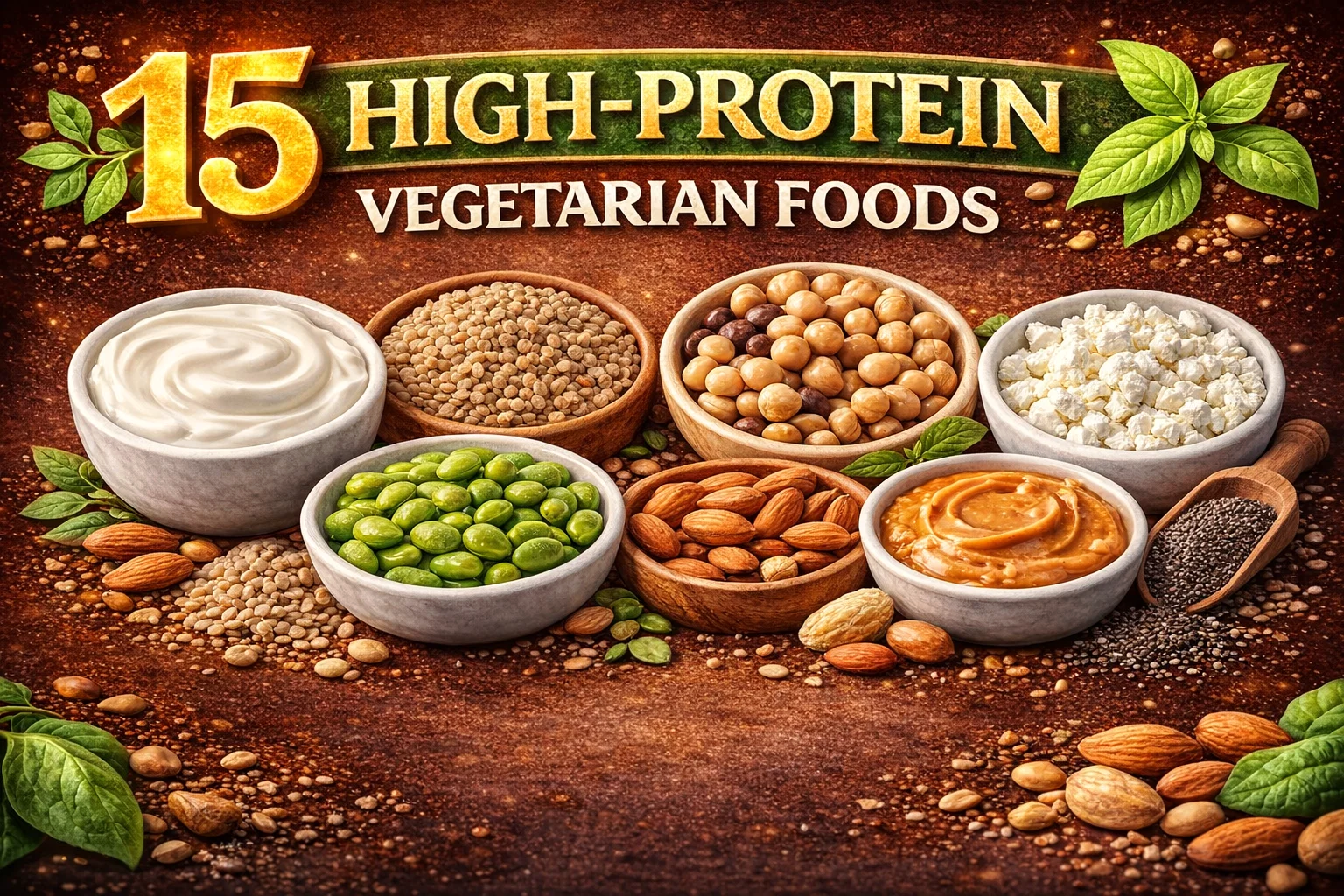
15 High-Protein Vegetarian Foods for Muscle Gain Fat Loss Best Protein Sources List
Whether you are a seasoned athlete, a weekend warrior, or someone simply looking to feel more energized throughout the day, the conversation around nutrition always seems to circle back to one powerhouse macronutrient: protein. For those following a vegetarian lifestyle, the question “where do you get your protein?” is practically a rite of passage. The good news is that the plant kingdom and dairy aisle are absolutely bursting with high-quality, muscle-building, and satiating options that can help you reach your fitness goals just as effectively as any meat-based diet.
The image provided highlights a brilliant roadmap of fifteen specific vegetarian protein sources that are as versatile as they are nutritious. Transitioning to a high-protein vegetarian diet does not mean you have to survive on protein shakes alone. In fact, by focusing on whole foods like lentils, chickpeas, and Greek yogurt, you are not just getting protein; you are also fueling your body with fiber, vitamins, and minerals that support overall metabolic health. In this comprehensive guide, we will dive deep into how these specific foods contribute to muscle gain and fat loss, and how you can easily integrate them into your daily routine.
The Science of Muscle Gain and Fat Loss on a Vegetarian Diet
To understand why these fifteen foods are so impactful, we first need to look at the mechanics of body composition. Muscle gain requires a positive nitrogen balance, which is achieved by consuming enough amino acids to repair the micro-tears in muscle fibers caused by resistance training. While animal proteins are complete proteins, many vegetarian sources need to be paired throughout the day to ensure you are getting all nine essential amino acids. However, staples like quinoa, buckwheat, and soy are complete on their own, making them incredible assets for your pantry.
On the flip side, protein is the ultimate tool for fat loss. It has a high thermic effect of food, meaning your body burns more calories digesting protein than it does digesting fats or carbohydrates. Additionally, protein triggers the release of satiety hormones like cholecystokinin and GLP-1, which tell your brain you are full. By prioritizing the foods listed in our guide, you can stay in a caloric deficit for fat loss without feeling the constant nag of hunger.
Dairy Powerhouses: Greek Yogurt and Cottage Cheese
Greek Yogurt: The Probiotic Protein King
Topping our list is Greek yogurt, boasting a staggering 23 grams of protein per cup. What makes Greek yogurt stand out is the straining process, which removes much of the liquid whey and lactose, leaving behind a thick, concentrated source of casein and whey protein. Casein is a slow-digesting protein, making it the perfect pre-bedtime snack to prevent muscle breakdown overnight. Plus, the live active cultures support gut health, which is essential for nutrient absorption.
Cottage Cheese: The Versatile Muscle Builder
With 14 grams per half-cup, cottage cheese is a hidden gem in the fitness world. It is incredibly high in leucine, an amino acid that acts as a primary trigger for muscle protein synthesis. You can enjoy it savory with black pepper and tomatoes, or sweet with berries and a drizzle of honey. Its high protein-to-calorie ratio makes it a staple for anyone looking to lean out while maintaining hard-earned muscle mass.
The Legume Family: Lentils, Beans, and Peas
Lentils: The Hearty Fiber Source
Lentils offer 8 grams of protein per half-cup when cooked. They are arguably one of the most cost-effective health foods on the planet. Beyond protein, they are loaded with folate and magnesium, which support heart health and energy production. Their earthy flavor makes them the perfect base for stews, salads, and even plant-based “meatloaves.”
Black Beans and Chickpeas: The Satiety Duo
Black beans provide 15 grams of protein per half-cup, while chickpeas offer 7 grams. These legumes are packed with resistant starch, a type of fiber that feeds your healthy gut bacteria and improves insulin sensitivity. Better insulin sensitivity means your body is more efficient at directing nutrients into your muscle cells rather than storing them as fat. Chickpeas are the star of hummus, while black beans are a must-have for vegetarian tacos and burrito bowls.
Edame and Green Peas: The Green Machines
Edamame, or young soybeans, are a complete protein source providing 9 grams per half-cup. Because they contain all essential amino acids, they are a top-tier choice for vegetarians. Green peas, often overlooked, provide 8 grams per cooked half-cup and are surprisingly high in Vitamin K and Vitamin C. They add a sweet pop of protein to pasta dishes and stir-fries.
Super Grains and Ancient Seeds
Quinoa: The Ancient Complete Protein
Quinoa is often mistaken for a grain, but it is actually a seed. It provides 8 grams of protein per half-cup and is one of the few plant foods that contains all nine essential amino acids. It is also gluten-free and easy on the digestive system. Use it as a base for your meal prep bowls to ensure you are getting a steady stream of complex carbohydrates and protein to fuel your workouts.
Oats: More Than Just a Breakfast Staple
A half-cup of cooked oats provides 5 grams of protein. While that might seem lower than some other sources, oats are unique because of their beta-glucan fiber content. This fiber helps regulate blood sugar levels, preventing the energy crashes that lead to overeating. Level up your oats by stirring in some protein powder or topping them with hemp seeds for a high-protein start to your morning.
The Power of Seeds: Hemp, Chia, Pumpkin, and Sunflower
Hemp and Chia Seeds: Tiny but Mighty
Hemp seeds offer 6 grams of protein in just two tablespoons, while chia seeds provide 5 grams for the same serving size. Hemp seeds are rich in Omega-3 and Omega-6 fatty acids in the perfect ratio for reducing inflammation. Chia seeds, on the other hand, can absorb up to ten times their weight in water, helping you stay hydrated and full for hours. Both are easy to sprinkle over salads, yogurt, or blended into smoothies.
Pumpkin and Sunflower Seeds: The Crunchy Boost
Pumpkin seeds are a powerhouse, providing 8 grams of protein per quarter-cup, along with a massive dose of zinc. Zinc is crucial for hormone regulation, including the production of testosterone, which is vital for both men and women when building muscle. Sunflower seeds provide 7 grams of protein and are an excellent source of Vitamin E, a potent antioxidant that protects your cells from oxidative stress during intense exercise.
Nuts and Nut Butters: Healthy Fats and Protein
Almonds and Peanut Butter: The Classic Combo
Almonds provide 6 grams of protein per quarter-cup, and peanut butter offers 7 grams per two tablespoons. While these are higher in calories due to their fat content, they are essential for long-term satiety. The monounsaturated fats found in almonds and peanuts support heart health and help your body absorb fat-soluble vitamins like A, D, E, and K. A simple snack of an apple with peanut butter can provide the perfect balance of fiber, healthy fats, and protein to get you through a midday slump.
Eggs: The Gold Standard of Protein
Last but certainly not least on our list are eggs. With 6 grams of protein per large egg, they are often referred to as the “gold standard” because their amino acid profile most closely matches human requirements. The yolk contains choline, a nutrient essential for brain health and fat metabolism. Whether poached, boiled, or scrambled, eggs are a quick and bioavailable way to hit your protein targets every single day.
How to Structure Your High-Protein Vegetarian Meal Plan
Knowing which foods to eat is only half the battle; the real magic happens when you combine them effectively. A great rule of thumb is to include at least two of these sources in every meal. For breakfast, try Greek yogurt topped with chia seeds and berries. For lunch, a quinoa and chickpea salad with a handful of sunflower seeds provides a complex array of nutrients. Dinner could be a lentil curry served with a side of steamed edamame.
When your goal is fat loss, prioritize the higher volume, lower calorie options like green peas, lentils, and Greek yogurt. These allow you to eat a larger physical amount of food for fewer calories. If you are focused on muscle gain and struggle to eat enough, lean into the calorie-dense options like pumpkin seeds, peanut butter, and almonds to easily boost your daily intake without feeling overly stuffed.
Conclusion: Your Path to a Stronger, Healthier Self
Building a strong, lean body on a vegetarian diet is not just possible; it is an opportunity to explore a diverse and vibrant world of nutrition. The fifteen foods we have discussed today provide the foundation you need to succeed. By focusing on these high-quality protein sources, you are giving your body the tools it needs to repair tissue, boost metabolism, and keep your energy levels soaring. Remember that consistency is the most important ingredient in any fitness journey. Start by picking three or four of these protein sources to add to your grocery list this week, and watch how your body responds to the power of plant-based and dairy-rich nutrition. You have the list, you have the science, and now you have the plan. It is time to get cooking and start reaching those goals!