15 Ways to Value Yourself Self-Respect Healthy Boundaries Guide
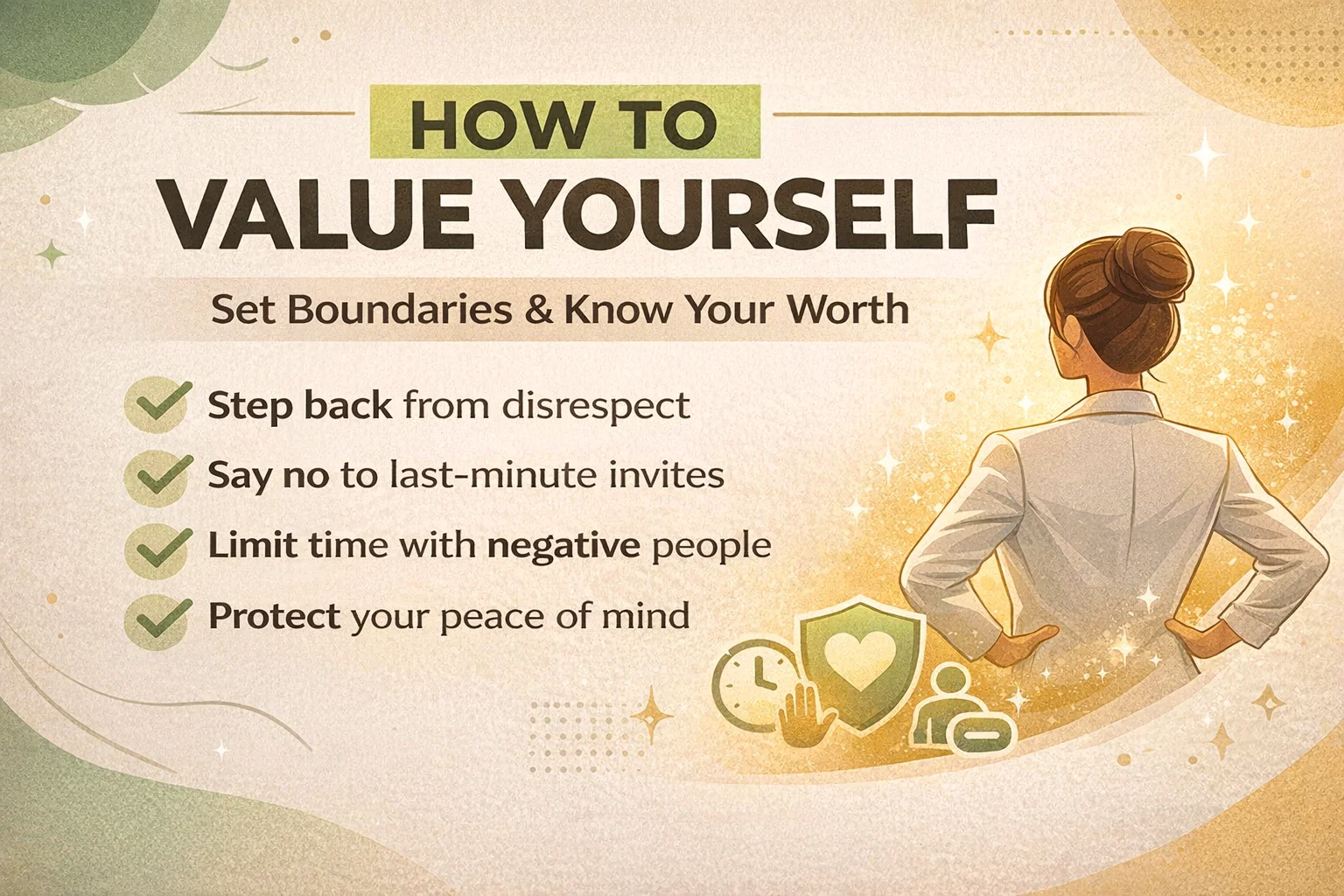
Finding your worth in a world that constantly asks you to give more of yourself can feel like an uphill battle. We often measure our value based on how others treat us, the invitations we receive, or the validation we get from our social circles. However, true self-worth is an internal compass. It is the quiet realization that your peace, your time, and your energy are non-negotiable assets. The image we are looking at today serves as a powerful manifesto for anyone feeling overlooked, undervalued, or simply exhausted by the demands of others. It outlines a roadmap for emotional sovereignty, teaching us that valuing ourselves is not about being arrogant, it is about being intentional with who we allow into our inner sanctum.
The Psychology of Stepping Back
One of the hardest lessons to learn in adulthood is that you cannot negotiate your way into being appreciated. If you feel that your presence is being ignored or that your efforts are going unnoticed, the most powerful move you can make is to step back. This isn’t an act of aggression; it is an act of self-preservation. When we stay in spaces where we are not valued, we begin to shrink ourselves to fit. By stepping back, you regain your perspective and allow the other party to feel the void left by your absence. It creates a vacuum where you can finally ask yourself: Is this environment serving me, or am I just serving it?
Stop Chasing and Start Attracting
There is a desperate energy that comes with “chasing” people. Whether it is a friend who never calls back or a colleague who consistently ignores your input, the act of chasing reinforces a narrative that you are “less than” and they are “more than.” When you stop chasing, you reclaim your dignity. You shift from a state of pursuit to a state of being. This allows room for people who actually value your presence to enter your life. Remember, the right people do not require you to run a marathon just to get their attention.
Setting Boundaries with Grace and Firmness
Boundaries are often misunderstood as walls, but they are actually gates. They determine who gets access to your emotional labor and who does not. If you find yourself being used or taken for granted, it is a clear sign that your boundaries have become porous. Valuing yourself means being comfortable with the word “no.” This applies especially to those last-minute invitations. While it might feel tempting to say yes just to feel included, accepting crumbs only teaches people that you are satisfied with leftovers. Politely declining shows that your time is planned, purposeful, and precious.
The Power of Walking Away Calmly
Disrespect does not always require a loud confrontation. In fact, the most devastating response to disrespect is a calm, silent exit. When you react with high emotion, you give the disrespector exactly what they want: control over your state of mind. Walking away calmly signals that their behavior is beneath your standards and that you are not willing to sacrifice your peace to “win” an argument. It is a sophisticated way of saying that your self-image is not dependent on their opinion of you.
Protecting Your Peace in a Digital Age
In our current era, negativity can surround us through screens just as easily as it does in person. If you find that your social media feeds or your group chats are filled with drama, cynicism, or manipulation, you must choose distance. Protecting your peace is a full-time job. This involves curating your environment so that it supports your growth rather than stifling it. When you are manipulated, the manipulator relies on your guilt or your desire to be “nice.” Breaking free means prioritizing your truth over their narrative.
Trusting Actions Over Promises
We have all been in situations where we were lied to or given empty promises. It is easy to fall in love with someone’s potential or the version of them they present in words. However, a person who values themselves looks at the data of behavior. Actions are the only reliable currency in a relationship. If the words say “I care” but the actions say “I am indifferent,” believe the actions every single time. This saves you from the cycle of disappointment and allows you to build a life based on reality rather than wishful thinking.
Overcoming the Fear of Being Forgotten
There is a deep-seated human fear of being forgotten or left behind. This fear often drives us to “remind” people of our existence through constant check-ins or over-sharing. But if someone forgets you, let them. This sounds harsh, but it is the ultimate test of compatibility. You want to be in the lives of people who hold a space for you naturally, not because you are constantly knocking on their door. By not reminding them, you make space for those who keep you in mind without effort.
Letting Your Work Speak for Itself
When you are underestimated, your first instinct might be to argue your worth or list your accomplishments. Instead, try the “quiet excellence” approach. Let your work speak. Whether it is in your career, your hobbies, or your personal development, results are much harder to ignore than words. When you focus on improving yourself for your own satisfaction, the external recognition becomes a byproduct rather than the goal. Being underestimated is actually a secret advantage; it gives you the room to grow without the pressure of a spotlight.
Reclaiming Your Choices from Controllers
Control is the opposite of love. If you find yourself in a situation where your choices are being limited or dictated by someone else, you are being controlled. Valuing yourself means taking back the steering wheel of your life. It starts with small decisions: what you wear, where you go, and how you spend your free time. Reclaiming your choices might cause friction with those used to controlling you, but that friction is the sound of your freedom returning. You are the only person who has to live with your decisions for the rest of your life, so make sure they are truly yours.
Forgiveness as a Tool for Growth
Forgiveness is often misunderstood as letting someone “off the hook.” In reality, forgiveness is about unhooking yourself from the pain. When you are betrayed, carrying that anger is like drinking poison and expecting the other person to die. You forgive for your own peace, not for their benefit. Moving on is the ultimate act of growth. It signifies that the betrayal was a chapter in your book, but it is certainly not the ending. By releasing the bitterness, you lighten your load for the journey ahead.
Daily Practices to Reinforce Self-Worth
Valuing yourself is not a one-time event; it is a series of daily choices. It is the choice to get enough sleep, to eat food that fuels you, and to speak to yourself with kindness. The way you talk to yourself in the mirror sets the tone for how the world is allowed to talk to you. If your internal dialogue is hyper-critical, you will likely accept criticism from others as truth. If your internal dialogue is supportive and grounding, you will view external negativity as noise that has nothing to do with you.
- Audit your inner circle: Take a look at the five people you spend the most time with. Do they inspire you or drain you?
- Practice the “Pause”: Before responding to a last-minute request or a manipulative comment, take ten seconds to breathe.
- Celebrate small wins: Acknowledge when you successfully set a boundary, even if it felt uncomfortable at the time.
- Physical Self-Care: Treat your body like a high-performance machine that deserves maintenance, not an object to be criticized.
Moving Forward with Confidence
As you begin to implement these changes, you might notice that some people fall away from your life. This is a natural part of the process. Not everyone is equipped to handle the “new you” who has standards and boundaries. Do not mourn the loss of people who only liked you because you were easy to use. Instead, celebrate the space that is opening up for genuine, reciprocal, and respectful connections. The path to self-value is sometimes lonely at the beginning, but it leads to a much more fulfilling destination.
You are the architect of your own value. No one else has the authority to appraise your worth unless you hand them the clipboard. By following these fifteen principles, you are effectively telling the world that you are a person of substance, integrity, and peace. You are no longer available for manipulation, disrespect, or being taken for granted. You are stepping into a version of yourself that is whole, healed, and highly valued.
Conclusion
Valuing yourself is the most important journey you will ever take. It changes the way you walk, the way you talk, and the way you allow others to interact with your soul. While the world may try to convince you that you are replaceable, these fifteen steps remind you that your individuality is your greatest strength. Protect your energy, honor your boundaries, and never apologize for choosing your own peace. The moment you start valuing yourself is the moment the world starts reflecting that value back to you. Keep going, stay firm in your worth, and watch how your life transforms into a masterpiece of self-respect.