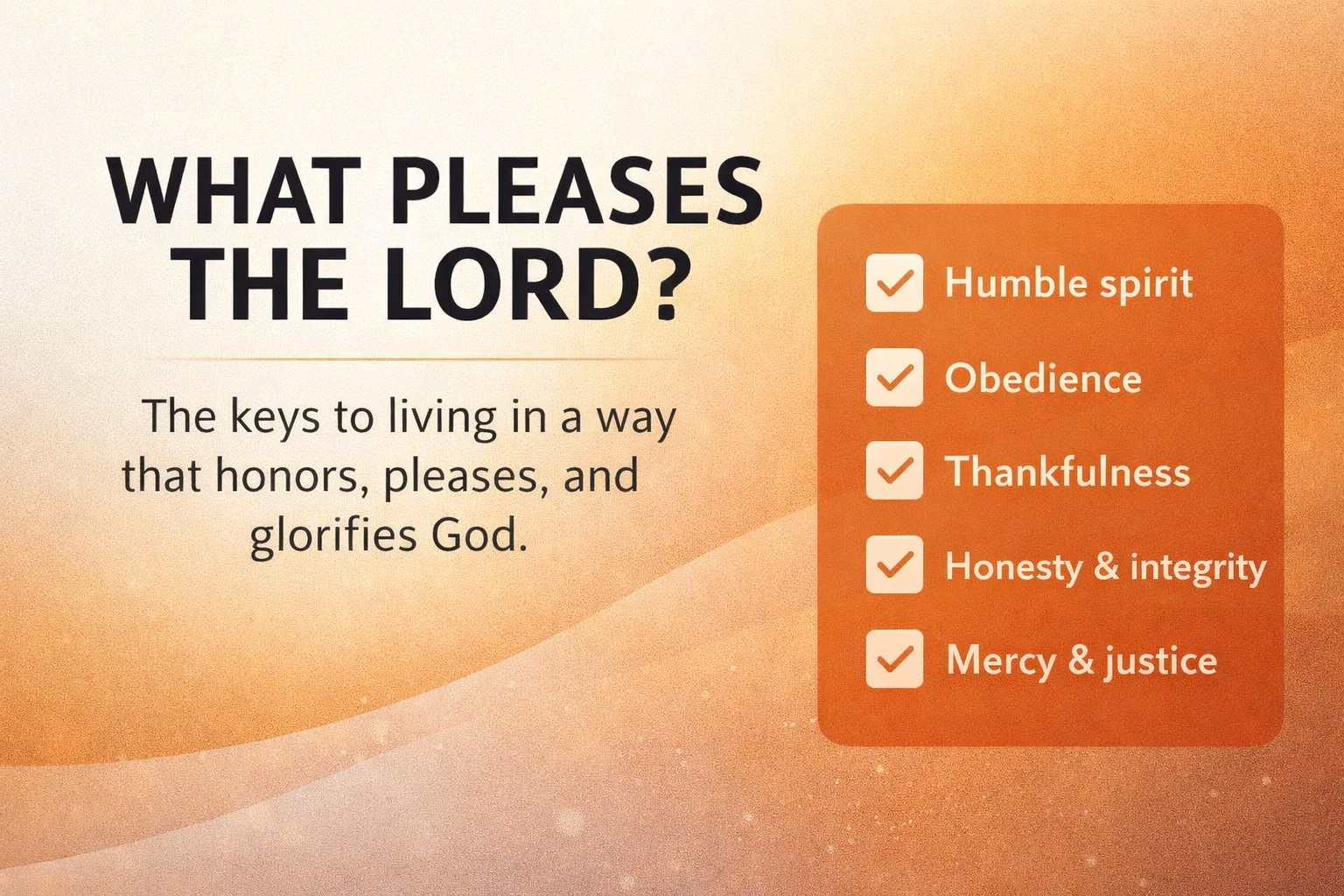
18 Biblical Ways to Please God Spiritual Growth Christian Faith Tips
Have you ever found yourself sitting in a quiet moment, looking up at the sky, and asking the one question that has echoed through centuries of faith? What does it actually mean to please the Lord? For many, the concept of a spiritual life feels like a complex maze of rules and rituals. We often get caught up in the “empty religion” that the scriptures warn us about, focusing more on the outward appearance than the internal transformation. But the truth is far more beautiful and intimate than a simple checklist. Pleasing God isn’t about achieving perfection; it is about a heart that is oriented toward His light, seeking to walk in truth, mercy, and love every single day.
When we look at the foundational teachings of the Bible, we see a consistent pattern of what moves the heart of the Creator. It is not our grand achievements or our loudest prayers that stand out, but rather the quiet, consistent choices we make to act with integrity, to show kindness to the stranger, and to remain faithful through the trials that life inevitably throws our way. In this exploration, we are going to dive deep into the biblical principles that guide us toward a life that is truly pleasing to God, offering a roadmap for anyone looking to deepen their spiritual journey and find lasting peace.
The Foundation of Faith: Taking God at His Word
At the very core of a life that pleases the Lord is the concept of faith. Hebrews 11:6 tells us quite clearly that without faith, it is impossible to please Him. But what does “faith” look like in a modern, fast-paced world? It isn’t just a vague feeling or a hopeful wish. True faith is the act of taking God at His word, even when the circumstances around us seem to say otherwise. It is the steady confidence that His promises are true and His character is unchanging.
Think of faith as the anchor in a storm. When the waves of life get choppy, an anchored ship doesn’t drift away. Similarly, when we trust in the Word, we stay grounded. This kind of faith requires us to move beyond our own understanding and lean into the divine wisdom that has been provided for us. It involves believing that God is who He says He is and that He will do what He has promised to do. This level of trust is deeply pleasing to the Lord because it honors His sovereignty and acknowledges our reliance on Him.
Living with a Humble and Lowly Spirit
In a culture that often prizes self-promotion and “hustle,” the biblical call to humility can feel almost counter-cultural. Yet, Isaiah 66:2 reminds us that God looks with favor on those who are humble and contrite in spirit. Humility is not thinking less of yourself; it is thinking of yourself less. It is the realization that everything we have and everything we are is a gift from above. When we approach life with a lowly spirit, we create space for God to work through us.
A humble person is teachable. They are willing to admit when they are wrong and are quick to seek guidance. This posture of the heart allows for genuine growth and prevents the “empty religion” of pride from taking root. By acknowledging our need for grace, we align ourselves with the heart of Christ, who modeled the ultimate form of humility throughout His life on earth. This internal shift from “me-centered” to “God-centered” is a powerful way to bring pleasure to our Creator.
Obedience from the Heart versus Empty Rituals
There is a significant difference between doing something because you have to and doing something because you want to. 1 Samuel 15:22 highlights that the Lord desires obedience more than sacrifice. In modern terms, this means that God values the “why” behind our actions just as much as the “what.” Rituals, traditions, and religious ceremonies can be beautiful, but if they are not backed by a heart that truly loves and wants to follow God, they become hollow.
Obedience from the heart is driven by love. When we keep the commandments because we love the One who gave them, our actions take on a whole new meaning. This isn’t about legalism or trying to earn a spot in heaven. Instead, it is a response to the incredible love and mercy we have already received. Whether it is being honest in our business dealings or showing kindness to a difficult neighbor, these acts of obedience are “sweet-smelling sacrifices” that demonstrate our devotion.
The Power of Thanksgiving in Every Circumstance
It is easy to be thankful when things are going well. When the bills are paid, the family is healthy, and the sun is shining, gratitude comes naturally. But 1 Thessalonians 5:18 challenges us to give thanks in “every circumstance.” This is a tall order! How can we be thankful in the midst of loss, frustration, or uncertainty? The secret lies in the realization that our gratitude is not based on our current situation, but on God’s eternal goodness.
Practicing thanksgiving in the dark valleys shows a profound level of trust. It signals to the Lord that we believe He is still in control and that He is working all things together for our good. This attitude shifts our focus away from our problems and onto our Provider. It guards our hearts against bitterness and opens the door for peace to enter. A thankful heart is a magnet for divine favor and is a clear indicator of a soul that is well-pleased by God’s presence.
The Beauty of a Broken and Contrite Heart
It might seem strange to suggest that being “broken” could please God. However, Psalm 51:17 teaches us that a broken and contrite heart is a sacrifice that God will not despise. This kind of brokenness isn’t about being defeated by the world; it is about being honest about our sins and our need for a Savior. It is the opposite of the “self-righteousness” that often plagues religious circles.
When we come to God with a contrite heart, we are dropping the masks. We are admitting our flaws, our mistakes, and our absolute need for His mercy. This vulnerability is incredibly precious to the Lord. It shows that we value our relationship with Him more than our own pride. It is out of this brokenness that real change occurs, as we allow His grace to heal the pieces and build us back up into something even more beautiful and resilient.
Acting with Integrity: Doing What is Just and Good
Pleasing the Lord isn’t just about what happens inside our hearts; it is also about how we interact with the world around us. Proverbs 21:3 notes that doing what is right and just is more acceptable to the Lord than sacrifice. This calls us to a life of integrity, where our private actions match our public words. In a world that often cuts corners, the person who chooses the “hard right” over the “easy wrong” stands out.
- Honesty: Being truthful in our speech and avoiding the “white lies” that erode trust.
- Fairness: Treating others with equity, whether in the workplace or within our social circles.
- Compassion: Actively looking for ways to do good and share with those who have less.
Doing good and sharing with others is explicitly mentioned in Hebrews 13:16 as a sacrifice that pleases God. When we use our resources, our time, and our talents to bless someone else, we are acting as the hands and feet of Christ. This outward focus prevents us from becoming stagnant in our faith and ensures that our spiritual life has a tangible, positive impact on the community.
Walking in Truth and Fearing the Lord
Walking in truth means more than just not telling lies; it means living an authentic life aligned with biblical principles. 3 John 4 expresses the great joy found in knowing that “children are walking in the truth.” This involves a commitment to studying the scriptures and applying them to our daily decisions. It means being a person of your word and living with a “clean dealing” mindset, as mentioned in Proverbs 11:1.
Coupled with this is the “fear of the Lord.” This isn’t a terrifying fear of punishment, but rather a profound sense of awe, respect, and reverence for God’s holiness. Psalm 147:11 tells us that the Lord delights in those who fear Him and who put their hope in His unfailing love. When we have a healthy reverence for God, we are naturally inclined to avoid what displeases Him and seek what brings Him glory. It creates a boundary for our lives that leads to wisdom and safety.
The Call to Mercy, Kindness, and Justice
Micah 6:8 is perhaps one of the most famous summaries of what God requires of us: “To act justly and to love mercy and to walk humbly with your God.” These aren’t just suggestions; they are core requirements for a life that honors the Lord. Seeking justice involves standing up for the oppressed and being a voice for those who cannot speak for themselves, as echoed in Isaiah 1:17.
Mercy and kindness are the lubricants that make human relationships work. When we show mercy to someone who doesn’t deserve it, we are reflecting the mercy we ourselves have received. When we choose kindness over sarcasm or bitterness, we are planting seeds of peace. These qualities are highly valued in the kingdom of God because they directly counter the harshness and selfishness of the world.
Stewardship and Sincere Praise
Everything we have is on loan from God. Our time, our money, our health, and our relationships are all gifts that we are called to manage wisely. Matthew 25:21 speaks of the “faithful servant” who is rewarded for being a good steward of what they were given. Pleasing the Lord involves recognizing that we are managers, not owners. Using our gifts to further His kingdom and help others is a vital part of our spiritual calling.
Along with stewardship comes the call to genuine praise. Psalm 69:30-31 mentions that praising God’s name with song and thanksgiving pleases the Lord more than an offering of an animal. Why? Because praise comes from the heart. When we lift our voices in worship, whether in a crowded church or alone in our cars, we are focusing on His greatness. Genuine praise isn’t about the quality of our singing; it is about the sincerity of our spirit. It is an acknowledgment of His worthiness that brings a smile to the heart of God.
Enduring Trials and Choosing Love
Finally, a life that pleases the Lord is one that is marked by endurance and love. James 1:12 promises a blessing to those who endure trials faithfully. Life is hard, and faith is often tested in the fire of adversity. When we choose to stay faithful despite the pain, our character is refined, and God is honored by our perseverance. It shows that our love for Him is not dependent on a “problem-free” life.
Above all else, Jesus gave us a new commandment: “Love one another as I have loved you” (John 13:34). Keeping His commandments out of love is the ultimate expression of our faith. When we prioritize love in our families, our churches, and our workplaces, we are fulfilling the very essence of the law. Love is the distinguishing mark of a disciple and the clearest evidence of a life that is truly pleasing to the Lord.
Conclusion: Crafting a Life of Purpose and Peace
As we have seen, the path to pleasing the Lord is not paved with complicated theology or unreachable standards. Instead, it is built on the simple, daily choices of the heart. It is about choosing faith over fear, humility over pride, and love over selfishness. When we align our lives with these biblical principles, we don’t just “check a box” for our faith; we enter into a deeper, more vibrant relationship with our Creator.
Walking in a way that pleases God brings a sense of purpose that the world simply cannot offer. It provides a moral compass in a confusing time and a source of peace that transcends our circumstances. As you move forward from today, pick one of these principles to focus on. Perhaps it is practicing more gratitude, or maybe it is seeking a more humble spirit. Whatever it is, know that every small step toward His light is a step that brings joy to His heart. Let us strive to live in a way that one day, we might hear those beautiful words: “Well done, good and faithful servant.”
Would you like me to generate a set of meta tags or a social media snippet to accompany this blog post?