20 Best Healthy Salad Types Recipes Guide Easy Homemade Salad Ideas
Salads have often been unfairly categorized as a boring side dish or a meal of last resort for those on a diet. However, as anyone who has ever tasted a perfectly balanced Waldorf or a zesty Greek salad knows, a well-crafted salad is a culinary masterpiece. It is a symphony of textures, colors, and flavors that can serve as a refreshing appetizer, a hearty main course, or a nutritious snack. Understanding the vast world of salads is the first step toward transforming your meal planning and bringing a burst of freshness to your kitchen table every single day.
The beauty of a salad lies in its versatility. You can go from a light and airy spinach salad to a dense and filling potato salad with just a few ingredient swaps. By exploring different types of salads, you unlock the ability to eat seasonally, stay healthy, and never get bored with your food. Whether you are a fan of leafy greens, protein-packed bowls, or fruit-filled delights, there is a specific category of salad designed to satisfy your palate. Let us dive deep into the diverse world of salads and discover how to master each one.
The Timeless Classics: Leafy Green Salads
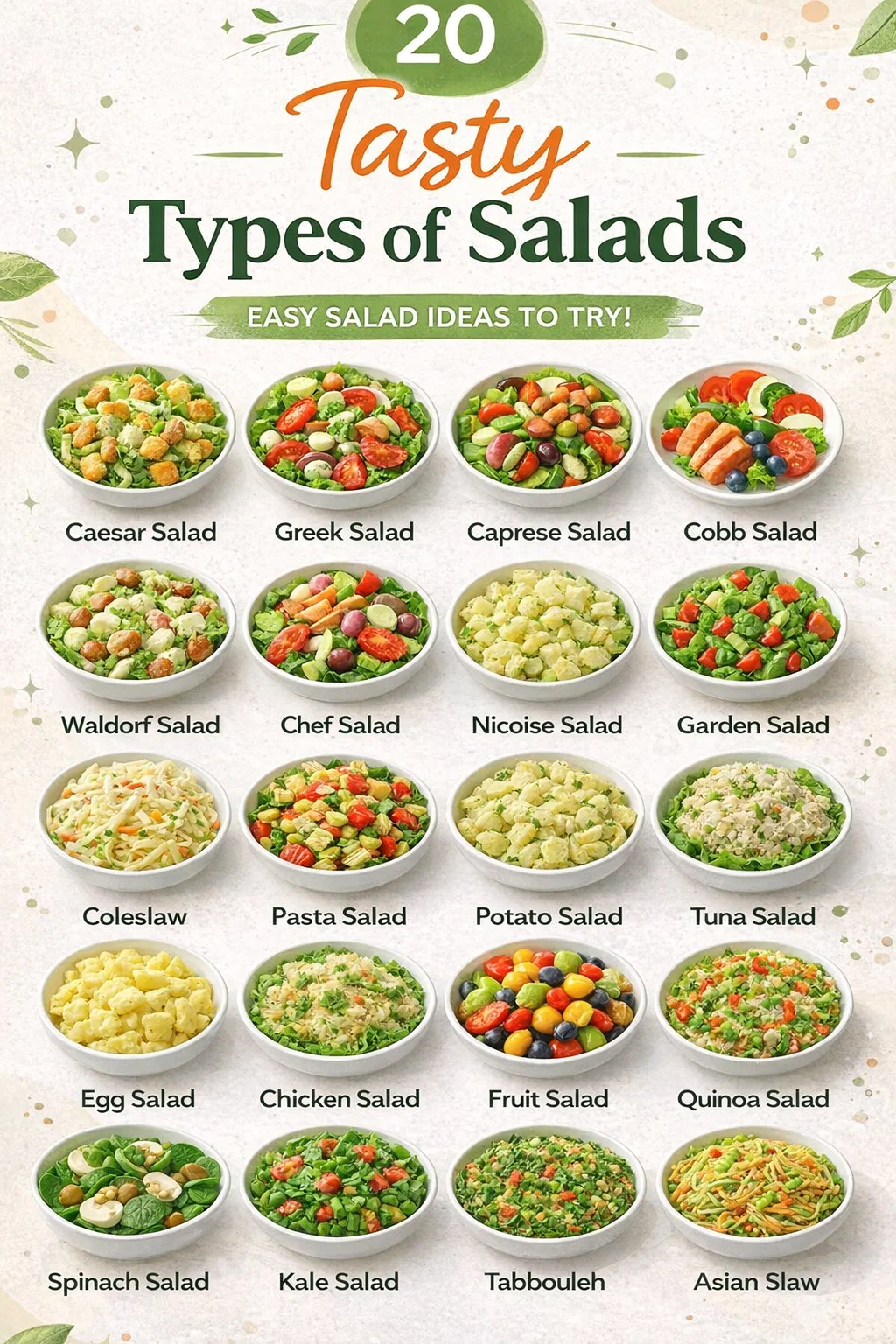
When most people think of a salad, they visualize a bowl filled with crisp greens. These are the foundation of the salad world. The Caesar Salad is perhaps the most famous of them all. Originating from Mexico, this dish relies on the crunch of romaine lettuce, the richness of parmesan cheese, and the savory punch of a dressing made with anchovies, garlic, and lemon. It is the gold standard for texture, especially when topped with buttery croutons.
Then we have the Garden Salad, often referred to as a house salad. This is the ultimate versatile dish, typically featuring a base of head lettuce or mixed greens topped with cucumbers, tomatoes, and carrots. It is the perfect canvas for your favorite vinaigrette. For those who prefer something darker and more nutrient-dense, the Spinach Salad and Kale Salad are excellent choices. Spinach offers a soft, buttery texture that pairs beautifully with hard-boiled eggs and mushrooms, while kale provides a sturdy, earthy base that can stand up to heavy dressings and bold ingredients like nuts and dried fruits.
Mastering the Vinaigrette
- Always use a ratio of three parts oil to one part acid (like lemon juice or vinegar).
- Incorporate an emulsifier like Dijon mustard or honey to keep the dressing from separating.
- Season generously with salt and freshly cracked black pepper to bring out the vegetable flavors.
Hearty and Filling: Protein and Grain Salads
Salads do not always have to be light. In fact, many of the most popular varieties are designed to be a complete meal. Take the Chef Salad or the Cobb Salad (often misspelled as Sobb). These are loaded with proteins like ham, turkey, chicken, and bacon. They often include cheese and eggs, making them incredibly satiating. These salads are perfect for lunch because they provide the energy needed to power through the afternoon without the heavy feeling of a pasta-heavy meal.
If you are looking for something with a bit more bite, grain-based salads like the Quinoa Salad are a fantastic modern staple. Quinoa is a complete protein, and when mixed with chopped bell peppers, parsley, and a lemon dressing, it becomes a refreshing yet filling dish. Similarly, the Tuna Salad and Chicken Salad move away from the leafy green base entirely. These are typically bound with a creamy dressing like mayonnaise or Greek yogurt and are just as delicious served on a bed of lettuce as they are stuffed into a sandwich or a tomato wrap.
The Mediterranean Influence: Bold and Zesty
The Mediterranean region has contributed some of the most iconic salads to global cuisine. The Greek Salad is a masterclass in simplicity. It features juicy tomatoes, crisp cucumbers, red onion, kalamata olives, and a large slab of feta cheese. Notably, a traditional Greek salad does not contain lettuce at all, letting the quality of the vegetables and the olive oil shine through.
The Caprese Salad from Italy is another example of minimalist perfection. It focuses on the colors of the Italian flag: red tomatoes, white mozzarella cheese, and green basil leaves. Drizzled with balsamic glaze and high-quality olive oil, it is the ultimate summer appetizer. We also cannot forget Tabbouleh, a Levantine salad made mostly of finely chopped parsley, with tomatoes, mint, onion, and bulgur. It is incredibly herb-forward and serves as a cooling side dish for grilled meats.
Creamy Comfort: Picnic and Deli Favorites
Some salads are more about comfort than crunch. These are the staples of backyard barbecues and deli counters. Potato Salad and Egg Salad are the kings of this category. Whether you prefer a mustard-based potato salad or a creamy mayo version with chives, these dishes provide a soft, satisfying texture that pairs perfectly with grilled foods. Coleslaw, made from shredded cabbage and carrots, provides a tangy and sweet crunch that is essential for balancing out heavy flavors like smoked brisket or fried chicken.
Pasta Salad is another versatile favorite. By using rotini or farfalle pasta as a base, you can add almost anything from the fridge. Chopped olives, pepperoni, bell peppers, and Italian dressing create a classic version that stays fresh for days, making it an ideal candidate for meal prepping. These salads actually tend to taste better the next day as the ingredients have time to marinate together.
Tips for Better Creamy Salads
- Cook your potatoes or pasta in heavily salted water to ensure they have flavor from the inside out.
- Let cooked ingredients cool slightly before adding mayonnaise to prevent the dressing from melting and becoming oily.
- Add a splash of pickle juice or apple cider vinegar to brighten the flavors of a heavy dressing.
Sweet and Specialty Salads
Salads can even transition into the territory of sweetness. A Fruit Salad is the perfect way to end a meal or start a morning. By combining seasonal fruits like berries, melons, and citrus, you create a dish that is naturally sweet and incredibly hydrating. For a more sophisticated take on fruit in salads, the Waldorf Salad combines apples, grapes, and walnuts in a creamy dressing. It is a classic for a reason, offering a unique blend of sweet, tart, and nutty flavors.
Finally, we have global fusion options like Asian Slaw. This typically features a base of cabbage similar to coleslaw but swaps the creamy dressing for a mix of soy sauce, ginger, sesame oil, and rice vinegar. Topped with crunchy noodles or toasted sesame seeds, it brings a completely different flavor profile to the table, proving that the definition of a salad is limited only by your imagination.
The Art of Salad Construction
To make a truly great salad at home, you need to think about the layers of flavor and texture. A great salad should have something crunchy, something soft, something salty, and something acidic. If you have a bowl of soft greens, add some toasted nuts or seeds for crunch. If your vegetables are quite bitter, like kale or arugula, add a touch of honey to your dressing or some dried cranberries to balance the palate.
The order in which you build your salad also matters. For leafy salads, always dress the greens first to ensure every leaf is coated, then add your heavier toppings like tomatoes or cheese on top so they do not sink to the bottom. For grain or pasta salads, let the starch soak in the dressing while it is still slightly warm to maximize flavor absorption. By paying attention to these small details, you can elevate your homemade salads to restaurant quality.
Why You Should Eat More Salads
Beyond the incredible flavors, the health benefits of incorporating more salads into your diet are undeniable. Salads are a primary source of fiber, which is essential for digestive health and keeping you feeling full longer. They are also packed with vitamins A, C, and K, as well as potassium and antioxidants. By eating a variety of salads like the ones discussed today, you ensure that you are getting a wide spectrum of nutrients.
Moreover, salads encourage the consumption of raw vegetables, which often contain higher levels of certain enzymes and vitamins that can be lost during the cooking process. It is a simple way to increase your water intake through hydrating vegetables like cucumbers and lettuce. Making salad a part of your daily routine is one of the easiest and most delicious ways to invest in your long-term well-being.
Conclusion
The world of salads is far more diverse than many people realize. From the crunchy Romaine of a Caesar to the protein-rich Quinoa or the sweet crunch of an Asian Slaw, there is a salad for every occasion and every taste preference. By experimenting with different bases, proteins, and homemade dressings, you can transform your meals into vibrant, nutrient-dense experiences that you actually look forward to eating. So, the next time you are planning your menu, do not just think of the salad as an afterthought. Give it center stage, explore these different types, and enjoy the endless possibilities that fresh ingredients provide. Whether you are aiming for a healthier lifestyle or simply looking for a delicious meal, the perfect salad is waiting for you to toss it together.