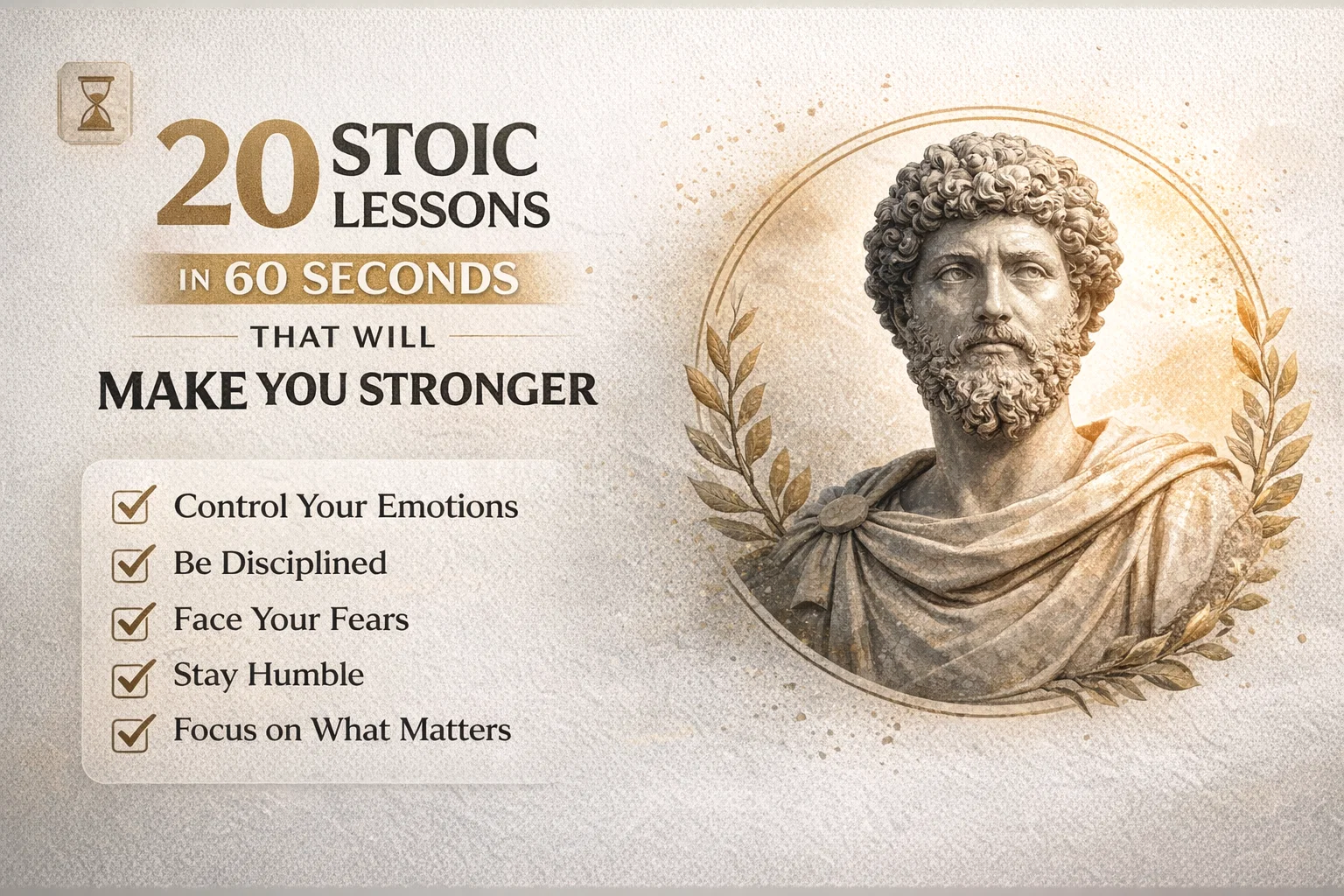
20 Stoic Lessons for Inner Strength Self-Discipline Wisdom for Personal Growth Success
In a world that often feels like it is moving at a breakneck speed, finding a sense of internal grounding can seem nearly impossible. We are constantly bombarded with notifications, societal expectations, and the pressure to perform. However, ancient wisdom offers a timeless remedy for modern chaos. Stoicism, a school of Hellenistic philosophy founded in Athens, provides a practical framework for living a life of purpose, resilience, and unshakeable peace. It is not about suppressing emotions or becoming a cold, unfeeling statue. Instead, Stoicism is about mastering the self and understanding that while we cannot control external events, we have absolute authority over our internal responses. By embracing these lessons, you can transform your mindset and build a foundation of strength that remains steady regardless of the storms outside.
The Power of Self-Discipline as Ultimate Self-Love
One of the most profound shifts in perspective that Stoicism offers is the idea that discipline is not a form of punishment, but rather the highest form of self-love. We often view discipline as a restrictive force that stops us from doing what we want in the moment. In reality, discipline is the tool that allows us to do what we actually want for our lives in the long term. When you choose routine over chaos, you are honoring your future self and your potential. This commitment to consistency builds a sense of self-trust that is essential for true confidence.
Building a Warrior Routine
Routine builds warriors while chaos builds victims. This might sound intense, but it speaks to the fundamental truth of human psychology. When we leave our days to chance, we become reactive to every minor inconvenience. A structured routine acts as a shield, protecting your energy and focus. By establishing morning and evening rituals that ground you, you create a predictable environment where your mind can thrive. This structure allows you to navigate the unexpected with a sense of calm because your foundation is already secure.
Mastering Emotional Intelligence and Logic
The relationship between emotion and logic is a central pillar of Stoic thought. The philosophy teaches us that emotion kills logic when left unchecked. This does not mean emotions are bad; it means they are unreliable narrators. When we feel a surge of anger, fear, or anxiety, our perspective becomes distorted. The Stoic practice of breathing and pausing before reacting is a simple yet revolutionary act. By creating space between a stimulus and your response, you regain the power to choose a path that aligns with your values rather than your temporary feelings.
Why Silence Wins Battles
Not everything deserves a reaction. In an age of instant communication and social media debates, the urge to respond to every slight or opinion is high. However, silence is often the most powerful move you can make. When you refuse to engage with negativity or unconstructive criticism, you preserve your peace. Silence allows you to observe, process, and act with intention. It signals to others, and more importantly to yourself, that your internal state is not for sale and cannot be easily disrupted by external noise.
The Illusion of Fear and the Reality of Effort
Most of our fears are illusions that never come to pass. We spend an incredible amount of energy worrying about “what if” scenarios that exist only in our imaginations. Stoicism encourages us to face these fears head-on by realizing their lack of substance. By focusing on the present moment and the task at hand, we dismantle the power that fear holds over us. The only thing that truly belongs to us is our effort; the outcome belongs to fate. When you detach your self-worth from the final result and place it on the quality of your work, you become unstoppable.
Letting Go of What You Cannot Change
There is an immense freedom in accepting that the world owes you nothing. This realization is not meant to be cynical; it is meant to be empowering. It means that you are the architect of your own life. You earn your life through your actions, your character, and your resilience. If you spend your time lamenting things you cannot change, those things will eventually own you. By ruthlessly auditing where you spend your mental energy and cutting off the supply to uncontrollable variables, you reclaim your personal power.
Living for Your Future Self
A powerful motivational tool in the Stoic toolkit is the idea of becoming the person your past self prayed for. Reflecting on how far you have come provides the necessary perspective to keep going. We are often our own harshest critics, focusing on our failures while ignoring our growth. By acknowledging the strength you have already built, you fuel the fire for future progress. This long term perspective is further reinforced by the five year rule: if it won’t matter in five years, do not spend more than five minutes worrying about it today.
The Wisdom of Listening
True wisdom is found in observation rather than constant speaking. A wise mind listens twice as much as it speaks. By being a student of the world and the people around you, you gather the information necessary to make better decisions. Listening is an act of humility and a recognition that you do not have all the answers. This openness to learning is what separates the stagnant from the truly successful. It allows you to refine your thoughts and speak with more impact when the time is right.
Accepting Suffering to Build Strength
Suffering is an inevitable part of the human experience, but it does not have to be meaningless. Stoicism teaches us that suffering becomes strength when we accept it. Instead of asking “why is this happening to me,” the Stoic asks “how can I use this to grow.” This shift from victimhood to agency is the key to resilience. Every challenge is a training ground for your character. When you stop resisting the difficult parts of life and start using them as fuel, you develop a level of grit that can withstand any hardship.
Guarding Your Time and Your Life
Your time is your life, and once it is gone, it can never be recovered. We are often very protective of our physical possessions but incredibly careless with our hours. Guarding your time means saying no to distractions that do not serve your higher purpose. it means being intentional with who you spend your time with and how you invest your energy. When you treat your time as your most valuable asset, you naturally start making choices that lead to a more fulfilling and impactful existence.
Practical Tips for Implementing Stoic Lessons
Integrating these twenty lessons into your daily life does not happen overnight. It requires consistent practice and a willingness to be patient with yourself. Start small by picking one or two principles that resonate most with you. Perhaps you start by implementing a strict morning routine to build discipline, or you practice the “five-year rule” when you feel stressed by a minor setback. The goal is progress, not perfection.
- Keep a Journal: Writing down your thoughts helps you identify patterns in your behavior and track your growth.
- Practice Voluntary Discomfort: Occasionally doing something difficult on purpose, like taking a cold shower or skipping a meal, reminds you that you can handle hardship.
- Negative Visualization: Briefly imagining the loss of things you value can help you appreciate what you have right now.
- Mindful Breathing: Use your breath as an anchor whenever you feel your emotions starting to override your logic.
Conclusion: The Path to Unshakable Resilience
Stoicism is not a set of rules to be followed blindly, but a philosophy to be lived deeply. By internalizing these lessons, you move from being a passenger in your life to being the captain of your soul. You learn that your happiness is not dependent on the weather, the economy, or the opinions of others. It is found within your own character and your ability to remain steady in the face of adversity. As you continue to apply these principles, you will find that you are not only stronger and more disciplined, but also more at peace with the world around you. Embrace the journey of self-mastery, stay humble, and remember that you have everything you need within you to thrive.