4 Types of Organizational Culture Handys Model Explained
Have you ever walked into a new office and instantly felt a specific vibe? Sometimes it feels rigid and highly structured, while other times it feels like a chaotic but highly creative startup. That invisible force shaping how everyone behaves, makes decisions, and interacts is known as organizational culture. Understanding this concept is not just an academic exercise. It is the absolute secret weapon for building thriving, dynamic teams. Today we are diving deep into one of the most brilliant frameworks for understanding workplace dynamics: Charles Handy’s Four Classes of Culture. By mapping out how companies balance centralization and formalization, we can uncover the true DNA of any business. Let us explore these fascinating cultural types and discover which one matches your own workplace!
The Foundation of Workplace Dynamics
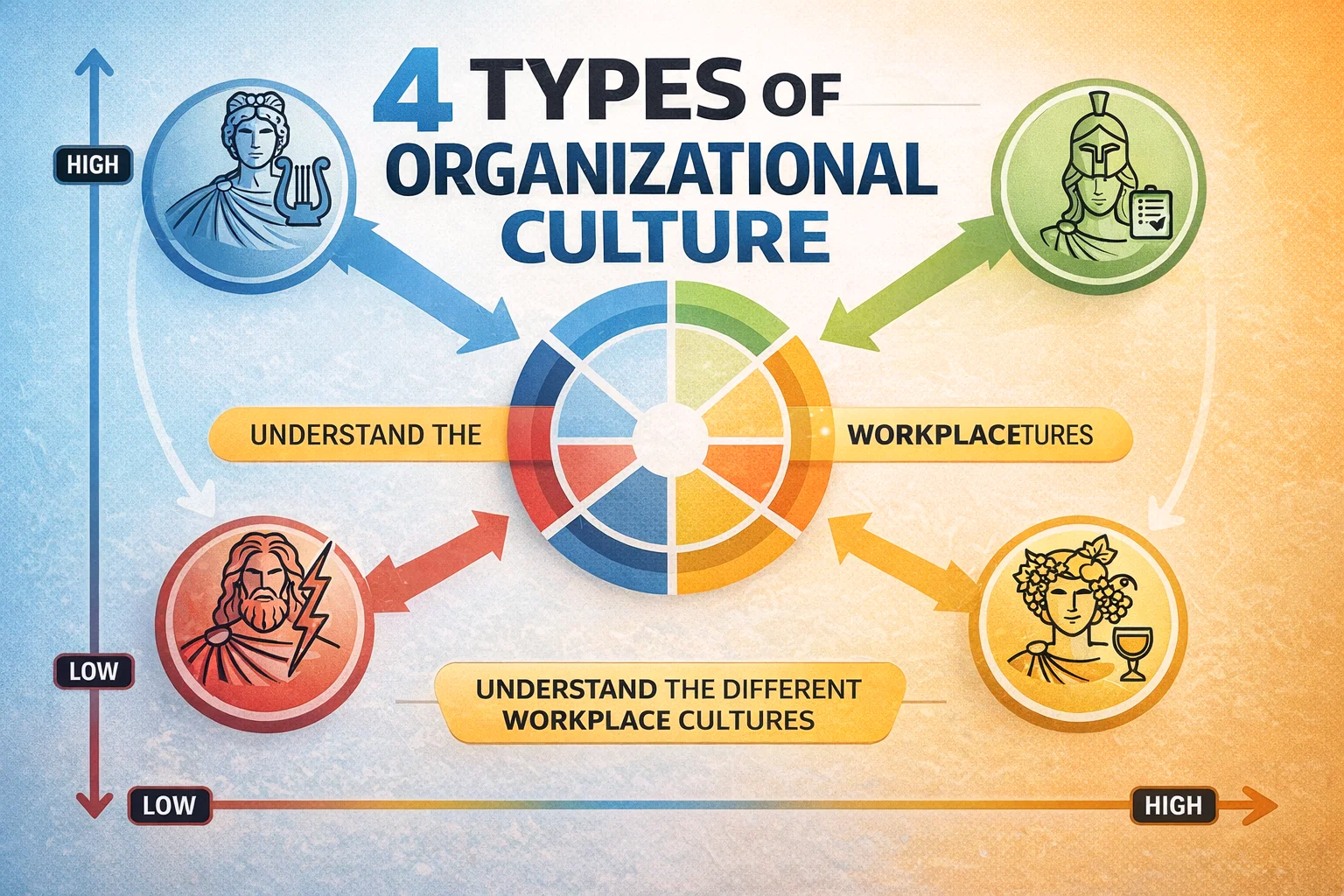
Before we look at the specific types of culture, we need to understand the two main forces that shape them. Handy’s model looks at organizations through a matrix of two key factors. The first is centralization. This refers to where the power lies. Does a single leader call all the shots, or is decision making spread out among many cross functional teams? The second factor is formalization. This measures the reliance on rules, procedures, and established hierarchies. A highly formal organization loves rulebooks and standard operating procedures, whereas a low formalization environment thrives on flexibility, adaptable processes, and trusting the gut instincts of its team members.
When you map these two spectrums against each other, you get a powerful visual matrix that divides organizations into four distinct cultural categories. Let us break down what each of these means for leaders, employees, and the overall success of a business.
Decoding Handy’s Four Types of Organizational Culture
Charles Handy famously assigned ancient Greek gods to his four cultural types to give them distinct, memorable personalities. These personas perfectly capture the energy and flow of different work environments. Let us explore each of these four quadrants in detail.
Role Culture (The Apollo Model)
Role culture is the classic, traditional bureaucracy. Imagine a tall, sturdy building where every single floor has a highly specific purpose. This environment features high formalization and high centralization. Everything runs on established rules, stringent procedures, and a strict top down hierarchy. People operating within a role culture have very formal job descriptions, and their status within the company is directly tied to their job title rather than their unique individual quirks.
The Greek god Apollo represents this model perfectly, as he is the god of order, logic, and rules. Large corporations, multinational banks, government agencies, and big businesses operating in highly stable environments are prime examples of role cultures. They prioritize predictability, risk management, and stability over rapid, chaotic innovation.
- Who thrives here: People who love structure, clear expectations, and a highly predictable career path will absolutely love a role culture. If you enjoy knowing exactly what your daily responsibilities are without constant surprises, this is the place for you.
- Potential pitfalls: The major downside of this highly structured approach is a significant lack of agility. Role cultures can be frustratingly slow to adapt to sudden market changes. Because the rules are so deeply ingrained into the fabric of the company, pushing innovative ideas up the chain of command can feel like wading through molasses.
Task Culture (The Athena Model)
If you want to see a dynamic team rally together to solve a complex, unprecedented problem, you are looking for a task culture. Represented by Athena, the goddess of wisdom, craft, and strategic warfare, this culture is all about getting the job done efficiently and creatively. Here we see an environment with low formalization but high centralization when it comes to focusing strictly on the end goal. It is highly flexible and entirely result oriented.
In a task culture, practical expertise is valued far more than a fancy job title. Teams are usually cooperative, bringing together different specialists and subject matter experts to tackle a specific project. Once the project is successfully completed, the team might disband and form entirely new groups for the next big challenge. You will often see this exciting dynamic in advertising agencies, fast paced tech startups, strategic consultancies, and modern service organizations operating in highly competitive environments.
- Who thrives here: Creative problem solvers, adaptable thinkers, and highly collaborative team players flourish in a task culture. If you get bored easily and love tackling diverse projects with exceptionally skilled colleagues, you will fit right in.
- Potential pitfalls: Because the relentless focus is always on the next big task or client pitch, the pace can become grueling over time. Employee burnout is a genuine and constant risk. Additionally, internal resources can sometimes become a fierce battleground, as different project managers compete to secure the best talent and budget to complete their specific tasks.
Power Culture (The Zeus Model)
Picture a powerful spider sitting confidently at the center of a web. That image captures the true essence of a power culture, ruled by Zeus, the undisputed king of the gods. In this environment, power radiates outward from a central charismatic figure or a very small, exclusive core group of top decision makers. This setup features high formalization in terms of central control but boasts very short, direct lines of communication. The leader holds the ultimate authority, and their personal power, vision, and charisma drive the entire organization forward.
This vibrant culture is extremely common in bold entrepreneurial ventures and small to medium businesses, especially those navigating turbulent, fast shifting market environments. The central leader can make sweeping, monumental decisions instantly without having to consult a massive rulebook or wait for a slow moving committee to approve the action.
- Who thrives here: Individuals who are fiercely loyal, highly ambitious, and capable of anticipating the leader’s shifting needs do incredibly well in a power culture. It requires excellent political instincts, high emotional intelligence, and the ability to work flawlessly in a fast paced, completely leader driven environment.
- Potential pitfalls: The absolute biggest risk in a power culture is the dangerous “key person dependency.” If the central leader leaves, falls ill, or makes a catastrophic misjudgment, the entire organization can instantly collapse. Furthermore, as the business inevitably grows, it becomes physically impossible for one single person to control everything, which means the culture must eventually evolve or risk breaking apart.
Person Culture (The Dionysus Model)
The person culture is undoubtedly the most unique and unconventional of the four models. Represented by Dionysus, the god of individuality, wine, and festivity, this culture flips the traditional organizational chart completely upside down. Instead of the individuals serving the broader organization, the organization actually exists to serve the individuals. It features both low formalization and low centralization.
In this rare environment, individual talents, personal brands, and high reaching ambitions take absolute center stage. Status is based solely on professional expertise, academic pedigree, and personal reputation. You will typically find person cultures in high end professional service firms like prestigious law partnerships, specialized medical practices, or independent architects’ collectives. The overarching firm provides the shared office space, administrative support, and umbrella branding, but the brilliant professionals operate highly autonomously.
- Who thrives here: Highly self motivated, independent experts who demand total control over their daily work absolutely love the person culture. It is the ideal setup for self starters who do not want to be bogged down by frustrating corporate management structures or endless middle management meetings.
- Potential pitfalls: Managing a person culture is notoriously difficult. Since everyone views themselves as an independent star player, achieving a unified, cohesive company vision is almost impossible. Decision making by group consensus can drag on forever, and resolving inevitable conflicts between strong, established personalities requires immense patience and extreme diplomacy.
The Fluidity of Organizational Culture
It is crucially important to note that these four types are not mutually exclusive boxes. In reality, most successful organizations exhibit fascinating elements of multiple cultural types simultaneously. A massive, globally recognized bank might have a strict Role Culture in its compliance and accounting departments, a highly dynamic Task Culture in its digital marketing wing, and an intense Power Culture operating right in the executive suite.
Furthermore, company cultures naturally and organically shift over time. A classic business trajectory begins with a wildly charismatic founder building a scrappy Power Culture in a garage. As the startup succeeds and client demands grow, the sheer volume of complex work requires creating specialized teams, shifting the vibe naturally toward a Task Culture. Eventually, if the company becomes a massive international entity, formal rules and hierarchies become absolutely necessary to maintain basic order, settling the business into a highly stable Role Culture. Understanding this natural evolution helps great leaders anticipate growing pains and intelligently guide their teams through necessary corporate transitions.
Why Identifying Your Culture is a Strategic Advantage
You might be wondering why mapping out these abstract cultural types is so vital to your daily operations. The answer ultimately comes down to strategic alignment. When a company’s deep rooted culture aligns perfectly with its strategic business goals and the specific personalities of its employees, pure magic happens on the bottom line.
First and foremost, it supercharges your hiring and recruitment process. If you know you run a highly structured Role Culture, you can intentionally hire candidates who actively appreciate order, meticulous planning, and clear directives. Conversely, if you run a Task Culture, you can actively hunt for agile team players who thrive in creative chaos. Hiring for cultural add and tight alignment drastically reduces employee turnover and significantly boosts overall daily job satisfaction.
Second, understanding your culture helps you manage inevitable corporate change effectively. If you are trying to implement a radical new software system in a Role Culture, you need to follow the proper channels, write thorough documentation, and update the official rulebooks. If you try to force that exact same change through a Power Culture, you just need to arrange a quick meeting to convince the central leader to passionately champion the idea. Tailoring your management approach to your specific cultural type saves massive amounts of time and prevents endless internal frustration.
Cultivating a Healthy Work Environment
There is a persistent myth that startups have good cultures and big corporations have bad cultures. The truth is that no single culture is inherently better than the others. A Role Culture is undeniably excellent for a nuclear power plant or a commercial airline where safety rules must be followed perfectly without exception. A Task Culture is absolutely perfect for an advertising agency trying to win a massive, highly creative client pitch. The ultimate goal is not to force your company into a specific, trendy box, but rather to ensure the unique culture you already have is healthy, transparent, and functioning exceptionally well.
To cultivate a genuinely positive environment, leaders must first be brutally honest about what their culture actually is right now, rather than what they ideally wish it were. Listen intently to your employees. Observe closely how decisions are truly made behind closed doors when the pressure is on. Once you have a crystal clear picture of your current state, you can begin to lean heavily into the strategic strengths of your cultural type while actively and thoughtfully mitigating its inherent weaknesses.
Embrace the Power of Cultural Awareness
Organizational culture is the invisible, beating heartbeat of your entire business operation. Whether you are navigating the strict, comforting hierarchies of an Apollo Role Culture, collaborating intensely in an Athena Task Culture, orbiting the visionary central leader in a Zeus Power Culture, or forging your own brilliant path in a Dionysus Person Culture, understanding these deep seated dynamics is incredibly empowering. It gives you the clear vocabulary to explain workplace frustrations, the strategic insight to build stronger, more resilient teams, and the profound vision to lead your people with absolute confidence. By embracing the unique, messy, and wonderful cultural mix of your organization, you can unlock unprecedented levels of daily productivity, team harmony, and long term financial success. Now is the perfect time to look closely around your own workplace and ask yourself which Greek god is truly running the show!