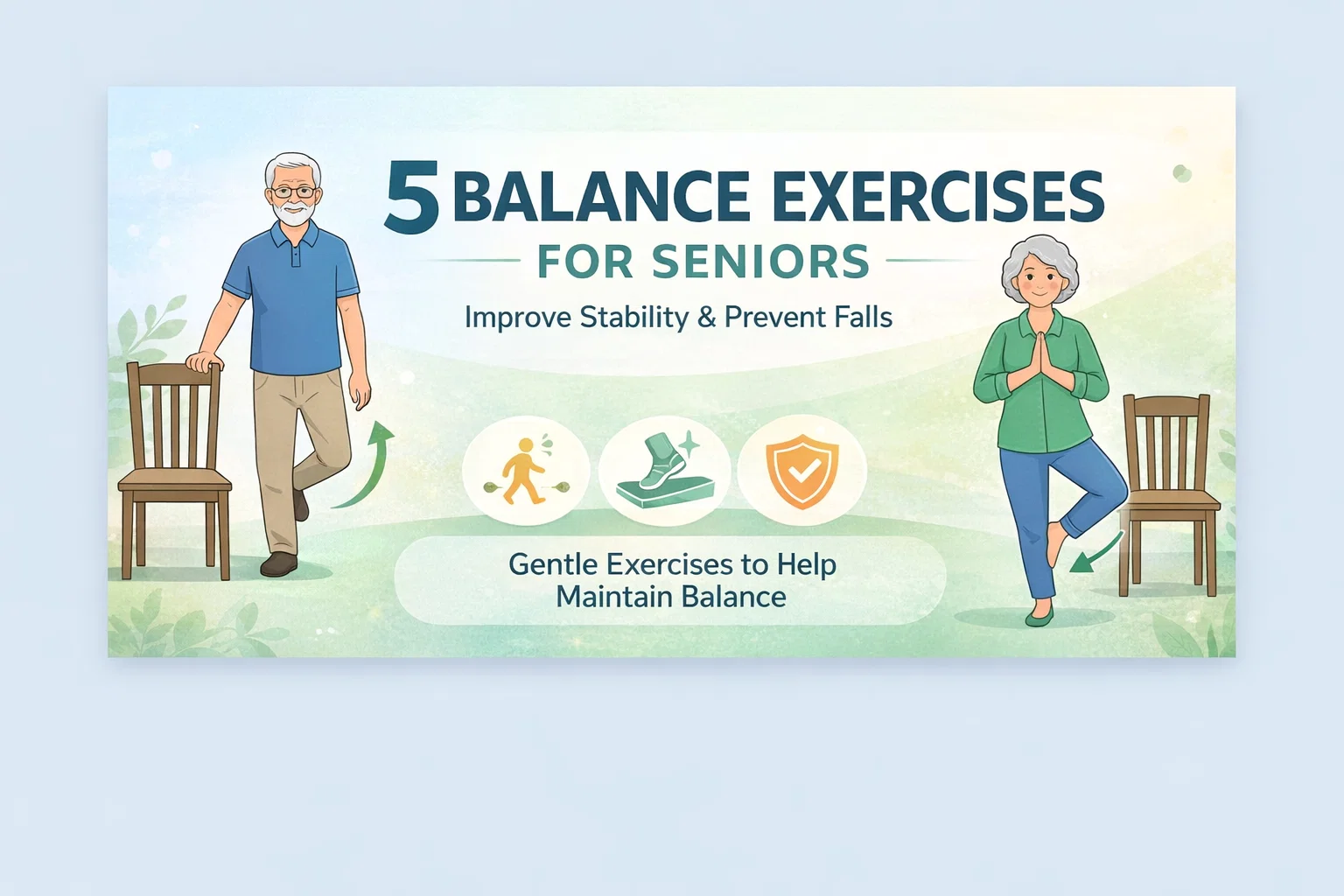
5 Best Balance Exercises for Seniors Improve Stability and Prevent Falls Naturally
Maintaining physical independence is one of the most rewarding goals we can pursue as we age. For many seniors, the fear of a sudden slip or a loss of balance can feel like a shadow over daily activities. However, stability is not just a matter of luck; it is a skill that can be practiced and improved at any age. By incorporating gentle, supported movements into a daily routine, it is possible to build a stronger foundation and move through the world with renewed confidence. The exercises we are exploring today are specifically designed to be accessible, safe, and highly effective for improving coordination and reducing the risk of falls.
The Vital Role of Balance in Healthy Aging
As the body matures, several physiological changes can affect our sense of equilibrium. Changes in vision, inner ear function, and muscle mass all play a part in how we perceive our position in space. This is why balance training is considered a cornerstone of senior wellness. Unlike high-impact aerobics or heavy weightlifting, balance exercises focus on the connection between the brain and the stabilizing muscles. When we practice these movements, we are essentially training our nervous system to react more quickly to changes in terrain or posture.
The beauty of a balance-focused routine is its simplicity. You do not need an expensive gym membership or specialized equipment to see results. A sturdy kitchen chair and a few minutes of dedicated time each day are the primary tools required to make significant strides in physical stability. By committing to these gentle movements, seniors can enjoy a higher quality of life, greater mobility, and the peace of mind that comes from knowing their body is strong and resilient.
Essential Safety Tips Before You Begin
Before diving into the specific movements, it is crucial to establish a safe environment. Safety is the priority when working on stability, especially if you are practicing alone. Always ensure you have a “safety anchor,” such as a heavy chair or a countertop, within arm’s reach. Wear supportive, non-slip footwear rather than socks or loose slippers. It is also important to listen to your body; if a movement feels painful or causes dizziness, stop immediately and consult with a healthcare professional. Staying hydrated and breathing deeply throughout each exercise will help keep your muscles oxygenated and your mind focused.
1. Single Leg Balance: Finding Your Center
The single leg balance is one of the most fundamental exercises for improving core stability and ankle strength. It mimics the moment in a walking stride when one foot is off the ground, which is often when falls occur. By practicing this in a controlled environment, you prepare your body for real-world movement.
How to Perform the Single Leg Balance
- Stand tall next to a sturdy chair, using one hand for light support if needed.
- Slowly lift one foot slightly off the floor, keeping your standing leg strong but not locked at the knee.
- Focus your gaze on a stationary point in front of you to help maintain your equilibrium.
- Try to hold this position for 10 to 15 seconds per leg.
- Lower your foot slowly and repeat the process on the other side.
As you become more comfortable, you can challenge yourself by reducing the pressure of your hand on the chair, eventually moving to just a single finger or letting go entirely for a few seconds at a time.
2. Tree Pose: Incorporating Mindfulness and Strength
Borrowed from the world of yoga, the Tree Pose is an excellent movement for enhancing both physical balance and mental focus. It encourages an upright posture and opens up the hips while strengthening the supporting leg. This pose is particularly effective because it requires a combination of strength, flexibility, and concentration.
How to Perform the Tree Pose
- Stand tall near your chair for safety.
- Shift your weight onto your left leg and place the sole of your right foot against the inner part of your left lower leg. Avoid placing your foot directly on the knee joint.
- Bring your hands together at your chest in a prayer position if you feel stable.
- Use the chair for support whenever you feel a wobble.
- Hold the posture for 15 to 20 seconds before switching to the other leg.
This exercise not only works the muscles but also helps in developing a sense of calm. The more relaxed you are, the easier it is for your body to find its natural center of gravity.
3. Weight Shifts: Preparing for Motion
Life is full of side-to-side movements, whether we are reaching for a grocery item or stepping out of a car. Weight shifts help the body practice transitioning weight from one limb to another smoothly and with control. This exercise builds lateral stability, which is often overlooked in traditional walking routines.
How to Perform Weight Shifts
- Stand with your feet slightly more than shoulder-width apart, keeping a chair nearby for balance.
- Slowly shift your entire body weight onto your right foot, allowing your left heel to rise slightly if necessary.
- Hold for a moment, then slowly transition the weight back through the center and onto the left foot.
- Keep your movements rhythmic and controlled, avoiding any sudden jerks.
- Repeat this shifting motion 10 times in total.
Weight shifts are a fantastic way to warm up the hips and prepare the legs for more vigorous activity. They remind the body how to move as a single, cohesive unit.
4. Side Leg Raises: Strengthening the Hips
Strong hips are essential for a steady gait. Side leg raises target the abductor muscles, which are responsible for moving your legs away from the midline of your body. When these muscles are strong, they help keep your pelvis level while you walk, which significantly lowers the risk of tripping.
How to Perform Side Leg Raises
- Stand behind or next to a chair, gripping the back for support.
- Keep your back straight and your toes pointing forward.
- Slowly lift one leg out to the side, keeping it straight without tilting your torso.
- Lower the leg back down with the same slow, controlled motion.
- Perform 10 repetitions on one leg before switching to the other.
The key to this exercise is the “down” phase. By lowering your leg slowly rather than letting it drop, you are forcing the muscles to work harder and build more endurance.
5. High Lunge Posture: Building Power and Length
The high lunge is a powerful posture that works on balance while simultaneously stretching the hip flexors and strengthening the thighs. It is a more dynamic movement that helps with functional tasks like getting up from a seated position or climbing stairs.
How to Perform the High Lunge Posture
- Step one leg forward into a wide stance near your chair.
- Ensure your front knee is bent and aligned over your ankle, while your back leg is extended behind you.
- Slowly raise both arms toward the ceiling, keeping your shoulders relaxed.
- Keep your torso upright and engage your core to maintain balance.
- Hold this position for 10 to 15 seconds per leg.
This posture provides a wonderful stretch for the front of the hip, which can often become tight from sitting. By opening up this area, you allow for a longer, more natural stride when walking.
The Benefits of a Consistent Routine
Consistency is the secret ingredient to any successful fitness plan. While doing these exercises once is beneficial, the real transformation happens when they become a daily habit. Over time, you will notice that you feel more “grounded” when you stand and more agile when you move. Beyond the physical gains, there is a profound psychological benefit to balance training. Gaining mastery over your movements leads to increased self-confidence, allowing you to engage in social activities, travel, and hobbies without the constant worry of falling.
Additionally, these exercises contribute to better bone density. Weight-bearing activities, even gentle ones like lunges and leg raises, signal to the body to keep bones strong and healthy. This is especially important for seniors, as it provides an extra layer of protection for the skeletal system.
Integrating Balance Into Your Daily Life
You do not always have to set aside a specific block of time to work on your balance. Many of these principles can be integrated into your normal day. For instance, you might practice the single leg balance while waiting for the microwave to finish or do a few weight shifts while brushing your teeth. By weaving these movements into the fabric of your day, you make stability training a natural part of your lifestyle rather than a chore.
Remember to always stay hydrated and breathe deeply. Proper hydration keeps your joints lubricated and prevents the fatigue that can lead to clumsiness. Deep breathing ensures that your brain remains sharp and focused, which is essential for maintaining coordination during any physical task.
Conclusion: Moving Toward a Balanced Future
Improving your balance is one of the most proactive steps you can take for your long-term health and independence. By practicing these five simple exercises—Single Leg Balance, Tree Pose, Weight Shifts, Side Leg Raises, and High Lunge—you are giving your body the tools it needs to stay upright and active. These movements are gentle enough for beginners yet effective enough to provide lasting results for seniors of all fitness levels.
Physical wellness is a journey, and every small step counts. Whether you are just starting out or looking to refine your current routine, the goal is to move within your comfort range while slowly pushing your boundaries. By prioritizing your stability today, you are investing in a future filled with movement, confidence, and freedom. Grab a chair, find your center, and start your journey toward a more balanced life today!