5 Essential Baking Secrets for Perfect Cookies, Cakes, and Muffins Expert Baking Tips
Baking is often described as a science, but for those who love spending time in the kitchen, it feels much more like magic. There is something truly transformative about taking basic ingredients like flour, butter, and sugar and turning them into a golden, aromatic masterpiece. However, we have all had those days where the cookies spread into one giant puddle on the pan or the cake comes out just a little too dry. The difference between a kitchen fail and a bakery quality treat usually comes down to a few small, expert techniques that are often overlooked by the casual baker. Mastering these subtle shifts in your process can elevate your baking from good to extraordinary without requiring any fancy equipment or expensive ingredients.
The Science of the Chill: Why Cold Dough Matters
One of the most common mistakes bakers make is rushing the process. When a recipe calls for chilling your cookie dough, it is not a suggestion. It is a vital step in controlling the texture and flavor of your finished product. Chilling the dough before it hits the oven performs two major functions. First, it solidifies the fat. Whether you are using butter or shortening, cold fat takes longer to melt in the heat of the oven. This means your cookies hold their shape for longer before the edges set, preventing that dreaded excessive spreading. If you want those thick, bakery style cookies with a soft center, a minimum of thirty minutes in the fridge is your best friend.
Beyond the structure, chilling also improves the flavor profile of your bakes. During the resting period, the flour has more time to fully hydrate, and the sugars begin to break down. This concentrated chemical reaction leads to a deeper, more caramelized flavor once the cookies are baked. You might notice that dough chilled for twenty four hours has a much more complex, toffee like taste compared to dough baked immediately after mixing. Patience in the kitchen truly pays off when you take that first bite of a perfectly intact, flavorful cookie.
Achieving the Perfect Crumb: The Butter and Oil Balance
When it comes to cakes and muffins, there is an age old debate: butter or oil? Butter is prized for its incomparable flavor and its ability to create a light, airy structure through the creaming process. However, butter based cakes can sometimes feel a bit dry once they reach room temperature or are stored in the fridge. On the other hand, oil provides incredible moisture and a soft, consistent crumb that stays tender for days, but it lacks that rich, savory note that only dairy can provide. The secret to a professional level cake is not choosing one, but rather using a combination of both.
Using a half butter and half oil ratio allows you to capture the best of both worlds. You get the structural integrity and the premium taste of the butter, while the oil ensures that every bite remains moist and velvety. This technique is particularly effective for chocolate cakes, carrot cakes, and vanilla sponges that need to hold up under layers of frosting. When you strike this balance, you create a dessert that feels luxurious and stays fresh much longer than a traditional all butter recipe would allow.
Texture Hacks: Melted Butter and Sugary Crusts
If you prefer a cookie that is dense and chewy rather than light and cakey, try changing the state of your butter. Using melted butter instead of softened, creamed butter changes how the fat interacts with the flour and sugar. Melted butter creates a more compact structure, leading to a fudgy, chewy consistency that many people crave in a classic chocolate chip cookie. It is a simple swap that completely transforms the eating experience.
For those who love muffins, the texture of the top is just as important as the fluffiness of the center. A simple trick to get that professional bakery look is to sprinkle a little bit of granulated sugar or turbinado sugar on top of the batter right before you slide the tin into the oven. As the muffins rise, the sugar crystallizes, creating a thin, crunchy, sweet crust that provides a delightful contrast to the soft interior. This small detail adds a sensory layer that makes home baked goods feel like they were purchased from a high end pastry shop.
The Secret to Stable Meringues
Meringues and macarons are notoriously finicky, often collapsing or becoming weepy due to humidity or improper whipping. While many recipes suggest using cream of tartar to stabilize egg whites, another pantry staple works wonders: cornstarch. Adding a small amount of cornstarch to your egg whites as you whip them helps to absorb excess moisture and creates a more stable protein bond. This ensures that your meringues hold their peaks perfectly and maintain their shape during the baking process.
This tip is especially useful for pavlovas or lemon meringue pies where you want a high, dramatic pile of toasted marshmallowy goodness. The cornstarch acts as a safety net, making the delicate process of working with egg whites much more forgiving. It results in a crisp exterior and a soft, stable interior that won’t deflate the moment you take it out of the oven. This is the kind of technical precision that separates a hobbyist from a true master of the craft.
Essential Tools for Every Baker
While techniques are the foundation of great baking, having a few reliable tools can make the process much smoother and more consistent. You do not need a kitchen full of gadgets, but investing in a few key items will change the way you work.
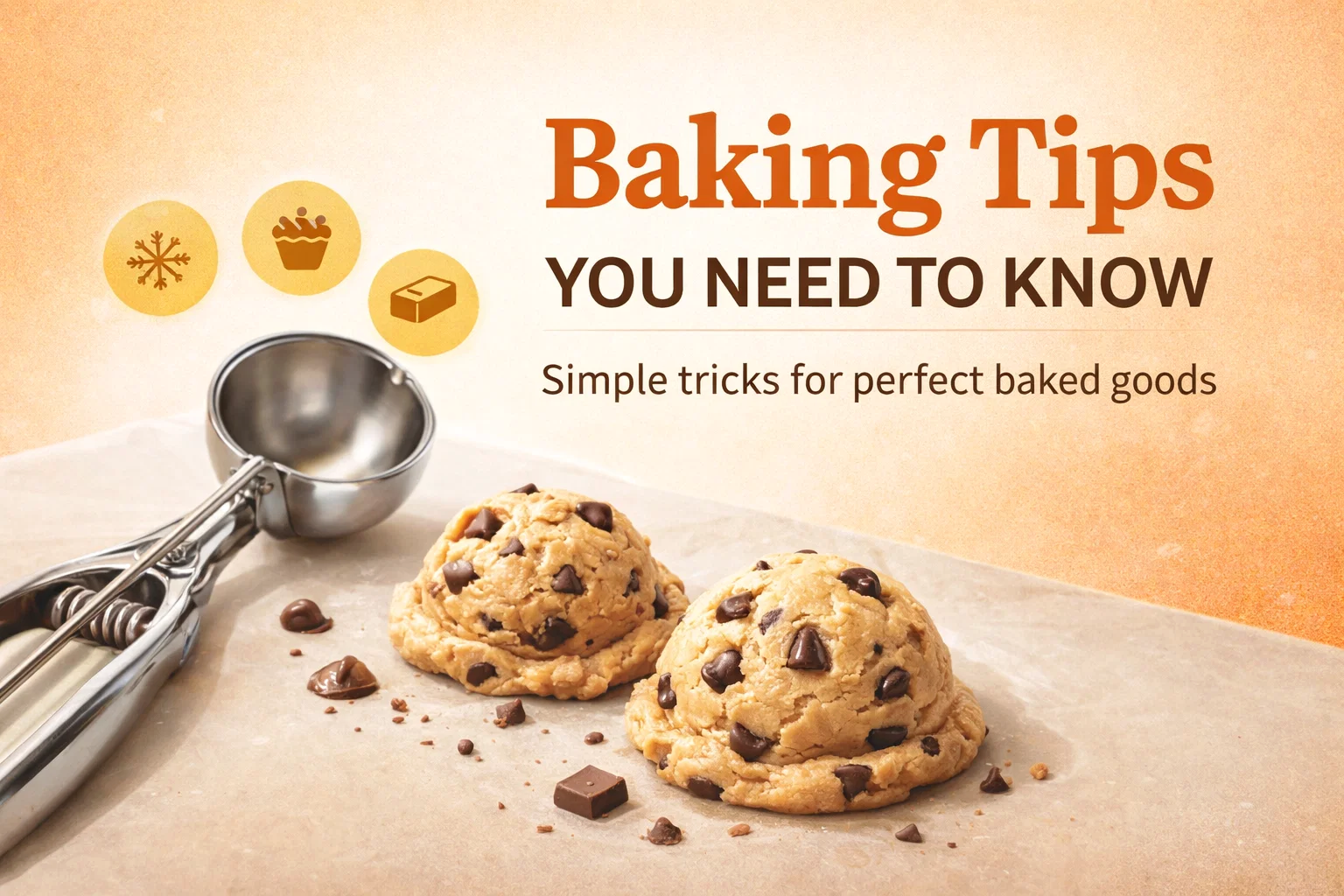
- Mechanical Cookie Scoops: These are essential for ensuring that every cookie is exactly the same size. Uniformity is not just about looks; it ensures that every piece on the tray bakes at the same rate, preventing some from burning while others remain raw.
- Digital Kitchen Scale: Professional bakers rarely use measuring cups. Weighing your ingredients in grams is the only way to be 100 percent accurate, especially with flour, which can be packed down or aerated depending on how you scoop it.
- Parchment Paper: Forget greasing pans with gobs of butter. High quality parchment paper prevents sticking and makes cleanup a breeze, while also helping the bottom of your bakes brown evenly.
- Oven Thermometer: Most home ovens are off by at least ten or fifteen degrees. An inexpensive thermometer that hangs inside your oven will tell you the true temperature, ensuring your delicate bakes do not fail due to a calibration error.
Organization and Prep: The Mise en Place Method
Before you even turn on the oven, the most important thing you can do is practice “mise en place,” which is a French culinary phrase meaning “everything in its place.” This involves measuring out all of your ingredients and having your tools ready before you start mixing. Baking is a series of chemical reactions, and some of those reactions start the moment wet hits dry. If you are scrambling to find the baking powder while your batter is already sitting out, you might lose the leavening power needed for a good rise.
Preparation also reduces stress in the kitchen. When you are organized, you are less likely to forget a crucial ingredient or lose track of how many cups of flour you have already added. It allows you to focus on the technique, like the speed of your mixer or the consistency of your dough, rather than the logistics of the recipe. A calm baker is a successful baker.
Mastering the Art of Scratch Baking
There is a unique satisfaction that comes from scratch baking. When you control every ingredient, you avoid the preservatives and artificial flavors found in store bought mixes. You have the freedom to experiment with different types of flour, high quality vanillas, and fresh fats. Scratch baking also allows you to tailor treats to your specific preferences, whether that means extra salt to balance the sugar or a specific blend of chocolates for the perfect melt.
Learning these skills is a journey of trial and error. Every batch that does not turn out quite right is simply a lesson in what to adjust for next time. Over time, you will develop an intuition for the kitchen. You will be able to tell by the look of the batter if it needs a splash more liquid or if the oven is running a bit too hot. This level of expertise comes from consistent practice and a willingness to try new methods like the ones we have discussed today.
Conclusion: Bringing Professional Secrets Home
Baking is a wonderful blend of precision and creativity. By incorporating these professional secrets into your routine, you are setting yourself up for success and ensuring that every hour spent in the kitchen results in something delicious. Remember that great baking is not about having the most expensive ingredients, but about understanding how those ingredients work together. From the temperature of your butter to the way you stabilize your egg whites, every small choice you make has an impact on the final result.
So, the next time you reach for your apron, take a moment to plan your approach. Chill that dough, balance your fats, and don’t forget that pinch of cornstarch. These simple yet effective hacks will turn your home kitchen into a boutique bakery, one tray at a time. Whether you are sharing your creations with friends or enjoying a quiet moment with a fresh muffin and a cup of tea, you can take pride in knowing you have mastered the art of the bake. Happy baking, and may your kitchen always be filled with the scent of something wonderful.