5 Habit Psychology Facts to Change Your Life How to Build Better Habits Neural Pathways
Have you ever felt like you are in a constant tug of war with your own mind? One moment you are determined to start a new fitness journey, and the next, you find yourself mindlessly reaching for a bag of chips while sitting on the couch. This is not a lack of character or a sign of weakness; it is actually a fundamental feature of your brain architecture. Habit psychology is the invisible force shaping nearly every minute of our lives, from the way we brush our teeth to how we respond to stress at work. Understanding these hidden mechanisms is the first step toward reclaiming your agency and designing a life that feels effortless rather than a constant uphill battle.
The Efficiency Program: Why Your Brain Loves Patterns
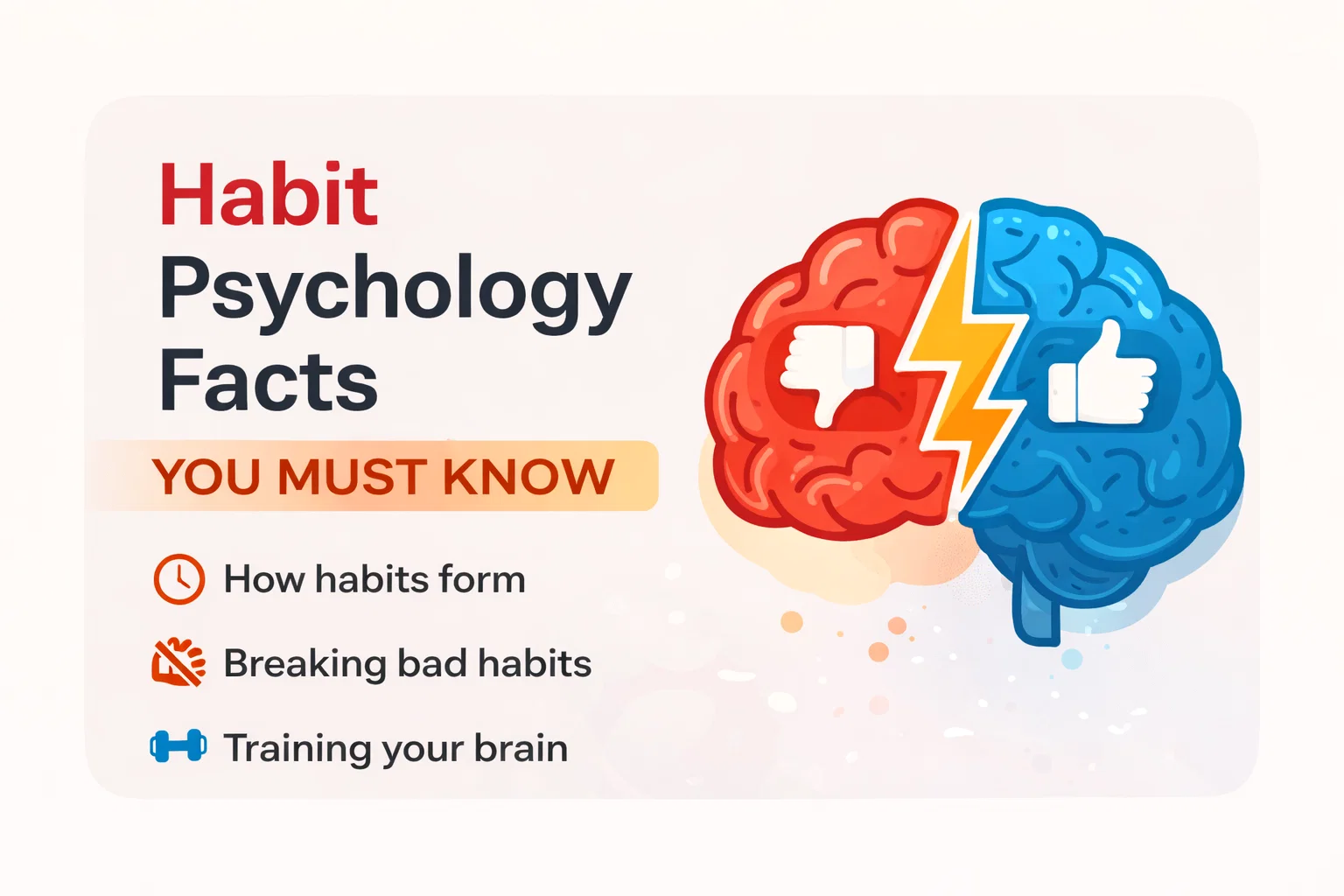
To understand habits, we first have to understand the brain’s primary objective: energy conservation. The human brain is an energy-hungry organ, consuming about 20 percent of our daily calories despite making up only 2 percent of our body weight. To stay efficient, the brain is constantly looking for ways to automate repetitive tasks. When you perform an action repeatedly in a stable context, the brain shifts the processing of that task from the conscious prefrontal cortex to the basal ganglia, a much older and more primitive part of the brain responsible for patterns and motor control.
The fascinating and sometimes frustrating reality is that your brain does not distinguish between a good habit and a bad habit. It does not care if a pattern is helping you reach your goals or holding you back; it only cares that the pattern exists and can be automated to save energy. This is why breaking a bad habit feels like you are fighting against yourself. In a very literal sense, you are. You are attempting to override a deeply ingrained efficiency program that your brain has spent a long time perfecting.
The Myth of the 21 Day Rule
We have all heard the popular myth that it takes exactly 21 days to form a new habit. This idea originated from a misunderstanding of a plastic surgeon’s observations in the 1950s, but modern neuroscience tells a much different story. Research from University College London suggests that, on average, it takes about 66 days for a new behavior to become automatic. However, this number can vary significantly depending on the complexity of the habit and the individual, ranging anywhere from 18 to 254 days.
The key takeaway here is patience. If you are struggling after three weeks, you haven’t failed; you are simply in the middle of the construction process. Building a habit is less like flipping a switch and more like carving a path through a dense forest. Each time you repeat the behavior, the path becomes a little clearer and easier to walk.
Neural Pathways are Permanent: The Road Map of the Mind
One of the most striking facts about habit psychology is that you cannot truly erase a habit once it has been formed. Instead, you can only replace it with a stronger, more dominant pathway. Think of your habits as physical roads in your brain. Once a highway is built, it stays there. When you try to change a behavior, you are not destroying the old highway; you are simply trying to build a new road next to it and choosing to drive on that one instead.
This explains why it is so easy to fall back into old patterns during times of high stress or exhaustion. When your conscious mind is tired, your brain defaults to the most established, well-paved road available. Recognizing that these pathways are permanent helps remove the shame associated with “relapsing” into old behaviors. It is not a moral failure; it is a neurological default. The goal is to make your new, positive pathways so wide and well-paved that they become the path of least resistance.
The Golden Rule of Habit Change
Since we cannot delete old habits, we must use the Golden Rule of Habit Change: keep the cue and the reward, but change the routine. Most habits are driven by a specific trigger (the cue) and provide a specific benefit (the reward). If you can identify what you are actually seeking when you perform a bad habit, you can substitute a healthier action that provides a similar satisfaction. This allows you to “hijack” the existing neural circuitry for your own benefit.
Environment vs. Willpower: Setting Yourself Up for Success
We often lionize willpower as the ultimate tool for self-improvement. We think that if we just “want it enough,” we can overcome any obstacle. However, psychology shows that environment is a much more powerful predictor of behavior than internal discipline. Your brain is designed to make decisions based on what is easiest to reach and most visible in your immediate surroundings. This is often referred to as choice architecture.
If you want to eat healthier but your kitchen counters are covered in snacks, you are forcing your brain to use precious energy to say “no” every time you walk by. Eventually, your willpower will falter. However, if you hide the junk food in a high cabinet and place a bowl of fresh fruit on the counter, you have made the good choice the easy choice. People with high self-control do not necessarily have more willpower; they simply design their environments so they don’t have to use it as often.
Designing Your Spaces
- Visual Cues: If you want to remember to take vitamins, place them right next to your toothbrush.
- Reducing Friction: If you want to work out in the morning, lay your clothes out the night before so there are fewer steps between waking up and starting.
- Adding Friction: If you want to spend less time on your phone, put it in another room while you work or delete distracting apps.
The Battery of Discipline: Understanding Willpower Depletion
Willpower is not an infinite resource; it behaves more like a battery or a muscle that gets tired with use. This concept, known as ego depletion, explains why many of us can be perfectly disciplined during the workday but find ourselves overeating or mindlessly scrolling through social media at 9:00 PM. Every decision you make throughout the day, from what to wear to how to phrase an email, drains a bit of your mental energy.
By the time evening rolls around, your “discipline battery” is often running on empty. When this happens, your brain stops making choices based on your long-term goals and starts making them based on immediate comfort and ease. To combat this, you should avoid making important decisions late at night and try to automate as many of your daily choices as possible. The fewer decisions you have to make, the more energy you preserve for the things that truly matter.
Habit Stacking: Piggybacking on Existing Automation
One of the most effective strategies for building new habits is a technique called habit stacking. Because your brain already has incredibly strong neural pathways for your existing routines, such as making coffee in the morning or getting into bed at night, you can “stack” a new habit on top of an old one. This uses the momentum of your established automation to pull the new behavior along with it.
The formula is simple: After [Current Habit], I will [New Habit]. For example, “After I pour my morning cup of coffee, I will meditate for one minute.” By anchoring the new behavior to something you already do without thinking, you remove the need for a separate reminder and lower the cognitive load required to get started.
Why Habit Stacking Works
Habit stacking works because it provides an immediate cue. You don’t have to remember to do the new thing; the completion of the old thing acts as a physical trigger. This technique is especially helpful for small, “micro-habits” that are easy to overlook but provide massive long-term benefits when performed consistently.
The Power of Micro-Wins and Identity
When we set out to change our lives, we often think we need to make massive, sweeping changes. But habit psychology suggests that small, incremental improvements are much more sustainable. A 1 percent improvement every day results in being 37 times better by the end of a year. These “micro-wins” are crucial because they provide the dopamine hits necessary to keep your brain engaged and motivated.
Furthermore, the most lasting habit changes are those that shift your identity. Instead of saying “I am trying to run,” a person who has successfully built the habit says “I am a runner.” When a behavior becomes part of who you are, you are no longer “working” to maintain it; you are simply acting in alignment with your self-image. Every time you perform a small habit, you are casting a vote for the type of person you want to become.
Focus on the System, Not the Goal
Goals are about the results you want to achieve, but systems are about the processes that lead to those results. If you focus only on the goal, you are in a state of failure until you reach it. If you focus on the system, you can feel successful every single day that you show up and stick to your routine. In the world of habit psychology, the process is the prize.
Conclusion: Becoming the Architect of Your Life
Understanding the psychology of habits changes the way you look at your daily life. It shifts the perspective from one of blame and frustration to one of curiosity and design. You are not a victim of your biology; you are the architect of your own neural pathways. By respecting the way your brain works, managing your environment, and utilizing strategies like habit stacking and choice architecture, you can build a lifestyle that supports your highest aspirations.
Remember that change is a slow process of building new roads while the old ones slowly fade into the background. Be kind to yourself when the discipline battery runs low, and focus on the small, consistent actions that define who you are. The power to change your life doesn’t come from a single moment of intense willpower, but from the quiet, daily commitment to the patterns that shape your world. Start small, stay consistent, and watch as your brain’s efficiency program begins to work for you instead of against you.