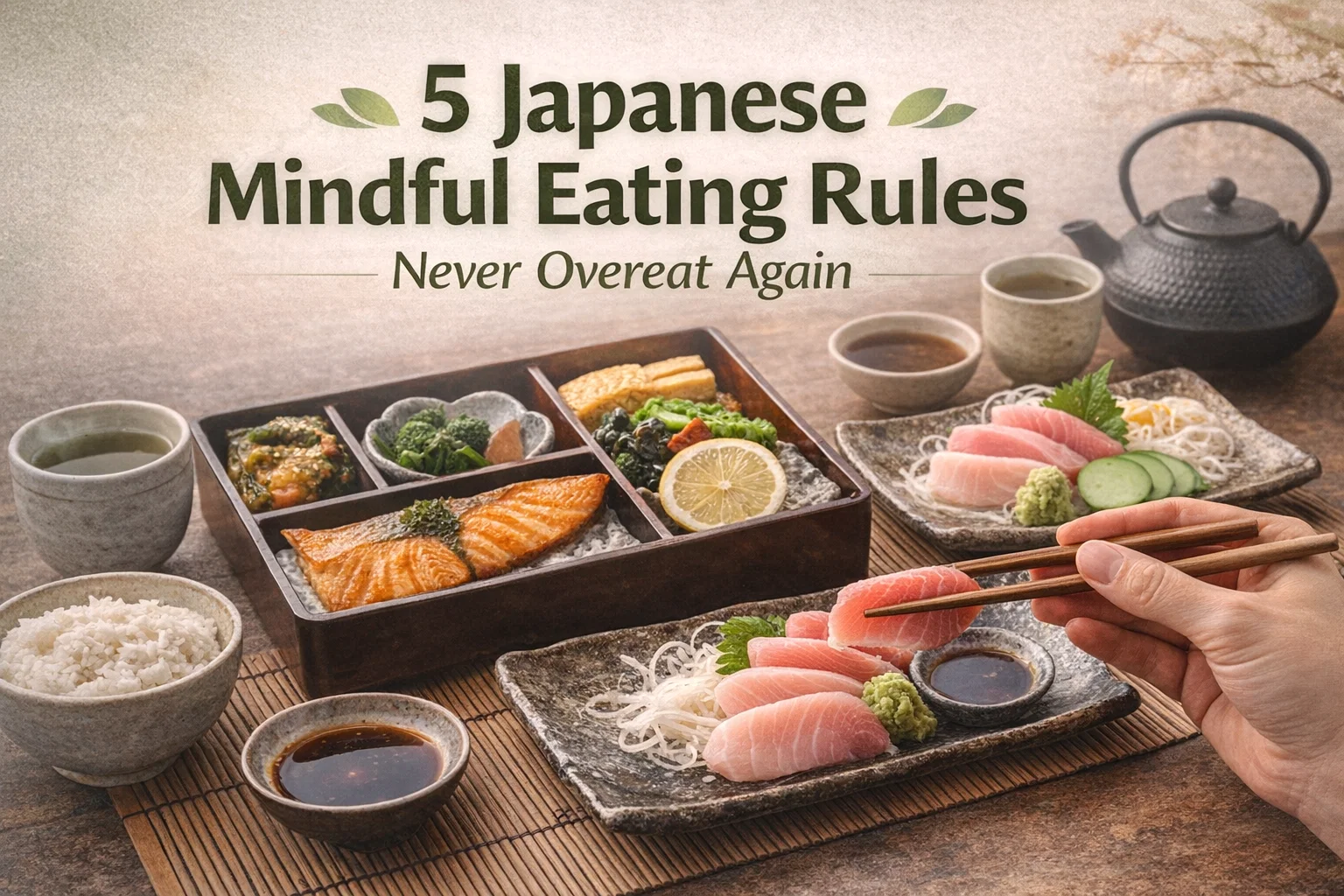
5 Japanese Mindful Eating Rules to Stop Overeating Naturally
Have you ever finished a delicious meal and realized you barely tasted a single bite? In our highly distracted modern world, eating often becomes just another hurried task to check off our endless daily schedules. We eat while answering emails, scrolling through social media feeds, or rushing to the next appointment. This disconnected approach to our meals is a primary reason why so many people struggle with overeating and poor digestion. But what if the secret to better portion control had absolutely nothing to do with restrictive fad diets, calorie counting, or exhausting willpower? What if the answer was actually hidden in mindful cultural traditions?
Today, we are exploring the transformative practice of Japanese mindful eating. The traditional Japanese approach to food is deeply rooted in respect, gratitude, and presence. By adopting these simple yet profound daily rituals, you can naturally prevent overeating and completely change your relationship with food. These habits align perfectly with a holistic wellness lifestyle, allowing you to nourish your body intuitively without feeling deprived.
Why Traditional Dieting and Willpower Often Fail
Before we dive into the specific Japanese rules of eating, it is important to understand why the conventional approach to portion control rarely works long term. Most modern diets rely heavily on restriction. They tell you exactly what you cannot have, which instantly creates a mindset of scarcity. When you rely solely on willpower to stop eating, you are fighting against your own biology. Your body is designed to seek out nourishment, and ignoring those biological cues often leads to a cycle of restricting and bingeing.
Mindful eating offers a completely different path. Instead of forcing you to ignore your appetite, mindfulness teaches you to listen to it closely. It shifts the focus from external rules to internal awareness. The Japanese eating rituals we are going to discuss act as gentle guardrails. They do not dictate what is on your plate, but rather how you interact with it. By slowing down the physical act of eating, you give your brain and your stomach the time they need to communicate effectively. This natural biological feedback loop is the ultimate key to feeling satisfied with less food.
1. The Power of Itadakimasu: Starting with Gratitude
The first rule of Japanese mindful eating happens before you even pick up a utensil. It is the practice of saying “Itadakimasu” right before the meal begins. Roughly translated, this phrase means “I humbly receive.” However, its cultural significance goes much deeper than a simple polite greeting.
Saying Itadakimasu is an expression of deep gratitude. It acknowledges the entire journey of the food on your plate. You are thanking the farmers who grew the vegetables, the individuals who transported the ingredients, the person who prepared the meal, and the natural elements that provided the nourishment.
How this prevents overeating: From a physiological standpoint, taking a moment to pause and express gratitude acts as a powerful pattern interrupt. It forces you to stop whatever stressful thoughts were occupying your mind and brings you into the present moment. This brief pause helps shift your nervous system from a state of “fight or flight” into the “rest and digest” mode. When your body is relaxed, your digestion improves significantly, and you become much more attuned to your physical hunger signals.
2. Eat with Chopsticks to Naturally Pacing Yourself
If you are accustomed to eating with a large fork or spoon, you might be surprised by how quickly you can consume a plate of food. Western utensils are highly efficient, making it incredibly easy to shovel large amounts of food into your mouth with very little effort. In contrast, eating with chopsticks requires focus, coordination, and significantly smaller portions per bite.
How this prevents overeating: Chopsticks are the ultimate tool for built in portion control. They mechanically force you to slow down your eating pace. Because you can only pick up a modest amount of food at one time, the entire dining experience is extended. You cannot blindly scoop up a mountain of rice or pasta. Instead, you must carefully select each bite. This slower pace allows you to actually taste the complex flavors and appreciate the unique textures of your meal, leading to a much higher level of sensory satisfaction.
3. Take Small Bites and Put Your Utensils Down
This rule builds beautifully upon the use of chopsticks. Even with smaller utensils, it is still possible to eat too quickly if you are continuously loading up the next bite while you are still chewing the previous one. The Japanese mindful eating method encourages taking distinctly small bites and, most importantly, putting your utensils down on the table between every single mouthful.
How this prevents overeating: Science tells us that it takes approximately twenty minutes for your stomach to send the hormonal signals to your brain that you are full. The hormone leptin needs time to travel and register satiety. If you finish your entire meal in ten minutes, your brain has no idea that you have consumed enough calories, which inevitably leads to overeating. By putting your chopsticks down, chewing thoroughly, and extending your meal to at least twenty minutes, you allow your natural fullness cues to catch up with your actual food intake. You will naturally feel the desire to stop eating exactly when your body has had enough.
4. Disconnect to Reconnect: Absolutely No Screens Allowed
In our current digital age, eating in front of a screen has become the norm. Whether it is catching up on a television show, watching a YouTube video, or scrolling through emails on a smartphone, distracted eating is a massive barrier to holistic health. The Japanese mindful eating philosophy requires you to remove these distractions so you can focus entirely on the food in front of you.
How this prevents overeating: When your brain is engaged with a screen, it cannot fully process the sensory input of your meal. This phenomenon is often referred to as “eating amnesia.” You might consume a massive portion of food but feel completely unsatisfied because your brain barely registered the experience. By eliminating phones, tablets, and televisions from the dining table, you bring your full awareness to the aroma, temperature, and taste of your food. This heightened level of mindfulness drastically reduces the urge to keep eating just for the sake of chewing.
5. Conclude Your Meal with Gochisosama
Just as a Japanese meal begins with a specific phrase, it also ends with one. After the final bite is consumed, it is customary to say “Gochisosama deshita,” which translates to “It was a feast” or “Thank you for the meal.”
How this prevents overeating: While Itadakimasu creates a definitive starting line for your meal, Gochisosama creates a firm finish line. This phrase acts as a psychological boundary. Once you have said it, the meal is officially over. This simple verbal cue is incredibly effective for stopping mindless grazing. It prevents you from sitting at the table and picking at leftover food simply because it is there. It signals to your brain that the time for nourishment has concluded and it is now time to move on to the next part of your day.
Bonus Habits for a Holistic Dining Experience
Beyond the core five rules, traditional Japanese dining incorporates a few other subtle habits that profoundly impact how much we eat and how satisfied we feel. Integrating these into your routine can elevate your personal growth and wellness journey.
The Art of Beautiful Presentation
In Japanese culture, we eat with our eyes first. Even the simplest meals are plated with care and attention to detail. Food is often arranged in beautiful bento boxes or on small, delicate ceramics that highlight the vibrant colors and fresh ingredients of the dish. Taking an extra sixty seconds to arrange your food nicely, rather than eating straight out of a takeout container or a cooking pot, increases the perceived value of the meal. When a meal looks beautiful and intentional, it feels more special. This psychological satisfaction translates into physical satisfaction, making you less likely to search the pantry for junk food immediately after dinner.
Always Sit Down to Eat
Eating while standing at the kitchen counter, walking out the door, or driving is entirely contradictory to mindful eating. In Japan, there is a strong cultural norm against walking and eating at the same time. Meals and even small snacks are meant to be consumed while seated. Sitting down to eat forces you to physically stop your day. It shows respect for the food and for your own body. Furthermore, eating in a relaxed, seated position is essential for proper digestion and helps prevent the uncomfortable bloating that often accompanies rushed, on the go meals.
How to Implement These Mindful Rules in Your Daily Life
Transitioning from distracted eating to a fully mindful practice will not happen overnight. It is a journey of self improvement that requires patience and grace. If you try to implement all of these rules at once, you might feel overwhelmed. Instead, try a gradual approach.
- Week 1: Start by simply sitting down for every single meal and snack. Banish standing meals from your routine completely.
- Week 2: Introduce the “no screens” rule for at least one meal a day, perhaps starting with dinner. Focus entirely on the flavors on your plate.
- Week 3: Begin practicing the pause. You do not have to say the Japanese phrases if they do not feel authentic to you, but take a deep breath and express silent gratitude before your first bite, and acknowledge when the meal is officially done.
- Week 4: Experiment with chopsticks for meals where it makes sense, or simply commit to putting your regular fork down between every bite to slow your pace.
Conclusion: Cultivating a Lifelong Holistic Habit
Learning to stop overeating naturally does not require a rigid diet plan, exhausting calorie tracking, or making yourself miserable through sheer willpower. By looking to the wisdom of Japanese mindful eating rules, we can transform our daily meals from stressful, rushed obligations into moments of peace and genuine nourishment.
By pausing for gratitude, eating slowly with intentional utensils, taking smaller bites, removing digital distractions, and clearly signaling the end of the meal, you allow your body to function exactly as it was designed. You will digest your food better, enjoy your meals more thoroughly, and naturally stop eating when you are comfortably full. Embrace these holistic habits, and you will discover a profound, joyful, and healthy new relationship with food that will last a lifetime.