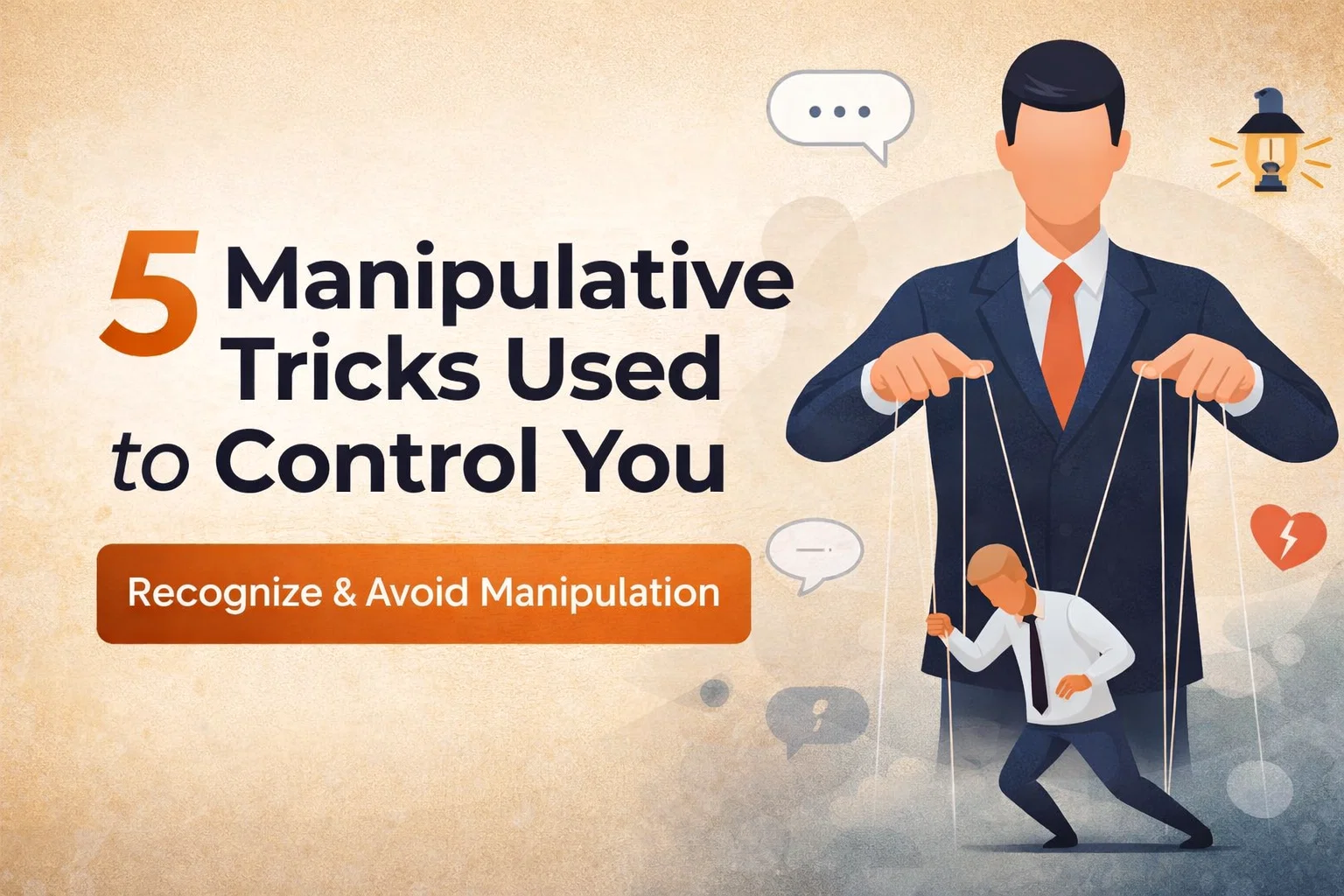
5 Manipulative Tactics Used to Control You Signs of Toxic Behavior and How to Respond
Have you ever walked away from a conversation feeling drained, confused, or like you were the one who did something wrong, even when you knew you hadn’t? If this happens to you regularly, you might be encountering subtle psychological manipulation. It is not always about overt shouting or dramatic arguments. Often, control is exerted through quiet, insidious habits designed to keep you off balance and undermine your confidence.
Understanding these dynamics is not about becoming paranoid or looking for conflict in every interaction. Instead, it is about gaining clarity and perspective so you can protect your mental energy and maintain healthier, more authentic connections. By identifying these five common manipulative patterns, you empower yourself to respond with confidence rather than reacting out of confusion.
1. The Silence Tactic: Weaponizing Quiet
Silence is a natural and healthy part of communication. However, when it is used intentionally to create discomfort, it transforms into a tool of control. The silence tactic occurs when someone goes quiet immediately after you have made a statement or asked a question. This calculated pause is designed to make you feel anxious, causing you to fill the gap by over-explaining, apologizing, or retracting what you just said.
How to handle it: When you feel that sudden pressure to talk, take a breath. Remind yourself that you have already said what you needed to say. It is perfectly acceptable to mirror the silence or simply say, “I am happy to wait until you are ready to respond.” By refusing to be baited into over-explaining, you reclaim control over the pace of the conversation.
2. The Guilt Trip: Flipping the Script
A guilt trip is a sophisticated way of shifting accountability. You might approach someone with a valid concern or a hurt feeling, only to find the conversation suddenly turning toward your own perceived flaws. Before you know it, you are the one apologizing for bringing up the issue, while the other person adopts the role of the victim.
This tactic is incredibly effective because it targets your empathy. Because you are a reasonable person who cares about how you affect others, you are susceptible to believing that you might be the problem. Recognizing this shift early is crucial. If you notice the subject moving from the issue at hand to your own character or behavior, gently steer the conversation back to the original topic.
3. The Interruption: Dominating the Frame
We have all been interrupted in casual conversation, but chronic interruption is a subtle signal of disrespect. When someone cuts you off mid-sentence, they are essentially telling you that their thoughts, opinions, and voice hold more value than yours. It keeps them in the driver’s seat and prevents you from fully articulating your point.
Tips for managing interruptions:
- Maintain your flow: If you are interrupted, you can politely but firmly say, “Please let me finish my thought,” before continuing.
- Wait it out: Sometimes, the most powerful response is to stop talking immediately when interrupted, look at the person calmly, and wait for them to finish. Once they are done, resume exactly where you left off. This highlights their behavior without you needing to get angry or defensive.
4. The False Apology: Invalidating Your Reality
The phrase “I’m sorry you feel that way” is a hallmark of a non-apology. It sounds like an admission of fault, but it actually puts the entire responsibility on your emotions. It suggests that your reaction is the problem, rather than the behavior that caused it. This invalidates your experience and shifts the blame back onto you.
An authentic apology acknowledges the impact of an action. A false apology minimizes it. When someone says this to you, recognize that they are not taking accountability. You can respond by saying, “My feelings are a response to what happened. I would appreciate it if we could talk about the actual situation.”
5. The Gaslight: Questioning Your Memory
Gaslighting is one of the most damaging forms of manipulation. It involves someone outright denying that an event occurred, or insisting that your memory of the facts is wrong. This causes you to doubt your own perception and sanity. It is a profound way to erode your self-trust.
The best defense against gaslighting is to trust your own memory. If you know something happened, do not let someone else define your reality. You do not need their validation to know what is true. If you find yourself in a situation where your memory is constantly questioned, it is a significant red flag that you are dealing with an unhealthy dynamic.
Cultivating Boundaries for a Healthier Life
Recognizing these five tactics is only the beginning. The goal is to move from a place of reaction to a place of action. Setting boundaries is not about attacking the other person; it is about clearly defining what you will and will not accept in your interactions. When you start setting these boundaries, you may find that some people push back harder. That is often a sign that the boundaries were necessary in the first place.
Remember that you have the right to feel heard, respected, and clear-headed in your relationships. Your voice matters, your memories are valid, and your concerns deserve to be addressed, not dismissed or twisted. By staying observant and keeping your composure, you can protect your peace of mind and foster deeper, more honest connections with the people in your life.
Conclusion
Navigating relationships can be challenging, and realizing that someone is using manipulative tactics can be a jarring experience. However, knowledge is your most powerful tool. By understanding the mechanics of these five behaviors, you can stop taking the bait and remain firm in your own truth. You are not responsible for someone else’s desire to control or manipulate, but you are responsible for your own boundaries and your own reactions. Choose to stay grounded, trust your instincts, and prioritize your well-being in every conversation.