6 Best Foods to Lower Nighttime Cortisol and Improve Sleep Quality
Waking up at 3:00 AM with a racing mind is more than just an annoyance; for many of us, it is a sign that our internal chemistry is slightly out of sync. While we often blame caffeine or a busy schedule, the real culprit behind that “wired but tired” feeling is often cortisol. Known as the primary stress hormone, cortisol follows a natural rhythm that should peak in the morning and bottom out at night. However, modern life has a way of flipping that script. When your cortisol levels stay high into the evening, falling asleep feels impossible and staying asleep becomes a gamble. The good news is that you do not always need a pharmacy to fix this. Your kitchen is already stocked with powerful, natural tools to help soothe your nervous system and prepare your body for a truly restorative night of rest.
Understanding the Cortisol Connection to Sleep
Before diving into the pantry, it is essential to understand why cortisol is the enemy of a good night’s sleep. Under normal circumstances, cortisol works in tandem with melatonin. Think of them as a biological seesaw: when cortisol goes down, melatonin should go up. Cortisol provides the energy you need to face the day, while melatonin signals to every cell in your body that it is time to repair and recover.
When you experience chronic stress, blue light exposure, or late-night exercise, your adrenal glands continue to pump out cortisol long after the sun has set. This creates a state of hyper-arousal. Even if you manage to drift off, high nighttime cortisol often leads to fragmented sleep or early morning wakening, leaving you feeling exhausted before your alarm even goes off. By choosing specific foods that contain targeted nutrients, you can manually nudge that cortisol “seesaw” back into balance.
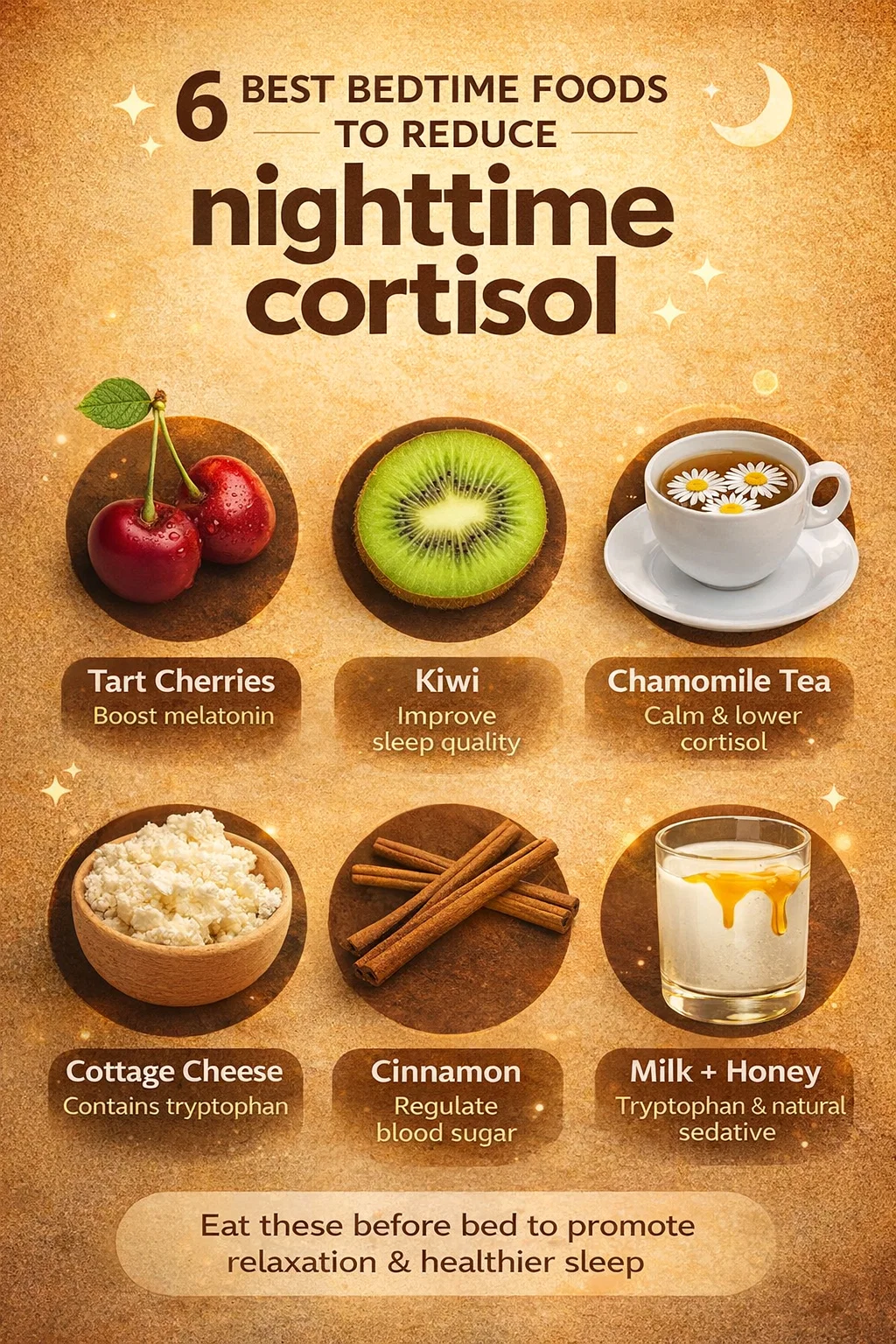
1. Tart Cherries: The Natural Melatonin Powerhouse
If there is a king of sleep-promoting fruits, it is the tart cherry. Specifically, the Montmorency variety has gained a massive reputation in the wellness community for its ability to improve sleep duration and quality. Unlike many other foods that simply contain the building blocks of sleep hormones, tart cherries are one of the few natural food sources of actual melatonin.
How Tart Cherries Regulate Your Rhythm
Studies have shown that consuming tart cherry juice or the whole fruit can significantly increase the levels of melatonin circulating in your body. This is particularly helpful for those dealing with jet lag or shift work. Beyond the melatonin content, these cherries are packed with anti-inflammatory compounds. Since high cortisol and systemic inflammation often go hand-in-hand, the antioxidants in tart cherries help calm the body’s stress response on multiple levels.
2. Kiwi: The Unexpected Sleep Ally
Most people associate kiwis with Vitamin C and digestive health, but research suggests they are an incredible tool for the evening hours. A medium-sized kiwi is a nutritional dense package that addresses sleep from several different angles simultaneously.
The Serotonin Link
Kiwi fruits are unique because they contain a high concentration of serotonin. While we often think of serotonin as a “feel-good” brain chemical for mood, it is also a metabolic precursor to melatonin. By eating kiwi an hour or two before bed, you are providing your body with the raw materials it needs to transition into a sleep state. Additionally, kiwis are rich in folate and potassium, which help relax the muscles and support a steady heartbeat as you wind down.
3. Chamomile Tea: The Ultimate Nervous System Soother
There is a reason chamomile tea has been a bedtime staple for centuries. It is not just the ritual of a warm cup of tea that helps; it is the specific phytochemicals found within the chamomile flower that interact with your brain chemistry.
The Power of Apigenin
Chamomile contains an antioxidant called apigenin. This compound binds to certain receptors in your brain that may promote sleepiness and reduce insomnia. When these receptors are activated, it creates a mild sedative effect that helps quiet the “mental chatter” often fueled by high cortisol. Drinking a cup of chamomile tea creates a chemical signal to your nervous system that the “fight or flight” period of the day is officially over.
4. Cottage Cheese: Slow-Digesting Protein for Stable Sleep
It might seem strange to eat a bowl of cottage cheese before bed, but from a biological standpoint, it is one of the smartest moves you can make. The secret lies in the type of protein it contains and how that protein affects your brain.
Tryptophan and Casein
Cottage cheese is incredibly rich in casein protein. Unlike whey protein, which is absorbed quickly, casein is a slow-digesting protein. This provides your body with a steady stream of amino acids throughout the night. Most importantly, it is loaded with tryptophan. Tryptophan is an amino acid that travels to the brain to produce serotonin and melatonin. Because cottage cheese also contains a bit of fat and protein, it prevents the blood sugar spikes that can sometimes cause the body to release “emergency” cortisol in the middle of the night.
5. Cinnamon: Balancing Blood Sugar to Prevent Spikes
Cinnamon is much more than a flavor enhancer for your morning oatmeal. When used in the evening, it acts as a powerful regulator for your metabolic health, which is intimately tied to your stress hormones.
Preventing Nighttime Glucose Crashes
One of the most common reasons people wake up at 2:00 or 3:00 AM is a blood sugar crash. When your blood sugar drops too low during sleep, your brain perceives it as an emergency and triggers a spike of cortisol and adrenaline to wake you up and encourage you to find food. Cinnamon improves insulin sensitivity and helps keep your blood sugar levels on an even keel. By sprinkling a little cinnamon on your evening snack, you are essentially installing a safety net that prevents cortisol from hijacking your sleep cycle.
6. Milk and Honey: The Classic Tryptophan Duo
Your grandmother was right: a glass of warm milk and honey is a “magic potion” for sleep. This combination works through a very specific chemical reaction that makes it easier for sleep-inducing nutrients to reach your brain.
The Insulin Trigger
Milk is naturally high in tryptophan, but tryptophan often has a hard time crossing the blood-brain barrier because it has to compete with other amino acids. This is where the honey comes in. The natural sugars in honey cause a slight rise in insulin. This insulin spike helps move those competing amino acids into your muscles, leaving the “express lane” open for tryptophan to reach your brain. Once there, it converts into serotonin and eventually melatonin, helping you drift into a deep, uninterrupted slumber.
Building Your Ideal Nighttime Routine
While these foods are powerful, they work best when integrated into a consistent evening ritual. Lowering cortisol is about sending a series of signals to your body that the environment is safe and peaceful. Start by dimming the lights an hour before bed to encourage natural melatonin production. Consider combining a few of these items for a synergistic effect.
Recipe Ideas for Better Sleep
- The Sleepy Smoothie: Blend one kiwi, a half cup of tart cherry juice, and a dollop of Greek yogurt or cottage cheese.
- Cinnamon Milk: Warm up a cup of dairy or almond milk, add a teaspoon of raw honey, and a generous sprinkle of cinnamon.
- Evening Bowl: A small bowl of cottage cheese topped with sliced kiwis and a dash of cinnamon.
The Role of Magnesium and Hydration
In addition to these specific foods, keeping your magnesium levels up is vital for cortisol management. Magnesium is often called the “relaxation mineral” because it helps regulate the hypothalamic-pituitary-adrenocortical (HPA) axis, which is the control center for your stress response. Many of the foods mentioned, like kiwi and certain seeds you might add to your cottage cheese, contain magnesium that works alongside the primary nutrients to keep you calm.
Be mindful of your hydration as well. While a cup of chamomile is great, drinking too much liquid right before bed might lead to mid-night bathroom trips that disrupt your sleep cycle. Aim to consume your “sleep snacks” and teas about 60 to 90 minutes before you actually plan to close your eyes.
Conclusion: Taking Control of Your Rest
We often treat sleep as something that just happens to us, but it is actually a biological process that we can actively support. By understanding how nighttime cortisol affects your brain and body, you can move away from frustration and toward a proactive approach to wellness. Whether it is the melatonin in tart cherries, the serotonin in kiwi, or the blood sugar stabilizing power of cinnamon, these natural ingredients offer a gentle way to reclaim your nights.
Next time you find yourself feeling stressed as the evening winds down, skip the mindless scrolling and head to the kitchen instead. Choosing the right bedtime foods is an act of self-care that pays dividends the moment your head hits the pillow. Start small by picking one or two of these foods to try this week and pay close attention to how you feel when the sun comes up. You might just find that the secret to a productive, energetic day was waiting for you in your evening snack bowl all along.