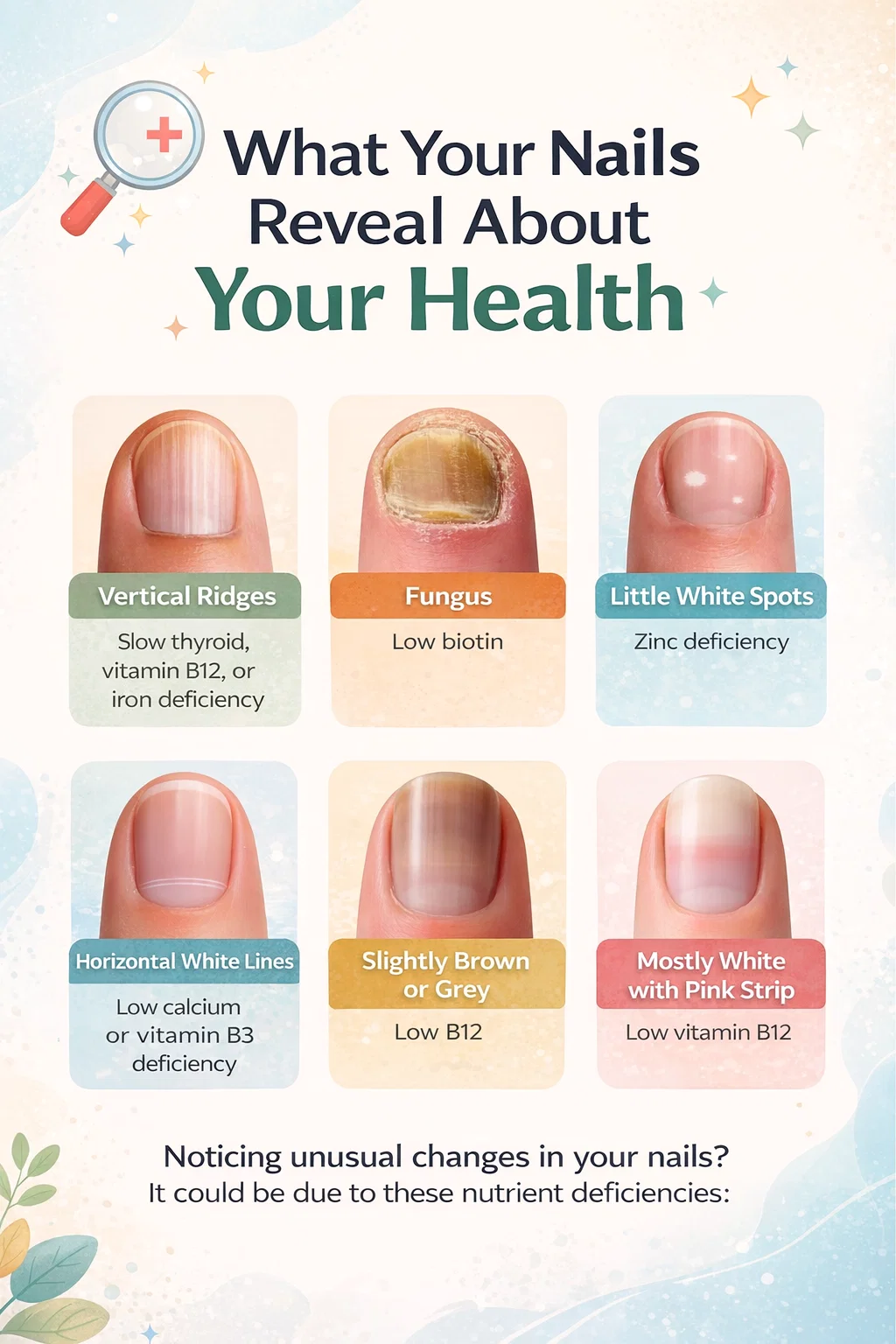
6 Finger Nail Warning Signs What Your Nails Say About Your Health Vitamin Deficiencies
Have you ever taken a moment to really look at your fingernails? Most of us view them as a canvas for polish or a tool for opening soda cans, but your nails are actually sophisticated biological mirrors. They reflect the internal state of your body, often signaling nutritional gaps or systemic shifts long before other symptoms appear. When you notice a new ridge, a strange spot, or a change in color, your body is effectively sending you a status report. Understanding these subtle visual cues can be a game-changer for your personal wellness journey, allowing you to address health needs through simple dietary adjustments or lifestyle changes.
The Language of Your Fingernails: Decoding the Basics
Your nails are composed primarily of a tough protective protein called keratin. Because the nail bed is rich in blood vessels, the appearance of the nail plate is heavily influenced by your circulation and the nutrients being delivered to your extremities. Healthy nails are typically smooth, consistent in color, and free of prominent grooves. However, when the body faces a deficiency or an underlying health challenge, it prioritizes vital organs over peripheral structures like hair and nails. This is why your fingertips are often the first place to show signs of trouble.
By paying attention to the texture, color, and strength of your nails, you can gain valuable insights into your thyroid health, mineral levels, and vitamin intake. It is not about self-diagnosing serious medical conditions, but rather about becoming more intuitive and proactive with your self-care. Let us dive deep into the specific signs you might see and what they typically indicate about your internal chemistry.
Vertical Ridges: A Map of Your Metabolic Health
If you run your finger across your nail and feel raised lines traveling from the cuticle to the tip, you are looking at vertical ridges. While these are common as we age, they are frequently linked to specific internal imbalances that deserve your attention. In many cases, these ridges act as a visual barometer for your metabolic speed and nutrient absorption.
Thyroid Function and Vertical Lines
One of the most common causes for prominent vertical ridges is an underactive thyroid, also known as hypothyroidism. When the thyroid gland slows down, it impacts the rate of cell turnover throughout the body. This can lead to nails that grow more slowly and develop these characteristic ridges. If you also feel chronically fatigued or notice your skin is unusually dry, your nails might be confirming that your metabolism needs a boost.
The Role of Vitamin B12 and Iron
Beyond the thyroid, vertical ridges are often a hallmark of Vitamin B12 deficiency or low iron levels. Iron is essential for carrying oxygen to your cells, and when levels are low, the nail matrix suffers from a lack of nourishment. Similarly, B12 is vital for red blood cell production. Ensuring you have adequate intake of leafy greens, lean proteins, or high quality supplements can often smooth out these ridges over time as the nail regrows.
Understanding White Spots and Horizontal Lines
Many of us grew up hearing that white spots on the nails meant we werent drinking enough milk. While that was a bit of an oversimplification, the core idea was correct: white markings are almost always related to mineral levels or physical stress on the nail matrix.
Zinc Deficiency and Leukonychia
Those small, scattered white clouds or spots are technically known as punctate leukonychia. Most often, these are a direct result of a zinc deficiency. Zinc is a trace mineral that plays a massive role in protein synthesis and immune function. If your body is running low on zinc, the nail plate may form with these small pockets of air or irregular keratinization. Incorporating pumpkin seeds, legumes, or shellfish into your diet can help clear these spots up.
Horizontal White Lines Near the Base
When you see thin, horizontal white lines stretching across the nail near the base, it often points toward a deficiency in Calcium or Vitamin B3, also known as Niacin. Unlike spots caused by minor trauma, these lines usually appear on multiple nails simultaneously. Niacin is crucial for converting food into energy and maintaining the integrity of the skin and nails. If these lines persist, it may be a sign that your body is struggling to maintain its mineral stores.
Color Shifts: When Nails Change Their Hue
The color of your nail bed is perhaps the most immediate indicator of your circulatory health. A healthy nail should have a pinkish tint, indicating robust blood flow. When the color shifts toward grey, brown, or even blue, it is a clear signal that something in the internal transport system is misaligned.
The Impact of B12 on Pigmentation
A brownish or greyish tint across the nail plate is a classic sign of low Vitamin B12. This deficiency can cause hyperpigmentation in the nail bed because B12 is involved in the pigment metabolism of the body. Because B12 is primarily found in animal products, those following plant-based diets should be particularly mindful of this color change, as it can be an early warning sign of anemia.
The Half-and-Half Nail: White and Pink Strips
If your nail appears mostly white but features a distinct pink or reddish strip at the very top, you might be looking at what researchers call Lindsay’s nails. This specific pattern is frequently associated with Vitamin B12 deficiency as well. However, if the entire nail turns completely white or develops a blueish cast, it could indicate a lack of Vitamin B1. These colors suggest that oxygenation or nutrient delivery is being compromised, and it is a good idea to focus on B-complex vitamins to restore balance.
Dealing with Fungal Growth and Brittle Texture
Sometimes the issue is not just a line or a spot, but a change in the entire structure of the nail. Fungal infections can cause the nail to become thick, yellowed, and crumbly. While topical treatments are common, the health of the nail from the inside out determines how well you can fight off these invaders.
Biotin and Silica: The Dynamic Duo for Strength
Fungal issues are often more prevalent when the nail’s natural defenses are weak. Low levels of Biotin, a B-vitamin, can lead to brittle nails that crack easily, providing an entry point for fungus. Supplementing with Silica is another powerful way to strengthen the structural integrity of your nails. Silica helps cross-link collagen fibers, making the nail plate harder and more resistant to external damage. Stronger nails are naturally better at repelling infections and maintaining a smooth, healthy appearance.
How to Support Your Nail Health Naturally
Once you have identified the signs your nails are showing, the next step is taking action. Improving your nail health is a slow process because it takes about six months for a fingernail to grow from the base to the tip. Consistency is key when it comes to nutritional support.
- Prioritize a B-Complex: Since B1, B3, and B12 are so vital for nail color and texture, a high quality B-complex supplement can cover multiple bases at once.
- Boost Your Minerals: Focus on foods rich in Zinc and Iron. Red meat, spinach, lentils, and seeds are excellent choices for building a strong nail matrix.
- Hydrate and Moisturize: While internal health is primary, external hydration prevents the nail from becoming brittle. Use natural oils like jojoba or almond oil on your cuticles nightly.
- Monitor Your Thyroid: If you see persistent vertical ridges along with other metabolic symptoms, consider a check-up to ensure your thyroid is functioning optimally.
Conclusion: Your Nails as a Wellness Compass
Your nails are far more than just a cosmetic feature. They are a functional, ever-evolving map of your internal health. Whether it is the subtle appearance of vertical ridges signaling a need for B12 or small white spots suggesting you need more zinc, these visual markers provide an incredible opportunity to listen to your body. By paying attention to these six common warning signs, you can take proactive steps to improve your nutrition and overall well-being.
Next time you notice a change in your nails, do not just reach for the nail file or a bottle of polish. Take a moment to consider what your body is trying to communicate. With the right nutrients and a bit of patience, you can transform your nails from a source of concern into a glowing reflection of your vibrant health. Your journey to wellness truly is right at your fingertips.
Would you like me to generate a specific meal plan or a list of supplements that target these specific nail health concerns?