7 Best Restorative Yoga Postures for Better Sleep Deep Relaxation
Finding a way to quiet the mind after a frantic day can feel like an uphill battle. We often climb into bed with our brains still buzzing from emails, chores, and the endless scroll of social media, wondering why sleep remains elusive. If you have been tossing and turning, it is time to stop fighting your body and start listening to it. Restorative yoga offers a gentle, science-backed bridge between the chaos of the day and the deep, nourishing rest you deserve. By using the weight of your body and the support of simple props, you can signal to your nervous system that the day is over and it is finally safe to let go.
The Science of Sleep and the Nervous System
To understand why yoga is so effective for sleep, we have to look at the autonomic nervous system. Most of our modern lives are spent in a state of sympathetic dominance, better known as the fight or flight response. This state increases cortisol and keeps our muscles primed for action. To fall asleep, we must shift into the parasympathetic nervous system, or the rest and digest state. Restorative yoga postures are specifically designed to trigger this shift by focusing on slow, rhythmic breathing and long-held, supported stretches that physically release the tension stored in our tissues.
Lowering Cortisol Through Movement
High levels of cortisol are the enemy of melatonin, the hormone responsible for regulating your sleep-wake cycle. When we practice yoga before bed, we are not just stretching muscles; we are chemically altering our internal environment. The slow transitions and mindful awareness required in these poses help to flush out stress hormones, making it easier for the brain to transition into the various stages of sleep. It is a natural, holistic way to reset your internal clock without relying on heavy supplements.
Essential Yoga Postures for a Better Night’s Rest
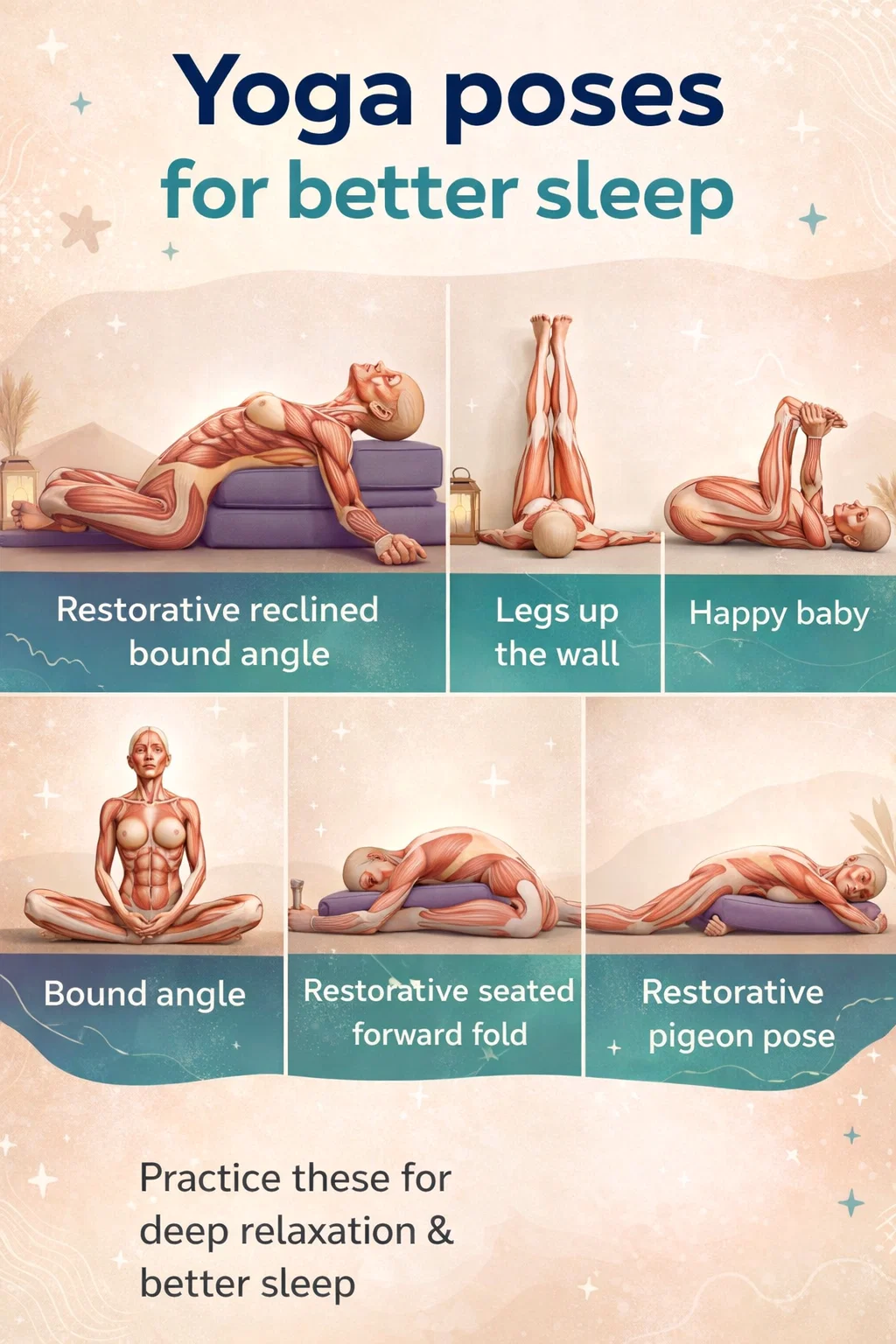
The beauty of a bedtime yoga practice is that you do not need a fancy studio or extreme flexibility. Many of these poses can be done right on your bedroom floor or even on your mattress. The goal is comfort, not intensity. Let us explore the most effective postures shown in our guide to help you drift off into dreamland.
Restorative Reclined Bound Angle
Often referred to as Supta Baddha Konasana, this is the ultimate heart and hip opener. By lying back on a bolster or a stack of pillows with the soles of your feet together, you allow gravity to do the work. This pose gently stretches the inner thighs and opens the chest, which can become constricted after a day of sitting at a desk. It encourages deep diaphragmatic breathing, which is the fastest way to calm a racing heart.
Legs Up the Wall
Viparita Karani is a favorite among yoga practitioners for its incredible ability to reduce anxiety and physical fatigue. By simply resting your legs vertically against a wall while your back stays flat on the floor, you facilitate lymphatic drainage and improve circulation. This inversion helps to pool blood back toward the heart, providing a sense of grounding and stability that is perfect for those who feel scattered or overwhelmed at night.
Happy Baby Pose
Ananda Balasana is as joyful as it sounds. By grabbing the outsides of your feet and pulling your knees toward your armpits, you release the lower back and the sacrum. Many of us hold emotional stress in our hips, and this pose provides a safe way to let that tension dissolve. It also provides a gentle massage to the spine, which can feel incredibly soothing after a day of movement or long periods of standing.
Deepening Your Practice with Restorative Variations
While basic stretches are great, restorative variations use props to ensure your body is 100 percent supported. When the body feels supported, the brain feels safe to shut down. This is where the real magic of sleep-focused yoga happens.
Restorative Seated Forward Fold
A traditional forward fold can sometimes feel straining if your hamstrings are tight. In the restorative version, you place a large pillow or bolster across your legs and lean your torso onto it. This creates a “cocoon” effect. Closing your eyes and resting your forehead allows you to turn your focus inward, effectively shutting out the external world and its distractions.
Restorative Pigeon Pose
Pigeon pose is legendary for its hip-opening benefits, but it can be intense. The restorative version involves laying your chest over a bolster while one leg is folded in front and the other extends back. This allows you to stay in the pose for several minutes, giving the deep connective tissues time to slowly unwind. It is a profound way to release the “physical armor” we build up during stressful days.
The Importance of Props and Environment
You do not need to buy expensive equipment to practice restorative yoga. Your home is already filled with tools that can enhance your experience. The key is to create a sensory environment that tells your brain it is time for bed.
- Use Pillows: Firm bed pillows can substitute for professional yoga bolsters in almost every pose.
- Grab a Blanket: Your body temperature drops as you relax, so keeping a warm blanket nearby ensures you stay cozy and comfortable.
- Dim the Lights: Practice by candlelight or with low-wattage lamps to keep your melatonin production high.
- Mindful Breathing: Focus on making your exhales longer than your inhales. This simple trick tells your brain to relax instantly.
Common Mistakes to Avoid
To get the most out of your bedtime routine, it is important to remember that this is not a workout. If you find yourself straining or pushing for a deeper stretch, you might be doing more harm than good for your sleep quality.
Pushing Too Hard
If you feel any sharp pain or intense pulling, back off. Restorative yoga should feel like a warm hug. You want to find a position where you can remain still for three to five minutes without discomfort. If a pose feels “too much,” add more pillows until you feel completely relaxed.
Focusing on Perfection
Your poses do not need to look like a magazine cover. Everyone’s anatomy is different. If your legs do not go flat or your back is naturally curved, that is perfectly fine. The only goal is to find a shape that allows you to breathe easily and feel supported.
Creating a Sustainable Bedtime Ritual
Consistency is the secret ingredient to better sleep. While a single session of yoga will certainly help you feel better tonight, creating a nightly ritual will train your body to expect sleep. Start with just ten minutes every night before you get under the covers.
Stacking Your Habits
Combine your yoga practice with other calming activities. Perhaps you do three poses after brushing your teeth but before your final meditation. By “stacking” these habits, you create a powerful neurological trigger that prepares you for rest as soon as you step onto your yoga mat.
Conclusion: Your Path to Peaceful Nights
Better sleep is not just about the hours you spend in bed; it is about how you prepare your mind and body to enter those hours. By incorporating these seven restorative yoga postures into your evening, you are giving yourself a gift of peace and longevity. These movements require no special skills, just a willingness to slow down and breathe. Whether you choose to spend ten minutes in Legs Up the Wall or move through a full restorative sequence, your nervous system will thank you with deeper, more restorative sleep. Roll out your mat, dim the lights, and allow yourself the grace of a quiet mind. You have worked hard all day, and now, it is finally time to rest.