7 Best Restorative Yoga Postures for Better Sleep Deep Relaxation Night Routine Yoga
Falling into a deep, restorative sleep often feels like a luxury in our fast-paced world. We spend our days staring at screens, rushing through to-do lists, and carries physical tension in our shoulders and hips without even realizing it. By the time our heads hit the pillow, our minds are still racing and our bodies are too wired to truly rest. This is where the ancient practice of yoga, specifically restorative postures, becomes a complete game changer for your sleep hygiene.
Restorative yoga is not about burning calories or mastering complex inversions. Instead, it is a practice of surrendering. By using props like pillows, bolsters, and even the wall, you allow your muscles to relax deeply and your nervous system to shift from a state of high alert into a state of healing. The following postures are designed to help you unwind, breathe deeply, and prepare your entire being for the best night of sleep you have ever had.
The Science of Yoga and Sleep
Before diving into the specific movements, it is essential to understand why yoga is so effective for insomnia and restless nights. When we are stressed, our bodies operate in the sympathetic nervous system, often called the fight or flight mode. This state increases cortisol levels and keeps us alert. To fall asleep, we need to activate the parasympathetic nervous system, or the rest and digest mode.
Yoga postures that involve gentle stretching and controlled breathing send a direct signal to the brain that it is safe to relax. Slowing down your breath slows down your heart rate and lowers your blood pressure. This physiological shift is the bridge between a chaotic day and a peaceful night. By incorporating a few of these poses into your evening routine, you are essentially training your brain to recognize the transition into sleep.
1. Restorative Reclined Bound Angle Pose
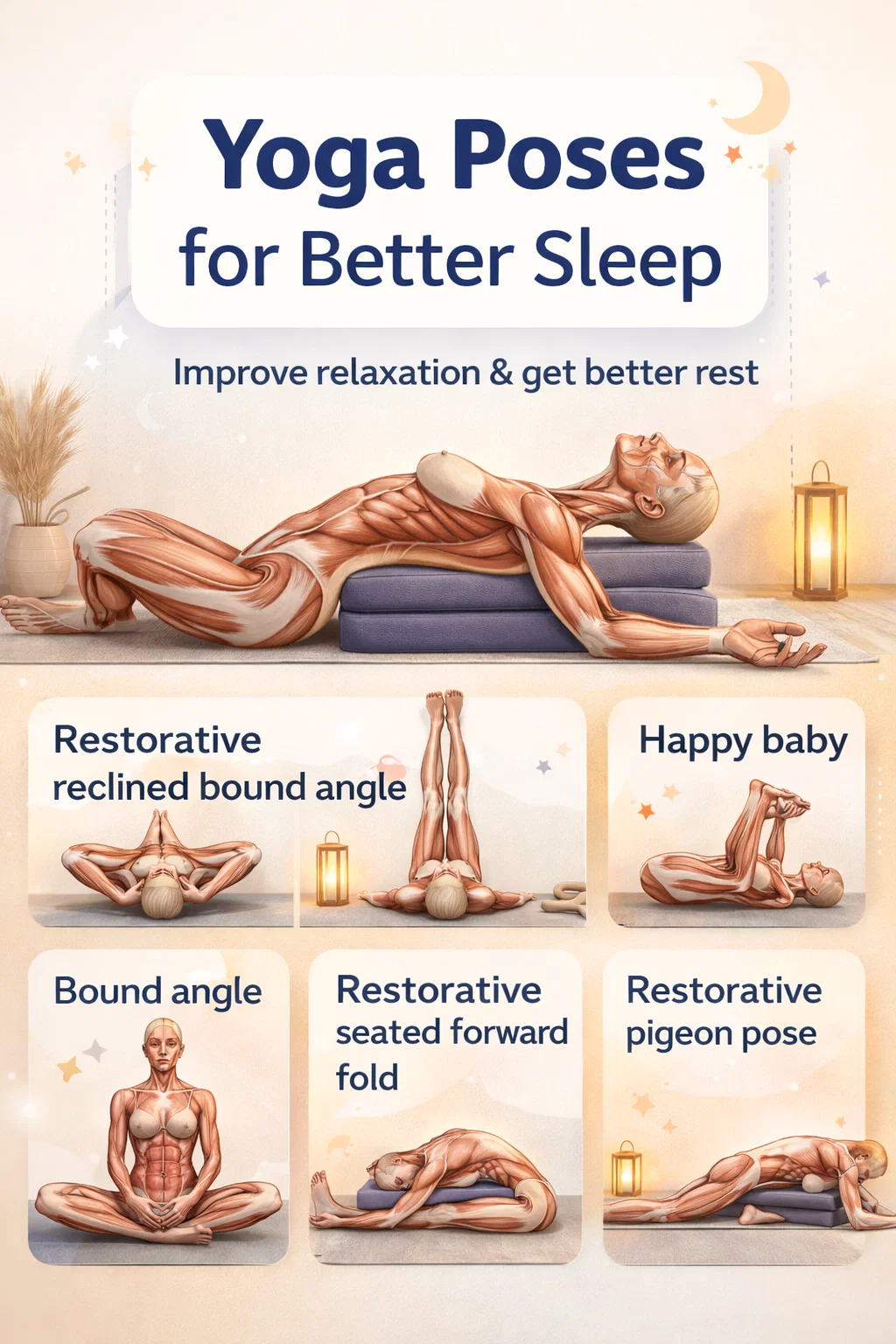
One of the most powerful poses for opening the heart and relaxing the hips is the Reclined Bound Angle Pose, or Supta Baddha Konasana. This posture is particularly effective when supported by bolsters or folded blankets. By elevating the torso and allowing the knees to fall open, you create space in the chest for deeper diaphragmatic breathing.
How to Practice
Place a bolster or a stack of firm pillows lengthwise behind you. Sit with your lower back against the edge of the bolster and bring the soles of your feet together, letting your knees drop to the sides. Slowly lean back until your entire spine and head are supported. Let your arms rest at your sides with palms facing up. This open posture helps counteract the slouching we do at desks all day, gently stretching the inner thighs and chest simultaneously.
2. Reclined Bound Angle on the Wall
Taking the bound angle pose to the wall adds an extra layer of support and a slight inversion benefit. Using the wall allows gravity to do all the work, meaning your leg muscles do not have to engage at all to hold the position. This variation is fantastic for those who carry a lot of stress in their pelvic floor and lower back.
Finding Comfort
Scoot your hips as close to the wall as possible and swing your legs up. Bend your knees and bring the soles of your feet together, allowing your heels to slide down the wall toward your groin. Use your hands to gently press your knees toward the wall if it feels good, or simply let them hang heavy. This pose encourages blood flow back toward the heart and provides a soothing stretch that feels incredibly grounding after a long day of standing or walking.
3. Legs Up the Wall
If you only have time for one pose before bed, let it be Legs Up the Wall, also known as Viparita Karani. This is a classic restorative inversion that provides almost immediate relief for tired feet and swollen ankles. It is widely considered one of the best natural remedies for anxiety and racing thoughts.
The Benefits of Inversion
By elevating your legs above your heart, you facilitate lymphatic drainage and venous return. This helps the body process waste and reduces the workload on your heart. Mentally, this pose is deeply quieting. Many practitioners find that holding this position for five to ten minutes creates a sense of stillness that makes falling asleep much easier. You can place a small pillow under your hips for extra comfort or a weighted eye mask over your eyes to block out light and signal to your brain that it is time to shut down.
4. Happy Baby Pose
Happy Baby Pose, or Ananda Balasana, is a playful yet deeply effective way to release the lower back and sacrum. Many of us hold emotional tension in our hips, and this pose provides a safe way to let that go before climbing into bed. It mimics the natural, relaxed movements of an infant, helping us tap into a state of primal comfort.
Step by Step Guide
Lie on your back and pull your knees in toward your chest. Reach for the outsides of your feet or your big toes with your hands. Open your knees wider than your torso and bring your feet up so your ankles are directly over your knees. Gently pull down on your feet while simultaneously pushing up into your hands. You can rock slowly from side to side to massage your spine against the floor. This movement releases the tight muscles surrounding the tailbone and helps flatten the spine for a more comfortable sleeping position.
5. Bound Angle Pose (Seated)
The seated version of the Bound Angle Pose, or Baddha Konasana, is an excellent way to begin your wind down routine while you are still sitting on your yoga mat or even on your bed. It focuses on the flexibility of the hips and the grounding of the sit bones, helping you feel centered and present.
Creating a Solid Foundation
Sit tall with your legs extended, then bend your knees and bring your feet together. Hold your ankles or feet and gently encourage your knees toward the floor. Avoid the temptation to bounce your knees. Instead, focus on a long spine and deep, steady breaths. If your hips are very tight, sitting on the edge of a folded blanket can tilt your pelvis forward and make the pose much more comfortable. This is a perfect time to practice some mindful meditation or set an intention for a restful night.
6. Restorative Seated Forward Fold
Forward folds are inherently introspective. They draw our attention inward and physically stretch the entire back body, from the calves to the base of the skull. In a restorative context, we use props to make this fold a place of total rest rather than a deep hamstring stretch.
Using Props for Support
Sit with your legs extended in front of you. Place a large pillow or a rolled up sleeping bag on top of your legs. Reach forward and rest your torso and head on the support. You might need to stack several pillows to bring the support up to you so that your neck does not feel strained. This pose gently stretches the spine and stimulates the liver and kidneys. More importantly, the pressure of the pillow against your abdomen can be very soothing for the digestive system, which often plays a role in how well we sleep.
7. Restorative Pigeon Pose
Pigeon pose is famous in the yoga world for being an intense hip opener. However, the restorative version is all about comfort and long holds. Since the hips are often referred to as the junk drawer of our emotions, releasing them can help clear out the mental clutter of the day.
Achieving Deep Release
Start on all fours and bring your right knee forward behind your right wrist. Stretch your left leg back behind you. Instead of staying upright, slide a pillow underneath your chest and slowly lower yourself down. Support your forehead so your neck can relax completely. If this feels too intense on your knees, you can perform a reclined version on your back. Spend several minutes on each side, breathing into the tight spots and visualizing the tension melting away into the floor.
Creating Your Perfect Sleep Environment
While these postures are incredibly effective, they work best when paired with a supportive environment. Before you begin your yoga practice, dim the lights and turn off any loud electronics. Consider using essential oils like lavender or chamomile to create a sensory signal for sleep. The goal is to create a ritual that tells your body exactly what to expect next.
Wear loose, comfortable clothing that does not restrict your breathing. Many people find that doing these poses directly on their bed makes the transition to sleep even more seamless. If you do practice on the floor, make sure you have a warm blanket nearby so your body temperature does not drop too low during the long, still holds.
The Importance of Consistency
Like any wellness practice, the benefits of restorative yoga for sleep are cumulative. You might feel a sense of relief after just one session, but the real transformation happens when you make it a nightly habit. Even five minutes of Legs Up the Wall can significantly alter the quality of your rest over time. By dedicating this small window of time to yourself, you are prioritizing your mental health and physical recovery.
Do not worry if your mind wanders during these poses. That is completely normal. When you notice your thoughts drifting toward tomorrow’s tasks, gently bring your focus back to the sensation of your breath moving in and out of your body. This mindfulness practice is just as important as the physical postures themselves.
Conclusion
Restorative yoga offers a gentle, accessible, and highly effective way to combat the stresses of modern life and reclaim your sleep. By incorporating poses like Reclined Bound Angle, Legs Up the Wall, and supported forward folds into your evening, you provide your body with the tools it needs to truly decompress. These movements encourage a physical and mental letting go that is essential for deep, uninterrupted rest.
Remember that your yoga practice does not have to be perfect to be effective. Listen to your body, use as many pillows as you need, and focus on the feeling of relaxation rather than the look of the pose. With a little bit of consistency and a commitment to slowing down, you will find yourself drifting off more easily and waking up feeling truly refreshed. Tonight, give yourself the gift of a few quiet moments on the mat and experience the profound difference that restorative yoga can make in your life.