7 Daily Non-Negotiables for Protecting Your Peace and Mental Health Boundaries Tips
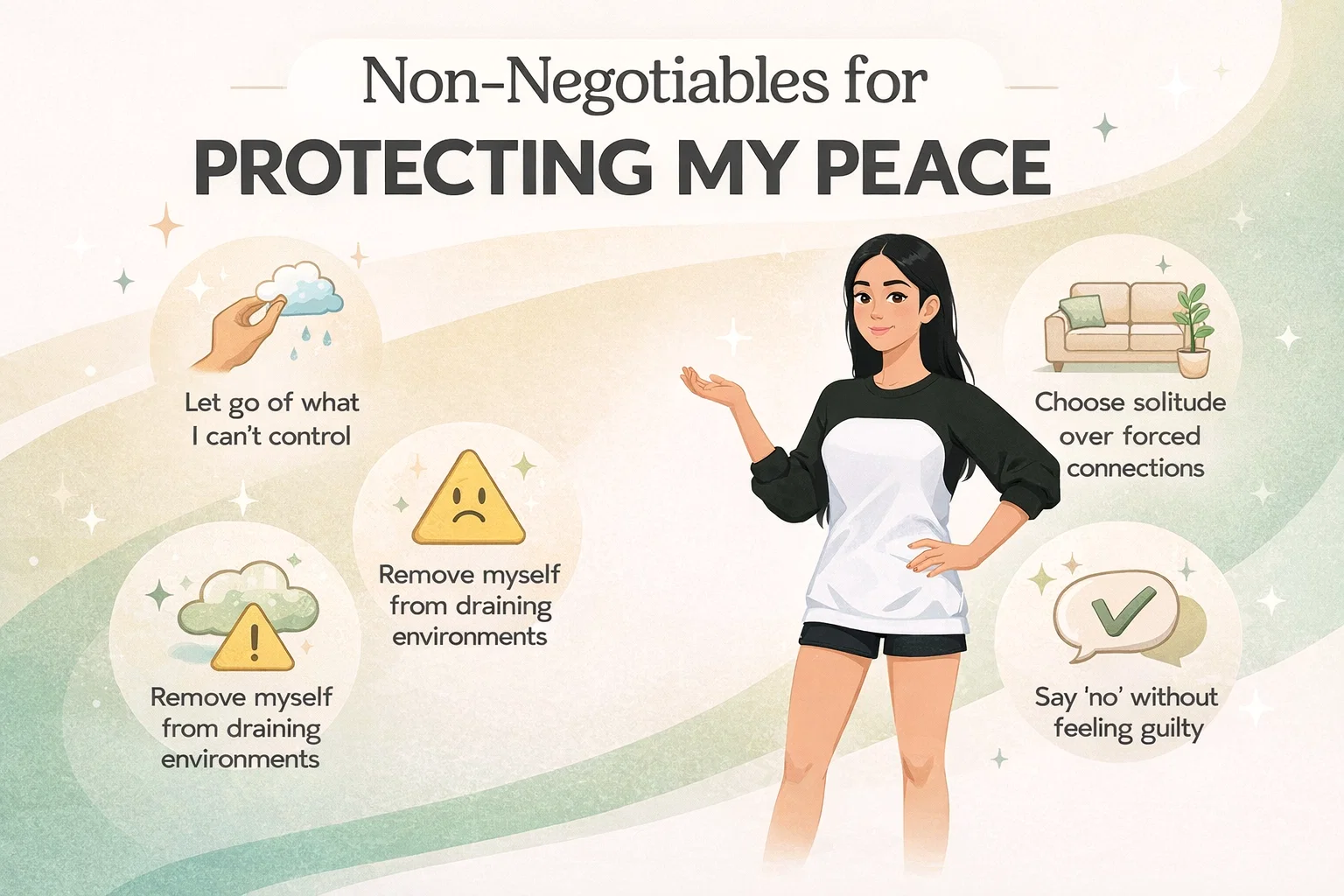
Protecting your mental health is not a luxury. It is a fundamental necessity for living a fulfilling and balanced life. In a world that constantly demands our attention, our energy, and our time, the act of setting boundaries can feel like a radical act of self-love. The image we are exploring today highlights several non-negotiables for protecting your peace, serving as a powerful roadmap for anyone feeling overwhelmed by the external pressures of modern life. By adopting these principles, you move from a state of constant reaction to a state of intentional living.
Understanding the Power of Letting Go
One of the most transformative shifts you can make in your mental health journey is learning to let go of what is out of your control. We often spend massive amounts of emotional labor worrying about the opinions of others, global events, or the unpredictable nature of the future. This chronic worry creates a state of high cortisol and constant stress that wears down the nervous system.
When you consciously decide to release the grip on things you cannot change, you instantly create more room for the things you can. This does not mean you stop caring; it means you stop allowing the uncontrollable to dictate your internal state. Focus your power on your reactions, your habits, and your environment. This is where your true influence lies.
The Art of Choosing Solitude
There is a significant difference between being lonely and being in solitude. Loneliness is a feeling of isolation, while solitude is a chosen state of being alone to recharge and reflect. The modern social landscape often pressures us into forced connections. We feel obligated to attend events, stay in group chats, or maintain friendships that no longer align with our values because we fear the social fallout of stepping away.
Choosing solitude over forced connections is a vital non-negotiable. It allows you to reconnect with your own voice without the static of everyone else’s opinions. When you stop forcing relationships that feel draining, you make space for authentic connections that actually nourish your soul. High-quality relationships require a high-quality version of you, and that version is often found in the quiet moments of self-reflection.
Defining Access and Personal Boundaries
A common misconception in our hyper-connected world is that being a good person means being available to everyone at all times. This is a recipe for burnout. Your peace is protected by the realization that not everyone deserves access to your inner world, your time, or your emotional labor. Think of your energy as a limited resource. If you give it away to every person who asks, you will have nothing left for yourself or the people who truly matter.
Setting boundaries on who has access to you is not about being cold or elitist. It is about being a good steward of your own life. When you understand that access is a privilege and not a right, you begin to treat your time with the respect it deserves. This might mean setting “do not disturb” hours on your phone, being more selective about the projects you take on, or simply distancing yourself from people who consistently bring drama into your life.
Removing Yourself from Draining Spaces
Environment plays a massive role in our psychological well-being. Sometimes, the most courageous thing you can do is walk away from a space that feels draining. This could be a toxic workplace, a social circle that thrives on gossip, or even a digital environment that leaves you feeling inadequate. We often stay in these spaces because of a sense of loyalty or a fear of the unknown, but the cost of staying is often your peace of mind.
Listen to your body. If you walk into a room and feel your shoulders tighten or your breath become shallow, your nervous system is trying to tell you something. Removing yourself from these environments isn’t a sign of weakness; it is a strategic move to preserve your health. You cannot heal in the same environment that made you sick.
The Freedom of the Unexplained No
For many of us, the word “no” is followed by a long list of excuses and justifications. We feel a deep-seated need to explain why we cannot do something, hoping that the other person will validate our reasoning and not be upset. However, over-explaining is often a trauma response or a sign of people-pleasing tendencies. It suggests that your time and boundaries are only valid if someone else agrees with them.
Learning to say “no” without over-explaining is one of the most liberating skills you can develop. A simple, “I can’t make it this time,” or “I don’t have the capacity for that right now,” is a complete sentence. When you stop justifying your boundaries, you reclaim your autonomy. You don’t need permission to look after yourself.
Allowing Yourself to Grow Out Loud
Growth is often uncomfortable, not just for you, but for the people around you. As you begin to implement these non-negotiables, you might find that some people in your life react negatively. They might be used to the version of you that never said no or the version that always put their needs last. When you change the “rules” of the relationship, it can cause friction.
However, you must allow yourself to grow even if it makes others uncomfortable. Your evolution should never be stunted to keep someone else’s comfort zone intact. True friends and supporters will eventually adapt and respect your new boundaries. Those who don’t are often the very people the boundaries were meant to protect you from in the first place. Embrace the discomfort of growth, as it is the only path to a more authentic version of yourself.
Conserving Emotional Energy for What Matters
Energy management is more important than time management. You can have all the time in the world, but if your emotional energy is depleted, you won’t be able to do anything meaningful with it. Protecting your peace means identifying the things that actually matter to you and fiercely guarding your energy for those things.
- Core Values: Align your daily actions with your deeply held beliefs.
- Passion Projects: Reserve energy for the hobbies and creative outlets that bring you joy.
- Deep Connections: Invest your emotional labor into the small circle of people who support and inspire you.
- Self-Maintenance: Prioritize sleep, nutrition, and movement as the foundation of your energy levels.
When you stop leaking energy into trivial arguments, social media comparisons, and people-pleasing, you find that you have a surprising amount of vitality for your goals and your loved ones. Peace is the result of focused energy.
Creating a Sustainable Peace Practice
Implementing these non-negotiables isn’t a one-time event. It is a practice that requires consistency and self-compassion. There will be days when you over-explain your “no” or days when you let someone drain your energy. The goal isn’t perfection; the goal is awareness. When you notice you have slipped away from your non-negotiables, simply acknowledge it and return to your center.
You might find it helpful to write these non-negotiables down in a journal or keep them as a digital wallpaper. The more you remind yourself of these principles, the more they become your default setting. Over time, protecting your peace will become less of a struggle and more of a natural rhythm of your life.
Conclusion: The Ripple Effect of Inner Peace
By choosing to protect your peace, you aren’t just helping yourself. You are showing up as a more present, patient, and grounded person for everyone else in your life. When you are not constantly drained and stressed, you have more to offer the world. You become a beacon of stability for others, showing them that it is possible to live with intention and boundaries in a chaotic world.
Take a moment today to look at the list of non-negotiables. Which one resonates with you the most? Which one feels the hardest to implement? Start there. Whether it is saying “no” to one small request or taking five minutes of solitude, every small step is a victory in the journey toward a peaceful life. You deserve a life that feels good on the inside, not just one that looks good on the outside. Protect your peace fiercely, because it is the foundation upon which everything else is built.