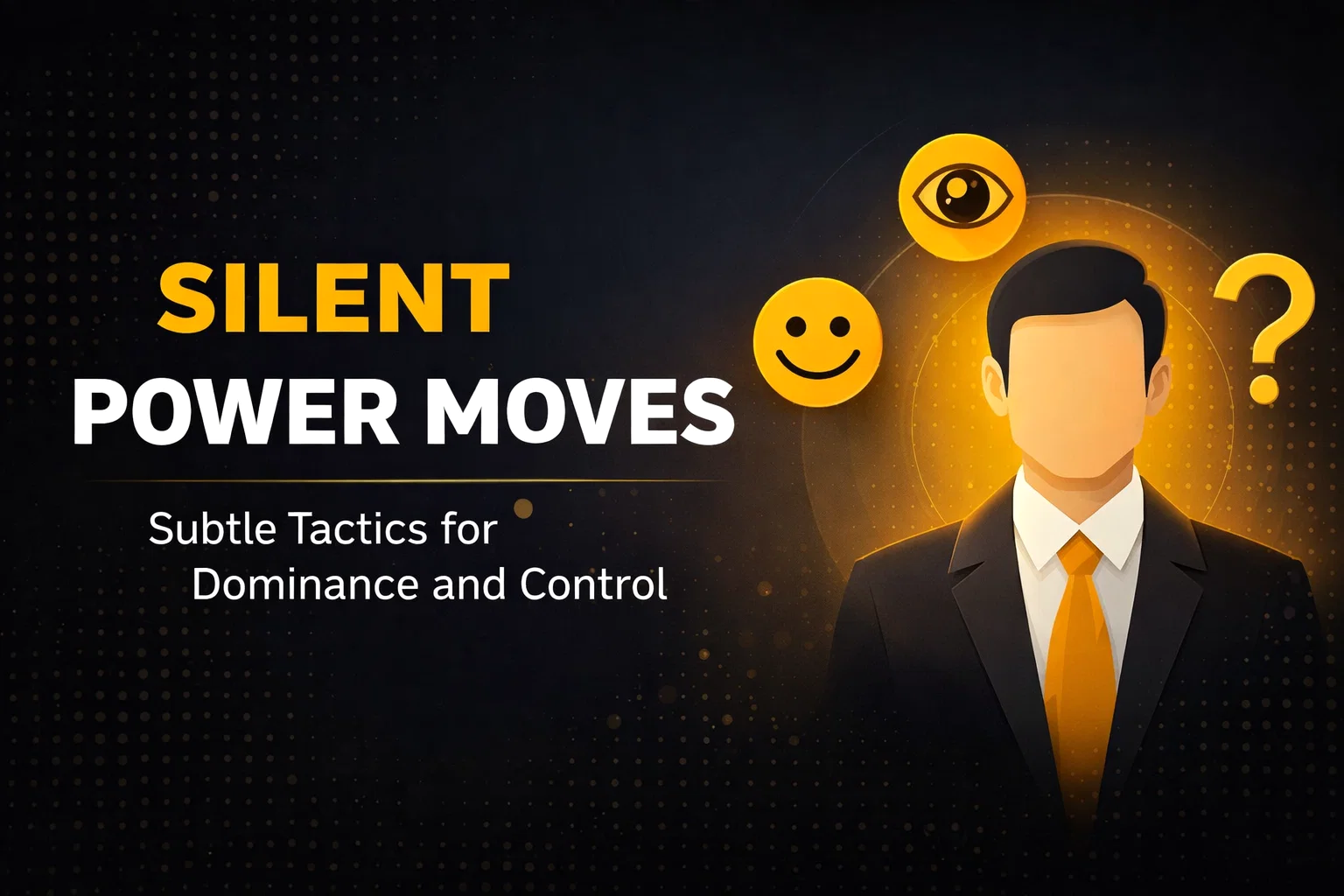
7 Dark Psychology Tricks to Master Any Social Situation Silent Power Moves for Influence
Have you ever walked away from a conversation feeling like you lost a battle you didn’t even know you were fighting? We have all been there. Whether it is a condescending remark from a coworker or a subtle power play during a heated debate, the way we carry ourselves and react to others determines our social standing. The image we are looking at today outlines seven silent power moves designed to flip the script. These are not just about being loud or aggressive; they are about psychological leverage. In this deep dive, we will explore the science and strategy behind these techniques to help you navigate social dynamics with poise and unshakeable confidence.
The Psychology of Silence and Subtlety
Most people believe that power comes from speaking the most or having the loudest voice in the room. However, true influence often resides in the things you do not say. Psychological studies on non-verbal communication suggest that over 90 percent of our social interaction is dictated by body language, tone, and eye contact. When you utilize silent power moves, you are communicating directly with the subconscious mind of the other person. You are signaling that you are in control of your emotions, which is the ultimate form of strength.
Why These Moves Work
Human beings are hardwired to look for social cues. When someone insults you, they expect a defensive reaction. When you give them a smile instead, you break their pattern. This creates a moment of cognitive dissonance where their brain struggles to reconcile their hostile action with your positive response. By mastering these subtle shifts, you stop being a passenger in your social life and start becoming the driver.
1. To Confuse: The Power of the Unexpected Smile
When someone hurls an insult your way, they are usually looking for a specific ROI: a return on their investment of negativity. They want to see you get angry, get defensive, or shrink back. By choosing to smile, you completely deny them that satisfaction. It is a disorienting move because it suggests that their words have zero impact on your self-esteem. It implies that you might know something they do not, or perhaps you simply find their attempt at an insult amusingly pathetic.
2. To Dominate: The Forehead Gaze
Eye contact is the bedrock of human connection, but the placement of that contact can change the entire vibe of a meeting. While looking someone in the eyes builds rapport, shifting your focus to their forehead creates a sense of intensity and pressure. This is often referred to as the power gaze. It makes the other person feel scrutinized, as if you are looking through them rather than at them. Use this sparingly, as it can be perceived as highly aggressive, but in a situation where you need to establish dominance without saying a word, it is incredibly effective.
3. To Dismiss: The Time Check
Nothing says your words are unimportant quite like a casual glance at your watch or phone in the middle of a heated argument. This move is the ultimate dismissive gesture because it signals that your time is more valuable than the conflict. It tells the other person that they are boring you or that their points are not worth the minutes you are losing. It is a cold, calculated way to de-escalate their importance without having to raise your voice.
4. To Control: Lowering Your Volume
In a world where everyone is shouting to be heard, the person who whispers is the one people listen to most intently. When you speak in a lower, calmer tone, you force others to stop their own internal noise and lean in to catch your words. This physically brings them into your personal space on your terms. It also prevents the situation from escalating into a shouting match, as it is very difficult for someone to keep screaming at a person who is responding with measured, quiet authority.
5. To Expose: The Art of the Long Pause
Silence is often uncomfortable, and most people will do anything to fill it. If you suspect someone is lying, withholding information, or trying to manipulate a narrative, try saying nothing at all after they finish speaking. Just keep looking at them with a neutral expression. More often than not, the discomfort of the silence will cause them to keep talking, and in their rush to fill the void, they will often reveal the very truth they were trying to hide. This is a classic interrogation tactic that works just as well in the boardroom as it does in the police station.
6. To Disarm: Agreeing with the Insult
This is a masterclass in psychological judo. When someone tries to mock you, agreeing with them takes all the wind out of their sails. If someone says, You are really obsessed with your work, and you reply with, You are absolutely right, I am incredibly focused on my goals lately, there is nowhere for them to go. You have accepted their weapon and neutralized it. It shows a level of self-assurance that is impossible to shake. When you are comfortable with your flaws or your choices, no one can use them against you.
7. To Unsettle: The Unexpected Question
Communication usually follows a predictable rhythm. If you want to knock someone off balance, ask a question that has nothing to do with the current flow but forces them to reflect on their own behavior. For example, if someone is being unnecessarily rude, asking them, Are you having a difficult day? in a genuinely concerned tone can be incredibly unsettling. It shifts the focus from their attack to their internal state, often making them feel self-conscious about their conduct.
Ethical Considerations of Power Moves
While these tools are powerful, they should be used with a degree of emotional intelligence. The goal is not to become a social bully, but to protect your boundaries and navigate difficult personalities. Influence is a double edged sword; use it to build better boundaries and professional respect, not to diminish the humanity of those around you. When you use these moves from a place of insecurity, they come across as “cringe” or try-hard. When you use them from a place of genuine self-worth, they become a natural extension of your charisma.
Building Genuine Confidence
These moves are outward expressions of an inward reality. If you do not truly value yourself, a forehead gaze will just look like a nervous twitch. To make these moves effective, you must work on your internal foundation. This means setting clear goals, practicing self-care, and learning to validate yourself so that you do not need it from others. When you do not need someone’s approval, you naturally gain power over the interaction.
Conclusion
Mastering social dynamics is less about what you say and more about how you position yourself within the space. By implementing these seven silent power moves, you can protect your peace, assert your authority, and handle conflict with a level of grace that most people never achieve. Remember, the goal is not to win every argument, but to remain unbothered by those who seek to bring you down. Start small, perhaps by practicing the power of the pause or the disarming agreement, and watch how the world around you begins to shift in your favor.
Would you like to learn more about how to read body language cues in professional settings to better apply these techniques?