7 Powerful Body Hacks for Anxiety, Insomnia, and Pain Relief That Actually Work
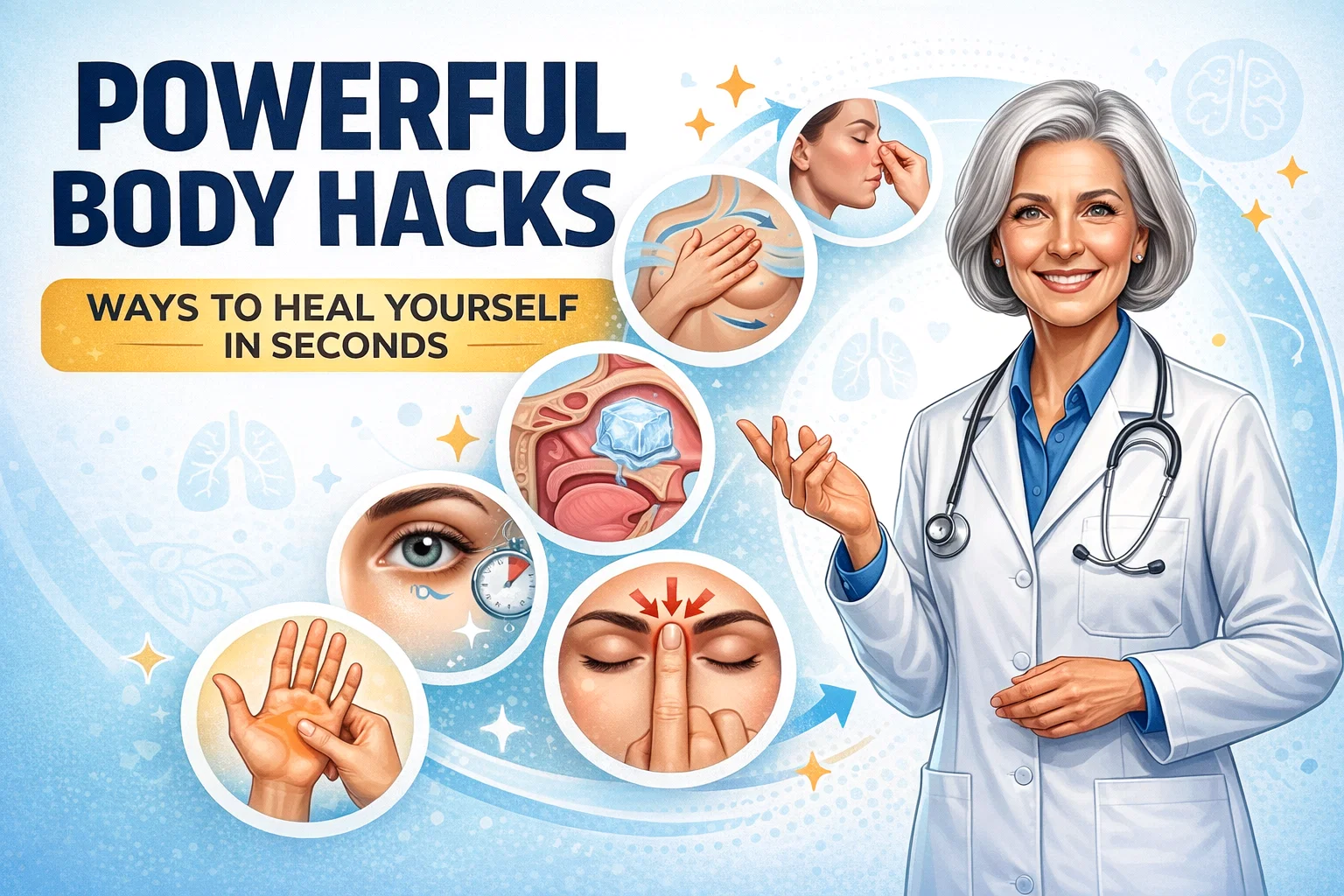
The human body is an incredible, complex machine that often comes with its own set of built-in shortcuts and bypasses. While we often look toward the medicine cabinet at the first sign of discomfort, many of our most common physical ailments can be managed using simple, biological triggers. These body hacks are not just old wives’ tales; they are practical applications of how our nervous system, circulation, and muscle groups interact. By understanding these quick fixes, you can take control of your well-being in seconds without needing a single prescription.
In this guide, we explore seven powerful techniques that can help you navigate everything from sudden spikes in anxiety to the frustration of a persistent hiccup. These methods are designed to be used anywhere, at any time, providing you with a mental and physical toolkit for modern living. Let’s dive into the science and the practice of hacking your body for better health and instant relief.
1. Calming Nervousness with a Simple Pinch
We have all experienced that sudden flutter in the chest or the shaking hands that come with a big presentation or an uncomfortable social situation. When nervousness strikes, your body is essentially stuck in a loop of high-alert signals. One of the quickest ways to break this cycle is by applying pressure to the nose. By gently pinching the bridge of your nose, you are engaging with various nerve endings that can help signal to the brain that it is time to slow down.
The Science of Physical Grounding
Physical grounding is a well-documented psychological technique. When you focus on a specific physical sensation, like the pressure on your nose, you pull your brain away from the abstract “what-if” scenarios of anxiety and back into the present moment. This tactile distraction is often enough to lower your heart rate and allow you to regain your composure before the nervousness spirals out of control.
2. Reducing Anxiety Through Heart-Centered Breathing
Anxiety often feels like it is centered right in the middle of the chest. Placing your hand over your heart is more than just a comforting gesture; it is a way to create a biofeedback loop. By feeling the rhythm of your heart, you can consciously work to slow it down through rhythmic breathing. This creates a powerful sense of safety and self-soothing that tells your amygdala the part of the brain responsible for the fight-or-flight response that the danger has passed.
To maximize this effect, try the following steps:
- Place your dominant hand firmly but gently over the center of your chest.
- Close your eyes to remove external visual stressors.
- Inhale deeply through your nose for four counts, feeling your chest rise against your hand.
- Exhale slowly through your mouth for six counts.
3. The Ice Cube Trick for a Stuffy Nose
Sinus congestion can be incredibly distracting and uncomfortable. While many people reach for nasal sprays, there is a fascinating hack involving the roof of your mouth. By pressing an ice cube against the palate, or even just using your tongue to apply pressure while pressing between your eyebrows, you can cause the vomer bone to rock back and forth. This movement helps to loosen congestion and encourages the sinuses to drain more effectively.
How Temperature Plays a Role
The introduction of cold to the roof of the mouth can also cause a slight constriction of the blood vessels in the nasal passages. This reduction in swelling often provides a temporary window of relief, allowing you to breathe more freely without the rebound congestion often associated with chemical treatments. It is a clean, natural way to clear your head in an instant.
4. Rapid Blinking to Combat Insomnia
Staring at the ceiling while the clock ticks toward morning is a universal frustration. If your mind is racing and your body refuses to drift off, try the rapid blinking hack. By blinking your eyes as fast as possible for one full minute, you are intentionally tiring out the small muscles around the eyes. When these muscles fatigue, your body naturally wants to keep the eyelids closed, which is the first physical step toward entering a sleep state.
Beyond the physical fatigue, this exercise requires just enough concentration to stop the “thought loops” that often keep us awake. Once the minute is up, your eyes will feel heavy and strained, making the transition into a deep sleep feel much more natural and less forced.
5. Managing Dizziness with Pressure Points
Dizziness or a sudden sense of vertigo can be disorienting and even scary. A well-known acupressure point located directly between the eyebrows can be a lifesaver in these moments. Pressing this point for five seconds helps to ground your sensory perception. In traditional practices, this area is thought to be a crossroads for energy, but from a modern perspective, the firm pressure provides a singular sensory input that helps the brain recalibrate its sense of balance.
Safety First with Vertigo
While this hack is excellent for mild lightheadedness or motion sickness, always remember to sit down before attempting it. Giving your brain a steady physical foundation while you apply pressure ensures that you stay safe while your internal equilibrium resets itself.
6. The Secret to Stopping Hiccups Every Time
Hiccups are essentially involuntary spasms of the diaphragm. To stop them, you need to “reset” the diaphragm and the vagus nerve. The most effective sequence involves a combination of breath retention and swallowing. By inhaling deeply and holding that breath, you are stretching the diaphragm and preventing it from contracting. Following this with two quick swallows creates a rhythmic movement in the throat that often breaks the spasm cycle immediately.
This method works because it forces your body to prioritize vital functions like swallowing and oxygen management over the glitchy reflex of a hiccup. It is much more reliable than being startled or drinking water upside down!
7. Massaging the Hegu Point for Headache Relief
Tension headaches often stem from stress that we carry in our neck, shoulders, and even our hands. The space between your thumb and index finger, known as the Hegu point in Chinese medicine, is a powerful trigger for pain relief. Massaging this fleshy area in a firm, circular motion can stimulate the release of endorphins, which are the body’s natural painkillers.
Technique Tips for Best Results
- Use your opposite thumb and forefinger to pinch the area.
- Apply firm pressure that feels slightly “achy” but not sharp.
- Rotate in small circles for about 30 seconds before switching hands.
- Breathe deeply while doing this to help the muscles throughout your body relax.
Embracing a Holistic Approach to Health
Integrating these body hacks into your daily life is about more than just fixing a temporary problem; it is about building a better relationship with your physical self. When we learn how to respond to our body’s signals with intentional actions, we reduce our reliance on external substances and increase our personal resilience. These techniques are rooted in the idea that the body has an inherent wisdom and a desire to remain in balance.
Nutrition, hydration, and regular movement remain the pillars of health, but these quick interventions are the perfect “emergency kit” for the stresses of modern life. They remind us that we have the power to influence our physiological state with just a few seconds of focus and the right technique.
Conclusion
The next time you feel a headache coming on, or you find yourself tossing and turning in bed, remember that the solution might be right at your fingertips. From pinching your nose to calm your nerves to massaging your hand for pain relief, these seven hacks offer a natural, fast, and effective way to feel better. Our bodies are constantly communicating with us, and by learning these simple “languages” of pressure and breath, we can live more comfortably and confidently. Start practicing these today and see how much of a difference a few seconds can make. Your body will thank you for the extra care and attention!