7 Streams of Income to Stop Living Paycheck to Paycheck Financial Freedom Tips
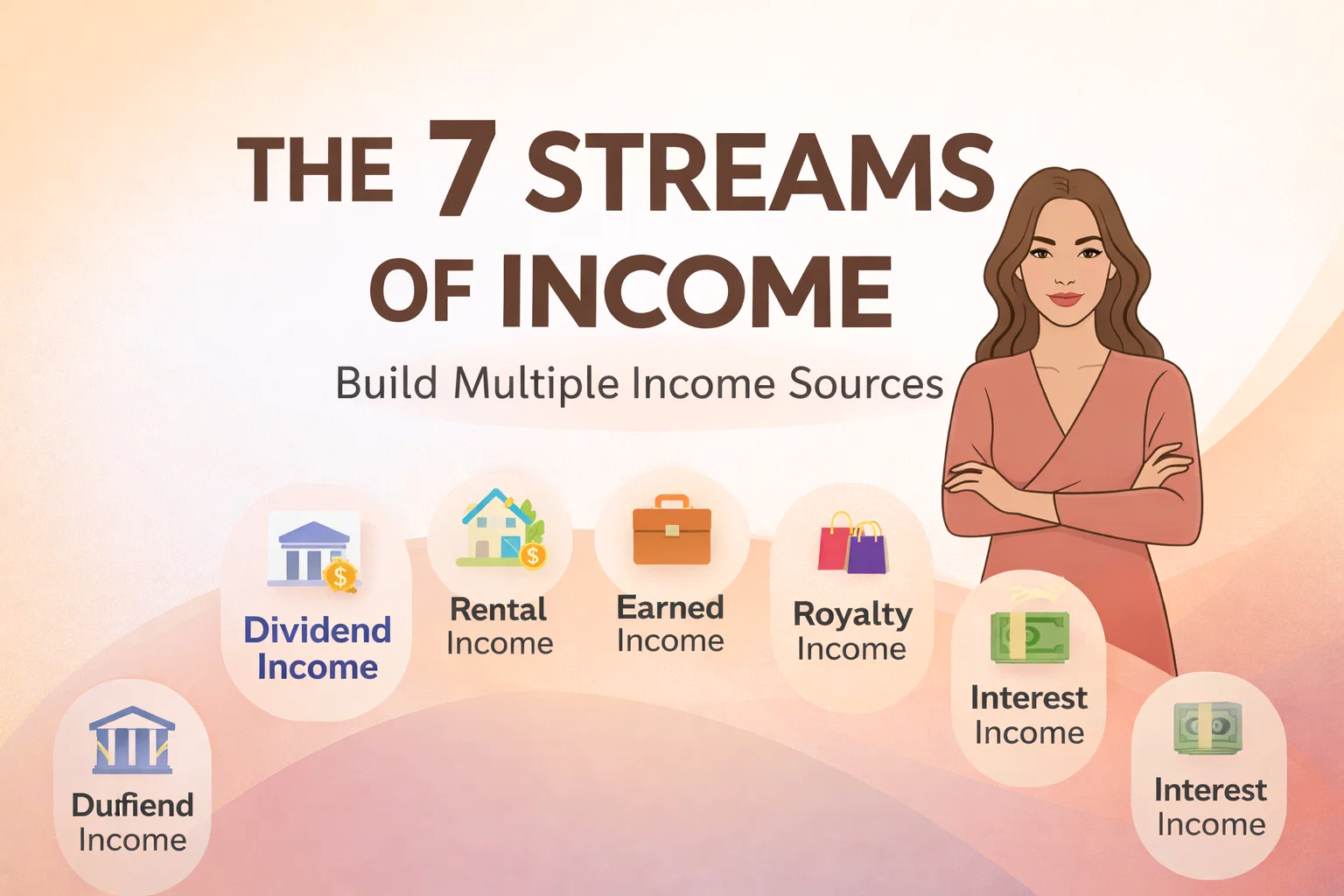
Living paycheck to paycheck is a modern day trap that millions of people find themselves caught in. It is a cycle of anxiety where every cent is accounted for before it even hits your bank account. But what if you could break that cycle? The secret held by the world’s most financially successful individuals isn’t just about having a high salary; it is about diversification. By building multiple streams of income, you create a financial safety net that allows you to breathe, save, and eventually achieve true independence. When you transition from one source of income to seven, you are no longer just working for money; you are making your money work for you.
The Power of Diversification: Why One Income is Never Enough
In today’s volatile economy, relying solely on a 9-to-5 job is a risky strategy. Layoffs, industry shifts, and unexpected life events can vanish a single income stream overnight. Diversification is the ultimate insurance policy. When you have different channels of revenue flowing into your household, the loss of one becomes a minor setback rather than a total catastrophe. Beyond security, multiple income streams accelerate your path to wealth. Instead of waiting decades to retire, you can use these extra funds to pay off debt, invest more aggressively, and enjoy a lifestyle that isn’t dictated by a monthly salary cap.
1. Earned Income: Your Primary Wealth Engine
For most people, earned income is the starting point. This is the money you receive in exchange for your time and labor, whether it is a traditional corporate job or a freelance side hustle. While it is the most common form of income, it is also the most limited because you only have a certain number of hours in a day. However, your earned income is the fuel that powers your other six streams. By maximizing your primary salary through career advancement or specialized skills, you generate the surplus cash needed to seed your investments and passive ventures.
Maximizing Your Salary for Investment
To move beyond living paycheck to paycheck, you must treat your primary job as a venture capital firm for your life. Every raise or bonus should not go toward lifestyle inflation. Instead, funnel that extra earned income into assets that produce cash flow. This shift in mindset transforms your job from a daily grind into a strategic tool for long-term freedom.
2. Dividend Income: Getting Paid for Owning Stocks
Dividend income is one of the purest forms of passive income. When you buy shares of a profitable company that pays dividends, you are essentially receiving a portion of their profits just for being a shareholder. You don’t have to manage the company or show up to work. You simply hold the asset and watch the payments hit your brokerage account. Over time, as you reinvest these dividends, the power of compound interest takes over, leading to exponential growth in your wealth.
The Strategy of Dividend Growth Investing
The goal with dividend income is to focus on Dividend Aristocrats, which are companies that have increased their dividend payouts for at least 25 consecutive years. By building a portfolio of these reliable stocks, you create a paycheck that grows every single year, often outpacing inflation. This is a favorite strategy for those looking to supplement their lifestyle without selling off their underlying assets.
3. Rental Income: Building Wealth Through Real Estate
Real estate has long been a cornerstone of wealth creation. Rental income involves purchasing a property and leasing it to tenants. While it requires more upfront capital and management than stocks, the rewards are multifaceted. Not only do you get a monthly check from your tenants, but you also benefit from the property’s appreciation over time and significant tax advantages.
- Residential Rentals: Single-family homes or apartments that provide steady monthly cash flow.
- Short-Term Rentals: Utilizing platforms like Airbnb to generate higher yields in vacation markets.
- Commercial Real Estate: Leasing office spaces or retail storefronts to businesses for long-term stability.
4. Royalty Income: Monetizing Your Intellectual Property
If you have a creative spark or a specific expertise, royalty income can be your ticket to financial freedom. This income comes from others paying to use your work. This could be a book you wrote, music you composed, a patent you developed, or even a digital course you designed. The beauty of royalties is that you do the work once, and you can get paid for it for years or even decades to come.
The Digital Age of Royalties
In the past, getting royalties required a major publishing deal or a record label. Today, anyone can tap into this stream. You can self-publish an ebook on Amazon, sell stock photography, or create a software plugin. Every time someone downloads or uses your creation, a royalty fee is deposited into your account, creating a truly scalable income source.
5. Profit Income: The Entrepreneurial Edge
Profit income is the money you make by buying something for one price and selling it for a higher price. This is the core of entrepreneurship and retail. Whether you are flipping items on eBay, running an e-commerce store, or manufacturing a physical product, the goal is to create a margin. Unlike earned income, profit income is not strictly tied to your hours; it is tied to the value you provide to the market and the efficiency of your business model.
Scaling a Side Business into a Major Stream
Many people start generating profit income as a hobby. Perhaps you enjoy refurbishing furniture or finding deals at local thrift stores. When you systematize this process, it becomes a reliable income stream. As you grow, you can hire others to handle the logistics, allowing the profit to become more passive over time.
6. Capital Gains: Profit from Asset Appreciation
Capital gains are realized when you sell an asset for more than you paid for it. This most commonly applies to stocks, bonds, and real estate. While dividend and rental income focus on ongoing cash flow, capital gains focus on the total growth of the underlying asset. For example, if you buy a house for $200,000 and sell it five years later for $300,000, that $100,000 profit is your capital gain.
Strategic Selling and Tax Planning
To maximize capital gains, it is important to understand the difference between short-term and long-term gains. Holding an asset for more than a year typically results in a lower tax rate, allowing you to keep more of your profits. Successful investors often balance their portfolios between assets that provide immediate income and those with high potential for capital appreciation.
7. Interest Income: Making Your Cash Work Harder
Interest income is the money you earn by lending your capital to others. In its simplest form, this is the interest you receive from a high-yield savings account or a certificate of deposit. However, it can also include more sophisticated options like peer-to-peer lending or purchasing corporate and municipal bonds. While the returns on basic savings are often lower than other streams, interest income provides a low-risk way to ensure your idle cash isn’t losing value to inflation.
The Importance of High-Yield Environments
To make interest income a viable stream, you must move beyond traditional big-bank savings accounts that offer near-zero interest. By utilizing online banks or treasury bills, you can significantly increase the yield on your cash reserves. This provides a safe, liquid source of funds that still contributes to your monthly bottom line.
How to Start Building Your 7 Streams Today
The idea of managing seven different income sources might seem overwhelming, but the key is to start with one at a time. Do not try to launch a rental business, write a book, and master the stock market all in the same month. Instead, focus on perfecting your earned income first to create a surplus. Once you have a steady margin, automate your dividend and interest income. From there, you can begin exploring more active streams like profit and royalty income.
Success in wealth building is about consistency rather than speed. Small, regular contributions to a dividend portfolio or the gradual development of a side business will eventually compound into a massive financial force. As each new stream comes online, you will find that your reliance on your primary paycheck diminishes, providing you with more choices and less stress.
Conclusion: Your Path to Financial Peace
Breaking the paycheck to paycheck cycle is not an overnight event; it is a strategic journey. By understanding and implementing these seven streams of income, you are doing more than just earning money. You are building a fortress that protects your time, your family, and your future. Financial freedom is the ability to live life on your own terms, and that freedom is built one income stream at a time. Start today by identifying which stream you can open next, and take that first step toward a life of abundance and security.