7 Tips for Long and Strong Hair Healthy Hair Growth Routine Natural Care Guide
Achieving the long, flowing, and radiant hair of your dreams is not just about the products you put on your strands. It is a holistic journey that combines consistent habits, internal nutrition, and a gentle touch. Many people struggle with breakage, thinning, or dullness because they lack a structured routine that addresses hair health from root to tip. By following a dedicated set of principles, you can transform your hair from fragile to resilient. This guide explores the essential steps to mastering your healthy hair journey, ensuring every strand gets the care it deserves.
The Foundation of Hair Health: Gentle Cleansing
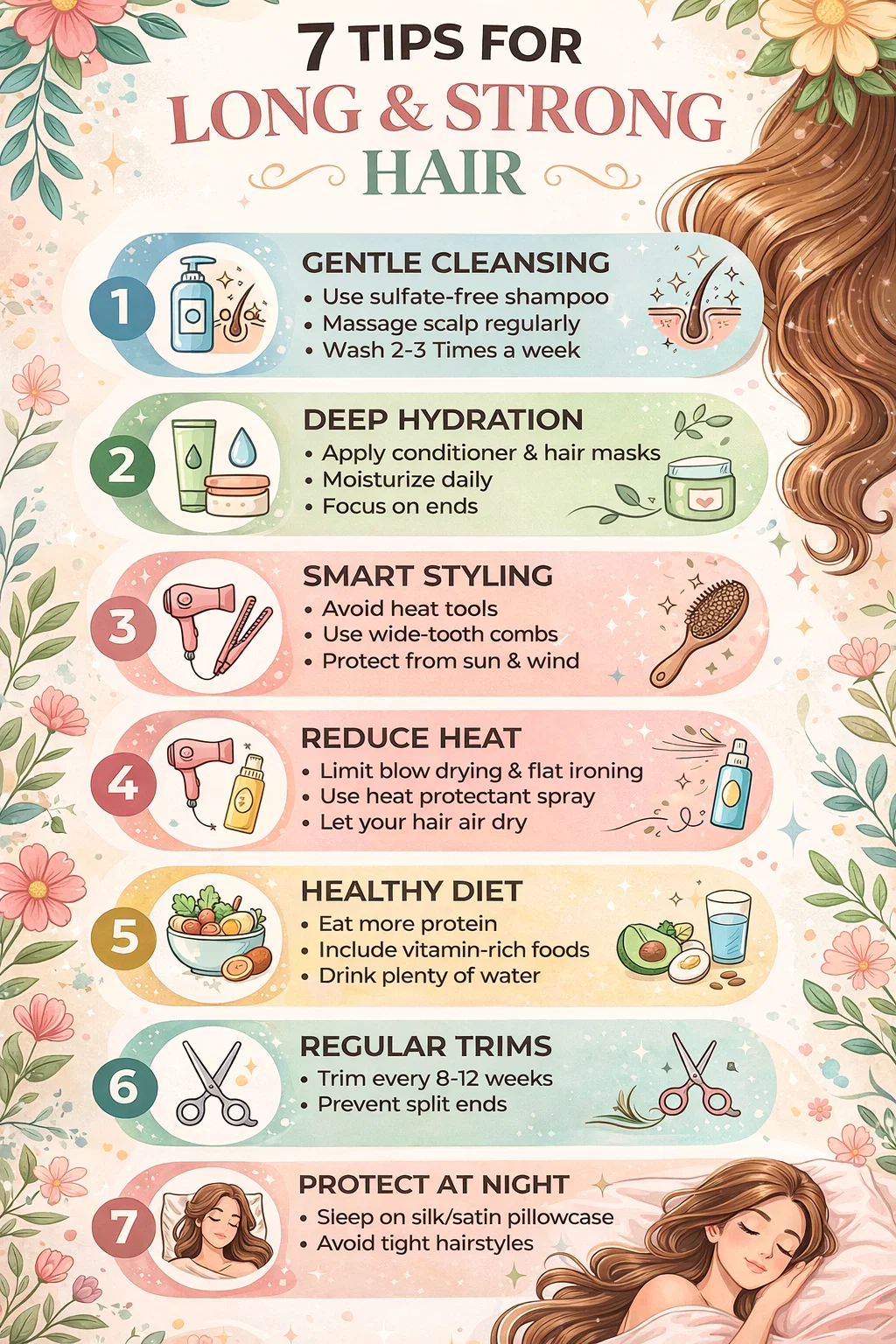
The way you wash your hair sets the stage for everything else. Many commercial shampoos contain harsh sulfates, which are detergents that strip away natural oils. While they leave your hair feeling squeaky clean, they often cause dryness and scalp irritation. Switching to a sulfate-free shampoo is the first step toward maintaining moisture. These formulas cleanse effectively without compromising the integrity of your hair cuticle.
Mastering the Scalp Massage
A healthy scalp is the soil from which your hair grows. Regular scalp massages are vital because they stimulate blood circulation to the follicles. This increased blood flow delivers essential nutrients and oxygen, promoting faster and thicker growth. Spend five minutes during your shower using your fingertips to gently move the skin on your scalp in circular motions. Not only does this feel incredibly relaxing, but it also helps break down product buildup and excess sebum.
Finding Your Washing Frequency
Washing your hair every single day can lead to overproduction of oil as your scalp tries to compensate for the dryness. For most hair types, washing two to three times a week is the sweet spot. This allows your natural oils to travel down the hair shaft, providing natural protection and shine. If you are active or have an oily scalp, consider using a gentle dry shampoo on off days to keep your style fresh without the need for a full rinse.
Deep Hydration and Moisture Retention
Hair is naturally porous, meaning it can lose moisture quickly if not properly sealed. Hydration is the key to elasticity. When hair is elastic, it can stretch slightly without snapping. Without enough moisture, it becomes brittle and breaks under the slightest pressure from a brush or hair tie.
The Power of Conditioners and Masks
Conditioner is not an optional step. It works by smoothing the hair cuticle and locking in moisture after your shampoo has opened it. For those looking for serious growth, a weekly deep conditioning treatment or hair mask is a game changer. These products contain higher concentrations of proteins and oils that penetrate deeper into the hair shaft than standard conditioners. Look for ingredients like shea butter, argan oil, or hydrolyzed silk to give your hair a professional level boost.
Focusing on the Ends
The ends of your hair are the oldest part of the strand. They have endured the most styling, weather exposure, and friction. Consequently, they are the most prone to damage. When applying moisture treatments, start at the bottom and work your way up. Your scalp produces its own oil, so your roots rarely need heavy conditioning. By saturating the ends, you prevent the dreaded split ends that force you to cut off your hard earned length.
Smart Styling and Damage Control
We often damage our hair in the pursuit of looking good. However, smart styling is about achieving your desired look while prioritizing the health of the hair. Small changes in your daily tools and techniques can lead to massive improvements over time.
Switching Your Tools
Standard brushes can be aggressive, especially on wet hair which is in its most vulnerable state. Using a wide tooth comb is a much safer alternative for detangling. Start from the ends and slowly work your way up to the roots to minimize tension. Additionally, be mindful of environmental factors. Intense sun exposure and harsh winds can dry out your hair just as much as a blow dryer. If you are spending the day outdoors, a stylish hat or a UV protection spray can keep your strands safe.
Reducing Heat Exposure
Heat is one of the primary enemies of long hair. Flat irons and curling wands reach temperatures that literally cook the protein in your hair, leading to permanent damage. Try to limit the use of these tools to special occasions. On a daily basis, letting your hair air dry is the healthiest choice. If you must use heat, never skip a heat protectant spray. This creates a thin barrier that slows down the heat transfer, giving your hair a fighting chance against the high temperatures.
Fueling Growth from Within
No amount of expensive topical products can replace the benefits of a nutrient dense diet. Your hair follicles require specific vitamins and minerals to produce strong, healthy keratin. If your body is deficient in these areas, it will prioritize vital organs over hair growth, leading to shedding and slow progress.
The Protein Connection
Since hair is primarily made of a protein called keratin, your intake of amino acids is crucial. Incorporating high quality protein sources like eggs, fish, and nuts ensures that your body has the building blocks it needs. Eggs are particularly beneficial because they also contain biotin, a B vitamin that is famous for its role in hair and nail health.
Essential Vitamins and Minerals
- Vitamin E: A powerful antioxidant that reduces oxidative stress on the scalp.
- Vitamin C: Helps your body produce collagen and aids in the absorption of iron.
- Biotin: Known to improve the hair keratin infrastructure.
- Hydration: Drinking plenty of water keeps your hair hydrated from the inside out, preventing a straw like texture.
The Necessity of Regular Trims
It might seem counterintuitive to cut your hair when you want it to grow long, but regular trims are essential for length retention. While a trim does not make the hair grow faster from the root, it prevents damage from traveling up the hair shaft. Once a hair strand splits at the end, that split will continue to move upward until the entire strand breaks off. By removing a small amount every eight to twelve weeks, you keep the ends healthy and the hair looking thick and full.
Nighttime Protection Habits
Many people do not realize that they are damaging their hair while they sleep. The friction between your hair and a traditional cotton pillowcase can lead to tangles, frizz, and breakage. Cotton is also absorbent, meaning it sucks the moisture right out of your hair while you rest.
The Silk and Satin Advantage
Switching to a silk or satin pillowcase is one of the easiest upgrades you can make for your hair health. These fabrics allow the hair to glide smoothly across the surface, significantly reducing friction. Furthermore, how you wear your hair to bed matters. Avoid tight ponytails or buns that pull on the hairline. Instead, tie your hair loosely in a silk scrunchie or a loose braid. This keeps the hair contained and prevents tangles without causing tension on the follicles.
Conclusion: Consistency is the Secret
The journey to long and strong hair is a marathon, not a sprint. You will not see a drastic change overnight, but by implementing these seven tips, you are creating an environment where your hair can thrive. Focus on gentle cleansing, prioritize hydration, and be mindful of how you style and protect your strands daily. Combine these external habits with a healthy diet and regular maintenance, and you will eventually achieve the vibrant, healthy hair you have been working toward. Be patient with yourself and your hair, and enjoy the process of self care as you watch your locks transform. Save these tips and start your healthy hair journey today.