7 Uncomfortable Truths for Personal Growth Life Lessons
Welcome to a conversation we all need to have but often avoid. Personal growth is frequently painted as a serene journey filled with green smoothies, meditation retreats, and positive affirmations. But let us be entirely honest. Real transformation is messy. It requires us to look in the mirror and confront the daily habits and mindsets that are actively holding us back. Growth happens when we are willing to face uncomfortable realities head on.
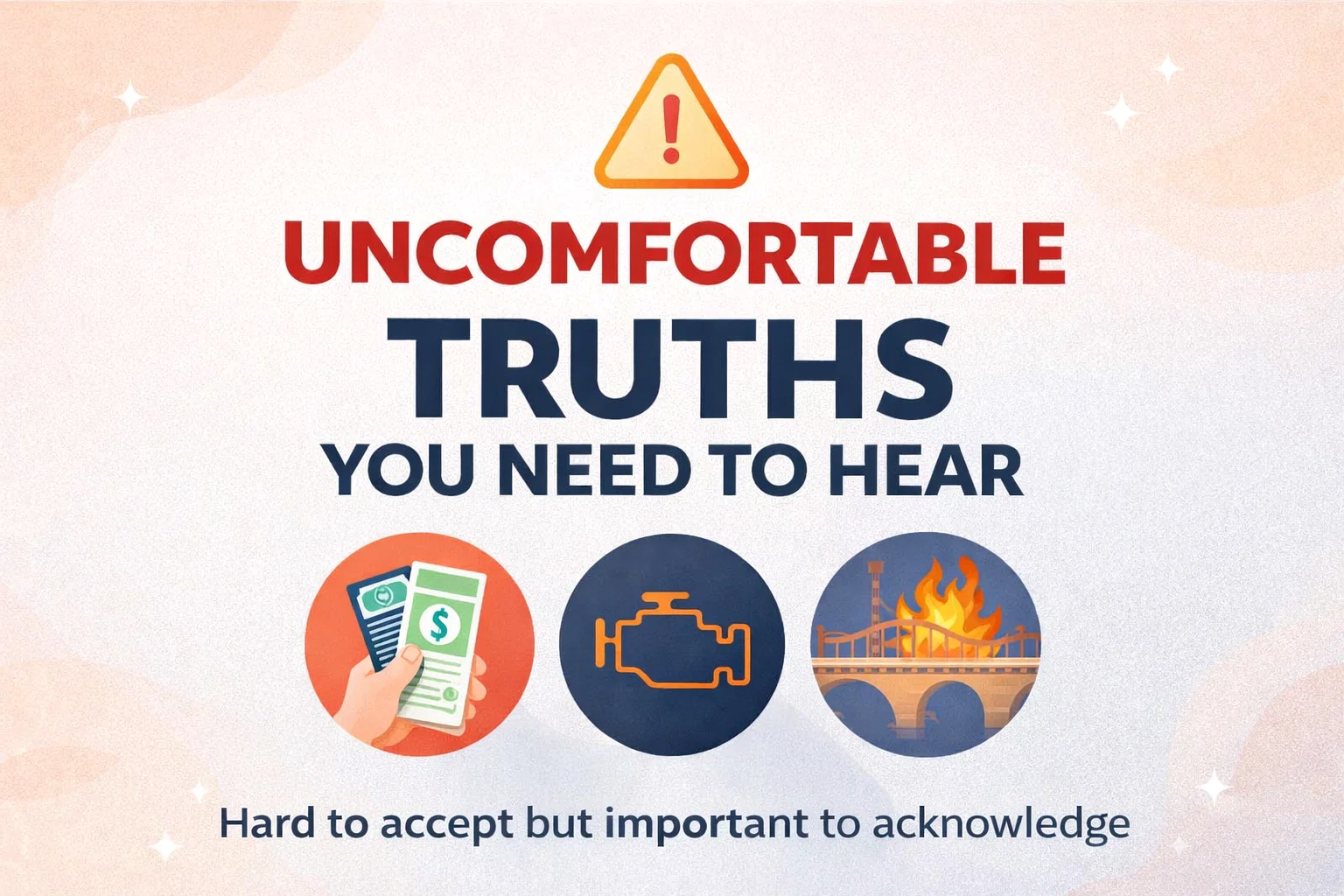
Today, we are diving deep into seven harsh but necessary truths about life, relationships, and success. These are the wake up calls that shake us out of complacency. They might sting a little to read, but embracing them will absolutely change the trajectory of your life. Grab a cup of coffee, get comfortable, and let us unpack the mindset shifts you need to prioritize your peace and reach your highest potential.
1. The Illusion of Success Without Effort
Avoiding hard work is like expecting to win the lottery without buying a ticket.
We live in a world obsessed with the idea of overnight success. We scroll through our feeds and see people living our dream lives, and it is incredibly tempting to assume they just got lucky. We secretly hope that if we just manifest hard enough, success will fall into our laps. This is a dangerous trap.
The uncomfortable reality is that luck favors the prepared, and preparation requires relentless hard work. Manifestation without action is merely a delusion. If you are avoiding the heavy lifting, the late nights, the early mornings, and the tedious tasks that no one wants to do, you have not even entered the game. You are standing outside the arena hoping a trophy magically appears in your hands.
How to Shift Your Mindset
- Fall in love with the process. Stop fixating entirely on the finish line and start finding joy in the daily grind.
- Embrace the discomfort. Recognize that feeling challenged means you are growing. If it is easy, you are likely stagnating.
- Take daily micro actions. You do not need to move mountains every single day. Consistent, tiny steps forward compound into massive results over time.
2. The Danger of the Habitual Apology
Apologizing too much is like repeatedly giving someone a free pass to cross your boundaries.
For many of us, saying sorry has become a reflex. We apologize for taking up space, we apologize for asking valid questions, and we even apologize when someone else bumps into us. While taking accountability is a beautiful and necessary trait, chronic over apologizing signals a deep lack of self worth.
When you apologize for things that are not your fault or for simply existing, you subconsciously tell the people around you that your needs are an inconvenience. It is the emotional equivalent of handing out unlimited free passes to let others walk all over you. Over time, your apologies lose their value, and your boundaries become nonexistent.
How to Reclaim Your Power
- Swap sorry for thank you. Instead of saying sorry I am late, say thank you for your patience. This simple pivot changes the entire dynamic of the conversation.
- Pause before you speak. When you feel the urge to apologize, take a one second breath and ask yourself if you actually did something wrong.
- Stand firm in your space. Remember that you are allowed to have needs, opinions, and boundaries without needing to ask for forgiveness.
3. The High Cost of Ignoring Red Flags
Ignoring red flags is like continuing to drive with the check engine light on while hoping for the best.
We have all been there. We meet someone new, take on a new client, or start a new job, and a tiny voice in our gut whispers that something is not quite right. But because we want things to work out so badly, we silence that voice. We paint those red flags green and convince ourselves that we are just overthinking.
Ignoring warning signs does not make them disappear. Just like a car with a flashing dashboard light, the longer you ignore the core issue, the more catastrophic the eventual breakdown will be. Whether it is a toxic partner, a manipulative friend, or an abusive work environment, denying reality only prolongs your inevitable pain and wastes your precious time.
Learning to Trust Your Intuition
- Acknowledge the patterns. One mistake is an accident, but a repeated behavior is a pattern. Do not ignore consistent disrespect or inconsistency.
- Stop making excuses for others. If someone shows you who they are, believe them the very first time. You are not a rehabilitation center for bad behavior.
- Value your peace over potential. Fall in love with the reality of a situation, not the imaginary potential of what it could be if the red flags magically vanished.
4. The Isolation of Burning Bridges
Burning bridges is like refusing to refill the gas until the tank is empty. Eventually, you will end up stranded.
In moments of anger or frustration, it can feel incredibly satisfying to have the last word and scorch the earth on your way out the door. Quitting a bad job in a blaze of glory or dramatically cutting off an acquaintance might provide a temporary dopamine hit. However, the professional and personal world is much smaller than you think.
Relationships are the fuel that drives our lives forward. When you unnecessarily burn bridges, you deplete your own resources. You never know when you might need a recommendation, a favor, or simply a friendly face in a new environment. Leaving a situation with grace does not mean you have to stay friends with toxic people, but it does mean handling your exits like an emotionally mature adult.
Practicing the Art of the Graceful Exit
- Process anger privately. Before you send that scathing email or text message, write it out in a journal and then throw it away. Respond only when you are calm.
- Focus on the lesson. Even terrible experiences teach us what we do not want. Take the lesson and leave the bitterness behind.
- Keep the door slightly cracked. Whenever possible, leave situations on neutral terms. You never know who will end up being the gatekeeper to your next big opportunity.
5. The Trap of Premature Bragging
Bragging about your goals is like sharing your strategy with the opposing team. You are less likely to score.
In the age of social media, we are conditioned to announce our every move. We post about the business we are going to start, the marathon we are going to run, and the book we are going to write before we have even taken the first step. Psychology tells us that sharing our goals gives us a premature sense of accomplishment. Our brains release dopamine just from the act of talking about the goal, which drastically reduces our motivation to actually do the work.
Furthermore, when you broadcast your moves before they are solidified, you invite unsolicited opinions, jealousy, and doubt from others. You give the opposing team your entire playbook. Real power lies in moving silently and letting your undeniable results speak for themselves.
The Power of Moving in Silence
- Protect your vision. Your dreams are fragile in their infancy. Protect them from the skepticism of people who do not share your drive.
- Seek accountability, not applause. Share your goals only with a trusted mentor or a small accountability group who will actually push you to work, rather than just cheering for the idea.
- Show, do not tell. Make it a personal rule to only announce a project once it is officially completed and ready for the world to see.
6. The Inevitable Breakdown of Neglected Self Care
Neglecting self care is like ignoring another kind of check engine light. Eventually, your body and mind will force you to stop.
Hustle culture has tricked us into believing that sleep deprivation is a badge of honor and burnout is just a sign of hard work. We push our bodies and minds to the absolute brink, running on caffeine and adrenaline, while completely ignoring the warning signs our bodies are desperately sending us.
Headaches, chronic fatigue, irritability, and a lack of focus are not just minor inconveniences. They are your internal check engine lights. If you do not intentionally carve out time for rest and recovery, your body will eventually choose a time for you, and it will likely be highly inconvenient. True self care is not just bubble baths and face masks. It is building a life that you do not need to regularly escape from.
Building Sustainable Self Care Habits
- Prioritize the basics. Never underestimate the transformative power of eight hours of sleep, drinking enough water, and moving your body daily.
- Schedule your rest. Treat your downtime with the exact same level of respect and urgency as you treat a meeting with your boss.
- Set digital boundaries. Unplugging from your screens is essential for mental clarity. Create tech free zones in your home, especially before bed.
7. The Exhausting Reality of People Pleasing
People pleasing is like constantly paying for someone else’s dinner while they are out having fun with someone else.
Being kind is a virtue, but chronic people pleasing is a self destructive habit born from a fear of rejection. When you constantly bend over backward to keep everyone else happy, you are abandoning yourself. You are spending your precious time, energy, and resources funding other people’s happiness while completely bankrupting your own.
The hardest truth to swallow is that people pleasers often end up resentful and unappreciated. The people who benefit from your lack of boundaries are not going to be the ones to enforce them for you. If you are always the one compromising, you are not building genuine relationships. You are simply becoming a convenient utility for others to use.
How to Break the People Pleasing Cycle
- Learn to tolerate the guilt of saying no. The discomfort of setting a boundary is temporary, but the resentment of saying yes when you meant no lasts much longer.
- Realize that you cannot control other people’s emotions. It is not your job to manage how others feel. Your only responsibility is to communicate honestly and respectfully.
- Prioritize your own joy. Start doing things purely because you want to do them, without worrying about how it will be perceived by the crowd.
Wrapping It Up: The Path Forward
Facing these seven uncomfortable truths is not about beating yourself up or dwelling on past mistakes. It is about radical accountability. When you stop avoiding hard work, stop apologizing for your existence, and start protecting your energy, your entire life begins to shift. You step out of the passenger seat and finally take the wheel of your own destiny.
Personal growth requires an immense amount of courage. It requires the bravery to look at your reflection and admit where you have been standing in your own way. But the reward for this honesty is absolute freedom. You get to build a life based on authenticity, strong boundaries, and genuine fulfillment.
Take a moment today to reflect on which of these seven truths resonated the most with your current situation. Pick just one area to focus on this week. Maybe you will practice saying no without offering a long explanation, or maybe you will finally take action on that goal you have been endlessly talking about. Whatever you choose, remember that every massive transformation starts with a single, honest step forward. Which uncomfortable truth are you ready to conquer first?