75 Hard vs 75 Medium vs 75 Soft Challenge Rules Which Fitness Program is Best for You
Embarking on a fitness journey is often met with a surge of motivation that feels like it could move mountains. However, as many of us have experienced, that initial fire can quickly dim when faced with rigid rules that do not account for the complexities of real life. The 75 Hard challenge took the internet by storm as a ultimate test of mental toughness, but it also sparked a vital conversation: does one size truly fit all when it comes to transformation? Today, we are diving deep into the 75 Hard, 75 Medium, and 75 Soft frameworks to help you navigate which path aligns with your goals, your schedule, and your current physical capacity.
Understanding the Foundation of the 75 Day Challenges
At its core, any 75 day challenge is designed to foster discipline, consistency, and a shift in mindset. The concept originated with Andy Frisella’s 75 Hard, which was never marketed as a fitness program but rather a “mental toughness” program. The premise is simple yet grueling: follow five critical rules for 75 days straight. If you fail or miss a single task, you must go back to Day 1. No excuses, no compromises.
While the intensity of the original program has changed lives, it also highlighted a need for more sustainable entries into the world of habit tracking. This led to the creation of the 75 Medium and 75 Soft versions. These adaptations keep the 75 day timeline but modify the daily requirements to be more inclusive of different fitness levels and lifestyle demands. The goal remains the same: to prove to yourself that you can stick to a commitment for over two months.
The Gold Standard of Discipline: 75 Hard
75 Hard is the “black coffee” of self-improvement challenges. It is stripped of all comfort and designed to push you to your absolute limits. For those who feel stuck in a rut or feel they have lost their edge, this program acts as a shock to the system. The rules are non-negotiable and remarkably specific.
The Daily Rituals of 75 Hard
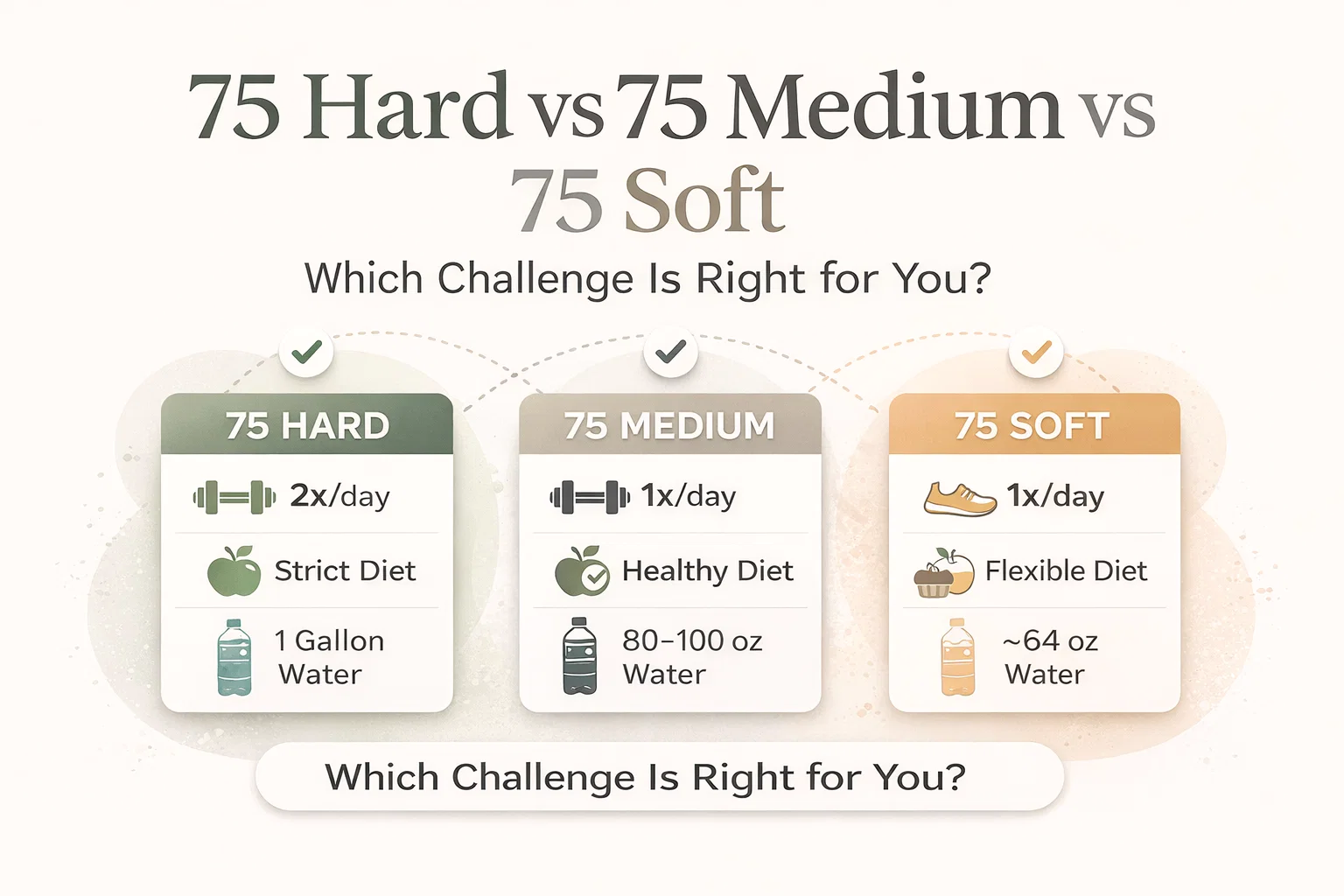
- Two 45-minute workouts: One of these workouts must be outdoors, regardless of the weather. Whether it is pouring rain or blistering heat, you are expected to show up.
- A Strict Diet: You choose the diet (Keto, Paleo, Vegan, etc.), but you must follow it perfectly. There are zero cheat meals and absolutely no alcohol.
- One Gallon of Water: Staying hydrated is a cornerstone of the physical requirements.
- Reading: You must read 10 pages of a non-fiction, self-improvement book every day. Audiobooks do not count toward this goal.
- Progress Photos: A daily photo is required to track the physical transformation that happens alongside the mental one.
The beauty and the terror of 75 Hard lie in the restart rule. If you forget your photo or drink only 120 ounces of water instead of 128, you are back at the starting line. This instills a level of hyper-awareness and attention to detail that few other programs can replicate.
Finding the Middle Ground: The 75 Medium Approach
If 75 Hard feels like a leap too far but you still want a significant challenge, 75 Medium is often the “Goldilocks” zone. It retains the structure of the original but introduces a small amount of grace that makes it more manageable for working parents, busy professionals, or those recovering from previous burnout.
What Changes in 75 Medium?
In the Medium version, the physical demands are dialed back slightly. Instead of two workouts, you commit to one 45-minute workout per day, which can be done anywhere. This removes the logistical hurdle of finding 90 minutes of exercise time and the potential for overtraining injuries. The diet remains healthy, but many participants allow for one “treat” or “cheat” meal per week. This prevents the psychological feeling of deprivation that can lead to binging after the 75 days are over.
Water intake is adjusted to a more standard 80 to 100 ounces, which is still significant but less daunting than a full gallon for many body types. Perhaps the biggest relief for many is the restart rule: usually, you only restart if you actually quit the program entirely, rather than making a singular minor mistake. This version focuses on progress over perfection.
The Sustainable Entry: 75 Soft
75 Soft is gaining massive popularity on platforms like TikTok and Pinterest because it prioritizes holistic wellness and habit formation over raw intensity. It is perfect for beginners or those who want to improve their health without the high stakes of a “restart” hanging over their heads. This version is about building a lifestyle you actually enjoy.
The Rules of 75 Soft
- One Workout Daily: This can be any activity, including a long walk, yoga, or a gym session. The focus is simply on moving your body.
- Healthy, Flexible Eating: There are no “off-limits” foods, but the focus is on eating nutritious meals and drinking alcohol only on social occasions.
- Hydration: The goal is roughly 64 ounces of water per day.
- Reading: You still read 10 pages, but any book counts, including fiction or audiobooks.
75 Soft is less about “breaking” you and more about “making” you. It encourages a healthy relationship with food and exercise, making it a fantastic choice for long term success beyond the 75 day mark.
Comparing the Pillars: A Side by Side Look
When you look at these three options, the differences in intensity become clear. Choosing between them requires an honest assessment of your current health and your primary motivation. Are you looking to build mental toughness, or are you looking to lose ten pounds? Are you trying to prove you can do something hard, or are you trying to stop a sedentary lifestyle?
Workout Comparisons
75 Hard requires 90 minutes of total movement, with the outdoor element adding a layer of environmental stress. 75 Medium and Soft require 45 minutes, but Soft allows for much lower intensity activities like stretching or light walking. If you have joint issues or a high-stress job, the 45-minute options are generally safer and more effective for cortisol management.
Dietary Differences
The “No Cheats” rule of 75 Hard is incredibly effective for breaking sugar addictions or emotional eating habits. However, 75 Soft’s “Flexible” approach is often better for those who have a history of disordered eating or who want to learn how to balance social lives with health goals. 75 Medium offers a bridge by allowing that single weekly treat, which can be a great reward for six days of clean eating.
Which Challenge Should You Choose?
Selecting your challenge is a personal decision that should be based on your “Why.” If your life feels chaotic and you feel you have no control over your impulses, 75 Hard can provide the structure you need to reclaim your power. It is a “monk mode” period that can produce radical results in a short amount of time.
However, if you are a beginner who currently does not exercise at all, jumping straight into 75 Hard might lead to injury or a quick sense of failure. In this case, 75 Soft is the superior choice. It allows you to build the “muscle” of showing up for yourself every day without the crushing weight of perfectionism. Once you complete 75 Soft, you might find you are ready to “level up” to Medium or Hard in the next round.
Tips for Success Regardless of the Version
No matter which path you take, 75 days is a long time. You will face birthdays, holidays, rainy days, and days where you simply do not want to get out of bed. Preparation is the only way to make it to the finish line.
First, meal prep is essential. If you are on a “strict” or “healthy” diet, having pre-made options prevents the “what should I eat?” panic that leads to poor choices. Second, do your most difficult task first. If you are doing 75 Hard, try to get that outdoor workout done in the morning. If you wait until 10:00 PM, the temptation to skip it will be massive. Finally, find a community. Whether it is a friend doing it with you or an online group, having someone to check in with makes the journey feel much less lonely.
The Power of Progress Photos and Tracking
One common thread across all versions is the importance of tracking. In our fast-paced lives, it is easy to miss the small changes happening in the mirror or in our energy levels. Daily or weekly progress photos serve as a visual receipt of your hard work. On Day 40, when you feel like nothing is changing, looking back at Day 1 can provide the psychological boost needed to keep going. Similarly, keeping a physical checklist where you can “X” out your tasks each day provides a hit of dopamine that reinforces the habit loop.
A Sustainable Conclusion to Your Transformation
The most important takeaway from the comparison of 75 Hard, Medium, and Soft is that the best challenge is the one you actually finish. There is no shame in choosing a “softer” version if it means you are actually going to improve your life. The goal is to finish the 75 days feeling stronger, more confident, and more in control than when you started. By picking the challenge that pushes you without breaking you, you are setting yourself up for a transformation that lasts long after the 75 days are over. Whether you are out in the rain for a second workout or simply enjoying a 64-ounce bottle of water and a good fiction book, you are making a choice to prioritize your well being. That, in itself, is a massive win. Stay consistent, stay focused, and remember that every single day is a new opportunity to prove what you are capable of achieving.
Would you like me to generate a specific SEO-optimized meta description or a list of long-tail keywords to help this post rank higher for “75 day challenge” searches?