8 Boundaries for Dealing with Gaslighting How to Protect Your Peace and Set Limits
Navigating relationships can be one of the most rewarding parts of the human experience, but it can also be one of the most challenging when communication breaks down. We have all been in those conversations where it feels like the ground is shifting beneath our feet. You remember an event clearly, but the person you are talking to insists it never happened, or worse, that you are making things up. This specific type of psychological manipulation, often referred to as gaslighting, can leave you feeling drained, confused, and questioning your own sanity. However, the power to reclaim your narrative starts with a single, foundational concept: setting firm, clear boundaries.
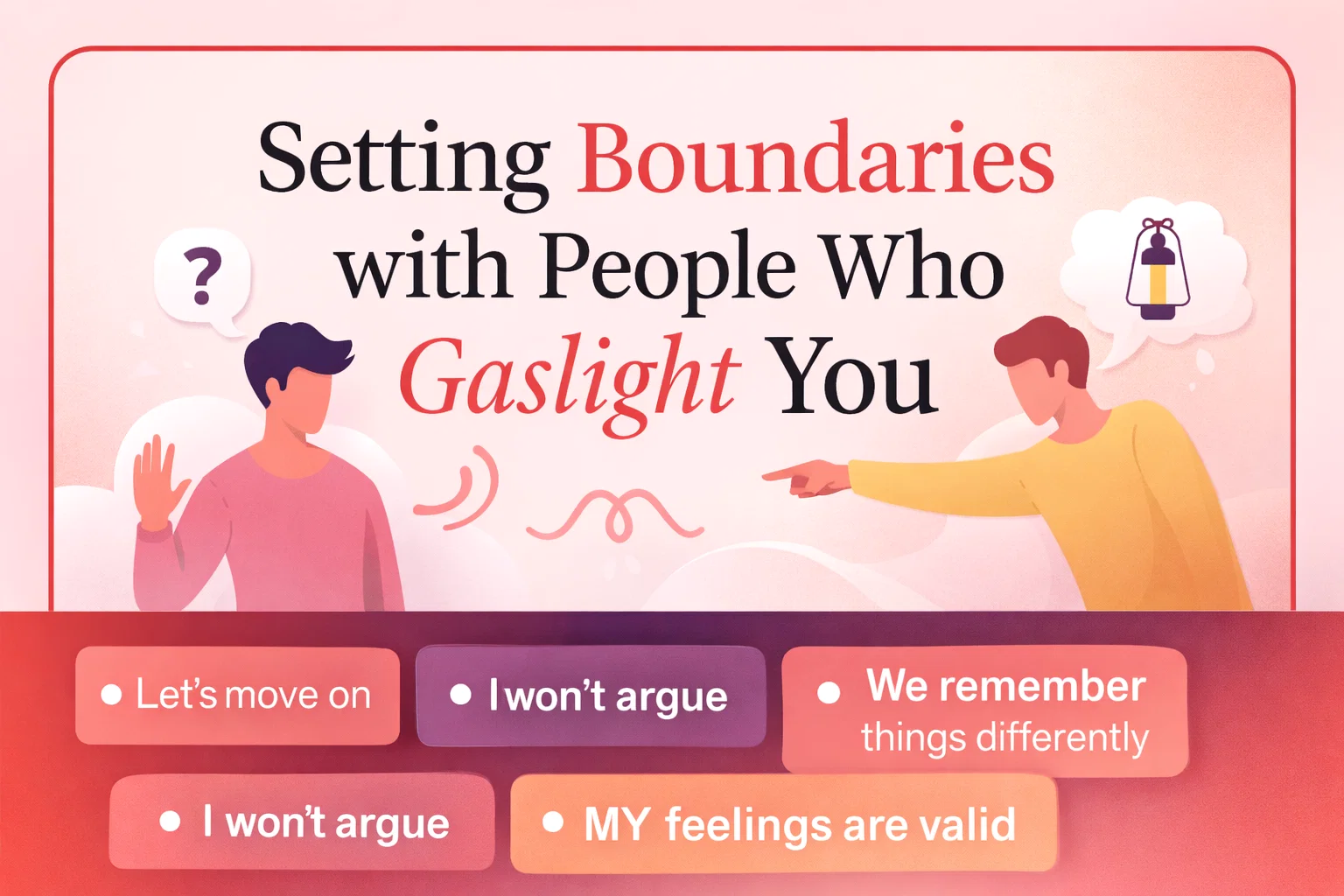
The image we are looking at today provides a vital roadmap for anyone feeling lost in these digital or verbal mazes. It lists eight specific, actionable boundaries designed to protect your mental health and keep you grounded in your reality. In this deep dive, we are going to explore why these boundaries are so effective, how to implement them without escalating conflict, and the psychological importance of validating your own lived experience.
Understanding the Mechanics of Gaslighting
Before we can effectively use the phrases listed in the guide, we need to understand what we are up against. Gaslighting is not just a simple disagreement. It is a persistent pattern of behavior where one person attempts to make another doubt their perceptions, memories, or mental stability. It often starts small, with minor denials of the truth, but can grow into a total distortion of reality.
The Goal of the Gaslighter
The primary goal of this behavior is control. By making you doubt yourself, the other person gains the upper hand in the relationship. When you no longer trust your own memory, you become more dependent on their version of events. This creates a power imbalance that is incredibly difficult to break without a conscious effort to set emotional guardrails.
Why Boundaries are the Antidote
Boundaries are not meant to change the other person’s behavior. That is a common misconception. Instead, boundaries are the rules you set for yourself regarding what you will tolerate and how you will respond. By using the phrases from our image, you are essentially drawing a line in the sand and saying, “My reality is not up for debate.”
Analyzing the 8 Boundaries for Self-Protection
Let us break down the specific phrases provided in the visual and look at the psychology behind why they work so well in the heat of the moment.
1. Let us move on; we have a different view of what happened
This is a powerful “circuit breaker” phrase. It acknowledges that a stalemate has been reached. Rather than banging your head against a wall trying to prove you are right, you are choosing to prioritize the peace of the present moment over the conflict of the past. It removes the fuel from the fire by refusing to engage in a circular argument.
2. If you continue to speak to me this way I am not engaging
This boundary is about self-respect and the environment of the conversation. Gaslighting often comes wrapped in verbal aggression or condescension. By stating this, you are making it clear that communication is a privilege that requires a certain level of mutual respect. If the respect vanishes, so does your presence in the conversation.
3. We remember things differently
This is perhaps the most neutral way to stand your ground. It does not call the other person a liar, which often triggers more defensiveness. Instead, it simply asserts that your memory exists and is valid. It allows two different “realities” to exist in the room without you having to surrender yours to theirs.
4. I will not argue with you about something I know I experienced
This is a firmer version of the previous point. It is particularly useful when the other person is being very insistent that you are wrong. It signals that your lived experience is an objective truth for you and is not a topic available for negotiation or debate.
The Importance of Emotional Validation
Moving further down the list, we see a shift toward the emotional aspect of these interactions. Gaslighting often targets your feelings just as much as your memories.
5. My feelings are valid even if you do not agree
You do not need someone else’s permission to feel hurt, angry, or disappointed. A common tactic in manipulative conversations is telling someone they are “too sensitive” or “reacting poorly.” This phrase reclaims your right to your emotional response regardless of the other person’s opinion on it.
6. I will not continue this conversation if you keep dismissing what I am saying
Communication requires two active participants. If one person is constantly “shutting down” the other, it is no longer a conversation; it is a lecture or an interrogation. Setting this boundary protects your time and your energy.
7. I am open to discussing solutions, but I am not open to debating my feelings
This is a brilliant way to pivot toward productivity. It shows that you are willing to work on the relationship and solve problems, but you are setting a “no-fly zone” around your internal emotional state. It keeps the focus on behavior and outcomes rather than an analysis of your character.
8. Your feelings are valid, and MY feelings are equally valid
This is the ultimate statement of equality. It utilizes “and” instead of “but” to create space for both people. It prevents the other person from using their own emotions as a way to overshadow yours. It promotes a balanced dynamic where both parties matter.
How to Implement These Boundaries in Real Life
Knowing the phrases is the first step, but saying them in the moment can be terrifying. Here are some practical tips for putting these into practice.
Start with Low-Stakes Situations
You do not have to wait for a massive blowout to practice boundaries. Start using phrases like “we remember things differently” during minor disagreements with friends or coworkers. Building the “muscle memory” of standing your ground makes it much easier when the stakes are higher.
Watch Your Tone and Body Language
The goal is to be assertive, not aggressive. Speak these phrases calmly and clearly. If you scream a boundary, it often gets lost in the noise of the conflict. A calm delivery shows that you are in control of yourself, which is the exact opposite of what a gaslighter wants to see.
Be Prepared for Pushback
When you start setting boundaries with someone who is used to manipulating you, they will likely double down on their behavior at first. They might mock your new “therapy talk” or get angrier. This is a sign that the boundary is working. Stay consistent. The boundary is for you, not for them.
The Path to Long-Term Healing
While these phrases are excellent tools for the “trench warfare” of a difficult conversation, they are also part of a larger journey toward self-healing. Constant gaslighting can erode your self-esteem over time, making you feel small and insignificant. Reclaiming your voice through these eight steps is a form of self-care that pays dividends in every area of your life.
Rebuilding Trust in Yourself
The more you stand up for your version of events, the more you begin to trust your own intuition again. You start to realize that you are a reliable narrator of your own life. This internal trust is the strongest shield you can have against any form of manipulation.
Evaluating the Relationship
Sometimes, setting boundaries reveals a hard truth: the other person is not capable of respecting them. If you consistently use these phrases and the other person continues to dismiss, demean, or manipulate you, it provides you with clear data. You can then make an informed decision about whether that relationship is healthy for you to maintain.
Conclusion: Your Truth is Worth Protecting
At the end of the day, your reality is the only one you truly have. The eight boundaries we explored today are not just sentences; they are declarations of independence. They remind both you and the person you are speaking with that your mind, your memories, and your emotions are your own. No one has the right to rewrite your history or tell you how to feel about your life.
By keeping these phrases in your back pocket, you are equipped to handle difficult dialogues with grace and strength. Remember that it is okay to walk away, it is okay to disagree, and it is absolutely necessary to validate yourself. You are the expert on your own life. Start acting like it, one boundary at a time.