8 Harsh Truths About Life and Personal Growth for Self Improvement Mindset Success
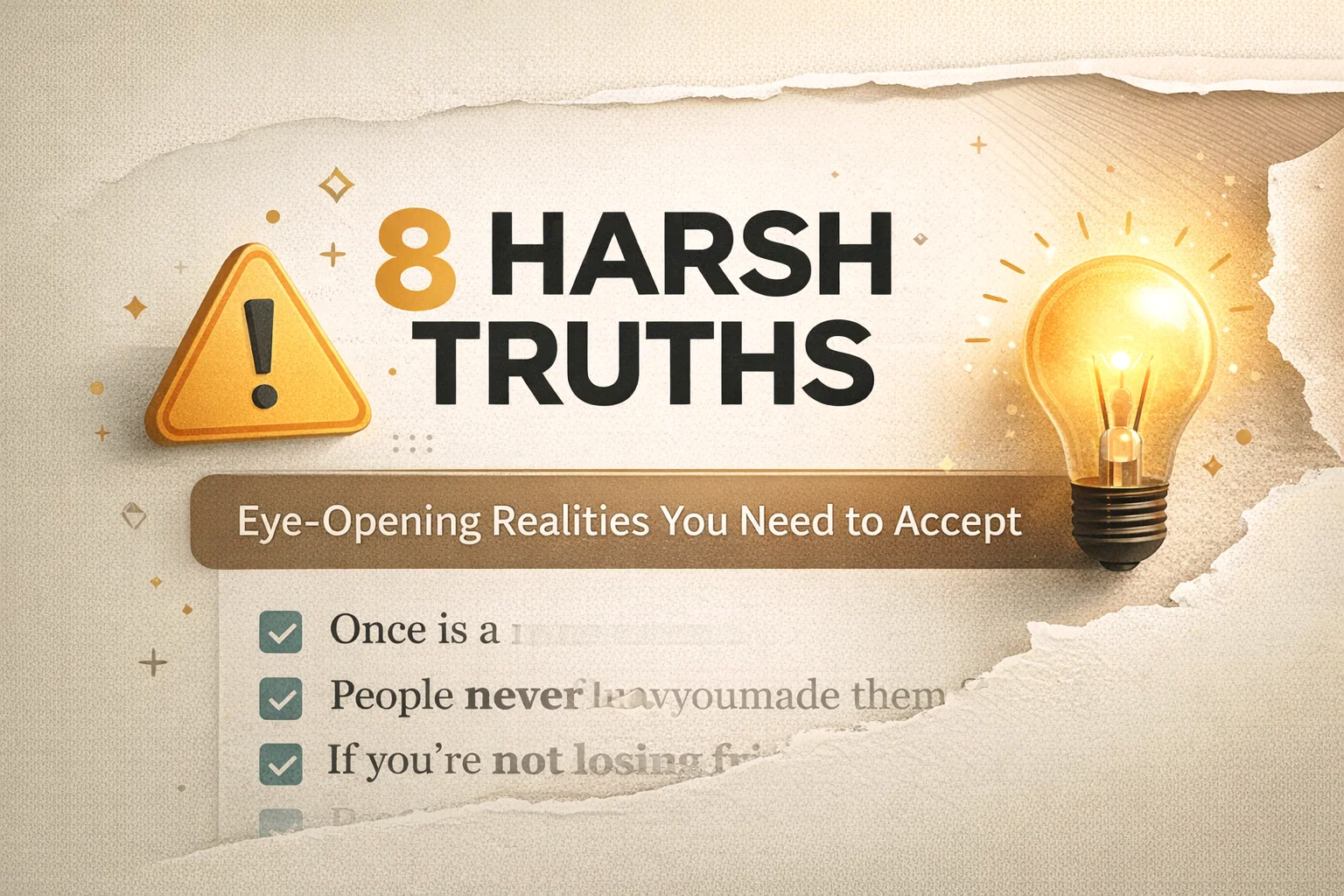
Life has a funny way of teaching us lessons. Sometimes they come as gentle whispers, but more often, they arrive as loud, uncomfortable realizations that we simply cannot ignore. We often spend our lives trying to avoid discomfort, yet it is within that very friction that our most significant transformations occur. Embracing harsh truths is not about being cynical; it is about developing the emotional maturity to see the world as it is rather than how we wish it to have been. When we stop sugarcoating our reality, we gain the clarity needed to build a life rooted in authenticity and strength.
The Power of Conscious Decision Making
One of the most profound shifts in personal accountability is recognizing the difference between a lapse in judgment and a recurring pattern. We are all human, and we all stumble. However, the first time we make a mistake, it is a learning opportunity. It is an accidental detour. When that same action happens a second time, it is no longer an accident. It is a choice. This realization is heavy because it strips away the excuses we use to protect our egos.
Breaking the Cycle of Repeated Mistakes
To move forward, we must look at our habits with radical honesty. If you find yourself in the same toxic relationship dynamics or the same financial ruts, it is time to stop calling them mistakes. By identifying these moments as decisions, you take back your power. You are no longer a victim of circumstance; you are the architect of your behavior. This shift allows you to pause before acting and ask yourself if you are truly choosing the path you want to walk.
Understanding the Emotional Footprint We Leave Behind
We often focus on what we say or what we do, but we rarely consider the lingering emotional residue we leave in our wake. People might forget the specific words you used during an argument, and they might forget the exact details of a gift you gave them, but they will never forget how you made them feel. This is the core of human connection. Our impact on others is measured by the safety, warmth, or anxiety we project into their lives.
The Importance of Emotional Intelligence
Cultivating emotional intelligence means being mindful of your presence. Are you someone who lifts others up, or do you leave people feeling drained and diminished? When we realize that our emotional footprint is our true legacy, we become more intentional with our interactions. Kindness becomes less of a chore and more of a foundational way of existing in the world. It is about creating a space where others feel seen and respected.
Why Growth Often Means Saying Goodbye
There is a common misconception that a successful life is one where you keep every friend you have ever made. In reality, growth and shedding are two sides of the same coin. As you evolve, your values, boundaries, and interests change. Naturally, this means you will no longer align with everyone who was part of your previous chapters. If you are not losing friends, you might be standing still.
The Necessity of Outgrowing Environments
Losing friends can be painful, but it is often a sign that you are leveling up. It means you are no longer willing to tolerate disrespect or that you are prioritizing a version of yourself that no longer fits into old boxes. True growth requires space. Sometimes, the people who knew you when you were smaller or less certain are the ones most resistant to your expansion. Letting go is not an act of malice; it is an act of self-preservation and alignment.
The True Value of a Sincere Apology
We have all been in a position where we felt we deserved an apology that never came. Eventually, we might even find ourselves asking for one. But here is the hard truth: an apology holds no weight if you have to demand it. A meaningful apology is a product of self-reflection and genuine remorse. It requires the other person to recognize their impact on you without being prompted.
Seeking Closure Within Yourself
When you have to extract an apology from someone, it often lacks the sincerity needed for true healing. It becomes a performance to keep the peace rather than a heart-felt acknowledgement of harm. Learning to find closure without that external validation is a superpower. It means your peace of mind is no longer held hostage by someone else’s inability to take responsibility. You heal for yourself, not because they finally said sorry.
Recognizing Where You Truly Matter
It is a stinging realization to admit that your absence might not affect certain people. We like to think we are indispensable in every circle we inhabit, but the truth is that if your absence doesn’t affect them, your presence never truly mattered. This sounds harsh, but it is actually incredibly liberating. It tells you exactly where to stop pouring your energy.
Investing in Reciprocal Relationships
Stop overstaying your welcome in places where you are merely tolerated rather than celebrated. Focus your time and affection on the people who notice when you are gone and who value the unique light you bring to the table. When you stop trying to prove your worth to people who are indifferent, you free up massive amounts of emotional bandwidth to invest in relationships that are actually reciprocal and nourishing.
The Danger of One Sided Judgments
In the age of instant information and social media, we are encouraged to form opinions quickly. However, true wisdom lies in the ability to wait. You must know both sides of a story before you allow yourself to judge. Every situation is layered with nuance, history, and personal perspective that may not be immediately visible on the surface.
Practicing Intellectual Humility
Judging without context is a sign of intellectual laziness. By committing to understanding multiple perspectives, you develop a more balanced and compassionate worldview. This doesn’t mean you have to agree with everyone, but it does mean you respect the complexity of human experience enough to look deeper. It saves you from the embarrassment of being wrong and the cruelty of being unfair.
Healing Through Acknowledgement
You cannot heal what you refuse to acknowledge and feel. Many of us try to “toxic positivity” our way out of pain or bury our traumas under a mountain of productivity. But suppressed emotions do not die; they are simply buried alive and will come forth later in uglier ways. Healing is a messy, visceral process that requires you to sit in the center of your pain.
The Path to Emotional Freedom
To move past a hurt, you must first give it a name. You must allow yourself to feel the anger, the grief, or the shame that you have been avoiding. Once these emotions are acknowledged, they lose their power over you. They become data points rather than dictators of your behavior. This is the only way to achieve genuine emotional freedom and move into the future without the heavy baggage of the past.
Growth, Discomfort, and the Arrival of Clarity
If you are waiting for a sign that you are on the right path, look for discomfort. Growth almost always requires a period of friction before clarity appears. Think of it like the transition between seasons or the stretching of muscles. If everything feels easy and comfortable, you are likely repeating what you already know rather than expanding into new territory.
Embracing the Fog Before the Sun
Clarity is the reward for enduring the confusion of growth. When you are in the middle of a major life change, it is normal to feel lost or overwhelmed. This discomfort is simply your old self breaking down to make room for a new perspective. Trust the process. The fog will eventually lift, and when it does, you will see your path with a level of detail and certainty that was impossible to achieve while you were still playing it safe.
Cultivating a Resilient Mindset for the Future
Accepting these truths allows you to build a foundation that is not easily shaken by the whims of others or the inevitable challenges of life. Resilience is not about never falling; it is about knowing how to get back up because you have done the hard internal work already. You become less afraid of the “harsh” parts of life because you recognize them as necessary tools for refinement.
- Take Responsibility: Own your choices and stop labeling patterns as mistakes.
- Evaluate Your Impact: Be mindful of how you make others feel.
- Prune Your Circle: Accept that losing friends is often a symptom of healthy growth.
- Validate Yourself: Don’t wait for apologies that aren’t freely given.
- Face the Pain: Healing requires you to feel everything you’ve been avoiding.
Conclusion: The Journey Toward Radical Truth
Living a life guided by these truths isn’t always easy, but it is infinitely more rewarding than living in denial. By embracing the discomfort of growth, the necessity of boundaries, and the power of accountability, you transform from someone who reacts to life into someone who actively creates it. These lessons are not meant to discourage you; they are meant to arm you with the reality you need to succeed. As you move forward, remember that every uncomfortable moment is an invitation to become more than you were yesterday. Embrace the truth, do the work, and watch as your world opens up in ways you never thought possible.