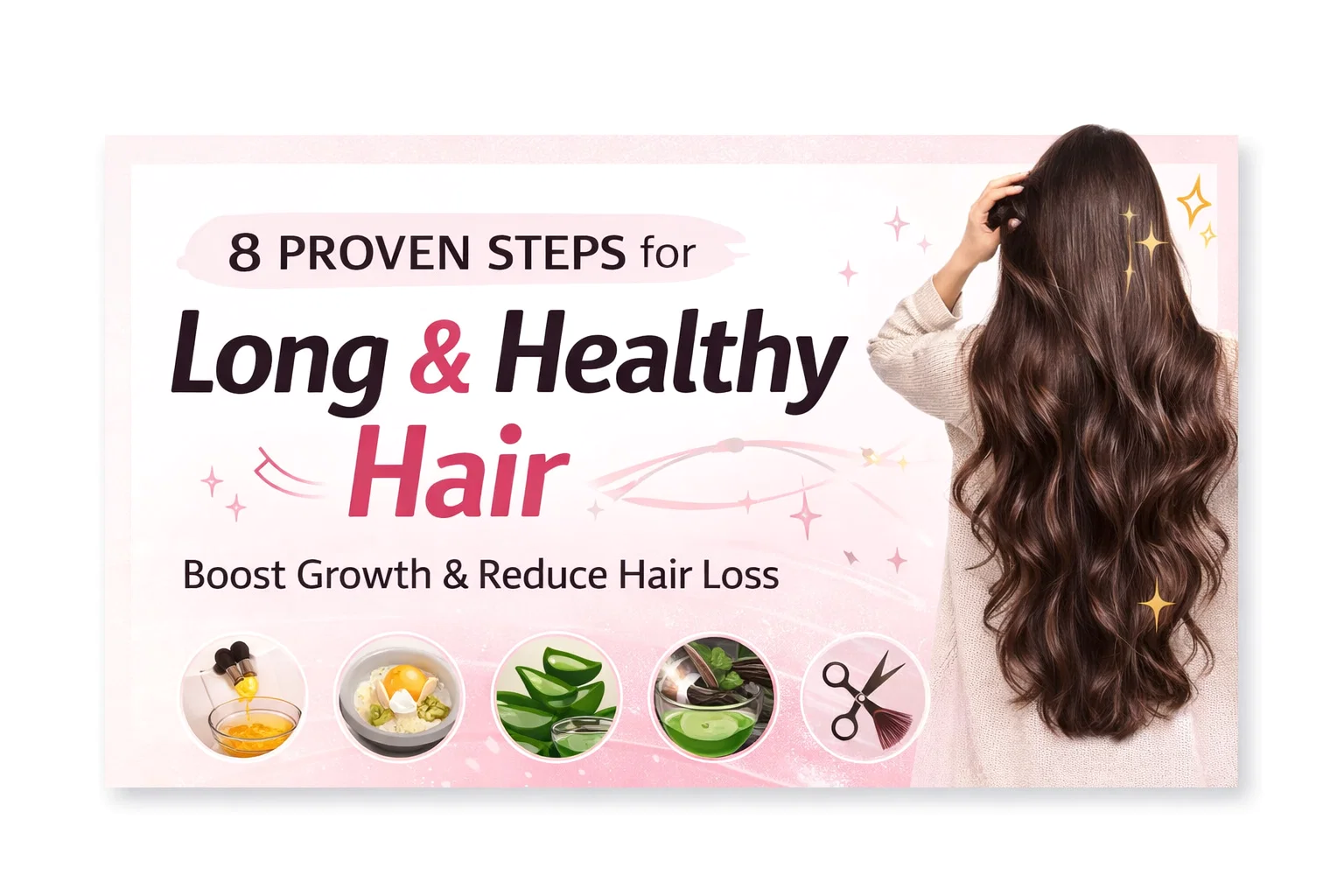
8 Step Hair Growth Guide How to Get Long, Thick Healthy Hair Faster
Achieving cascading, floor-length tresses often feels like a distant dream reserved for fairy tales or high-end salon advertisements. Many of us find ourselves stuck in a cycle of breakage, stagnant growth, and dull texture, wondering why our hair refuses to grow past a certain point. The truth is that long, healthy hair is rarely the result of luck or expensive miracle products alone. Instead, it is the product of a consistent, intentional routine that addresses both the scalp and the strands. By following a structured step by step process, you can transform your hair from brittle and short to thick and vibrant within just a few months.
The journey to your dream hair requires patience and a holistic approach. It is not just about what you apply to your hair during your morning shower, but also how you nourish your body and how you protect your hair while you sleep. This comprehensive guide breaks down the eight essential steps shown in our routine to help you unlock your maximum growth potential. Let’s dive into the science and the methods that will lead you to the long, healthy hair you have always wanted.
Step 1: The Power of the Oil Massage
The foundation of any successful hair growth journey starts at the roots. A scalp massage is one of the most effective ways to stimulate blood circulation to the hair follicles. When you massage your scalp, you are essentially waking up the follicles and ensuring they receive the nutrients and oxygen necessary for hair production. To see real results, consistency is key, which is why we recommend an oil massage three times per week.
Choosing the right oil is crucial for this step. Coconut oil is a classic favorite because it penetrates the hair shaft to prevent protein loss. Castor oil is renowned for its ricinoleic acid content, which helps increase circulation and has antimicrobial properties. Onion oil has recently gained massive popularity in the hair care community because it is rich in sulfur, which prevents breakage and thinning. For the best experience, massage your chosen oil into your scalp for 10 to 15 minutes using your fingertips in circular motions. For a deep conditioning effect, leave the oil in overnight to let your scalp fully absorb the benefits.
Step 2: Cleansing with a Mild Shampoo
While keeping the scalp clean is vital, over-washing or using harsh chemicals can strip your hair of its natural oils, leading to dryness and breakage. Many commercial shampoos contain sulfates and parabens that are too aggressive for those trying to grow long hair. Switching to a mild, sulfate-free shampoo two to three times a week allows you to remove dirt and excess oil without compromising the health of your hair fibers.
When washing, focus the product on your scalp where the oil and buildup live, letting the suds naturally rinse through the ends. A major tip for maintaining hair integrity is to avoid hot water. While a steaming shower feels relaxing, hot water opens the hair cuticles too wide, leading to moisture loss and frizz. Use lukewarm water instead to keep the hair structure intact and healthy.
Step 3: Nourishing Weekly Hair Masks
Once a week, your hair deserves an extra boost of nutrition that a standard conditioner cannot provide. A DIY hair mask using natural ingredients found in your kitchen can work wonders. A combination of curd, egg, and honey is a powerhouse for hair health. Curd is rich in lactic acid which cleanses the scalp and clears away dead skin cells, while eggs provide the essential proteins and biotin needed for strength.
Honey acts as a natural humectant, meaning it draws moisture from the air and locks it into your hair. Mix these ingredients into a smooth paste and apply it from root to tip. Let it sit for at least 30 minutes to allow the nutrients to penetrate deeply into the hair cortex. When you rinse it out, you will immediately notice an improvement in softness and manageability.
Step 4: The Magic of the Cold Water Rinse
This is perhaps the simplest yet most underrated step in a hair care routine. After you have finished conditioning your hair, give it one final rinse with cold water. This helps to seal the hair cuticles that were opened by the warm water during your wash. By sealing the cuticle, you are locking in the moisture from your products and creating a smooth surface that reflects light.
The result of a cold water rinse is an instant boost in shine and a significant reduction in frizz throughout the day. It acts as a protective shield for your hair, keeping the internal moisture safe from the drying effects of the environment. It might be a bit chilly, but the results for your hair texture are well worth the brief discomfort.
Step 5: Boosting Growth with Aloe Vera Gel
Aloe vera is a versatile plant that has been used for centuries to promote skin and hair health. Applying pure aloe vera gel to your scalp and hair three times a week can significantly boost growth and reduce hair fall. It contains proteolytic enzymes which repair dead skin cells on the scalp, providing a healthy environment for hair to grow.
Aloe vera also acts as a fantastic natural conditioner that leaves your hair all smooth and shiny. It has a similar chemical makeup to keratin, the primary protein of hair, which helps it rejuvenate the hair with its own nutrients. Whether you use gel straight from the plant or a high quality store-bought version, your hair will benefit from the hydration and cooling properties of this miracle plant.
Step 6: Preventative Trimming
It might seem counterintuitive to cut your hair when you are trying to grow it longer, but regular trims are essential for length retention. If you leave split ends untreated, they will eventually travel up the hair shaft, causing the hair to break off higher up than where the split started. This results in hair that looks thin and ragged at the bottom.
By trimming just a small amount of hair every six to eight weeks, you remove those damaged ends before they can cause further breakage. This ensures that the length you are gaining is healthy and thick rather than stringy. Think of trimming as a way to maintain the quality of your hair as you work toward your goal quantity.
Step 7: Fueling Growth from Within
Topical treatments are only half of the equation. Your hair is an extension of your body, and its health is a direct reflection of your internal nutrition. To grow long and thick hair, you must provide your body with the building blocks of hair production. A diet rich in nuts, fruits, leafy greens, and high quality protein is non-negotiable.
Biotin, Zinc, and Vitamin E are particularly important for hair strength. Additionally, hydration plays a massive role in hair health. Your hair is made of about 25 percent water, and if you are dehydrated, your hair will be the first place to show it by becoming brittle and stopping its growth. Aim to drink eight to ten glasses of water daily to keep your hair hydrated from the inside out.
Step 8: Sleep, Stress Management, and Recovery
Stress is a major contributor to hair thinning and loss. When your body is under high levels of stress, it can push hair follicles into a resting phase, meaning they stop producing new strands. Prioritizing seven to eight hours of sleep and practicing meditation can help keep your cortisol levels in check, allowing your body to focus its energy on hair growth.
Furthermore, your hair is most vulnerable when you are tossing and turning at night. Using a silk or satin pillowcase reduces friction, which prevents tangles and breakage while you sleep. Traditional cotton pillowcases can snag the hair and absorb its natural oils, leaving it dry by morning. Making the switch to silk is an easy luxury that pays off in hair health.
Extra Tips for Daily Maintenance
Beyond the eight main steps, small daily habits can make a huge difference over time. Always brush your hair gently, starting from the ends and working your way up to the roots to avoid snapping the strands. Limit the use of heat styling tools like flat irons and blow dryers, as excessive heat is one of the fastest ways to damage the hair cuticle.
Avoid tight hairstyles like high ponytails or buns that pull on the roots, as this can lead to traction alopecia or thinning around the hairline. Instead, opt for loose braids or clips. Finally, the most important tip is to be patient. Hair typically grows about half an inch per month, so you should expect to see significant results in three to six months of following this routine consistently.
Conclusion: Your Path to Transformation
Transforming your hair is not an overnight process, but with the right routine, it is an achievable goal. By combining the external care of oil massages and natural masks with the internal support of a healthy diet and stress management, you are giving your hair everything it needs to thrive. The “before and after” results seen in those who commit to this process are a testament to the power of consistency.
Remember that every small action counts. Whether it is choosing a silk pillowcase or opting for a cold rinse, these habits accumulate to create the long, thick, and healthy hair you have always desired. Start your journey today, stay patient with the process, and soon you will be seeing the magic happen in your own mirror. Save this routine, follow it diligently, and get ready to enjoy the hair of your dreams.