8 Strange Body Symptoms Explained Nutritional Deficiency Wellness Tips Guide
Have you ever noticed your body acting in ways that seem a bit, well, strange? Perhaps you have experienced a sudden ringing in your ears that comes out of nowhere, or maybe you find yourself yawning constantly even after a full night of sleep. These little physical quirks are easy to dismiss as just part of getting older or having a busy week, but your body is actually a sophisticated communication system. It doesn’t have a voice, so it uses physical symptoms to send signals about what is happening on the inside. Understanding these “strange” body symptoms is like learning a new language that can help you unlock better health, higher energy, and a deeper sense of well-being.
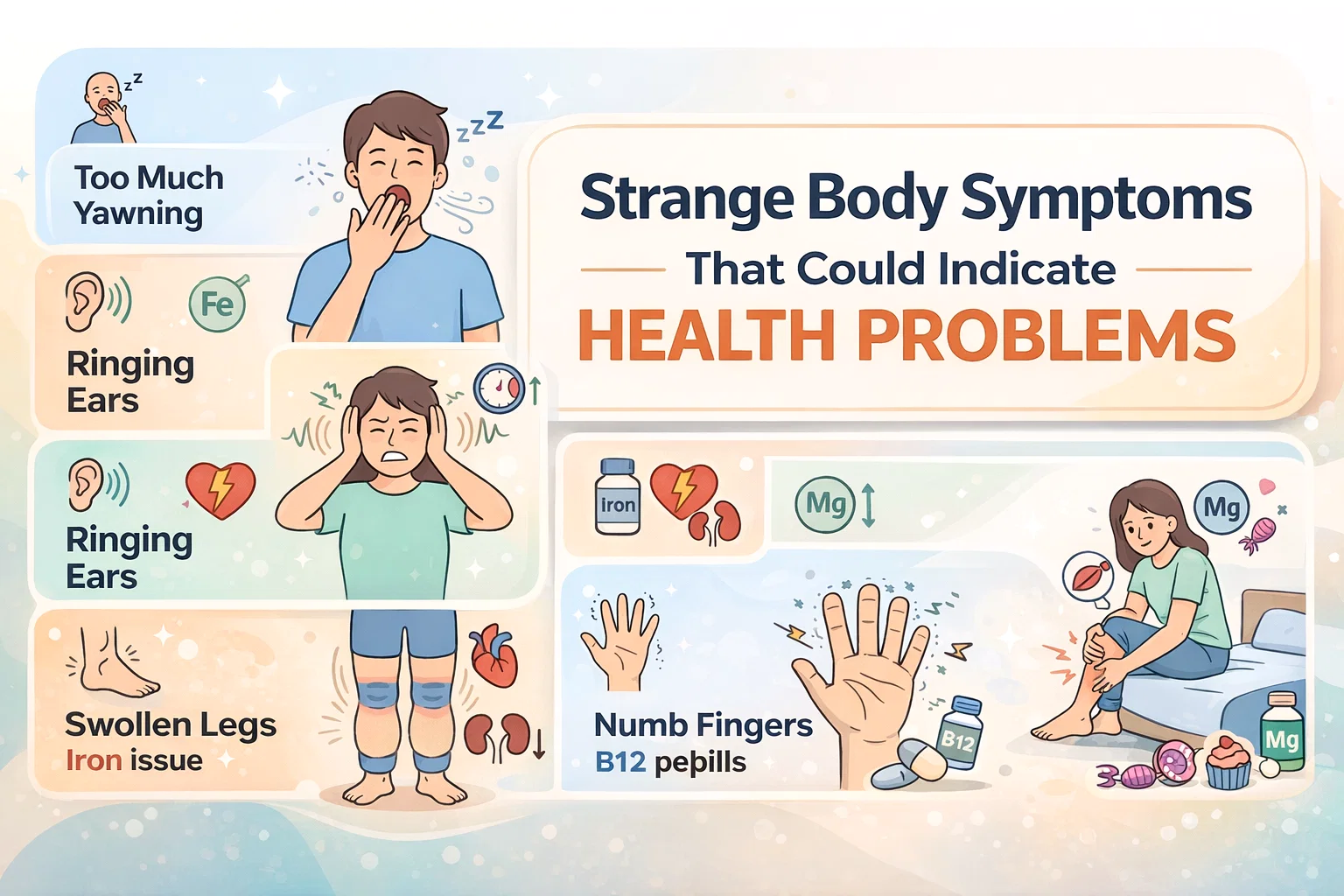
The image we are looking at today highlights some of the most common yet overlooked signals our bodies send us. From the tips of your fingers to the way your breath smells, every sensation has a story to tell. By paying attention to these indicators, we can identify nutritional deficiencies, stress levels, and organ health before minor issues turn into major problems. Let’s dive deep into these eight specific symptoms and explore what they might be trying to tell you about your internal chemistry.
The Mystery of the Constant Yawn: More Than Just Being Tired
We usually associate yawning with boredom or a lack of sleep. However, if you find yourself yawning excessively throughout the day despite resting well, your body might be signaling a need for more oxygen. Yawning is a natural reflex that helps the body take in a large gulp of air, which in turn increases the oxygen levels in the blood and helps cool down the brain temperature.
Low oxygen levels can stem from various sources. It might be as simple as poor posture or shallow breathing habits, but it can also be a sign of iron deficiency or poor circulation. When your blood isn’t carrying enough oxygen to your tissues, your brain triggers the yawn reflex to compensate. If this is a recurring issue for you, focusing on deep breathing exercises or checking your iron levels could make a significant difference in how you feel daily.
Understanding the Internal Echo: Why Are My Ears Ringing?
Tinnitus, or that persistent ringing, buzzing, or hissing sound in the ears, can be incredibly distracting. While exposure to loud noises is a common culprit, the image points toward a different internal factor: high blood pressure. When your blood pressure is elevated, the force of the blood moving through your vessels increases. Since the ears have a complex network of delicate blood vessels, they are often the first to feel the impact of this increased pressure.
High blood pressure can cause the blood to flow more forcefully through the carotid artery and the jugular vein, which are located near the inner ear. This can create a rhythmic thumping or a steady ringing sound. If you notice this symptom, especially when you are stressed or after a salty meal, it is a clear sign from your body to check in on your cardiovascular health. Managing stress and reducing sodium intake are great first steps toward quietening the internal noise.
The Silent Message in Your Breath and Gut
Bad breath is often treated as an oral hygiene issue, but if brushing and flossing don’t seem to help, the problem might be originating much deeper. Your gut health and your breath are intrinsically linked. An imbalance in gut bacteria, known as dysbiosis, can lead to the production of gases that escape through the breath. This is why certain digestive issues, like acid reflux or an overgrowth of “bad” bacteria, manifest as persistent bad breath.
Think of your gut as the engine room of your body. When the “exhaust” isn’t smelling right, it’s usually because the fuel isn’t being processed correctly. Incorporating probiotics, fermented foods, and plenty of fiber can help rebalance your microbiome. By healing the gut, you aren’t just improving your digestion; you are freshening your breath from the inside out.
Heavy Hair Loss and the Iron Connection
It is normal to lose a few strands of hair every day, but noticing clumps in your brush or thinning patches can be alarming. One of the most common biological reasons for heavy hair loss is an iron deficiency. Iron is essential for the production of hemoglobin, the protein in your red blood cells that carries oxygen to your cells. This includes the cells that stimulate hair growth.
When your body is low on iron, it goes into survival mode. It prioritizes sending oxygen to vital organs like the heart and brain, leaving “non-essential” parts like hair follicles to fend for themselves. Without enough oxygen, the hair follicles enter a resting phase and eventually fall out. Boosting your intake of iron-rich foods like spinach, lentils, and lean proteins, along with Vitamin C to help absorption, can help keep your hair where it belongs.
Swollen Legs: A Cry for Help from the Heart and Kidneys
Edema, or the swelling of the legs and ankles, occurs when fluid becomes trapped in your body’s tissues. While standing for long periods can cause this, chronic swelling is a major red flag for heart or kidney issues. The heart is responsible for pumping blood throughout the body, and the kidneys are responsible for filtering out excess fluid and waste. If either of these systems is struggling, fluid can begin to pool in the lower extremities due to gravity.
If you notice that your legs feel heavy or that an indentation stays in your skin after you press on a swollen area, your body is asking for attention. Reducing salt intake can help lower fluid retention, but it is also important to support your circulatory system through gentle movement and proper hydration. This symptom is a clear reminder that our organs work as a team to keep our fluid levels in balance.
Night Cramps and the Magnesium Deficit
There is nothing quite as jarring as being woken up in the middle of the night by a painful leg cramp. These “charley horses” are frequently a sign of low magnesium levels. Magnesium is a vital mineral that helps your muscles relax after they contract. When you are deficient, your muscles can become hyper-excitable, leading to those painful, involuntary contractions.
Magnesium is used in over 300 biochemical reactions in the body, and many of us are unknowingly deficient because of soil depletion and high-stress lifestyles. If you suffer from night cramps, consider increasing your intake of magnesium-rich foods or using topical magnesium lotions. This simple mineral can be the key to a peaceful, cramp-free night of sleep.
Numb Fingers and the Vitamin B12 Signal
That “pins and needles” sensation in your fingers or toes is often more than just your limb “falling asleep.” Numbness and tingling are hallmark signs of a Vitamin B12 deficiency. B12 is crucial for the health of your nervous system and the production of the myelin sheath, which is the protective coating around your nerves. Without enough B12, the nerves can become damaged, leading to strange sensations or a loss of feeling.
Since B12 is primarily found in animal products, those on plant-based diets need to be especially mindful of this nutrient. However, even meat-eaters can struggle with absorption as they age. If you feel frequent numbness, it is your nerves telling you they need more support. Ensuring adequate B12 levels through diet or supplementation can help keep your nervous system firing correctly.
Decoding Sugar Cravings: Why Your Body Wants Sweets
We often blame a lack of willpower for our sugar cravings, but your brain might actually be reacting to a magnesium deficiency. It sounds counterintuitive, but magnesium plays a huge role in glucose metabolism and insulin regulation. When your magnesium levels are low, your body struggles to manage its energy effectively, leading to a “false” signal that you need a quick hit of sugar for energy.
Furthermore, magnesium is involved in the production of dopamine, the “feel-good” hormone. When levels are low, you might crave chocolate or sweets because they provide a temporary boost in mood. Next time you find yourself reaching for the candy jar, try reaching for a handful of almonds or a piece of dark chocolate instead. You might find that satisfying the mineral need is much more effective than feeding the sugar habit.
How to Support Your Body Naturally
Seeing these symptoms listed out can feel overwhelming, but the good news is that most of these issues can be addressed through simple, holistic lifestyle changes. Your body is incredibly resilient and is always working toward a state of balance. Here are a few ways you can start supporting your system today:
- Eat the Rainbow: Focus on whole, unprocessed foods to ensure you are getting a wide spectrum of vitamins and minerals.
- Listen to Your Gut: Incorporate fermented foods like sauerkraut, kimchi, or yogurt to support a healthy microbiome.
- Prioritize Minerals: Magnesium and iron are common deficiencies. Look for seeds, nuts, and leafy greens to boost these levels naturally.
- Hydrate Intelligently: Water is essential, but adding a pinch of sea salt or electrolytes can help your cells actually absorb the moisture.
- Mindful Movement: Gentle stretching and walking can help improve circulation and reduce swelling in the legs.
The Importance of Professional Guidance
While identifying these “strange” symptoms is a powerful way to take charge of your health, it is always important to remember that this information is a starting point. If you are experiencing persistent or severe symptoms, consulting with a healthcare professional is vital. They can provide the necessary tests to confirm deficiencies or rule out more serious underlying conditions. Think of yourself as the primary investigator of your own health, and use these body signals as clues to guide your wellness journey.
Conclusion: Celebrate Your Body’s Intelligence
At the end of the day, our bodies are not trying to annoy us with ringing ears or night cramps. They are speaking to us in the only way they can. By shifting our perspective from seeing these symptoms as “problems” to seeing them as “messages,” we can foster a much more harmonious relationship with ourselves. Whether it is a nudge to eat more spinach for iron or a reminder to take a deep breath for more oxygen, every signal is an opportunity to improve our quality of life.
Start paying closer attention to these small signs this week. You might be surprised at how much your body has been trying to tell you. By honoring these messages and providing your system with the nutrients and care it needs, you are setting the foundation for long-term health and vitality. Your body is your most precious home, and listening to its wisdom is the greatest act of self-care you can perform.
Would you like me to generate some Pinterest descriptions or SEO titles for this blog post to help with your promotion strategy?