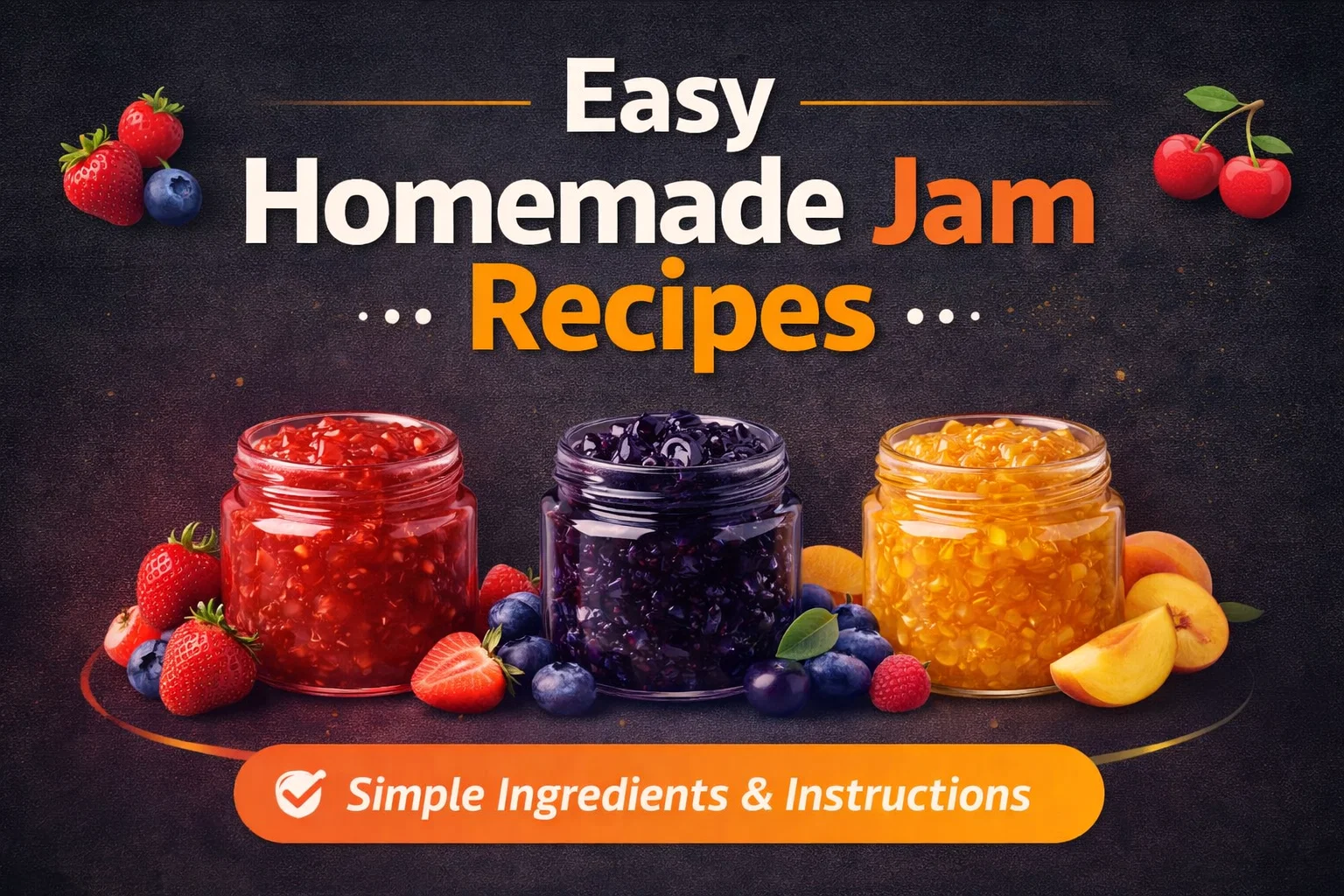
9 Easy Homemade Jam Recipes Best Fruit Preserve Ingredients DIY Canning Guide
There is something undeniably magical about the sound of a vacuum seal popping on a fresh jar of homemade jam. It is the sound of captured sunshine, preserved fruit, and a bit of kitchen alchemy that transforms simple ingredients into a vibrant spread. While grocery store shelves are lined with endless rows of preserves, nothing compares to the intense flavor and nostalgic charm of a jam made in your own kitchen. Whether you are spreading it over a warm piece of sourdough or swirling it into a bowl of morning yogurt, homemade jam elevated every meal it touches.
Many people feel intimidated by the idea of canning and preserving, picturing giant bubbling cauldrons and complex scientific formulas. However, as the beautiful array of recipes in our guide shows, the process is remarkably straightforward. Most of these recipes require just three core components: fruit, sugar, and lemon juice. By mastering these basics, you can turn a seasonal harvest into a year round pantry staple. Let us dive into the world of small batch jam making and explore how you can create these nine incredible flavors at home.
The Essential Ingredients for Perfect Jam
Before we break down the specific recipes for strawberry, peach, or cherry jam, it is important to understand why these specific ingredients are used. Jam making is a balance of flavor, acidity, and structure. When you understand the role of each player, you can begin to experiment with your own fruit combinations.
The Role of Fresh Fruit
The star of the show is, of course, the fruit. For the best results, you want to use fruit that is at the peak of its ripeness. This is when the natural sugars are highest and the flavor is most concentrated. Interestingly, using a small handful of slightly under ripe fruit alongside the ripe ones can actually help your jam set better, as under ripe fruit contains higher levels of natural pectin.
Sugar as a Preservative
Sugar does more than just make the jam sweet. it acts as a preservative by drawing water out of the fruit and preventing the growth of bacteria. It also works in tandem with pectin and acid to create the gel like consistency we love. If you reduce the sugar too much, your jam might turn out runny or have a shorter shelf life.
Lemon Juice and Acidity
Lemon juice is the unsung hero of the jam jar. Most fruits need an extra boost of acidity to help the pectin strands bond together. Without enough acid, the jam will not set properly. Additionally, the brightness of the lemon balances the heavy sweetness of the sugar, making the fruit flavor pop.
Top 3 Classic Berry Jams
Berries are the most popular choice for jam because they cook down quickly and offer a beautiful, jewel like color. Here are the three essentials every home cook should try first.
Classic Strawberry Jam
Strawberry jam is the gold standard of preserves. To make it, you will need 3 cups of fresh strawberries, 2 and a half cups of sugar, and 2 tablespoons of lemon juice. The key with strawberries is to hull them and either mash them for a smooth jam or leave them in small chunks for a more rustic texture. Because strawberries are relatively low in pectin, the lemon juice here is crucial for a good set.
Deep Blue Blueberry Jam
Blueberries offer a sophisticated, deep purple spread that is perfect for pancakes. This recipe uses 3 cups of blueberries, 2 cups of sugar, and 1 tablespoon of lemon juice. Blueberries have a thicker skin than strawberries, so they hold their shape well during the boiling process, providing a lovely texture.
Tart and Tangy Raspberry Jam
If you prefer a jam with a bit of a bite, raspberry is the way to go. Use 3 cups of raspberries, 2 cups of sugar, and 2 tablespoons of lemon juice. Raspberries are naturally high in pectin, so this jam often sets very quickly. Some people prefer to strain out the seeds, but leaving them in provides that classic, authentic homemade look.
Stone Fruit Delights: Peach, Apricot, and Cherry
When summer hits its stride, stone fruits become the kings of the kitchen. These fruits offer a velvety texture that berries simply cannot match.
Golden Peach Jam
Peach jam tastes like summer in a jar. You will need 3 cups of peeled and chopped peaches, 2 and a half cups of sugar, and 2 tablespoons of lemon juice. The trick with peaches is to blanch them in hot water for a minute so the skins slip right off. This results in a smooth, glowing orange jam that is incredible on toasted muffins.
The Elegant Apricot Jam
Apricots have a natural muskiness and a high pectin content, making them ideal for jam. Combine 3 cups of apricots with 2 and a half cups of sugar and 2 tablespoons of lemon juice. Apricot jam is a favorite among bakers for glazing tarts and cookies because of its beautiful clarity and balanced sweetness.
Rich Cherry Jam
Cherry jam is decadent and bold. Using 3 cups of pitted cherries, 2 and a half cups of sugar, and 2 tablespoons of lemon juice, you create a preserve that rivals any gourmet shop. Be sure to use a cherry pitter to save time, and consider using a mix of sweet and tart cherries for a more complex flavor profile.
Unique Varieties: Grape, Mixed Berry, and Apple
If you want to move beyond the standard single fruit preserves, these three options provide variety in color and spice.
Homemade Grape Jam
Forget the corn syrup heavy versions from the store. Homemade grape jam made with 3 cups of grapes, 2 cups of sugar, and 1 tablespoon of lemon juice is a revelation. Concord grapes are the traditional choice here, offering that iconic deep purple color and nostalgic flavor.
The Crowd Pleasing Mixed Berry Jam
Can not decide on just one berry? Combine them. Use 2 cups of mixed berries (strawberries, blueberries, and raspberries), 2 cups of sugar, and 2 tablespoons of lemon juice. This is a great way to use up the last bits of various berry containers in your fridge. The result is a complex, multi layered flavor that everyone loves.
Warm Spiced Apple Jam
Apple jam is a bit different from the others, leaning into cozy, autumnal flavors. Use 3 cups of chopped apples, 1 and a half cups of sugar, 1 tablespoon of lemon juice, and half a teaspoon of cinnamon. This jam is thicker, almost like a chunky apple butter, and is the perfect companion for autumn mornings and pork dishes alike.
Simple Steps to Success: The Cooking Process
While the ingredients change, the method for making these jams remains largely the same. Following a consistent process will ensure that your jams are safe to eat and perfectly set every time.
- Preparation: Wash your fruit thoroughly. Peel, pit, or hull as necessary, and chop the fruit into small, uniform pieces.
- Maceration: For the best flavor, combine your fruit and sugar in a bowl and let them sit for about an hour before cooking. This draws out the juices.
- Boiling: Place the fruit, sugar, and lemon juice in a heavy bottomed pot. Bring the mixture to a full rolling boil that cannot be stirred down.
- The Set Test: To check if your jam is ready, place a small spoon of the hot liquid on a chilled plate. Let it sit for a minute, then push it with your finger. If it wrinkles, it is done.
- Jarring: Ladle the hot jam into sterilized jars, leaving about a quarter inch of headspace at the top.
Common Jam Making Questions
Do I need to add commercial pectin?
The recipes we have shared rely on the natural pectin found in the fruit and the boost from lemon juice. However, if you find your jam is consistently too runny, you can add a small amount of store bought pectin. Just keep in mind that this usually requires a different sugar ratio.
How long does homemade jam last?
If you use a proper water bath canning method, your jars can stay shelf stable for up to a year. If you are making “fridge jam” (simply putting it in a clean jar and refrigerating it), it should be consumed within three to four weeks. Always check for signs of spoilage before eating.
Can I use frozen fruit?
Yes, you absolutely can. Frozen fruit is often picked at peak ripeness and frozen immediately, making it a great option for jam making during the off season. Just be sure to thaw it slightly so you can measure it accurately.
Creative Ways to Use Your Jam
Once you have a pantry full of colorful jars, the fun truly begins. Jam is incredibly versatile and can be used in more ways than just a topping for toast.
- Baking: Use your cherry or apricot jam as a filling for thumbprint cookies or layered sponge cakes.
- Savory Pairings: Peach and apricot jams pair beautifully with soft cheeses like Brie or goat cheese. Try adding a dollop to your next charcuterie board.
- Marinades: Whisk a spoonful of grape or apple jam into a marinade for grilled chicken or roasted pork for a touch of sweetness and glaze.
- Dessert Toppings: Warm up some strawberry jam and drizzle it over vanilla bean ice cream for an instant sundae.
Embrace the Art of Preserving
Making your own jam is a rewarding hobby that connects you to the seasons and the simple joys of scratch cooking. It allows you to reduce food waste by preserving surplus fruit and provides you with a stock of thoughtful, handmade gifts for friends and family. There is a deep sense of satisfaction in looking at a row of shimmering jars that you created with your own hands.
Whether you start with a small batch of strawberry jam or dive straight into a spiced apple preserve, the journey is one of discovery and delicious rewards. We hope this guide inspires you to grab a pot, some fresh fruit, and start your own canning adventure. Once you taste the difference of homemade, you may never go back to the store bought aisle again. Happy cooking and enjoy the sweet fruits of your labor.