9 Genius Gardening Hacks Using Everyday Household Items for a Thriving Garden
Gardening is one of the most rewarding hobbies you can cultivate, but it can also feel like an expensive pursuit. Between specialized fertilizers, pest control sprays, and fancy starter kits, the costs can pile up quickly. The good news? Your kitchen is likely packed with powerful, effective tools that can help your plants thrive without breaking your budget. By repurposing common household items, you can create a sustainable, high-yielding garden that works with nature rather than against it.
Why Household Items Make Great Garden Helpers
Many of the products we buy for our gardens are simply concentrated versions of things we already throw in the trash or recycling bin. When you look at coffee grounds, banana peels, or old plastic forks through the lens of a gardener, you start to see them as valuable resources. These everyday items offer a way to recycle nutrients back into your soil, protect your seedlings, and manage common garden issues using simple, organic methods. Not only is this approach easier on your wallet, but it is also much better for the environment.
Transforming Kitchen Scraps into Garden Gold
One of the easiest ways to improve your gardening game is to stop viewing waste as garbage. Your kitchen scraps are essentially concentrated minerals and nutrients just waiting to be broken down.
The Power of Coffee Grounds
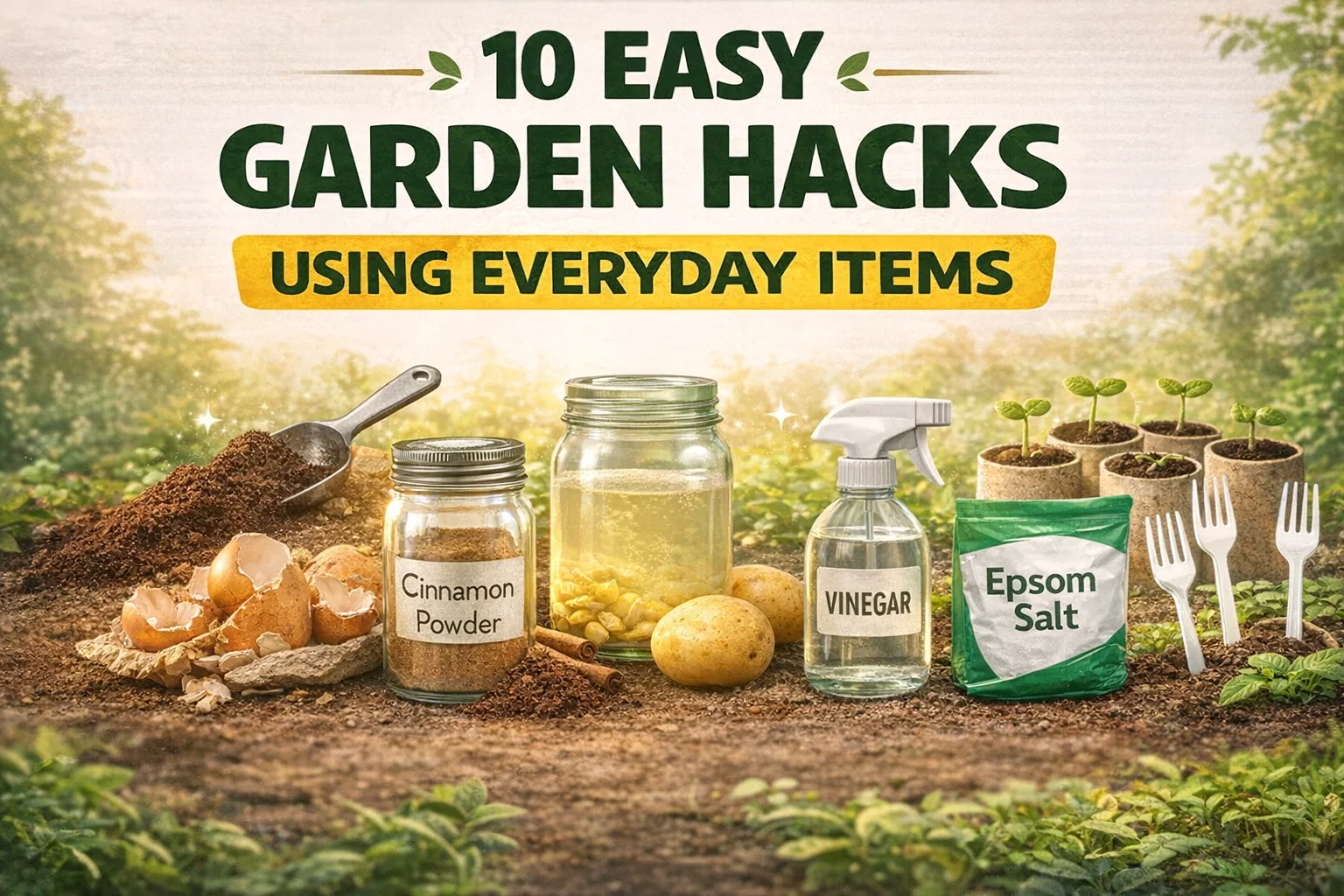
If you drink coffee, you have a steady supply of free nitrogen-rich fertilizer. Coffee grounds are excellent for improving soil structure and drainage. They provide a slow-release nitrogen source that helps leafy green plants grow strong. Just be careful not to overdo it, and try to mix them into your compost pile first, as they can sometimes be too acidic for certain plants if used in large quantities directly on the soil surface.
Eggshells: The Calcium Boost
Plants need calcium to build strong cell walls, just like people. Crushed eggshells are a fantastic way to introduce this mineral to your soil over time. Beyond the nutrition, the sharp edges of crushed shells act as a natural deterrent for slugs and snails, who dislike crossing over the jagged surfaces. It is a dual-purpose hack that protects your delicate vegetable starts while feeding them.
Banana Peel Water
Bananas are rich in potassium, a critical nutrient for plant growth and fruit production. Instead of tossing the peels, place them in a jar of water and let them steep for a few days. You can then use this nutrient-infused liquid to water your plants. It is a gentle, natural way to give your garden a boost during the peak flowering and fruiting season.
Innovative Pest Control and Plant Protection
Pests and diseases are the bane of every gardener, but you do not always need harsh chemicals to keep them in check. Sometimes, a simple physical barrier or a mild, natural solution is enough to get the job done.
Cinnamon as a Fungal Fighter
Fungal issues like damping-off can devastate young seedlings in a matter of days. Cinnamon is a natural fungicide that works wonders in the garden. By lightly dusting the soil surface or the base of your plants with cinnamon powder, you can prevent fungal growth and protect your plants during their most vulnerable stages of life.
Upright Plastic Forks
It sounds strange, but placing old plastic forks in the soil around your plants—tines facing upward—is a clever way to keep larger animals, like squirrels or neighborhood cats, from digging up your garden beds. The forks create an uncomfortable barrier that discourages them from walking or scratching in those spots, keeping your young starts safe from accidental uprooting.
Managing Garden Weeds and Foliage
A tidy garden often requires constant vigilance against weeds and yellowing leaves. While these tasks can be tedious, simple mixtures can make the workload feel much lighter.
The Vinegar Weed Spray
White vinegar is a powerful, non-selective herbicide. When sprayed directly onto the leaves of weeds on a sunny day, the acetic acid in the vinegar desiccates the plant tissue. It is highly effective for weeds growing in sidewalk cracks or driveway pavers where you want a clean, plant-free zone. Be very careful when using this, however, as vinegar does not distinguish between weeds and your favorite flowers. Only apply it exactly where you want growth to stop.
Epsom Salt for Greener Leaves
If your plants are looking a bit yellow or lackluster, they might be lacking magnesium. Epsom salt, or magnesium sulfate, is a classic gardener secret for lush, green foliage. A diluted spray of Epsom salt can help plants produce chlorophyll more efficiently, leading to deeper, healthier greens. It is best to use this sparingly and test it on a small section of your plant first to ensure it responds well.
Starting Seeds on a Budget
You do not need to buy plastic seed-starting trays every year. Cardboard toilet paper rolls make perfect, biodegradable containers for your seeds. Simply fold in the bottom of the roll to create a base, fill it with seed-starting mix, and plant your seeds. When the seedlings are ready to move into the ground, you can plant the entire cardboard roll directly into the soil. It will decompose over time, and because you are not disturbing the roots by transplanting, your plants will suffer far less shock.
Conclusion: The Sustainable Path to a Better Garden
Gardening is all about observation and experimentation. By utilizing items you already have on hand, you are practicing a form of circular gardening that is both efficient and deeply satisfying. Whether you are creating a DIY fertilizer from kitchen scraps or finding clever ways to deter pests, these hacks prove that you do not need a massive budget to cultivate a thriving outdoor space. Start small, try one or two of these methods this season, and watch how your plants respond. Your garden, your wallet, and the planet will thank you.