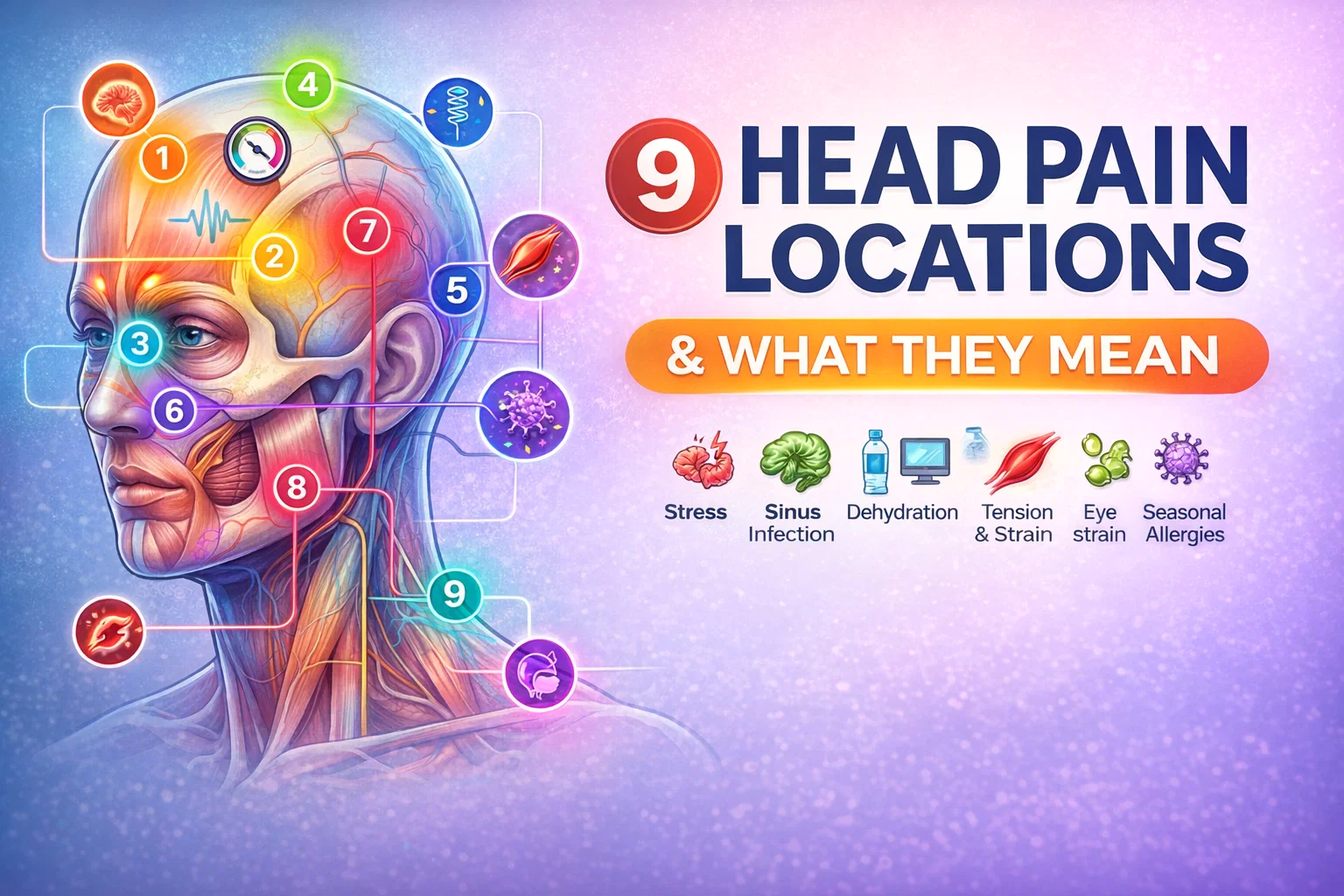
9 Head Pain Locations What They Mean Headache Chart for Relief
Have you ever felt a sharp, stabbing sensation behind your eyes after a long day at the office, or perhaps a dull, heavy pressure at the base of your skull that just won’t quit? We often brush off head pain as a simple inconvenience, reaching for a quick fix without considering what our bodies are actually trying to tell us. The truth is that the specific location of your headache is a biological map. By identifying exactly where the discomfort resides, you can uncover the underlying triggers ranging from simple dehydration to complex nerve compression. Understanding these signals is the first step toward reclaiming your day and finding long-term relief.
Decoding the Map of Head Pain
Headaches are rarely random. While it might feel like your whole head is throbbing, taking a moment to pin down the epicenter of the pain can provide vital clues. Medical professionals and holistic practitioners alike look at these locations to differentiate between types of headaches. When we look at the human head, we see a complex network of muscles, nerves, and sinus cavities. Each area responds differently to stress, environmental factors, and internal health. By categorizing pain into specific zones, we can move away from generic treatments and toward targeted solutions that actually work.
1. Forehead Pain: Stress and Sinuses
Pain located across the forehead is one of the most common complaints. This is typically the hallmark of a tension headache, often described as a dull, aching sensation. It feels like someone is pressing their palm against your brow. However, the forehead is also home to the frontal sinuses. If your forehead pain is accompanied by a sense of heaviness or congestion, it is likely a sinus pressure build-up. Common triggers for forehead pain include:
- Emotional Stress: Tightening the muscles in the face and scalp during a difficult day.
- Sinus Congestion: Seasonal allergies or a lingering cold causing inflammation in the nasal passages.
- Eye Strain: Squinting to see a screen or reading in poor lighting.
2. Temple Pain: The Tension Band
If you feel a squeezing sensation on the sides of your head, you are likely experiencing a classic tension headache. This often feels like a tight band is being wrapped around your skull. Interestingly, temple pain is frequently linked to factors outside of the head itself. Many people experience this due to involuntary teeth grinding, also known as bruxism, which happens during sleep or high-stress moments. Dehydration is another major culprit here. When your body lacks fluids, brain tissue can temporarily shrink and pull away from the skull, causing that familiar temple throb.
The Connection Between Facial Pressure and Headaches
Sometimes the pain isn’t on the “head” in the traditional sense, but rather centered in the face. This can be incredibly distracting and often points toward respiratory or dental issues. Understanding the difference between a headache that radiates to the face and a facial issue that causes a headache is crucial for proper care.
3. Pain Behind the Eyes
Pain located directly behind or around the eyes can be quite alarming. For many modern workers, this is the result of digital eye strain. Staring at blue light for eight hours a day causes the tiny muscles around the eyes to fatigue. However, this location can also signal caffeine withdrawal. If you have missed your morning cup of coffee, the blood vessels in your brain may dilate, creating pressure behind the eyes. In more serious cases, sharp pain in this area can be linked to glaucoma, which is why persistent pain here should always be monitored by a professional.
4. Sinus Area: Nose and Cheeks
When pain is concentrated around the bridge of the nose and the cheekbones, the sinuses are almost certainly involved. This type of discomfort is usually paired with a feeling of fullness in the face. If you lean forward and the pain intensifies, it is a classic sign of a sinus infection or seasonal allergies. Because the sinuses are so close to the upper teeth, some people even mistake this for a toothache. Managing inflammation through steam, hydration, and allergy medication is often the best path forward for this specific zone.
Top and Back of the Head: Posture and Nerves
Pain at the very top or the very back of the head often points toward physical alignment and muscle health. These areas are heavily influenced by how we carry ourselves throughout the day, especially in an era of “tech neck” and sedentary lifestyles.
5. The Heavy Weight on Top
Feeling like there is a literal weight pressing down on the top of your head? This is frequently related to muscle tension in the scalp and neck. When the muscles at the base of your skull are tight, they pull on the fascia that covers the top of your head. Poor posture is the leading cause here. If you find yourself slouching at your desk, the muscles have to work overtime to keep your head upright, resulting in that heavy, pressurized feeling at the crown.
6. Back of the Head and the Occipital Region
Pain at the back of the head, or the occipital area, is often sharp or throbbing. This location is a major indicator of nerve involvement. Occipital neuralgia occurs when the nerves running from the top of the spinal cord up through the scalp are compressed or inflamed. This can be caused by:
- Arthritis: Inflammation in the cervical spine (the neck).
- Nerve Compression: Tight muscles or misaligned vertebrae pinching the nerves.
- Injury: Lingering effects from whiplash or similar neck traumas.
7. The Base of the Neck
Cervicogenic headaches are those that actually start in the neck but are felt in the head. The pain usually radiates upwards from the base of the skull. This is a very common issue for people who spend long hours driving or working on laptops. Stretching the neck and improving the ergonomics of your workspace can provide significant relief for this upward-radiating pain.
Intense and Localized Pain Patterns
Not all head pain is a dull ache. Some patterns are intense, localized, and require a different level of attention. When the pain is strictly one-sided or focused on the jaw, the causes are often more specific.
8. One-Sided Pain: Migraines and Clusters
When pain is localized to only the left or right side of the head, it is a strong indicator of a migraine. Migraines are more than just bad headaches; they are neurological events often accompanied by sensitivity to light, sound, or an “aura” of flickering lights. On the more severe end of the spectrum are cluster headaches, which provide intense, piercing pain usually centered around one side. These require specialized management as they are often more debilitating than standard tension headaches.
9. Jaw Pain and TMJ
If you notice clicking or popping sounds when you eat or talk, and your headache is concentrated around the jawline, you are likely dealing with TMJ (Temporomandibular Joint) disorder. This is closely linked to persistent teeth grinding. The jaw is one of the strongest muscles in the body, and when it is constantly clenched, the pain radiates up into the ears and the sides of the head. Stress management and dental guards are frequent solutions for this specific pain point.
Natural Strategies for Headache Relief
Once you have identified the location and likely cause of your pain, you can look toward holistic and lifestyle-based solutions. While over the counter options are available, addressing the root cause is better for long-term health. For tension-based pain in the forehead or temples, peppermint oil diluted with a carrier oil can provide a cooling, relaxing sensation. For pain caused by dehydration at the top of the head, simply increasing your water intake and adding electrolytes can work wonders.
If your pain is posture-related, such as at the back of the head or neck base, incorporating daily stretching can change your life. Simple chin tucks and shoulder rolls help to decompress the cervical spine. For sinus-related pressure, using a saline rinse or a warm compress over the nose and cheeks can help clear the passages. Always remember that your environment plays a role too. Reducing screen glare and taking frequent breaks can prevent that sharp pain behind the eyes from developing in the first place.
When to Seek Professional Advice
While most headaches are the result of lifestyle factors like stress or posture, it is important to listen to your body when something feels “off.” Persistent or severe headaches that interfere with your daily life deserve a professional medical evaluation. If a headache comes on suddenly and is the most intense pain you have ever felt, or if it is accompanied by confusion, fever, or numbness, seek help immediately. Your health is your most valuable asset, and understanding the nuances of your head pain is a powerful tool in your wellness journey.
Conclusion: Listening to Your Body
Understanding the nine common locations of head pain transforms a confusing symptom into actionable information. Whether it is the forehead, the temples, or the base of the neck, each spot tells a story about your hydration, your posture, your stress levels, or your environment. By paying attention to these locations, you can move away from guessing and start treating the actual cause of your discomfort. Next time you feel an ache starting to form, take a deep breath, identify the location, and give your body exactly what it needs to heal. A headache-free life isn’t just about masking the pain; it is about living in harmony with the signals your body is sending you every single day.