9 Kitchen Hacks for Fresh Food Easy Cleaning Genius Home Cooking Tips 2026
We have all been there, standing in the middle of a messy kitchen after a long day, wondering why the cilantro is already slimy and why the grease on that lasagna pan seems to be mocking us. Kitchen management is an art form, but it does not have to be a difficult one. Sometimes, the most effective solutions are not found in expensive gadgets or harsh chemicals, but in the simple, everyday items we already have in our cupboards. By mastering a few clever hacks, you can transform your kitchen from a place of stress into a streamlined hub of efficiency and freshness.
The Science of Cutting Grease and Odors Naturally
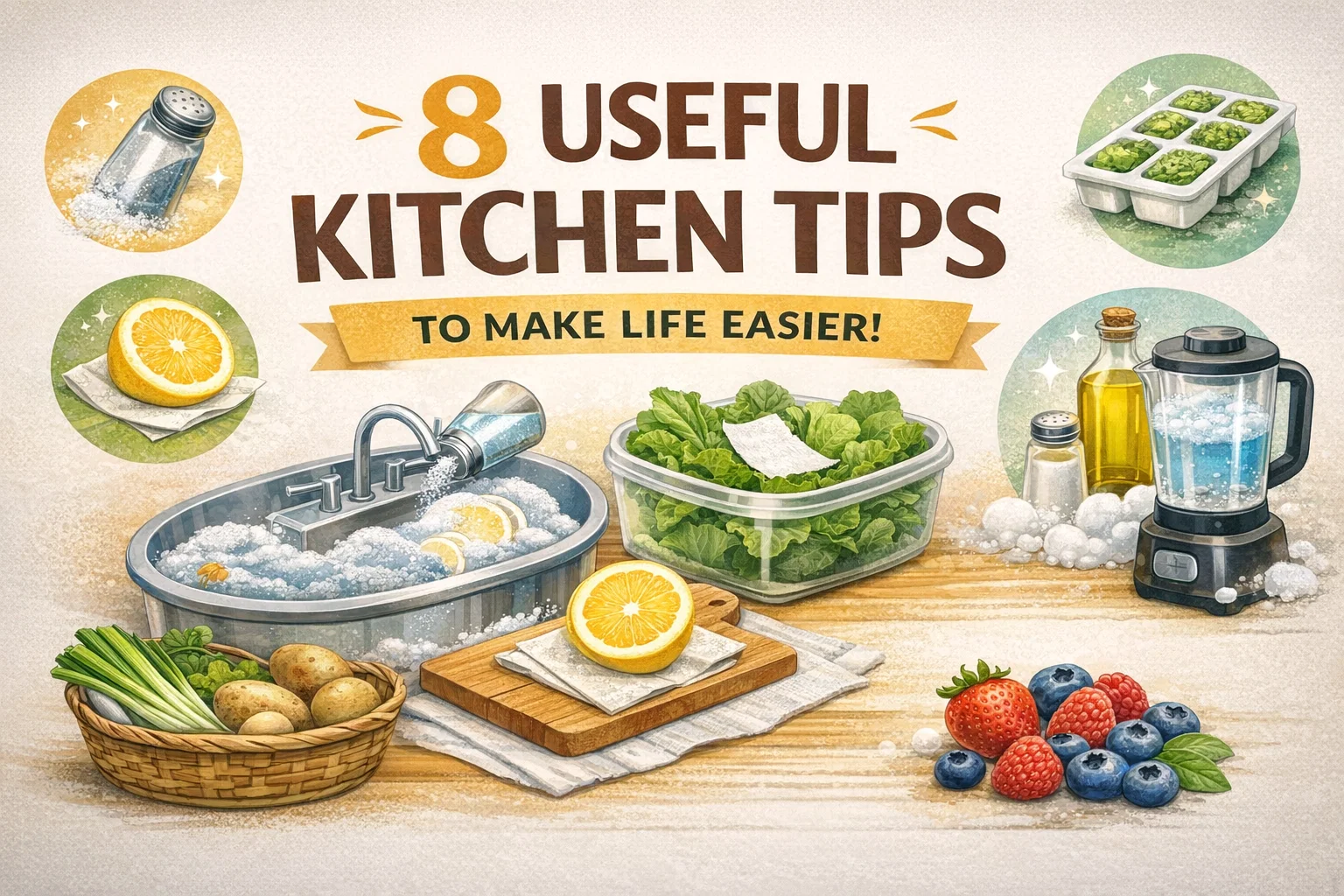
One of the biggest hurdles in any kitchen is the cleanup process. We often reach for heavy duty degreasers, yet a simple kitchen staple like table salt can do the heavy lifting for us. When you add salt to dishwater or sprinkle it directly onto a greasy pan, it acts as a mild abrasive and an absorbent. This helps to break up the molecular bonds of fats and oils, allowing your soap to work much more effectively. It is a cost effective trick that saves your scrubbing arm from a lot of unnecessary fatigue.
Neutralizing Cutting Board Scents
If you have ever chopped garlic or onions and then tried to slice an apple on the same board, you know how stubborn food odors can be. Wood and plastic boards are porous, meaning they trap tiny particles that lead to lingering smells. Rubbing a fresh lemon half over the surface is a game changer. The citric acid in the lemon acts as a natural disinfectant and neutralizer. For those particularly pungent boards, sprinkling a little baking soda before rubbing the lemon creates a gentle foaming action that deep cleans the grooves, leaving your kitchen smelling like a citrus grove instead of a deli counter.
Revolutionary Food Storage for Maximum Longevity
Food waste is not just frustrating, it is expensive. Understanding how different produce items interact with their environment is the secret to making your grocery budget stretch further. Moisture is often the enemy of freshness, especially when it comes to leafy greens. When you store spinach, kale, or lettuce in a plastic container, condensation builds up and leads to rapid decay. Placing a dry paper towel inside the container acts as a moisture wick, keeping the leaves crisp and dry. Just remember to swap the towel every couple of days to keep the environment optimal.
The Secret Relationship Between Onions and Potatoes
Many of us have a dedicated bin where we toss all our root vegetables together, but this is actually a recipe for spoilage. Onions emit ethylene gas as they ripen, which is a natural ripening agent. When potatoes are exposed to this gas, they begin to sprout and rot much faster than they would on their own. Conversely, the high moisture content in potatoes can cause onions to become soft and moldy. By simply keeping these two staples in separate baskets or different cupboards, you can significantly extend their shelf life and reduce waste.
Prepping Like a Pro with Smart Herb Preservation
Fresh herbs provide that vibrant, restaurant quality flavor to home cooked meals, but they are notoriously delicate. If you find yourself throwing away half a bunch of parsley or basil every week, it is time to try the olive oil freeze method. By chopping your herbs and placing them into ice cube trays filled with high quality olive oil, you create a perfect flavor bomb. This method prevents freezer burn and keeps the herbs from oxidizing and turning brown. When you are ready to cook, you simply pop a cube into your hot pan. The oil melts, and the herbs are released, perfectly preserved and ready to sauté.
Handling Berries with Care
Berries are among the most perishable items in the produce aisle. The mistake most people make is washing them as soon as they get home from the store. Introducing moisture to the surface of a berry encourages mold growth almost instantly. To keep your strawberries, blueberries, and raspberries firm and sweet, keep them unwashed in the refrigerator until the exact moment you are ready to eat them. This simple change in habit can add days to their freshness.
Safety and Efficiency in the Cooking Zone
A fast kitchen is a good kitchen, but a safe kitchen is even better. One of the most common kitchen injuries occurs when a cutting board slides across a countertop during heavy chopping. Professional chefs use a simple trick to anchor their workspace: the damp towel method. By placing a thin, damp kitchen towel or a specialized silicone mat under your cutting board, you create a high friction grip that prevents the board from budging. This allows you to focus on your knife skills without worrying about the board shifting under your hand.
The 30 Second Blender Cleanup
Blenders are incredible tools for smoothies and soups, but cleaning the blades can be a nightmare. Instead of reaching in and risking a cut, let the machine do the work for you. Immediately after use, fill the blender halfway with warm water and a small drop of liquid dish soap. Run it on high for about 30 seconds. The centrifugal force creates a powerful vortex that blasts food particles off the blades and out of the corners. A quick rinse afterward, and your blender is sparkling clean without you ever having to scrub a blade.
Temperature Control and the Golden Rule of Refrigeration
The transition from the stove to the fridge is a critical point for food safety. A common misconception is that putting hot food directly into the refrigerator helps it cool faster. In reality, placing a steaming pot of soup into a cold fridge can raise the internal temperature of the entire unit, putting your milk, eggs, and meat into a dangerous temperature zone. Additionally, the steam creates excess moisture and condensation, which can lead to soggy leftovers and ice buildup on the fridge coils. Always allow your food to cool down on the counter for a bit until it reaches a manageable temperature before sealing it and tucking it away for later.
Why Organization Matters
Beyond the immediate benefits of freshness, these hacks contribute to a more organized mindset. When you know exactly where your onions belong and you have herb cubes ready in the freezer, meal prep becomes a joy rather than a chore. It reduces the mental load of cooking, allowing you to be more creative and experimental with your recipes. A clean, organized kitchen is the foundation of a healthy, holistic lifestyle.
Conclusion: Small Changes, Big Results
Living a more efficient and sustainable life does not require a total kitchen renovation or a culinary degree. It starts with small, intentional choices like using a lemon to refresh your workspace or separating your vegetables to prevent spoilage. These hacks are about more than just saving time, they are about respecting your ingredients and making the most of the resources you have. By implementing these nine simple tips, you will find that your kitchen runs smoother, your food tastes better, and your cleanup is a breeze. Start with one or two of these methods tonight, and soon they will become second nature, leaving you with more time to enjoy the meals you create and less time worrying about the mess.
Would you like me to generate a specific Python script to automate the posting of this content to your WordPress site, or perhaps help you brainstorm a series of follow-up topics on holistic home management?