9 Secrets of the Social Hierarchy Dark Psychology and Manipulation Tactics Exposed
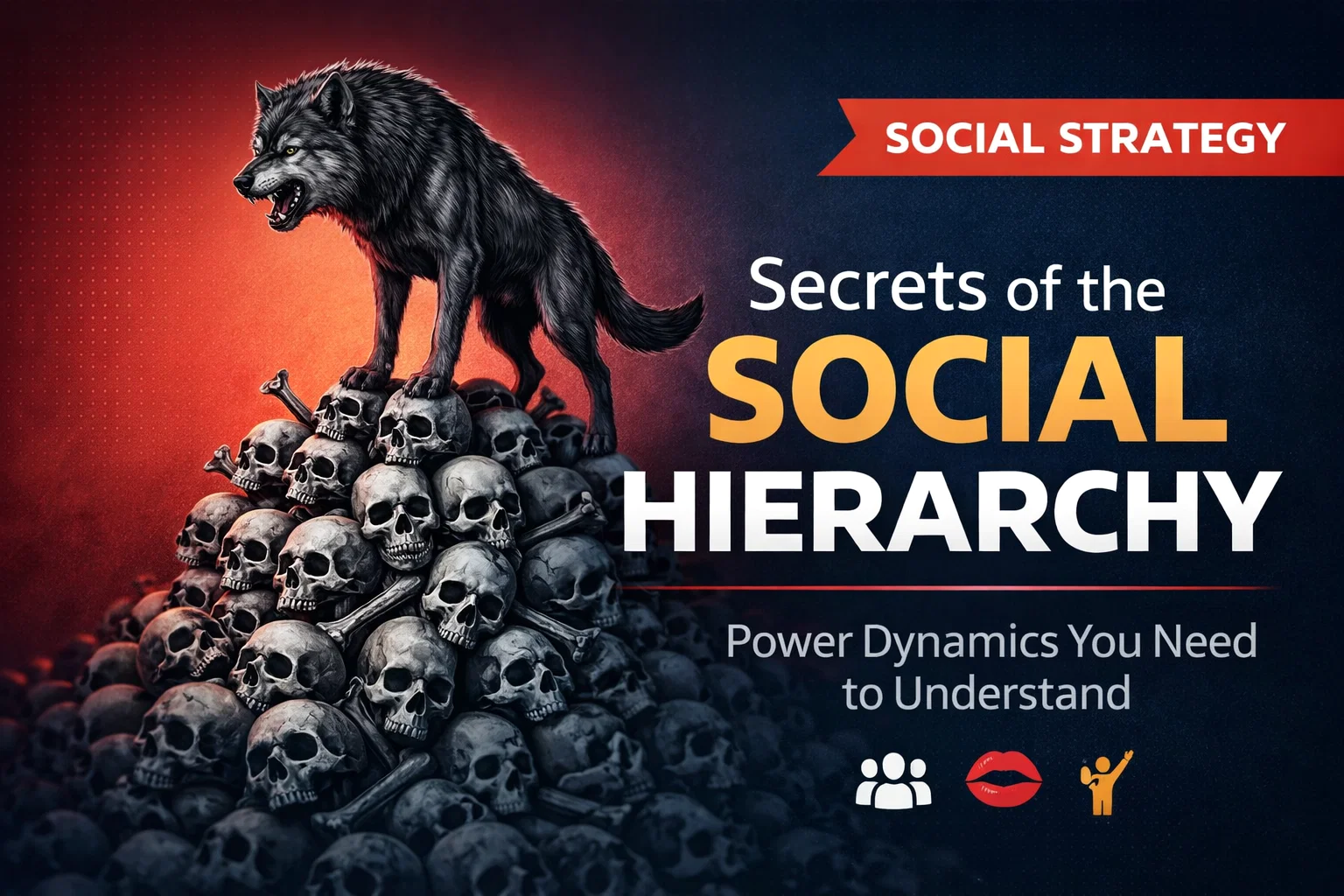
The image presented reveals a provocative and arguably dark perspective on social structures, framing them as a strict hierarchy akin to the “alpha” and “beta” dynamics often observed in certain animal groups. This concept, while often criticized for its simplistic and potentially harmful generalizations about human behavior, has gained traction in certain online communities and philosophies. Let’s delve into a deeper analysis of the nine principles outlined, exploring the underlying psychological concepts and potential societal implications without endorsing the view, but rather to understand the context from which it emerges.
The Foundations of the Wolves and Skulls Image
The visual elements – a solitary wolf perched atop a mound of human skulls – immediately establish a theme of dominance, ruthlessness, and survival of the fittest. This imagery directly evokes classic interpretations of animal hierarchy where the “alpha” wolf leads through sheer strength and intimidation. By placing human skulls beneath the wolf, the image implies a parallel dynamic within human society, suggesting that some dominate while others are subordinate.
This “alpha” vs. “beta” lens simplifies complex human social interactions into binary categories, often overlooking the nuances of personality, cooperation, and situational contexts. However, it’s essential to understand the appeal of such a framework, especially in environments where power struggles and competition are perceived as paramount.
Unpacking the Psychological Concepts Within the 9 Secrets
The “9 Secrets” themselves are a collection of observations about power dynamics, social maneuvering, and human vulnerability, often framed with a cynical or manipulative edge. Let’s break down some of the key psychological concepts that underpin these assertions:
- Zero-Sum Mentality (Secret 1): The idea that one person’s gain must come at another’s loss is a classic zero-sum mentality. Within this framework, the “alpha tax” suggests that being at the top inevitably attracts rivals who seek to overthrow you. This fosters a constant state of defensiveness and competition, potentially hindering genuine cooperation.
- Social Proof and Impression Management (Secret 3): The “Confidence Illusion” touches upon social proof, where people are more likely to follow those who appear confident, regardless of their actual competence. This underscores the power of impression management – intentionally shaping how others perceive you. While confidence can be a positive attribute, its emphasis over competence can lead to leadership failures and poor decision-making.
- Group Polarization and Social Influence (Secret 4): “Emotional Contagion” refers to the tendency for emotions to spread within a group. The advice to “be the thermostat, not the thermometer” suggests exerting influence over the group’s emotional state, rather than being passively affected by it. This can be interpreted both positively (as emotional intelligence and leadership) and negatively (as manipulation).
- Reciprocity and Strategic Altruism (Secret 5): While reciprocity is a fundamental aspect of human social interaction, framing it solely as a “trap” where gifts are strategic investments highlights a highly cynical view of generosity. This perspective overlooks the genuine altruism that can exist in human relationships.
- Authenticity as a Privilege (Secret 7): The idea that being “yourself” is a luxury for the powerful raises interesting points about social conformity and the pressures to adapt. In hierarchical structures, individuals may feel compelled to “play a character” to fit in or avoid conflict. This can have negative consequences for mental well-being and genuine self-expression.
- Manipulation Through Victimhood (Secret 8): “The Victim Power Play” addresses a controversial topic where perceived vulnerability can be used as a manipulative tool to gain support, resources, or sympathy. While genuine victimhood is a serious issue, this principle suggests that the appearance of weakness can sometimes be a strategic choice.
The Societal and Ethical Implications
Understanding these dynamics is crucial for navigating complex social landscapes, but it’s equally important to critically examine the ethical implications of adopting a worldview entirely centered on manipulation and self-interest.
Focusing purely on dominance and social hierarchy can lead to:
- Erosion of Trust: A constant state of suspicion and a view of relationships as transactional can erode trust and prevent the formation of meaningful connections.
- Reinforcement of Power Imbalances: Emphasizing “alpha” and “beta” dynamics can inadvertently reinforce existing power imbalances and justify inequality.
- Stifling of Cooperation: When social interaction is framed as a constant power struggle, opportunities for collaboration and collective action may be missed.
- Negative Impact on Well-being: Living with a worldview that prioritizes constant competition and manipulation can contribute to stress, anxiety, and a sense of alienation.
It’s important to recognize that human social behavior is far more complex than simple animal hierarchies. Cooperation, empathy, and altruism are fundamental aspects of human nature that are often overlooked in the “wolves and skulls” worldview. While awareness of power dynamics can be valuable, it should be balanced with a consideration of ethical principles and the importance of fostering positive social connections.
Conclusion
The image of the wolf and skulls, accompanied by the “9 Secrets of the Social Hierarchy,” presents a stark and provocative commentary on power dynamics in human society. While it taps into real-world observations about competition, influence, and vulnerability, it’s essential to approach these concepts with a critical eye, understanding the potential for harm when complex human behaviors are reduced to overly simplistic and potentially manipulative frameworks. By recognizing the complexities of human social interaction, we can navigate social landscapes more ethically and effectively, fostering genuinely positive and mutually beneficial relationships.