9 Simple Self-Care Fixes for Tough Days Soft Aesthetic Mental Health Guide Sanrio Tips
In a world that often demands constant productivity and high energy, it is remarkably easy to feel overwhelmed by the weight of daily life. We are taught to push through the noise, to ignore the fatigue, and to keep moving regardless of how we feel inside. However, true resilience actually comes from knowing when to pause. This guide is all dedicated to those quiet, soft moments of recovery that help you navigate the toughest days with grace. By focusing on gentle fixes rather than radical lifestyle overhauls, you can reclaim your peace of mind one small step at a time.
Understanding the Need for Gentle Mental Health Resets
Mental health is not always about grand breakthroughs in therapy or life changing realizations. Most of the time, it is about the tiny, microscopic choices we make when we feel scattered or burnt out. When your brain feels foggy or your heart feels heavy with worry, your body is sending you a signal that it needs a different kind of attention. Instead of fighting against these feelings, the most productive thing you can do is meet them with kindness.
The concept of soft comfort is rooted in sensory grounding and emotional validation. It suggests that by changing your immediate environment or performing a simple physical action, you can interrupt the cycle of stress. These gentle fixes are designed to be accessible, low pressure, and deeply nurturing, making them perfect for those days when even the simplest tasks feel like a mountain.
Taming the Scattered Mind through Physical Order
When you feel scattered, it often feels like your thoughts are moving faster than you can keep up with. You might find yourself starting five different tasks and finishing none of them, or feeling a sense of chaos in your mental space. One of the most effective ways to combat this internal noise is through a very small, controlled act of tidying.
The Power of One Tiny Space
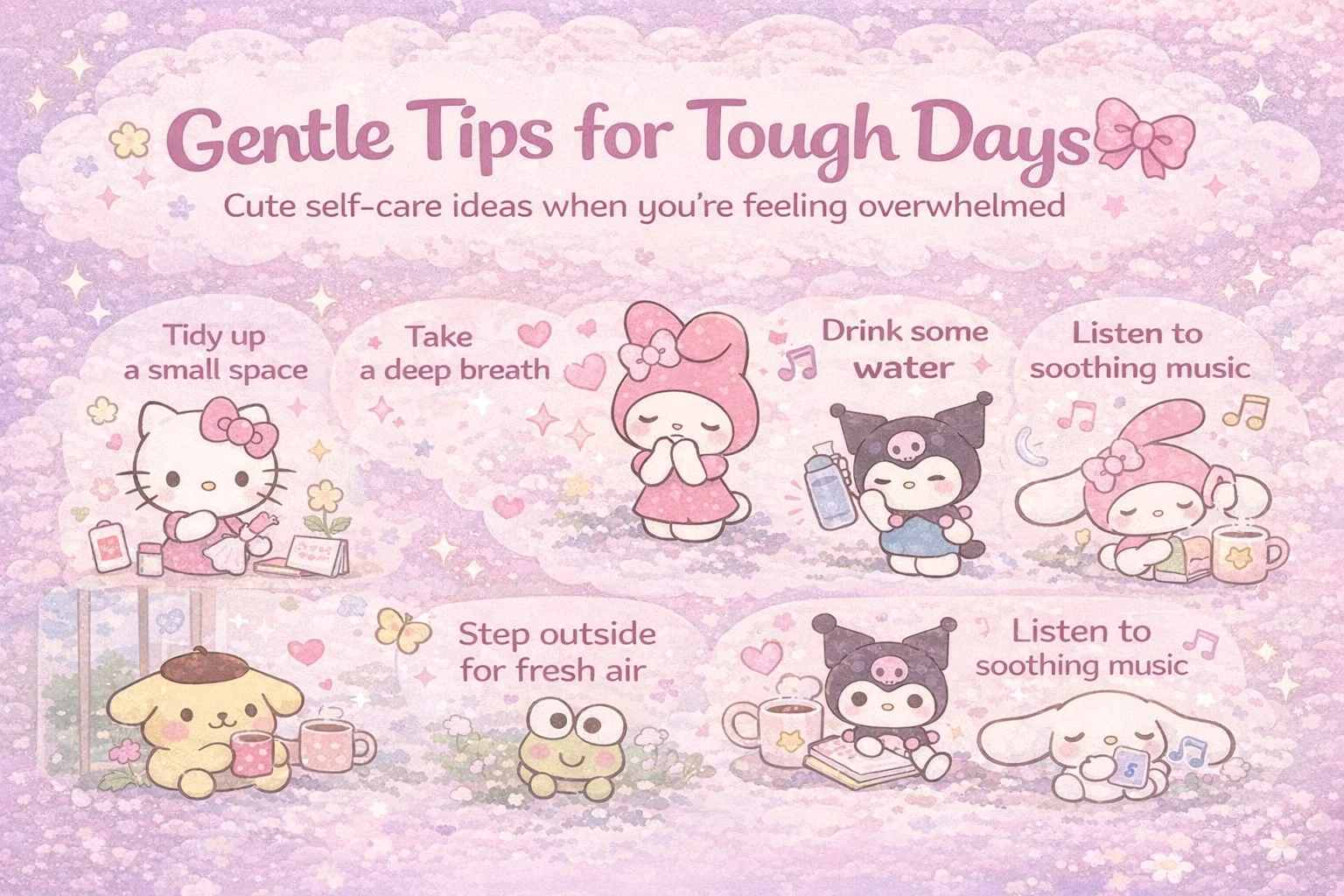
You do not need to clean your entire house to feel better. In fact, attempting to do so when you already feel scattered will likely lead to more stress. Instead, choose one tiny space—perhaps your bedside table, a single desk drawer, or even just the tray where you keep your keys. By clearing a single surface, you create a visual anchor of order. This physical clarity acts as a mirror for your mind, providing a sense of accomplishment without the exhaustion of a major project.
Managing Overwhelm with Conscious Breathing
Overwhelm is a physical state as much as it is a mental one. When the world feels like it is moving too fast, your nervous system often enters a state of high alert. Your heart rate increases, and your breathing becomes shallow. To fix this, you must manually override your body’s stress response.
The 3 Breath Technique
Pause wherever you are. You do not need a meditation cushion or a quiet room. Simply inhale deeply through your nose for a count of four, feeling your abdomen expand. Hold it for a brief second, and then exhale slowly through your mouth as if you are breathing through a straw. Repeating this just three times signals to your brain that you are safe. It is a biological “stop button” for panic and a primary tool for emotional regulation.
Replenishing Low Energy and Fighting Fatigue
Low energy days are often misinterpreted as laziness, but they are usually a sign of depletion. If you find yourself dragging your feet or feeling physically heavy, your body is asking for basic maintenance. Two of the most overlooked solutions for low energy are hydration and gentle movement.
- Hydrate First: Dehydration is a leading cause of brain fog and physical fatigue. Drinking a glass of cool water can provide an immediate, subtle lift to your system.
- The Arm Stretch: You do not need a full workout. Simply reaching your arms over your head and stretching toward the ceiling helps circulate blood and oxygen. Small resets like these count toward your overall well being.
Healing from Burnout with Nature and Fresh Air
Burnout happens when we have been in “output mode” for too long without enough “input.” If you feel like a candle that has burned down to the wick, you need a change of scenery that requires zero effort from you. Fresh air is often called gentle medicine because it provides sensory input that is naturally calming.
The Window Seat Solution
If you cannot go for a walk, simply sitting by an open window can make a difference. Feeling the breeze on your skin and hearing the distant sounds of the outside world helps pull you out of your internal loop of exhaustion. It reminds you that there is a world existing outside of your current stress, providing a much needed perspective shift.
Embracing the Productive Power of Nothingness
We live in a “too busy” culture where doing nothing is often seen as a waste of time. However, your brain requires downtime to process information and emotions. If your schedule is overflowing, you must give yourself the gift of five minutes of nothing.
This means no scrolling on your phone, no checking emails, and no planning the next meal. Just sit. Watch the steam rise from a cup of tea or look at the patterns on the wall. By intentionally doing nothing, you are resting your cognitive functions. This brief period of stillness allows your mental batteries to recharge, making you more effective when you eventually return to your tasks.
Clearing the Fog with Nourishment
Brain fog can make you feel disconnected from reality, making it hard to focus or even hold a conversation. Often, this is a sign that your brain lacks the fuel it needs to function at full capacity. When you feel foggy, look toward warmth and nutrition.
Fueling the Brain
A small, nutritious snack or a warm beverage can work wonders. The warmth of a mug against your hands provides a grounding tactile sensation, while the nutrients give your brain the glucose it needs to sharpen your focus. Treat your brain with the same care you would give a friend who is feeling unwell.
Grounding Techniques for Anxious Moments
Anxiety often pulls us into an imagined future filled with “what ifs.” To combat this, you need to bring your awareness back to the present moment through your senses. One of the softest ways to do this is through texture.
Holding something soft, like a plush toy, a velvet pillow, or a knitted blanket, provides immediate comfort. The rhythmic action of touching a soft surface helps ground your nervous system. It is a form of self soothing that honors your need for safety and softness when the world feels too sharp or harsh.
Finding Clarity When You Feel Unsure
Uncertainty can lead to a paralyzing fear of making the wrong choice. When you are unsure of yourself or your path, the best remedy is to reconnect with your own sense of joy. This helps remind you of who you are outside of your current dilemma.
The Joy List
Take a piece of paper and write down just one thing you enjoyed today. It could be as simple as a delicious piece of fruit, a funny meme, or the way the light hit the floor. By focusing on tiny joys, you train your brain to look for the positive. Even in times of great uncertainty, these small anchors of happiness matter and provide a foundation of confidence.
Soothing the Worried Heart with Sound
Worry is like a song played on repeat in the back of your mind. Sometimes, the best way to change the tune is to literally change the music. Sound has a profound impact on our emotional state and can be used as a tool for healing.
Play a song that feels like a hug. This might be a nostalgic track from your childhood, a lo-fi beat, or nature sounds like rain. Allow yourself to feel the worry without trying to “fix” it immediately. Let the music hold space for your emotions. Often, once we stop fighting the worry and simply acknowledge it, it begins to dissipate on its own.
Conclusion: Building Your Personal Comfort Kit
Tough days are an inevitable part of the human experience, but they do not have to define your week or your month. By keeping these gentle fixes in your mental toolkit, you empower yourself to handle life’s fluctuations with kindness and patience. Remember that self care does not have to be loud, expensive, or time consuming. Sometimes, the most profound healing happens in the quietest moments.
Whether you are tidying a small corner of your desk or taking three deep breaths before a big meeting, you are making a choice to prioritize your well being. These small resets add up to a life lived with more balance and less burnout. Be gentle with yourself today, for you are doing the best you can with the energy you have. Save these reminders for the next time everything feels like a bit much, and remember that peace is always just a small habit away.