Simple Daily Exercises That Every Body Organ Thrives On
Welcome to a fresh perspective on wellness! When we think about exercising, our minds usually jump to building muscles, burning calories, or training for a marathon. However, true holistic health goes much deeper than what we see on the outside. Every single organ in your body requires care, stimulation, and specific types of movement to function at its absolute best. By shifting our focus from pure aesthetics to internal vitality, we can unlock a new level of daily energy and long-term health.
Today, we are going to explore a fascinating approach to fitness. We will break down simple, everyday exercises and habits that specifically target and nourish your individual organs. From your brain down to your intestines, there are targeted movements you can do right now to support your internal systems. Grab a glass of water, get comfortable, and let us dive into the ultimate guide to organ-thriving exercises!
Nourishing Your Cardiovascular and Nervous Systems
Your heart and brain are the command centers of your body. They work tirelessly around the clock, meaning they need specific practices to help them recover, strengthen, and maintain their incredible output.
Deep Breathing for a Stronger Heart
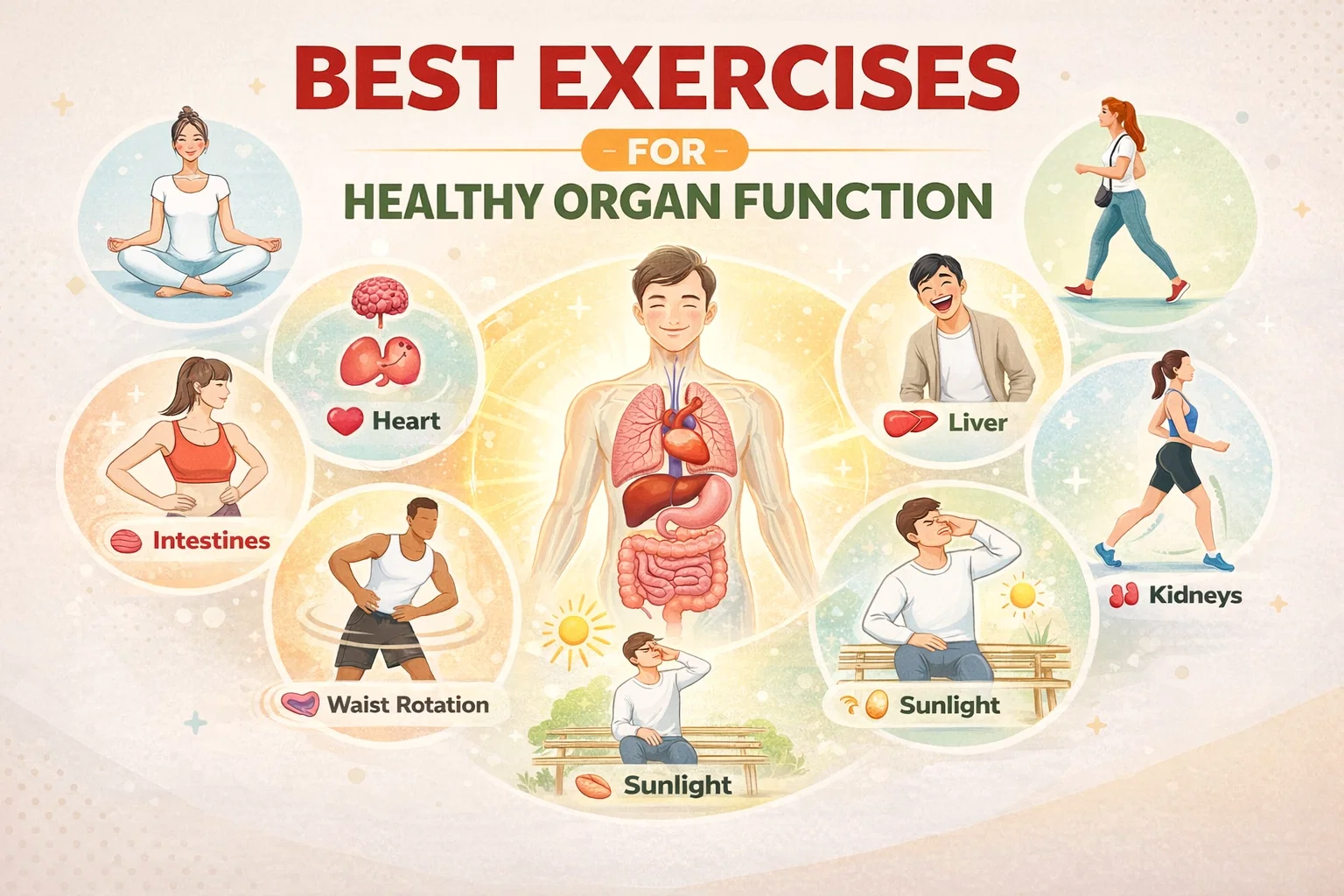
It might sound incredibly simple, but deep breathing is one of the most powerful exercises you can perform for your heart and your lungs. Most of us go through our days taking shallow chest breaths, which keeps our bodies in a mild state of stress. By consciously shifting to deep, diaphragmatic breathing, you signal to your nervous system that it is time to relax.
When you take a deep breath, you allow your lungs to fully expand. This process strengthens the lung tissue and maximizes oxygen exchange. More oxygen in your blood means your heart does not have to work as hard to pump vital nutrients throughout your body. Furthermore, deep breathing actively reduces cortisol levels, directly lowering your stress and reducing the strain on your cardiovascular system. Try taking five minutes each morning to inhale deeply through your nose, hold for a few seconds, and exhale slowly through your mouth.
Meditation to Optimize the Brain
Think of meditation as a gym workout for your brain. In our modern, fast-paced world, our minds are constantly bombarded with notifications, tasks, and endless streams of information. This constant stimulation can lead to mental fatigue and brain fog.
Meditation provides a necessary pause. When you sit quietly and focus your mind, you are actively enhancing your brain’s ability to concentrate. Regular meditation has been shown to calm the mind, reduce anxiety, and even increase the density of gray matter in areas of the brain associated with learning and memory. You do not need to sit perfectly still for hours. Just ten minutes of focusing on your breath or a simple mantra can drastically enhance your cognitive focus and bring a sense of profound calm to your busy mind.
Supporting Your Digestive Powerhouses
Shutterstock
Your digestive tract is a complex and highly sensitive system. It is responsible for breaking down food, absorbing nutrients, and eliminating waste. When your digestion is sluggish, your whole body feels it. Let us look at how gentle movements can keep things flowing smoothly.
Loud Laughter and Abdominal Massage for the Stomach
Did you know that having a good belly laugh is an actual exercise? Loud, genuine laughter forces your diaphragm to move vigorously up and down. This internal movement acts as a natural massage for your stomach and other abdominal organs. Laughter also releases endorphins, which relieve stress. Since stress is a major trigger for digestive issues like indigestion and acid reflux, laughing is a fantastic preventative measure.
In addition to laughing, gentle abdominal massage is incredibly beneficial. Using your hands to apply light, circular pressure around your belly button follows the natural path of your digestive tract. This simple physical manipulation improves digestion, stimulates blood flow to the stomach, and is wonderful for easing uncomfortable bloating after a heavy meal.
Waist Rotations for Happy Intestines
Your intestines rely on a process called peristalsis, which is the wave-like muscle contractions that move food through your digestive tract. Sometimes, especially if we sit at a desk all day, this process needs a little physical encouragement.
Standing up and performing gentle waist rotations is a fantastic way to stimulate this movement. By twisting your torso from side to side, you are physically wringing out tension and stimulating the smooth muscles of your gut. This gentle torsion supports overall gut health, aids in regular bowel movements, and prevents the stagnant feeling that comes from a sedentary lifestyle.
Walking to Support the Liver
The liver is your body’s primary detoxification organ. It filters your blood, processes nutrients, and neutralizes toxins. To do its job effectively, the liver requires excellent, consistent blood flow.
Brisk walking is arguably the best exercise for liver health. It is low-impact but highly effective at getting your heart rate up and pumping fresh, oxygenated blood throughout your entire body, including your liver. Regular walking improves overall circulation, which in turn supports the liver’s natural detoxification processes and prevents the buildup of fatty deposits. Aim for a brisk thirty-minute walk daily to keep your liver functioning at its peak.
Boosting Your Filtration and Energy Systems
We often overlook our kidneys until there is a problem, but they are constantly working to filter waste and excess fluid from our blood. In many traditional health practices, the kidneys are also viewed as the root of our body’s vital energy.
Standing on Tiptoes for Kidney Health
This is a fascinating and highly accessible exercise. Standing on your tiptoes engages the calf muscles, which act as a secondary pump to send blood back up toward your heart. This vigorous boost in lower-body circulation is highly beneficial for the kidneys.
In traditional Eastern medicine, the meridians or energy channels associated with the kidneys run down through the legs and feet. By actively engaging your calves and feet through tiptoe stands, you are thought to stimulate these pathways, boosting circulation and strengthening your overall kidney energy. Try doing sets of twenty tiptoe raises while brushing your teeth or waiting for your morning coffee to brew.
Caring for Your Structure and Senses
Your bones give you structure, your skin protects you, and your eyes connect you to the world. These components also thrive on specific, targeted habits.
Sunlight for Strong Bones
While not a physical exercise in the traditional sense, spending time in the sunlight is an active habit that your bones absolutely require. Your body needs Vitamin D to absorb calcium, and calcium is the building block of strong, healthy bones.
The most natural and efficient way for your body to synthesize Vitamin D is through direct sunlight on the skin. Just fifteen to twenty minutes of midday sun a few times a week can drastically improve your Vitamin D levels, thereby building bone strength and preventing conditions like osteoporosis. Think of your time in the sun as a passive but vital workout for your skeletal system.
The Quick Distant Gaze for Eye Relief
In the digital age, we spend hours staring at screens that are only inches from our faces. This constant close-up focus locks our eye muscles into a contracted state, leading to severe eye strain, headaches, and blurred vision.
The best exercise for your eyes is the quick distant gaze. Also known as the 20-20-20 rule, the practice involves looking away from your screen every twenty minutes and focusing on an object at least twenty feet away for twenty seconds. This simple act completely relaxes the ciliary muscles in your eyes. Regularly practicing the distant gaze prevents fatigue, improves overall vision health, and keeps your eyes feeling fresh throughout the workday.
Teeth Tapping for Skin Vitality
This might be the most surprising exercise on the list! Teeth tapping is an ancient practice where you gently click your upper and lower teeth together in a rhythmic motion. How does this help the skin?
The gentle vibration caused by tapping your teeth together stimulates the nerves and blood vessels in your jaw and face. This localized boost in circulation brings fresh blood, oxygen, and nutrients to your facial skin, promoting a healthy, natural glow. It also helps to release tension held in the jaw muscles, which can otherwise contribute to fine lines and a tired appearance. It is a quick, invisible exercise you can do anywhere to promote facial vitality.
Creating Your Daily Organ Wellness Routine
Now that you know exactly what each organ thrives on, the next step is incorporating these practices into your daily life. The beauty of these exercises is that they do not require a gym membership, special equipment, or hours of your time. They are small, intentional habits.
- Morning Start: Begin your day with five minutes of meditation to center your brain, followed by ten deep breaths to wake up your heart and lungs.
- Mid-Day Break: Step outside for a brief walk to support your liver and catch some sunlight for your bones. If you are working on a computer, remember to practice your distant gaze every twenty minutes.
- Afternoon Energy: While standing at your desk or in the kitchen, do a set of tiptoe raises for your kidneys and some waist rotations for your intestines.
- Evening Wind Down: After dinner, gently massage your abdomen to aid your stomach in digestion. Share a funny story or watch a comedy to get a good laugh in!
Conclusion: Small Movements, Big Impact
True health is a beautiful symphony of all your internal organs working together in harmony. By stepping outside the conventional view of exercise and focusing on these specific, targeted movements, you are giving your body the exact tools it needs to thrive from the inside out.
Whether it is taking a moment to breathe deeply, laughing out loud, or simply looking out the window at a distant tree, these small actions compound over time. They reduce stress, improve circulation, aid digestion, and boost your overall vitality. Start integrating these simple organ-focused exercises into your routine today, and experience the profound difference that holistic, mindful movement can make in your life!