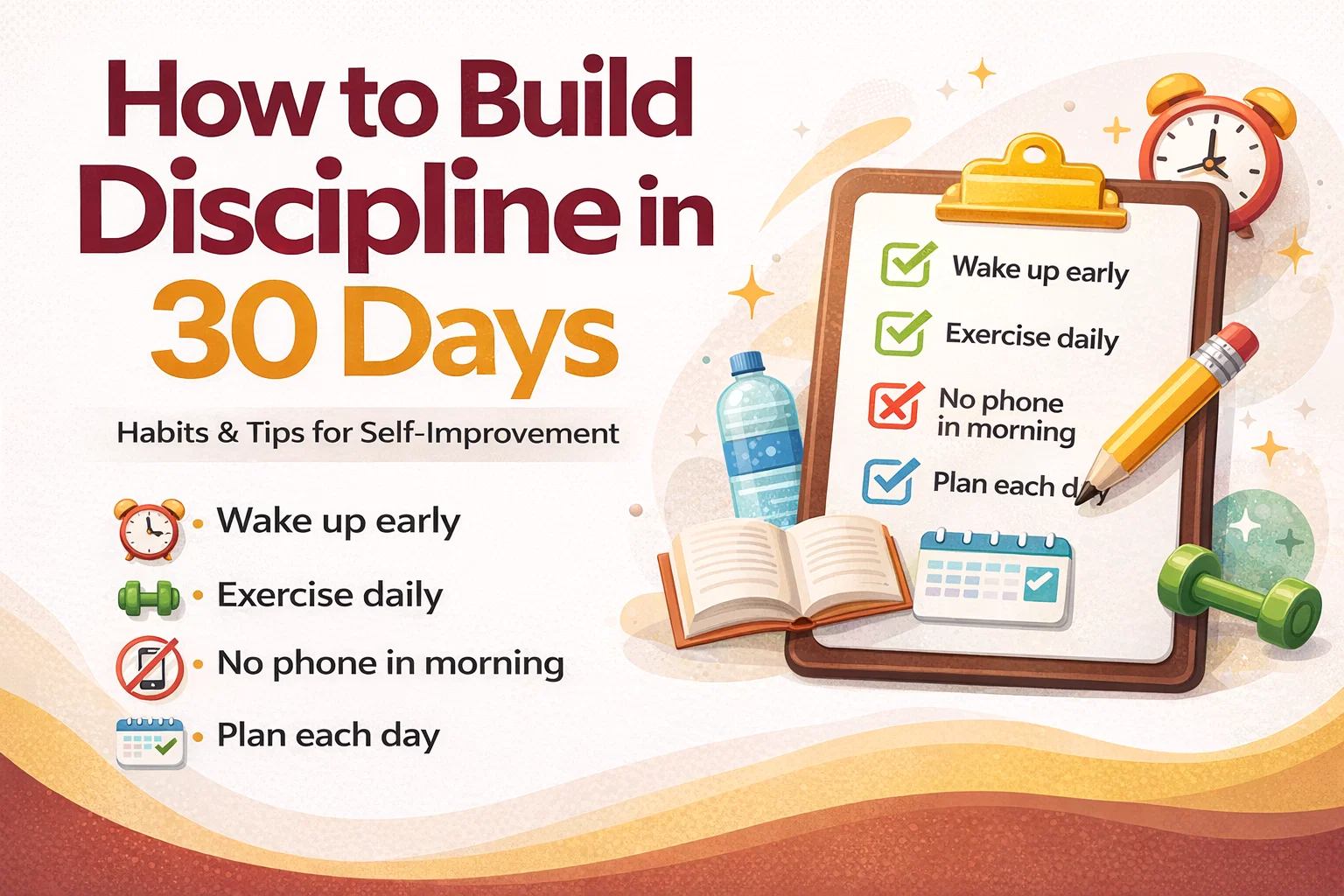
How to Build Discipline in 30 Days Daily Habits
Have you ever woken up with a sudden burst of motivation, ready to completely transform your life, only to find that same energy completely gone by Tuesday? We have all been there. Relying strictly on motivation is a flawed strategy because motivation is entirely dependent on your emotions. Discipline, on the other hand, is the art of showing up for yourself regardless of how you feel. Building solid discipline is the absolute fastest way to improve your self-esteem and create lasting personal growth. When you commit to a routine and follow through, you prove to yourself that you are reliable. This thirty-day guide is designed to help you build that unshakeable foundation through small, manageable daily habits.
You do not need to overhaul your entire existence overnight. In fact, doing so usually leads to burnout. The most successful transformations happen through compounding micro-habits. By tackling tiny actions every single day, you rewire your brain to crave consistency. Let us dive into a comprehensive, step-by-step framework to build rock-solid discipline over the next thirty days.
The Science of Building Better Habits
Before jumping into the daily checklist, it is crucial to understand how habits actually form in the brain. Every habit follows a specific psychological pattern that dictates our behavior.
To successfully implement the habits in this thirty-day challenge, you need to identify your triggers and ensure you are rewarding yourself appropriately. When you force yourself to do something difficult, like taking a cold shower or skipping a sugary snack, your brain experiences friction. Over time, pushing through that friction builds a mental muscle. This is the very essence of discipline. Now, let us break down the specific daily actions that will help you cultivate this essential life skill.
Conquering Your Morning: Setting the Tone
How you spend the first hour of your day dictates the momentum for the remaining twenty-three hours. A chaotic morning usually leads to a scattered day. A disciplined morning sets you up for absolute success.
Mastering the First Waking Moments
The very first step to building discipline is waking up at the exact same time every single day, including weekends. This regulates your circadian rhythm, making it significantly easier to fall asleep at night and wake up feeling energized. Once your feet hit the floor, immediately make your bed. It takes less than two minutes, but it provides an instant sense of accomplishment. You have completed your first task of the day, setting a productive tone.
Next, institute a strict rule of absolutely no phone usage for the first thirty minutes after waking up. Scrolling through social media or checking emails floods your brain with cheap dopamine and spikes your stress levels before you have even had a chance to breathe. Instead of reaching for your phone, head to the kitchen and drink a large glass of pure water before you even think about brewing coffee. Your body has just gone hours without hydration, and replenishing those fluids is vital for holistic health and cognitive function.
Activating Your Body and Mind
Once you are hydrated, it is time to get your blood flowing. Commit to doing one small workout, even if it is just for ten minutes. You do not need a gym membership for this. A quick routine of stretching, jumping jacks, or bodyweight squats is enough to release endorphins and shake off any lingering fatigue. Follow this up with a cold or quick shower. Exposing yourself to cold water is a phenomenal way to build mental toughness. If you can force yourself to stand under cold water first thing in the morning, you can conquer almost any challenging task that comes your way later.
Finally, before you dive into your work, sit down and write out your top three priorities for the day. Do not write a list of twenty things you hope to achieve. Narrow it down to the three most critical tasks that will actually move the needle forward in your life or career.
Maintaining Laser Focus Throughout the Day
Discipline is not just about a great morning routine. It is about maintaining your focus and avoiding the countless distractions that compete for your attention during the day.
Tackling Your Workload with Intention
One of the most profound habits you can develop is the commitment to finish what you start. We often leave a trail of half-finished projects behind us, which drains our mental energy. Train yourself to see tasks through to completion. A major part of achieving this is avoiding multitasking. While it might feel productive to juggle five things at once, context switching destroys your efficiency and leads to sloppy work. Focus on one single task at a time.
To really flex your discipline muscle, make it a daily goal to complete one task you have been actively avoiding. We all have that one email we do not want to send or that one chore we keep putting off. Tackle it head-on. The relief you feel afterward is immensely rewarding. Furthermore, practice saying “no” to at least one distraction every day. Whether it is declining a time-wasting meeting or ignoring a notification, guarding your time is essential for personal growth.
Nourishing Your Mind and Environment
Discipline extends to how you feed your intellect and treat your surroundings. Commit to reading at least ten pages of a book every single day. Over a month, that is an entire book consumed simply by dedicating a few minutes a day to learning. Keep your physical space tidy by cleaning one small area daily. A cluttered environment leads to a cluttered mind, so take five minutes to organize your desk or wipe down the kitchen counters.
When it comes to your diet, practice restraint by committing to no sugar or junk food for at least one meal a day. Choose foods that fuel your body properly. Additionally, make an effort to eat without distractions. Turn off the television, put away the phone, and actually taste your food. Mindful eating improves digestion and helps you recognize your body’s natural hunger cues.
Cultivating a Resilient and Peaceful Mindset
True discipline requires emotional regulation and mental clarity. You cannot operate at your highest potential if your mind is constantly racing or dwelling on negativity.
The Power of Mindfulness and Patience
Make time daily to try a mindfulness or breathing exercise. Just a few minutes of deep, intentional breathing can drastically lower cortisol levels and reset your nervous system. Pair this with a commitment to spend ten minutes in complete silence. In our modern world, we are constantly bombarded with noise and information. Sitting in quiet solitude allows you to process your thoughts and find inner calm.
Challenge yourself to practice patience in at least one situation daily. When you are stuck in traffic or waiting in a long line, instead of getting frustrated, use it as an opportunity to practice emotional control. Take it a step further and challenge yourself to skip complaining for an entire day. It is incredibly difficult, but realizing how often we default to negative language is a powerful step toward changing our mindset.
Connecting with Yourself and Your Progress
Physical movement does not have to be intense to be beneficial. Go on a short walk daily to get some fresh air and clear your head. This ties beautifully into holistic health practices, allowing you to connect with nature and step away from artificial lighting.
As you navigate these daily habits, it is vital to track them. Use a journal or an app to check off your daily wins. Tracking your habits provides visual proof of your consistency and builds incredible momentum. Do not forget to reward yourself after completing hard tasks. Positive reinforcement is a crucial component of the habit loop.
The Evening Wind Down: Preparing for Tomorrow
A disciplined morning actually begins the night before. Your evening routine is just as important as your morning routine for ensuring sustained success.
Disconnecting and Reflecting
Quality sleep is the bedrock of discipline. To ensure you get the rest you need, strictly limit your screen time after 9 PM. The blue light emitted by phones and televisions suppresses melatonin production, making it harder to fall asleep. Instead of scrolling, you might brew a soothing cup of chamomile or peppermint herbal tea to naturally signal to your body that it is time to relax. Spend this screen-free time stretching or meditating before bed to release physical tension built up during the day.
Take five minutes to journal. Write down your thoughts, clear your mind of worries, and practice gratitude every night. Listing three things you are thankful for shifts your perspective from what you lack to what you have abundantly. Follow this by reflecting on what you learned today. Continuous self-improvement relies on acknowledging your daily lessons and growth.
Setting the Stage for Success
Before your head hits the pillow, plan tomorrow before bed. Write down your schedule, lay out your clothes, and prepare whatever you need for the morning. This simple act eliminates decision fatigue for the next day, allowing you to wake up and immediately execute your plan without hesitation. Finally, commit to sleeping at a consistent time. Just like waking up at the same time, going to bed at the same time regulates your body’s internal clock.
At the end of your thirty days, take the time to deeply review your progress and plan the next month. Acknowledge how far you have come and identify the areas where you still want to improve.
Your Journey Starts Today
Building discipline is not about punishing yourself or striving for absolute perfection. It is about making a series of intentional choices day after day. It is about choosing what you want most over what you want right now. By implementing these habits over the next thirty days, you are not just changing your routine; you are entirely changing your identity. You are becoming a person who follows through, a person who values their time, and a person who is entirely capable of achieving their grandest goals. Start with just one or two habits today, track your progress, and watch as your life transforms through the power of consistency.