High Potassium Food List Printable Potassium Foods Chart Eat Limit Avoid
Navigating the world of nutrition can often feel like decoding a complex puzzle, especially when you are trying to balance specific minerals like potassium. Whether you are looking to increase your intake to support heart health or managing a specific dietary requirement, having a clear, visual guide makes all the difference. The High Potassium Food List Printable is designed to take the guesswork out of your grocery shopping and meal planning. Instead of scrolling through endless data tables, this color coded system gives you an instant snapshot of what to prioritize, what to moderate, and what to keep off your plate for the time being. Let us dive deep into how you can use this guide to transform your energy levels and overall well-being.
Understanding the Importance of Potassium in Your Body
Potassium is much more than just a line item on a nutrition label. It is a vital electrolyte that carries a small electrical charge, enabling your cells to communicate and function. From the rhythmic beating of your heart to the contraction of your skeletal muscles, potassium is the silent engine behind many of our most basic physical processes. When your levels are balanced, you likely feel more energetic, less prone to muscle cramps, and more capable of managing stress.
The Role of Electrolytes and Nerve Function
In the world of biology, potassium works in a delicate dance with sodium. While sodium often hangs out outside the cells, potassium stays inside. This balance creates the electrical gradient necessary for nerve impulses to fire. If you have ever felt a sudden twitch in your eyelid or a sharp cramp in your calf after a workout, your body might be signaling a shift in this electrolyte balance. By focusing on high-potassium foods, you are essentially providing the “fuel” your nervous system needs to stay sharp and responsive.
Supporting Cardiovascular Health and Blood Pressure
One of the most celebrated benefits of a potassium-rich diet is its ability to support healthy blood pressure levels. Potassium helps your body ease tension in your blood vessel walls, which promotes better circulation. Additionally, it assists the kidneys in flushing out excess sodium through urine. In a world where processed foods often lead to hidden sodium spikes, increasing your intake of whole, potassium-dense foods acts as a natural counterbalance for your heart.
Breaking Down the High Potassium Food List
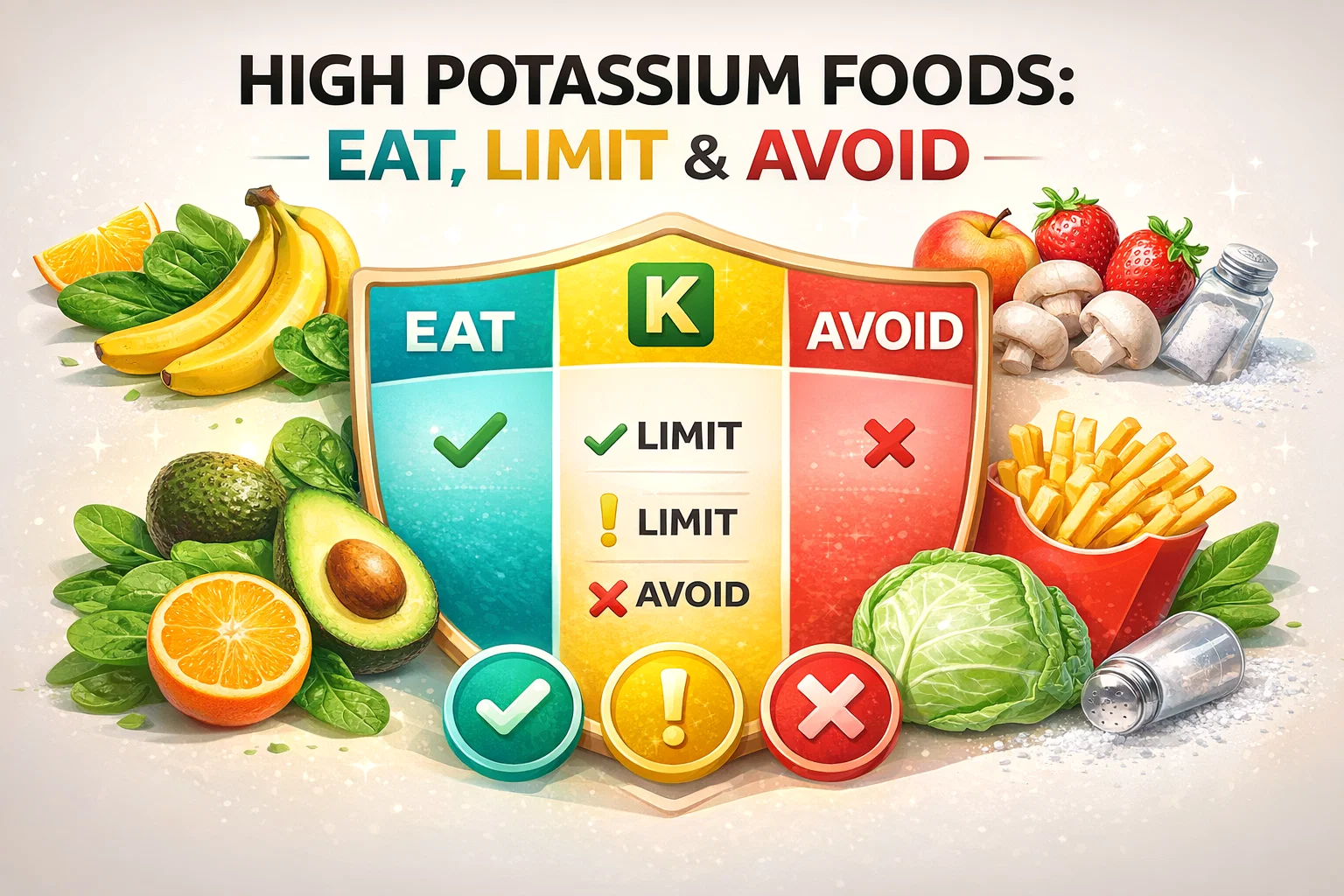
The beauty of the “Eat, Limit, Avoid” system is its simplicity. When you are standing in the produce aisle, you do not want to be doing complex math. You want to know if that avocado or that bag of spinach is a “go” for your current goals. Let us break down the categories from the printable to see why certain foods occupy their specific spots.
The Green Zone: Foods to Eat and Prioritize
The “Eat” column is your nutritional powerhouse. These are the foods that pack the highest punch per serving. Most people immediately think of bananas, and while they are a fantastic source, they are just the tip of the iceberg. Fruits like cantaloupe, honeydew, and kiwi offer a refreshing way to hit your daily targets. If you prefer savory options, potatoes, sweet potatoes, and yams are some of the most concentrated sources of potassium available.
- Leafy Greens: Spinach, kale, and Swiss chard are incredibly versatile. You can sauté them into an omelet or blend them into a morning smoothie.
- Legumes and Beans: Lentils, chickpeas, and black beans provide a double benefit of high potassium and high fiber.
- Hydration: Coconut water is often called “nature’s Gatorade” because it is naturally loaded with potassium, making it a perfect post-workout drink.
The Yellow Zone: Foods to Limit
Moderation is the theme of the “Limit” column. These foods are not necessarily “bad,” but they have a moderate potassium content or other nutritional factors that mean they shouldn’t be the primary focus of every meal. For example, peaches, pears, and nectarines are wonderful snacks but contain less potassium per gram than a papaya or a mango. Vegetables like broccoli and carrots are essential for general health but fall into a middle-ground category for this specific mineral focus.
The Red Zone: Foods to Avoid or Approach with Caution
The “Avoid” section often surprises people. Why would blueberries or strawberries be on a list to avoid? In the context of a “High Potassium List,” these items are actually low-potassium foods. If your goal is to increase your potassium, filling up on berries might take up “stomach real estate” that could have been used for a high-potassium mango. Conversely, if you are on a restricted renal diet where you must avoid high potassium, this red column represents the “safe” low-potassium choices. It is all about the perspective of your specific health goal.
Practical Tips for Incorporating High-Potassium Foods
Knowing which foods are high in potassium is only half the battle. The real magic happens when you find creative, delicious ways to work them into your daily routine. Transitioning to a new dietary focus does not have to mean eating bland or repetitive meals. It is about swapping low-nutrient fillers for high-impact alternatives.
Smart Swaps for Breakfast
Start your day with a potassium boost by swapping your usual white toast for a baked sweet potato bowl topped with almond butter and sliced bananas. If you are a fan of yogurt, choose a high-quality Greek yogurt and stir in some fresh pomegranate seeds or sliced apricots. These small changes can add several hundred milligrams of potassium to your morning before you even head out the door.
Elevating Your Lunch and Dinner
Instead of a standard side of white rice, which offers very little in the way of minerals, try a base of quinoa or black beans. If you are making a salad, use spinach or kale as your base instead of iceberg lettuce. Adding half an avocado to your sandwich or salad not only provides healthy fats but adds a significant amount of potassium that helps keep you full and satisfied until your next meal.
The Science of Bioavailability: Getting the Most Out of Your Food
It is not just about what you eat, but how your body absorbs it. Bioavailability refers to the proportion of a nutrient that enters the circulation when introduced into the body and is able to have an active effect. To maximize the potassium you get from your meals, consider how you prepare your vegetables.
Cooking Methods Matter
Potassium is water-soluble. This means that if you boil your potatoes or spinach and throw away the water, you are literally pouring some of the potassium down the drain. To preserve the mineral content, try steaming, roasting, or microwaving your vegetables. If you do choose to boil them, consider using the leftover water as a base for a soup or stew so that the minerals stay within your meal.
Whole Foods vs. Supplements
While potassium supplements exist, most nutritionists recommend getting your minerals from whole food sources first. Whole foods like beans, fruits, and vegetables come with a complex matrix of vitamins, fiber, and antioxidants that work together synergistically. For instance, the fiber in a potato helps regulate the absorption of its carbohydrates, while the potassium supports your blood pressure. This holistic package is something a pill simply cannot replicate.
Managing Dietary Restrictions and Specialized Diets
It is important to acknowledge that a “High Potassium” list serves different purposes for different people. For athletes or those with high blood pressure, the goal is often to maximize intake. However, for individuals managing chronic kidney disease (CKD), the goal is often the exact opposite. This is why having a printable chart is so useful; it allows you to clearly identify which side of the line a food falls on.
Potassium and Fitness Performance
If you are highly active, you lose electrolytes through sweat. A drop in potassium can lead to muscle fatigue and a slower recovery time. Integrating potatoes and coconut water into your post-training nutrition can help replenish your stores faster than plain water alone. It helps your muscles recover their strength and prevents that “heavy leg” feeling that often follows an intense leg day or a long run.
Consulting with Professionals
Before making radical changes to your diet based on a potassium chart, it is always a wise idea to speak with a healthcare provider or a registered dietitian. They can provide personalized blood work to see where your levels actually sit. Every body is unique, and while a general list is an incredible starting point, your specific health history will determine exactly how much of the “Eat” or “Avoid” columns you should be focusing on.
Creating a Sustainable Routine with the Printable Guide
The secret to long term health isn’t a “crash diet” but a sustainable lifestyle. Use the High Potassium Food List as a tool for gradual improvement. You do not have to overhaul your entire pantry overnight. Start by picking three items from the “Eat” list that you already enjoy and make sure they are on your grocery list every single week.
- Keep it Visible: Print out the chart and stick it on your refrigerator. Having that visual cue when you are deciding what to cook for dinner can steer you toward a healthier choice.
- Experiment with Recipes: If you have never tried Swiss chard or parsnips, look up a new recipe once a week. You might discover a new favorite food that also happens to be a potassium powerhouse.
- Batch Prep: Roast a large tray of sweet potatoes and beets at the start of the week. Having these high-potassium sides ready to go makes it much easier to stick to your goals when you are tired after work.
Conclusion: Empowering Your Nutritional Journey
Taking control of your nutrition is one of the most empowering things you can do for your health. By using a visual aid like the High Potassium Food List, you are removing the barriers of confusion and replaced them with actionable information. Whether you are looking to support your heart, boost your athletic performance, or simply feel more balanced throughout the day, these food choices are your foundation. Remember that consistency beats perfection every time. Focus on adding more of the “Eat” category into your life, enjoy the process of discovering new flavors, and watch as your body thanks you with better energy and vitality. Your journey to a more mineral-rich lifestyle starts with the very next meal you choose.
Would you like me to generate a specific meal plan based on the “Eat” column of this list?